


Screens in Water Treatment
In industrial water treatment, the primary objective is the removal of suspended solids, debris, and particulate matter to protect downstream equipment and ensure process integrity. Screens in water treatment represent the first and most critical stage of this process. As mechanical barriers, they prevent large objects from entering pumps, heat exchangers, and sensitive membrane systems. For engineers and facility managers, selecting the correct screening technology involves a complex balance of material science, fluid dynamics, and operational requirements.
Effective filtration starts at the intake or the primary treatment stage. Whether the source is municipal supply, surface water, or recycled process water, the reliability of the entire system depends on the durability and precision of the initial screening components. High-quality filtration solutions, such as those found on our Main Page, are designed to withstand the rigors of continuous industrial use while maintaining specific filtration accuracies.
The Fundamental Role of Screening in Industrial Processes
Screens in water treatment serve as the physical separation layer that distinguishes between acceptable fluid and harmful debris. In an industrial context, screening is categorized based on the size of the openings and the stage of the treatment process.
Coarse Screening
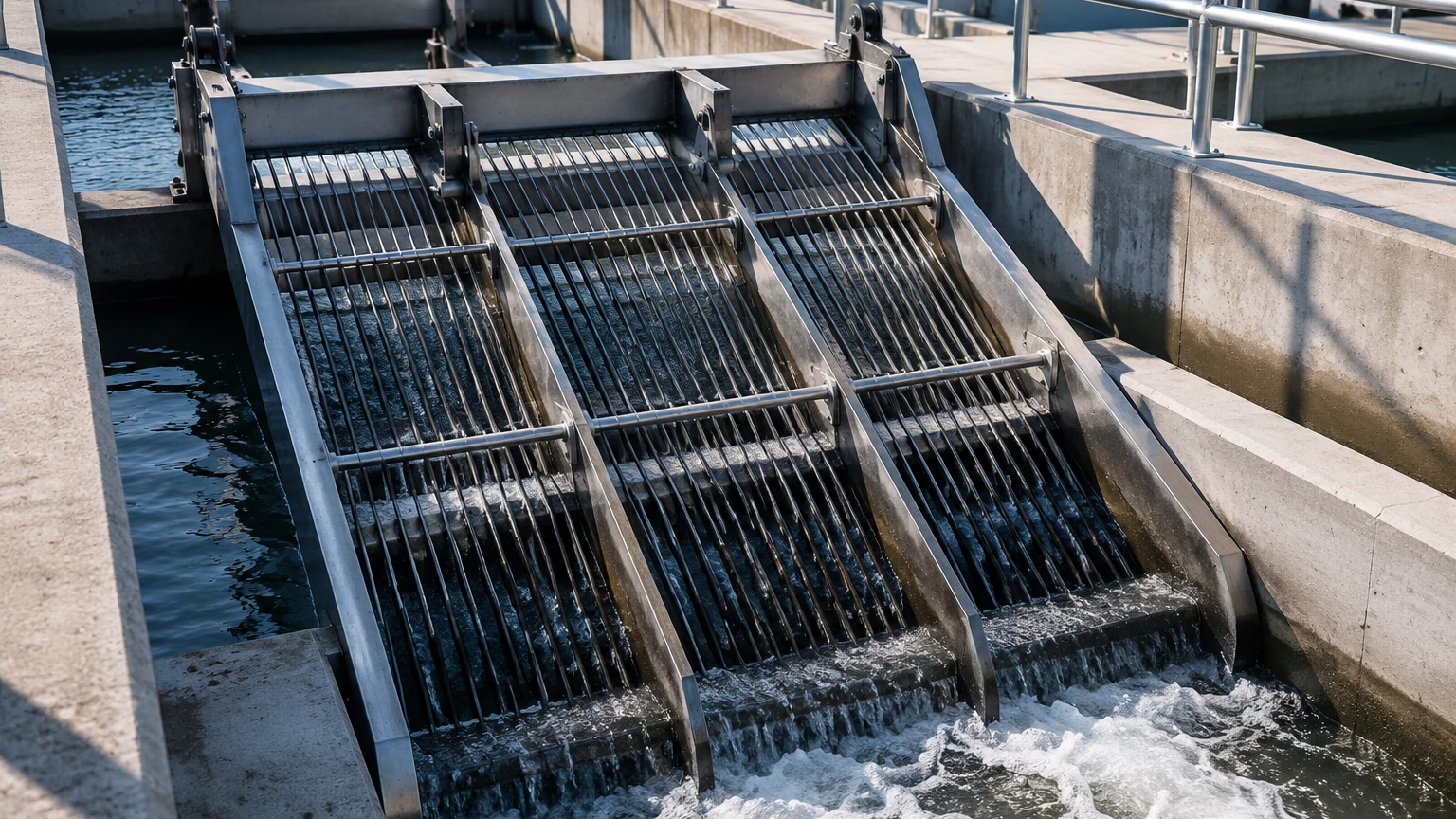
Coarse screens are typically the first line of defense. They are designed to capture large debris such as sticks, plastic, and large organic matter. These are often used in raw water intake structures. The goal here is not fine filtration but the protection of mechanical components like impellers and valves from physical damage.
Fine Screening
Fine screens utilize smaller apertures, often ranging from 10 microns to a few millimeters. These are critical in protecting secondary treatment systems, such as Reverse Osmosis (RO) membranes or Ultrafiltration (UF) units. In these applications, stainless steel wire mesh or precision-perforated metals are preferred due to their ability to maintain consistent pore sizes under high-pressure conditions.
Engineering Considerations for Screen Selection
When specifying screens for water treatment, engineers must look beyond simple dimensions. Several technical factors dictate the performance and lifespan of the filtration component.
Filtration Accuracy and Micron Rating
The micron rating defines the size of the smallest particle the screen is intended to retain. In industrial water treatment, achieving the right balance is essential. A screen that is too coarse will allow contaminants to pass through, potentially fouling downstream equipment. Conversely, a screen that is too fine for the application will clog prematurely, leading to excessive pressure drops and increased maintenance costs.
Open Area Percentage
The open area is the ratio of the total area of the openings to the total area of the screen surface. A higher open area percentage generally results in a lower initial pressure drop and higher flow capacity. However, increasing the open area often requires thinner wire diameters or narrower bridges between perforations, which can compromise the structural integrity of the screen. Engineers must calculate the "Effective Filtration Area" to ensure the screen can handle the required flow rate without causing cavitation or mechanical stress.
Pressure Drop (Delta P)
Pressure drop is the difference in total pressure between two points of a fluid carrying network. In water treatment, a high pressure drop across a screen indicates either a high flow rate or a clogged filter. Selecting a screen with optimized geometry—such as wedge wire or high-grade stainless steel mesh—can help minimize energy consumption by maintaining a low Delta P during operation.
Material Science: Why Stainless Steel Dominates
The environment in which screens in water treatment operate is often corrosive, abrasive, and subject to fluctuating temperatures. This makes material selection a primary engineering decision. Stainless steel is the industry standard for high-performance filtration for several reasons.
Corrosion Resistance
Industrial water often contains chlorides, dissolved gases, and chemicals used for pH adjustment or disinfection. Grade 304 stainless steel is suitable for many general-purpose applications, but for environments with high salinity or chemical exposure, Grade 316 or 316L is required. The addition of molybdenum in 316 stainless steel significantly enhances its resistance to pitting and crevice corrosion.
Mechanical Strength and Durability
Unlike plastic or fabric filters, stainless steel screens maintain their shape and filtration accuracy under high differential pressures. They are resistant to "blindage" (the lodging of particles in the openings) and can withstand the mechanical stresses of backwashing or manual cleaning cycles. This durability translates to a lower total cost of ownership by extending the replacement cycle.
Types of Metal Screens Used in Water Treatment
Different water treatment challenges require different screen architectures. The most common types produced by specialized manufacturers like Kaifil include:
1. Woven Wire Mesh: Created by weaving individual wires into various patterns (plain, twilled, or dutch weave). This provides high precision and a wide range of micron ratings.
2. Perforated Metal: Sheets of metal with mechanically punched holes. These are exceptionally strong and are often used as support structures for finer mesh or as coarse primary screens.
3. Wedge Wire (V-Wire): Constructed from V-shaped profiles welded onto support rods. This design is non-clogging because the outward-opening slots allow particles to pass through or be easily washed away, making it ideal for high-solids water treatment.
4. Sintered Mesh: Multiple layers of wire mesh bonded together through a heat-treating process. This creates a robust, multi-layered filter medium that combines high filtration accuracy with extreme mechanical strength.
Application-Specific Requirements
The design of screens in water treatment must be tailored to the specific industry. Each sector has unique contaminants and regulatory standards.
Food and Beverage Industry
In food and beverage production, water is often an ingredient. Screens must be made of food-grade materials and designed to prevent bacterial growth. Smooth surfaces and the ability to withstand Clean-in-Place (CIP) procedures are mandatory. Precision stainless steel cartridges ensure that no metallic fragments or contaminants enter the production line.
Pharmaceutical and Biotech
These industries require the highest levels of filtration accuracy. Screens are used for pre-filtration to protect expensive sterile filters. The materials must be traceable, and the manufacturing process must ensure that no lubricants or residues remain on the screen surface.
Chemical Processing
Chemical plants often deal with aggressive fluids. Screens in these environments must be chemically compatible with the processed media. This often necessitates the use of high-alloy stainless steels or specialized coatings to prevent rapid degradation.
Maintenance, Cleaning, and Replacement Cycles
No filter is permanent, but the choice of screen significantly impacts the maintenance schedule. Engineers should establish a monitoring protocol based on pressure differentials.
Cleaning Methods
* Backwashing: Reversing the flow of water to dislodge particles from the screen surface. This is common in automated systems.
* Ultrasonic Cleaning: Using high-frequency sound waves in a cleaning solvent to remove fine particulates trapped deep within the mesh.
* Chemical Cleaning: Using acids or bases to dissolve organic or mineral scaling. This requires the screen material to be chemically resistant.
Determining Replacement
A screen should be replaced when it shows signs of mechanical fatigue, such as broken wires or deformed mesh, or when the pressure drop remains high even after thorough cleaning. Choosing high-quality components from a professional manufacturer ensures that the screens can survive multiple cleaning cycles before needing replacement.
The Value of Customization and OEM Solutions
Off-the-shelf screens rarely meet the exact needs of complex industrial systems. Customization allows engineers to specify the exact dimensions, flange types, and reinforcement structures required for a seamless fit.
Working with a manufacturer that understands the nuances of metal filtration is essential. For instance, a custom-designed stainless steel filter cartridge can be engineered to fit an existing housing while providing improved flow characteristics or higher filtration efficiency. This bespoke approach reduces the need for costly system modifications and ensures that the screens in water treatment perform exactly as intended by the system designers.
Conclusion: Making Informed Purchasing Decisions
Selecting screens in water treatment is a technical task that requires an understanding of the fluid's characteristics, the required effluent quality, and the mechanical constraints of the system. By focusing on high-grade materials like stainless steel and considering factors such as open area and pressure drop, engineering teams can optimize their water treatment processes for both performance and longevity.
When evaluating suppliers, it is important to confirm their manufacturing capabilities, material certifications, and experience in your specific industry. Reliable filtration components are the foundation of efficient water management, preventing downtime and protecting the significant investment made in downstream treatment technologies. For more information on specialized filtration components and engineering support, visit our Main Page.
