


Self Cleaning Automatic Water Filters
In industrial water management, the transition from manual filtration systems to automated solutions is driven by the need for process continuity, reduced labor costs, and the protection of sensitive downstream equipment. Self cleaning automatic water filters represent a critical engineering advancement, allowing for the continuous removal of suspended solids from a liquid stream without interrupting the flow or requiring manual intervention. For engineers and facility managers, understanding the mechanical principles, material constraints, and selection criteria of these systems is essential for optimizing plant efficiency.
Industrial applications—ranging from cooling tower water filtration and chemical processing to food and beverage production—demand filtration systems that can handle fluctuating solids loading while maintaining a stable pressure drop. This guide examines the technical architecture of self-cleaning filtration, the role of precision stainless steel components, and the factors that influence long-term performance in demanding environments.
The Engineering Principles of Automatic Self-Cleaning Filtration
The primary objective of self cleaning automatic water filters is to maintain a clean filtration interface while the system remains online. Unlike traditional bag or cartridge filters that require a shutdown for manual replacement once they reach a terminal pressure drop, automatic filters utilize an internal cleaning mechanism triggered by specific process parameters.
Pressure Differential Triggering
The most common method for initiating a cleaning cycle is the monitoring of the differential pressure ($ΔP$). As contaminants accumulate on the surface of the filter element (typically a stainless steel mesh or wedge wire screen), the resistance to flow increases. When the $ΔP$ reaches a pre-set threshold—usually between 0.5 to 1.0 bar (7 to 15 psi)—the system's controller activates the cleaning mechanism. This ensures that cleaning only occurs when necessary, minimizing water waste and mechanical wear.
Backwashing vs. Mechanical Scraping
There are two primary mechanical approaches to self-cleaning:
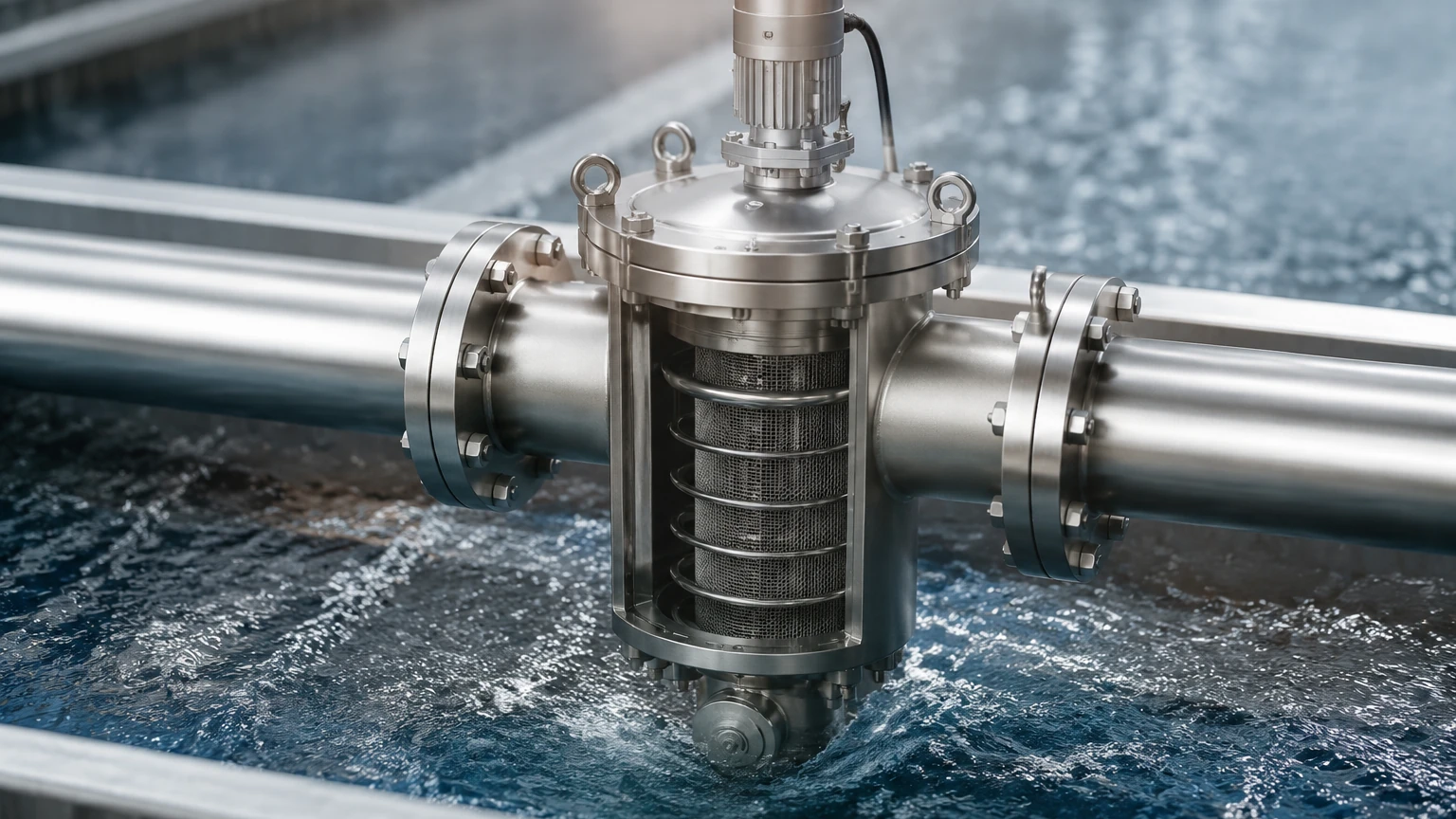
1. Suction Scanning (Backwashing): This method uses a rotating suction scanner located on the clean side or the dirty side of the screen. When the flush valve opens to the atmosphere, a high-velocity suction effect is created at the nozzles of the scanner. This localized vacuum pulls the debris off the screen and out through the drain. This is highly effective for removing inorganic particles like sand and scale.
2. Mechanical Scraping: In applications involving sticky, organic, or fibrous materials, a mechanical scraper (made of stainless steel or high-performance polymers) moves across the surface of the filter element. The scraper physically dislodges the cake, which then settles into a collection chamber at the bottom of the filter housing to be purged. This method is often preferred in the food processing and chemical industries where fluids have higher viscosities.
Critical Components: The Role of Stainless Steel Filtration Media
The heart of any self-cleaning filter is the filter element. Because these elements are subjected to constant mechanical stress and high-velocity fluid movement during cleaning cycles, the material and construction must be of the highest industrial grade. As a specialist in custom stainless steel filtration, Kaifil emphasizes the use of high-alloy steels to ensure structural integrity.
Sintered Wire Mesh
For fine filtration requirements (typically 10 to 100 microns), multi-layer sintered wire mesh is often employed. By diffusion-bonding multiple layers of stainless steel mesh together, engineers create a media that combines high porosity with extreme mechanical strength. The sintered structure prevents individual wires from shifting under pressure, ensuring consistent filtration accuracy over thousands of cleaning cycles.
Wedge Wire Screens
For heavier solids loading or coarser filtration (above 50 microns), wedge wire (V-wire) screens are the industry standard. The V-shaped profile of the wire creates a slot that widens inwardly, which reduces the likelihood of particles becoming wedged in the screen—a phenomenon known as "blinding." Wedge wire is exceptionally robust and is the preferred choice for high-pressure hydraulic systems and heavy industrial water intake.
Material Compatibility
Selecting the correct grade of stainless steel is vital for preventing premature failure due to corrosion. While Grade 304 is suitable for many general water applications, Grade 316L is required for environments containing chlorides or in pharmaceutical and food applications where localized pitting corrosion must be avoided. For highly aggressive chemical processes, specialized alloys like Duplex stainless steel may be integrated into the custom design.
Application-Specific Considerations for Engineers
When integrating self cleaning automatic water filters into a process, several engineering variables must be confirmed to ensure the system meets the intended performance specifications.
Flow Rate and Flux
The "flux rate" (the volume of fluid passing through a unit area of filter media) is a critical design parameter. Oversizing a filter can lead to unnecessary capital expenditure, while undersizing leads to frequent cleaning cycles, increased water loss, and accelerated wear on the drive motor and seals. Engineers must calculate the effective filtration area based on the maximum anticipated flow and the nature of the suspended solids.
Particle Characterization
Not all solids are created equal. Hard, granular particles like sand are easily removed via suction scanning. However, soft, deformable particles (such as algae or certain chemical precipitates) can be forced into the mesh openings. In such cases, a lower flux rate or a mechanical scraping mechanism may be necessary to maintain performance.
Integration with Control Systems
Modern self-cleaning filters are rarely standalone units. They must interface with the plant’s PLC (Programmable Logic Controller) via Modbus, Profibus, or 4-20mA signals. This allows for remote monitoring of the filter status, manual overrides, and the logging of cleaning frequency, which can serve as an early warning system for changes in the upstream process water quality.
Total Cost of Ownership (TCO) and Maintenance
While the initial capital expenditure for an automatic system is higher than that of a manual strainer, the Total Cost of Ownership is significantly lower over a 5-to-10-year horizon. The primary cost drivers in manual systems—labor for filter changes, disposal costs for spent cartridges, and lost production during downtime—are virtually eliminated.
Maintenance Requirements
Even "self-cleaning" systems require periodic maintenance. Key areas for inspection include:
* Dynamic Seals: The seals around the rotating shaft or scraper must be checked for leaks, especially in high-pressure or high-temperature applications.
* Drive Components: Motors and gearboxes should be inspected for lubrication and alignment.
* Screen Integrity: While stainless steel screens are durable, they should be inspected annually for signs of erosion or mechanical damage caused by oversized debris.
Why Customization Matters in Industrial Filtration
Standard off-the-shelf filtration units often fail to meet the specific nuances of a complex industrial process. Customization allows for the optimization of the filter housing geometry, the selection of specialized gasket materials (such as Viton or EPDM), and the tailoring of the filtration media to the exact particle size distribution of the process fluid.
As a professional manufacturer, Kaifil provides the engineering expertise required to develop these bespoke solutions. By focusing on the precision of the metal filter components, Kaifil ensures that the most vulnerable part of the self-cleaning system—the filter element—is engineered for the specific chemical and mechanical rigors of the application. For technical teams looking to evaluate specific configurations, it is recommended to Review product options and application support to ensure the selected hardware aligns with the operational goals.
Conclusion
Self cleaning automatic water filters are indispensable tools for modern industrial efficiency. By automating the removal of contaminants and utilizing high-performance stainless steel components, these systems protect downstream infrastructure and ensure process stability. For engineers, the key to success lies in the rigorous evaluation of flow dynamics, material compatibility, and the selection of a manufacturing partner capable of delivering precision-engineered filtration elements. When properly specified and maintained, these systems provide a reliable, cost-effective solution for the most demanding water treatment challenges in the chemical, pharmaceutical, and industrial sectors.
To explore the full range of custom stainless steel filtration solutions and technical specifications, visit the Kaifil Main Page for detailed engineering resources and product guidance.
