


Self Cleaning Filtration Systems
In industrial manufacturing and processing, the continuity of operations is a primary driver of profitability. Manual filtration systems, while effective for low-solids applications, often introduce significant downtime and labor costs when scaled to high-volume or high-contamination environments. This is where self cleaning filtration systems become an essential engineering solution. By automating the removal of debris from the filter media, these systems ensure constant flow rates, protect downstream equipment, and minimize human intervention.
For engineers and procurement specialists, selecting the right self-cleaning technology requires a deep understanding of fluid dynamics, material compatibility, and the specific mechanical mechanisms that facilitate the cleaning cycle. As a professional manufacturer of stainless steel filtration components, Kaifil provides the precision-engineered elements that form the core of these automated systems.
Core Mechanisms of Self Cleaning Filtration Systems
Self-cleaning filters generally fall into two primary categories based on their cleaning mechanism: backwashing (or back-flushing) and mechanical scraping. Each method offers distinct advantages depending on the nature of the contaminants and the viscosity of the fluid.
1. Backwash Filtration Systems
Backwashing systems utilize a reversal of flow to dislodge particles from the filter surface. When the differential pressure (the difference in pressure between the inlet and outlet) reaches a predetermined set point, a valve opens to create a low-pressure path. A portion of the filtered fluid—or sometimes an external clean fluid or compressed air—is forced backward through the filter media. This action flushes the accumulated "filter cake" into a waste manifold.
This method is highly effective for low-viscosity fluids like water or light chemicals. However, it requires a certain amount of system pressure to be effective and results in a small volume of "backwash waste" that must be managed.
2. Mechanically Cleaned Systems
Mechanical cleaning involves a physical scraper or brush that moves across the surface of the filter element. These are often referred to as "scraper filters." The scraper, typically made of high-performance plastics or metal, removes solids from the upstream side of the filter media (usually a wedge wire or perforated stainless steel element). The solids then settle into a collection chamber at the bottom of the housing, where they can be purged without interrupting the main flow.
Mechanical cleaning is the preferred choice for high-viscosity fluids, such as resins, oils, and food products (like chocolate or syrups), where backwashing would be ineffective due to the fluid's resistance to flow reversal.
Engineering Considerations for Filter Elements
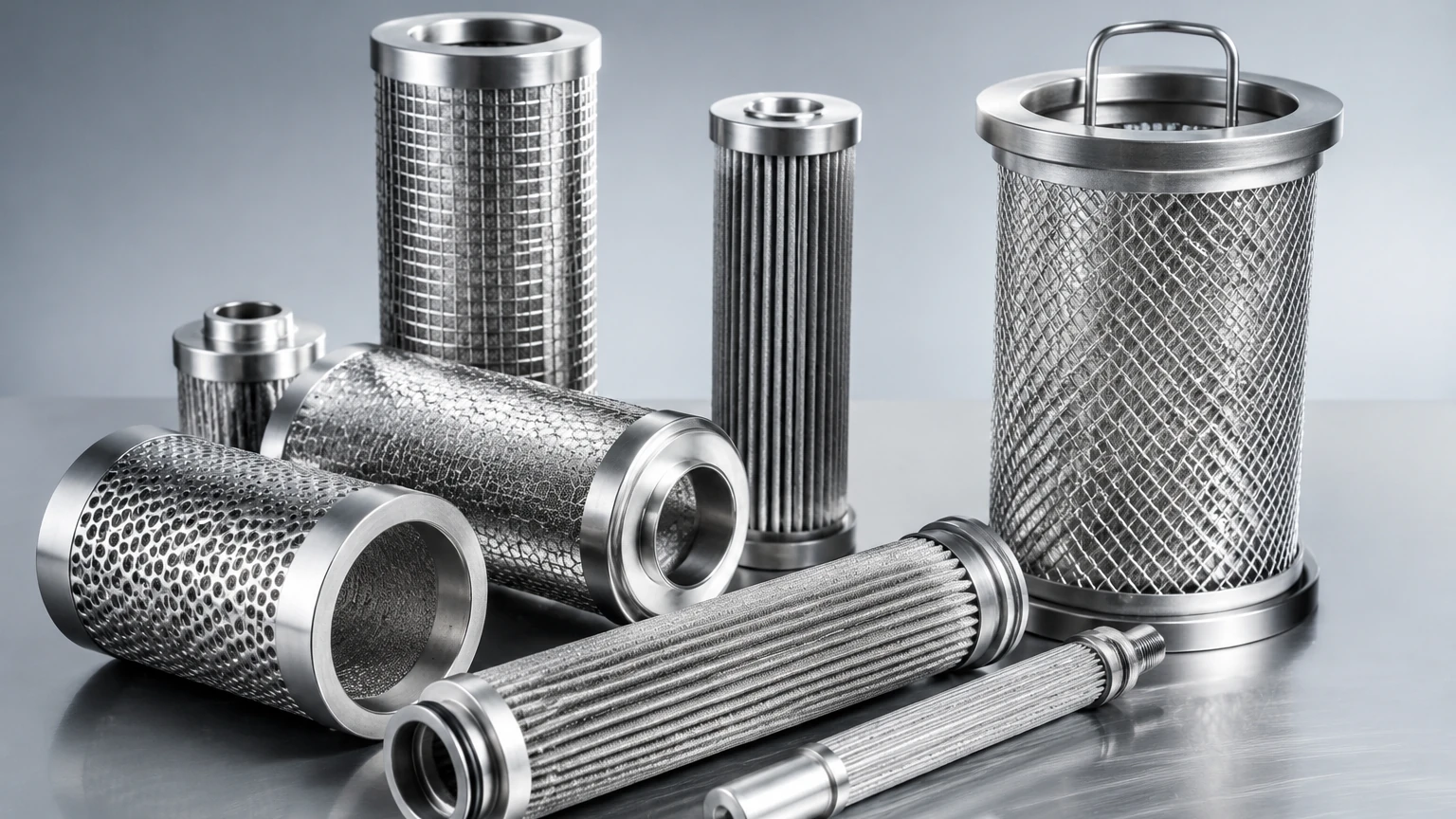
The heart of any self-cleaning system is the filter element. Because these elements are subject to frequent cleaning cycles and mechanical stress, their construction must be exceptionally robust. At Kaifil, we focus on high-grade stainless steel components that withstand these demanding environments.
Material Selection: 304 vs. 316L Stainless Steel
Most industrial applications require either Grade 304 or Grade 316L stainless steel. While 304 is suitable for general water treatment and less corrosive environments, 316L is the industry standard for chemical processing and pharmaceutical applications due to its superior resistance to pitting and crevice corrosion, particularly in the presence of chlorides.
Wedge Wire vs. Sintered Mesh
In self cleaning filtration systems, the geometry of the filter media is critical:
* Wedge Wire: This is the most common media for self-cleaning filters. The V-shaped profile of the wire ensures that particles only make contact at two points. If a particle passes the narrowest point, it moves into a wider area, significantly reducing the risk of "blinding" or clogging. Wedge wire is also extremely rigid, making it ideal for mechanical scrapers.
* Sintered Wire Mesh: For applications requiring finer filtration (down to 1-5 microns), multi-layer sintered mesh provides the necessary precision. However, because mesh is more delicate than wedge wire, it is typically used in backwashing systems rather than scraper systems to avoid mechanical damage to the fine wires.
Performance Evaluation and Selection Criteria
When evaluating self cleaning filtration systems for a specific project, engineers must look beyond the initial flow rate. Several technical variables dictate the long-term success of the installation.
1. Solids Loading and Particle Distribution
The concentration of solids (measured in PPM or percentage by weight) determines how frequently the cleaning cycle must trigger. If the solids loading is too high for the filter's surface area, the system may enter a continuous cleaning loop, which increases wear and waste. Understanding the particle size distribution is equally important; a filter that is too fine will clog prematurely, while one that is too coarse will fail to protect downstream processes.
2. Differential Pressure (DP) Thresholds
Most automated systems are triggered by a DP sensor. It is vital to establish the maximum allowable pressure drop that the process can tolerate before the cleaning cycle begins. A well-designed system should operate at a low initial DP to provide a sufficient "buffer" for contaminant buildup.
3. Flow Rate Stability
One of the primary benefits of self-cleaning technology is the ability to maintain a steady flow. However, during a backwash cycle, there is a temporary drop in downstream pressure. If the process is sensitive to pressure fluctuations, engineers should consider a multi-chamber system where one chamber cleans while others remain online to maintain constant pressure.
Total Cost of Ownership (TCO) Analysis
While the capital expenditure (CAPEX) for self cleaning filtration systems is higher than for manual bag or cartridge housings, the Total Cost of Ownership is often significantly lower over a 3-to-5-year period. To help purchasing teams make informed decisions, consider the following factors:
* Elimination of Consumables: Manual filters require the constant purchase, storage, and disposal of filter bags or cartridges. Self-cleaning systems use permanent stainless steel elements that can last for years.
* Labor Savings: The man-hours required to monitor, pull, clean, or replace manual filters are eliminated. This is particularly valuable in hazardous environments where filter changes require specialized PPE and safety permits.
* Reduced Product Loss: In many processes, opening a filter housing results in the loss of the fluid contained within. Automated systems, especially scraper types, are designed to concentrate waste, ensuring that the maximum amount of valuable product reaches the end of the line.
* Energy Efficiency: A clogged filter forces pumps to work harder. By maintaining a clean filter surface, automated systems optimize pump performance and reduce energy consumption.
Industry-Specific Applications
Chemical and Petrochemical Processing
In these sectors, filtration systems must handle aggressive solvents and high temperatures. Stainless steel self-cleaning filters are used to remove catalysts, protect heat exchangers, and ensure the purity of final chemical products. The closed-loop nature of these systems also prevents operator exposure to toxic fumes.
Food and Beverage Production
Sanitary design is paramount here. Self-cleaning filters used in the food industry must feature smooth internal surfaces and specialized gaskets (such as EPDM or Viton) that are FDA-compliant. They are used for filtering juice, honey, chocolate, and edible oils, where maintaining a continuous production line is essential for meeting throughput targets.
Water Treatment and Cooling Towers
Large-scale water systems often deal with organic matter, sand, and scale. Self-cleaning filters protect spray nozzles and cooling tower fill from clogging. Because these systems often handle high flow rates, backwash filters with wedge wire elements are the standard choice for their durability and low maintenance requirements.
Customization and Engineering Support
Every industrial process has unique constraints, from footprint limitations to specific flange requirements. Off-the-shelf solutions rarely provide the optimal balance of performance and longevity. Customization is often necessary to ensure the filter housing and internal elements are perfectly matched to the fluid's characteristics.
When working with a manufacturer like Kaifil, engineers can specify the exact micron rating, material grade, and structural reinforcement needed for their specific application. Whether you are designing a new system or retrofitting an existing line, technical consultation ensures that the filtration component will withstand the mechanical stresses of the cleaning mechanism while providing the required filtration accuracy.
Before moving forward with a procurement decision, it is recommended that technical teams confirm the following:
1. Fluid Viscosity at Operating Temperature: Viscosity changes significantly with temperature, affecting the choice between backwash and scraper mechanisms.
2. Maximum System Pressure: Ensure the housing and the internal element can handle the peak pressures of the system.
3. Waste Management: Determine how the backwash or purge waste will be handled or recycled.
For a detailed look at specific filtration components and to explore how custom stainless steel solutions can be integrated into your process, you can Review product options and application support on our Main Page.
Conclusion
Self cleaning filtration systems represent a critical investment in process efficiency. By automating the maintenance of the filter media, these systems provide a level of reliability that manual filtration cannot match. Through careful consideration of material science, mechanical design, and operational parameters, engineers can implement filtration solutions that significantly reduce downtime and improve product quality. As industrial requirements continue to evolve toward greater automation, the role of high-quality stainless steel filtration components remains central to achieving sustainable, high-performance manufacturing.
