


Single Cartridge Filter Housing
In industrial filtration, the single cartridge filter housing serves as a critical component for low-to-medium flow applications where precision, durability, and ease of maintenance are paramount. Designed to hold a single filter element, these housings are widely utilized across the chemical processing, pharmaceutical, food and beverage, and water treatment industries. Selecting the appropriate housing requires a deep understanding of fluid dynamics, material compatibility, and mechanical design to ensure the filtration system operates efficiently under specific process conditions.
As a specialized manufacturer, Kaifil provides engineered stainless steel filtration solutions that address the rigorous demands of modern industrial environments. Understanding the technical nuances of a single cartridge filter housing is the first step for engineers and procurement teams in optimizing their filtration performance and minimizing downtime.
Technical Overview of Single Cartridge Filter Housings
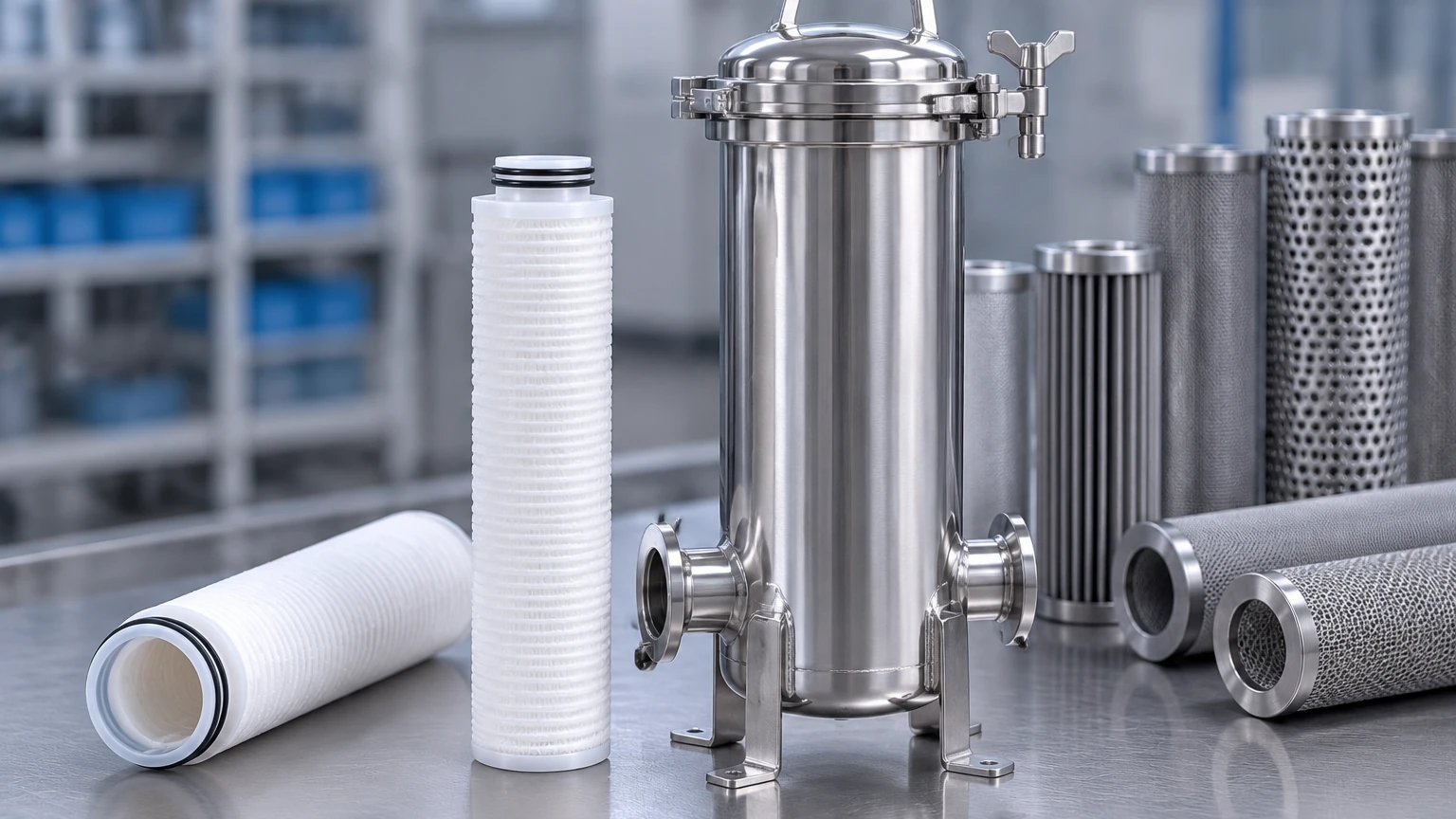
A single cartridge filter housing is a pressure vessel designed to contain a single filter cartridge, directing the flow of fluid through the media to remove contaminants. Unlike multi-cartridge housings used for high-volume bypass or bulk filtration, single cartridge units are often employed for point-of-use filtration, pilot plant operations, or smaller batch processes where flow rates are manageable within a single element's capacity.
The primary function of the housing is to provide a leak-proof environment that forces the process fluid through the filter cartridge. The design must account for the inlet and outlet configurations, the sealing mechanism for the cartridge, and the method used to secure the housing head to the bowl. For those seeking comprehensive details on various filtration components, visiting the Kaifil Main Page provides an overview of available configurations and technical support.
Material Selection: 304 vs. 316L Stainless Steel
Material selection is perhaps the most critical factor in the longevity and performance of a single cartridge filter housing. In industrial settings, stainless steel is the standard due to its corrosion resistance and structural integrity. The two most common grades are 304 and 316L.
304 Stainless Steel
304 stainless steel is suitable for general-purpose applications, including water filtration, light chemicals, and some food and beverage processes. It offers excellent durability and cost-effectiveness. However, it may be susceptible to pitting and corrosion in environments with high chloride concentrations or aggressive acidic conditions.
316L Stainless Steel
For more demanding applications, 316L stainless steel is the preferred choice. The addition of molybdenum enhances its resistance to chloride-induced pitting and crevice corrosion. The "L" denotes low carbon content, which improves weldability and reduces the risk of intergranular corrosion after welding. This grade is essential for pharmaceutical manufacturing, chemical processing involving corrosive solvents, and high-purity water systems.
Surface Finish and Treatment
Beyond the alloy grade, the surface finish of the housing impacts both hygiene and flow efficiency. For sanitary applications, housings are often electropolished to achieve a smooth, mirror-like finish (often measured in Ra). This reduces the risk of bacterial growth and makes the housing easier to clean during Sterilization-in-Place (SIP) or Clean-in-Place (CIP) cycles.
Closure Mechanisms and Pressure Ratings
The method used to seal the housing head to the body determines the ease of cartridge replacement and the maximum operating pressure the unit can safely handle. There are three primary types of closures used in a single cartridge filter housing:
1. Threaded Closure: Common in small, low-pressure housings. The bowl screws directly into the head. While simple, it may not be suitable for high-pressure applications or processes requiring frequent cartridge changes due to the risk of thread galling.
2. V-Band Clamp: This design uses a circular clamp to secure the head and bowl. It is popular for its quick-opening capability, allowing operators to change filters rapidly without specialized tools. V-band clamps are typically rated for moderate pressures (up to 150-300 PSI depending on the design).
3. Swing Bolt Closure: For high-pressure or heavy-duty industrial applications, swing bolts provide the most robust seal. Multiple bolts are spaced around the flange, ensuring even pressure distribution on the gasket. This design is favored in chemical plants and refineries where safety and high-pressure integrity are non-negotiable.
Engineering Considerations for Cartridge Compatibility
A housing is only as effective as the cartridge it holds. When specifying a single cartridge filter housing, engineers must ensure the internal hardware is compatible with the cartridge's end-cap configuration. Common configurations include:
* Double Open End (DOE): The cartridge is open at both ends and relies on flat gaskets and a spring-loaded compression nut in the housing to create a seal.
* Code 7 (226 O-Rings/Fin): Features two locking tabs and two O-rings at the base, providing a high-integrity seal suitable for critical applications where bypass must be eliminated.
* Code 3 (222 O-Rings/Flat): Uses two O-rings for sealing but lacks the locking tabs of Code 7. It is often used in general industrial liquid filtration.
Selecting the correct internal seat is vital. A mismatch between the housing's internal adapter and the cartridge's end cap will result in fluid bypass, rendering the filtration process ineffective.
Flow Rate and Pressure Drop (Delta P)
Determining the size of the single cartridge filter housing involves more than just matching the pipe size. Engineers must calculate the clean pressure drop across the entire system. The total pressure drop is the sum of the pressure drop caused by the housing itself and the pressure drop caused by the clean filter cartridge.
In a well-designed system, the initial pressure drop should be kept low (typically below 2-5 PSI) to maximize the dirt-holding capacity of the cartridge. If the housing is undersized for the required flow rate, the high velocity of the fluid can cause turbulence, premature clogging, and potential damage to the filter media. Manufacturers like Kaifil provide flow curves to help engineers select the right housing size based on fluid viscosity and desired flow rates.
Sealing Materials and Chemical Compatibility
The O-rings or gaskets used to seal the housing and the cartridge must be chemically compatible with the process fluid. Common materials include:
* EPDM: Excellent for water, steam, and dilute acids. Not suitable for petroleum-based fluids.
* Viton (FKM): High resistance to chemicals, oils, and high temperatures. Widely used in chemical processing.
* Silicone: Preferred in food and pharmaceutical applications due to its inertness and high-temperature stability.
* PTFE/Teflon: Offers the broadest chemical resistance but lacks the elasticity of elastomers, often requiring encapsulated designs for effective sealing.
Failure to select the correct sealing material can lead to seal swelling, degradation, and process contamination.
Application-Specific Configurations
Single cartridge filter housings are adapted to meet the unique needs of different sectors:
Sanitary Housings
In the pharmaceutical and biotech industries, housings must be designed without "dead legs" where bacteria can accumulate. These units often feature Tri-clamp connections, electropolished internals, and self-draining designs. They are built to withstand repeated steam sterilization cycles.
Industrial and Chemical Housings
For chemical filtration, the focus is on corrosion resistance and pressure safety. These housings may feature NPT threaded or ANSI flanged connections. They are often built to ASME standards if the operating pressure and volume exceed certain thresholds defined by local regulations.
High-Temperature Gas Filtration
When filtering hot gases or steam, the housing must account for thermal expansion. Stainless steel wire mesh cartridges are often paired with these housings to provide a durable solution that can withstand extreme temperatures without losing structural integrity.
Installation and Maintenance Best Practices
To ensure the longevity of a single cartridge filter housing, proper installation and maintenance protocols must be followed:
* Venting and Draining: Every housing should be equipped with a vent valve at the highest point to release trapped air and a drain valve at the lowest point to allow for safe fluid removal before opening the unit.
* Pressure Gauges: Installing pressure gauges at the inlet and outlet is essential for monitoring the differential pressure. This allows operators to change the cartridge at the optimal time, preventing cartridge collapse or process interruption.
* Seal Inspection: During every filter change, O-rings and gaskets should be inspected for nicks, compression set, or chemical degradation. Replacing seals regularly is a low-cost way to prevent expensive leaks.
* Alignment: Ensure the housing is installed vertically and that the piping does not exert excessive stress on the housing nozzles. Support brackets should be used for heavier industrial models.
Customization and OEM Solutions
Standard off-the-shelf housings may not always meet the specific requirements of a complex industrial system. This is where working with a specialized manufacturer like Kaifil becomes an advantage. Customization options can include:
* Unique Port Orientations: Adjusting the inlet and outlet positions to fit within tight spatial constraints.
* Specialty Coatings: Applying coatings like Halar or PFA for extreme chemical environments where even 316L stainless steel may struggle.
* Integrated Systems: Designing housings with built-in bypass valves or duplex configurations for continuous operation.
By collaborating with an OEM partner, engineering teams can ensure that the filtration hardware is perfectly tailored to their specific process parameters, rather than forcing a standard product to fit a non-standard application.
Conclusion: Evaluating Total Cost of Ownership
When purchasing a single cartridge filter housing, the initial price is only one part of the equation. Engineers must consider the total cost of ownership, which includes maintenance labor, replacement part availability, and the cost of potential downtime. A high-quality stainless steel housing from a reputable manufacturer provides a long service life, often spanning decades, making it a more cost-effective investment than cheaper, lower-grade alternatives.
By focusing on material integrity, proper pressure ratings, and ease of maintenance, facilities can achieve reliable filtration that protects downstream equipment and ensures product quality. For technical guidance on selecting the right components for your specific industrial application, exploring the resources available on the Kaifil website is a recommended next step for any technical professional.
