


Sinter Plate
In the landscape of industrial filtration and fluid processing, the sinter plate represents a pinnacle of structural integrity and filtration precision. Unlike traditional woven wire mesh or non-woven fiber media, a sinter plate is an engineered porous material created through a process of diffusion bonding. This process fuses multiple layers of stainless steel wire mesh or metal powders into a single, robust monolithic structure without the use of binders or adhesives. For engineers and procurement specialists, understanding the technical nuances of sinter plates is essential for optimizing system performance in demanding environments such as chemical processing, pharmaceutical manufacturing, and high-pressure hydraulic systems.
As a professional manufacturer, Kaifil specializes in developing these high-performance components, ensuring that every sinter plate meets rigorous industrial standards for durability and filtration accuracy. By focusing on the mechanical properties and fluid dynamics of these materials, technical teams can better evaluate their suitability for specific process conditions.
Understanding Sinter Plate Engineering and Construction
The fundamental characteristic of a sinter plate is its multi-layer construction. While a single layer of wire mesh may be susceptible to deformation under pressure or wire migration, the sintering process creates molecular bonds at every contact point of the wire intersections. This is achieved by placing the layered material into a high-temperature vacuum furnace, where heat and pressure facilitate atomic diffusion across the interfaces of the wires.
Multi-Layer Configurations
A standard sinter plate often utilizes a five-layer structure, though custom configurations are common depending on the application requirements. The typical layers include:
1. Protective Layer: The outermost layer that protects the fine filter mesh from mechanical damage during handling and operation.
2. Filter Control Layer: The core layer that defines the filtration rating. It consists of a precision-woven mesh that dictates the micron size and ensures consistent pore distribution.
3. Dispersion Layer: This layer helps distribute the fluid flow evenly across the filter layer, preventing localized high-velocity zones that could lead to premature fouling.
4. Reinforcement Layers: Usually composed of coarser mesh, these layers provide the necessary mechanical strength to withstand high differential pressures and maintain the plate's flatness.
Material Selection
Material science plays a critical role in the longevity of a sinter plate. While 304 stainless steel is suitable for general industrial use, 316L stainless steel is the industry standard for applications involving corrosive chemicals or high-moisture environments due to its superior resistance to pitting and crevice corrosion. For extreme environments, specialized alloys such as Hastelloy, Monel, or Inconel can be used to manufacture sinter plates that resist high-temperature oxidation and aggressive acidic or alkaline media.
Key Performance Advantages in Industrial Applications
The transition from disposable or single-layer mesh filters to sinter plates is often driven by the need for reliability and repeatable performance. The engineering advantages of these plates translate directly into operational efficiency.
Structural Rigidity and Pore Stability
One of the primary failure modes in industrial filtration is the shifting of filter media under pressure, which can lead to "pore enlargement" and the passage of oversized contaminants. Because a sinter plate is diffusion-bonded, the pore geometry is fixed. Even under significant mechanical stress or backpulsing, the filtration rating remains constant. This stability is vital in applications like catalyst recovery, where the loss of expensive catalyst particles must be strictly prevented.
Thermal and Chemical Resistance
Sinter plates are designed to operate in environments where polymer-based or bonded-fiber filters would fail. They can typically withstand continuous operating temperatures ranging from -200°C to over 600°C (depending on the alloy and atmosphere). This thermal stability allows for in-situ sterilization (SIP) in pharmaceutical processes and the filtration of hot gases in petrochemical refining.
High Permeability and Low Pressure Drop
Despite their multi-layer construction, sinter plates are engineered to maintain high porosity. This ensures a low initial pressure drop (ΔP), which reduces the energy requirements for pumps and compressors. By selecting the appropriate mesh count and layering sequence, engineers can balance the need for fine filtration with the requirement for high flow rates.
Technical Selection Criteria for Engineers
Selecting the right sinter plate requires a detailed analysis of the process fluid and the operational parameters. Engineers should focus on several key metrics to ensure the component performs as expected throughout its service life.
Filtration Rating: Absolute vs. Nominal
It is critical to distinguish between nominal and absolute filtration ratings. A sinter plate typically offers an absolute rating, meaning it will stop 99.9% of particles at the specified micron size. Common ratings for these plates range from 1 micron to 200 microns. For critical applications, such as sterile air venting or fine chemical clarification, the absolute rating provides the necessary security against bypass.
Mechanical Load and Differential Pressure
Engineers must calculate the maximum expected differential pressure across the plate, especially during the end-of-cycle phase when the filter is loaded with contaminants. Sinter plates can be designed to withstand differential pressures exceeding 10 MPa. If the application involves high-viscosity fluids or high flow velocities, additional reinforcement layers or thicker support structures may be required to prevent permanent deformation.
Customization of Geometry
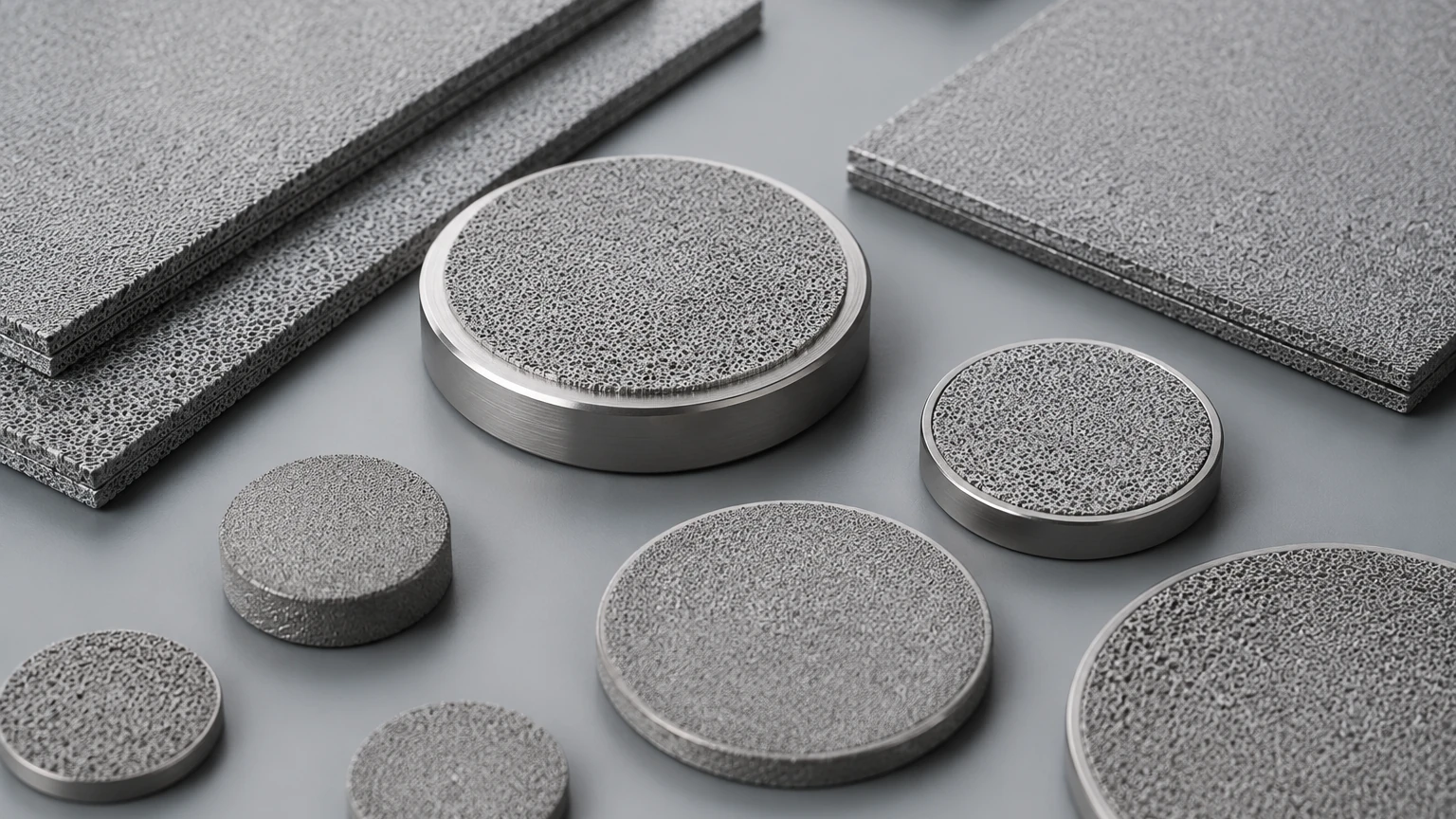
While standard sheets are available, most industrial applications require customized shapes. Sinter plates can be precision-cut using CNC laser or waterjet technology into discs, squares, or complex geometries. Furthermore, they can be rolled and welded into pleated or cylindrical cartridges. When sourcing from a manufacturer like Kaifil, providing exact dimensional tolerances and edge-finishing requirements (such as deburring or framing) is essential for a proper fit in the filter housing.
Common Applications Across Industries
The versatility of the sinter plate makes it a staple in various sectors where precision and durability are non-negotiable.
* Chemical and Petrochemical: Used for the filtration of aggressive solvents, polymers, and the recovery of precious metal catalysts. The ability to clean and reuse the plates makes them more cost-effective than disposable alternatives in high-volume processes.
* Food and Beverage: Sinter plates are utilized in steam filtration for sterilization, as well as in the carbonation and aeration of beverages. Their stainless steel construction ensures compliance with food safety standards and resistance to Clean-in-Place (CIP) chemicals.
* Pharmaceuticals: In the production of Active Pharmaceutical Ingredients (APIs), sinter plates provide the necessary purity for solvent filtration and gas sparging. Their smooth surface and lack of binders prevent extractables and leachables from contaminating the product.
* Fluidization and Aeration: Beyond filtration, sinter plates are used as fluidizing media in silos and transport systems for powders. The uniform pore distribution ensures an even flow of air, preventing "channeling" and ensuring the smooth movement of bulk solids.
Maintenance, Cleaning, and Replacement Cycles
One of the most significant advantages of a sinter plate is its cleanability. Unlike depth filters that trap contaminants within a complex matrix, the surface-loading nature of many sinter plate designs allows for effective cleaning.
Cleaning Methodologies
Depending on the nature of the contaminant, several cleaning methods can be employed:
* Backwashing/Backpulsing: Using a reverse flow of clean fluid or gas to dislodge particles from the surface.
* Ultrasonic Cleaning: Utilizing high-frequency sound waves in a cleaning solution to remove fine particles from deep within the mesh layers.
* Chemical Cleaning: Soaking the plate in solvents, acids, or caustic solutions to dissolve organic or inorganic fouling. This is only possible due to the high chemical resistance of the stainless steel.
* Thermal Burn-off: In cases of heavy organic loading (such as polymer filtration), controlled heating can be used to carbonize and remove the contaminants.
Determining Replacement Cycles
While sinter plates are highly durable, they are not infinite. Replacement should be considered if the "clean" pressure drop begins to rise significantly after successive cleaning cycles, indicating permanent fouling or "blinding" of the pores. Additionally, any signs of mechanical fatigue, such as cracking or delamination of the layers, necessitate immediate replacement to prevent process contamination.
Sourcing and Customization with Kaifil
For technical professionals, the process of procuring a sinter plate involves more than just selecting a micron rating. It requires a collaborative approach with a manufacturer that understands the complexities of fluid dynamics and material science. Kaifil provides comprehensive support in the design and production of custom filtration components, ensuring that each product is tailored to the specific demands of the end-use application.
By leveraging advanced manufacturing capabilities, Kaifil can produce sinter plates with specific permeability characteristics, specialized alloy compositions, and precise mechanical tolerances. Whether you are designing a new filtration system or seeking to optimize an existing process, our engineering team is available to provide technical guidance and high-quality filtration solutions. To explore our full range of capabilities and discuss your project requirements, please Review product options and application support.
In conclusion, the sinter plate is an essential component for any industrial process requiring high-strength, high-precision filtration. By focusing on the engineering fundamentals—from layer construction to material selection and cleaning protocols—engineers can ensure long-term operational success and a lower total cost of ownership for their filtration systems.
