


Sintered Bronze Filters
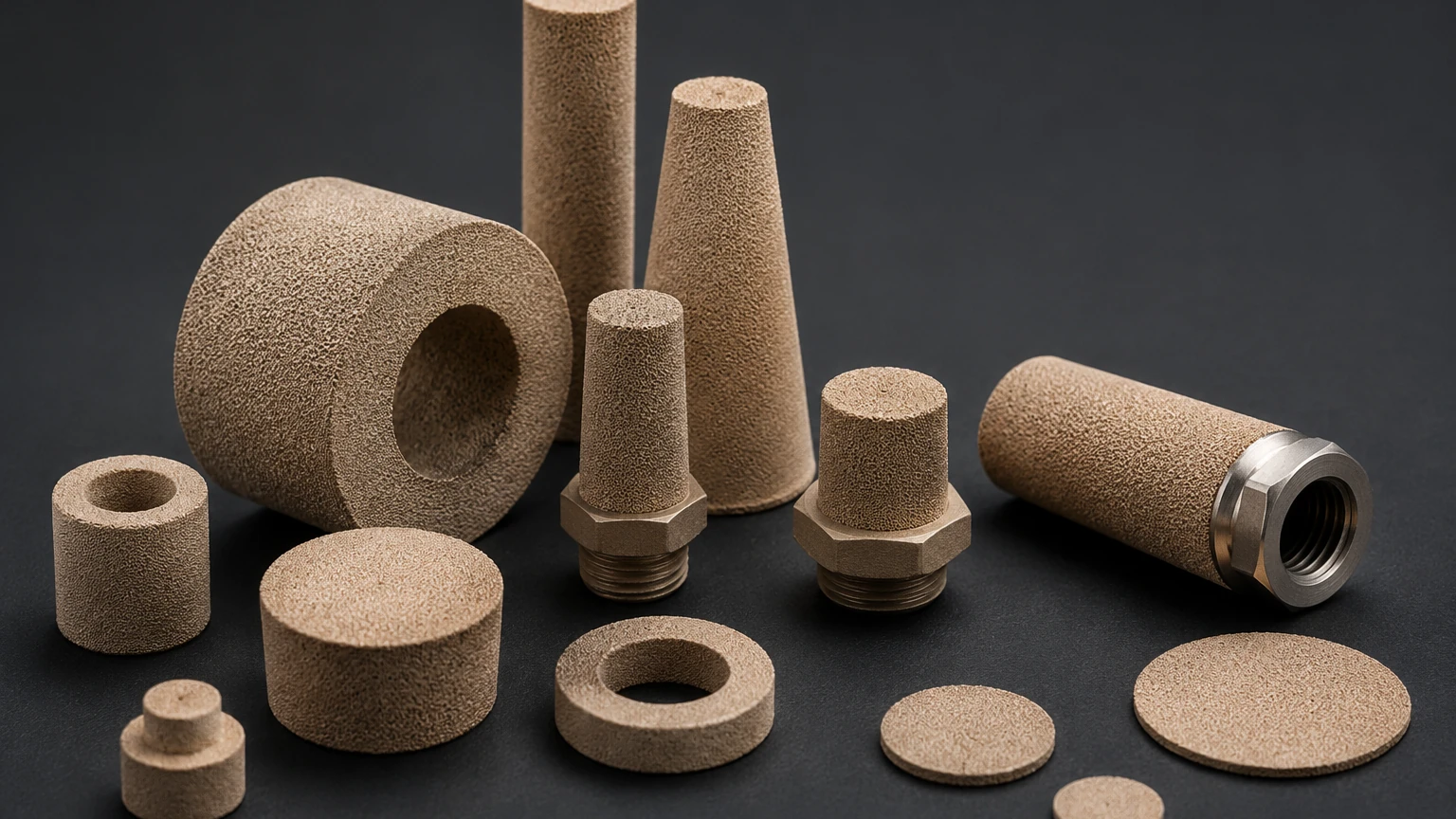
In the landscape of industrial filtration, sintered bronze filters represent a specialized category of porous metal components designed for high-efficiency depth filtration, fluid control, and noise reduction. Produced through the process of powder metallurgy, these filters are valued for their structural integrity, precise pore size control, and excellent thermal conductivity. For engineers and procurement teams, understanding the technical nuances of sintered bronze is essential for optimizing system performance and ensuring the longevity of downstream equipment.
While many industrial applications demand the extreme corrosion resistance of stainless steel, sintered bronze remains a cost-effective and highly functional choice for specific pneumatic, hydraulic, and gas-handling environments. This guide examines the engineering principles, selection criteria, and operational considerations associated with sintered bronze filtration technology.
Understanding the Sintering Process for Bronze Filters
The performance of a sintered bronze filter is fundamentally determined by its manufacturing process. Sintering is a thermal treatment that bonds metallic powder particles together without melting them to the point of liquefaction. For bronze filters, the primary material is typically a spherical bronze powder, often a tin-bronze alloy such as CuSn10 (90% copper and 10% tin).
Powder Selection and Compaction
The process begins with the selection of spherical bronze powder. The shape of the powder is critical; spherical particles allow for more uniform pore distribution and predictable flow characteristics compared to irregular or dendritic powders. These particles are loaded into a mold—often through gravity filling or isostatic pressing—to achieve the desired shape, such as discs, cones, cylinders, or complex custom geometries.
The Thermal Bond
Once shaped, the "green" component is placed in a sintering furnace with a controlled atmosphere. The temperature is raised to just below the melting point of the bronze alloy. At this temperature, atomic diffusion occurs at the contact points between the particles, creating metallurgical bonds known as "necks." These necks provide the structural strength of the filter while leaving the interstitial spaces between the particles open to form a network of interconnected pores.
Pore Size Control
The resulting porosity is a function of the powder particle size and the sintering parameters (time, temperature, and pressure). By using larger powder particles, manufacturers create larger pores for high-flow applications. Conversely, fine powders result in tight pore structures for high-precision filtration. This level of control allows for the production of filters with specific micron ratings, typically ranging from 1 micron to over 100 microns.
Key Performance Characteristics of Sintered Bronze
Sintered bronze filters offer a unique combination of physical and chemical properties that make them suitable for demanding industrial environments. When evaluating these components, engineers must consider how these characteristics align with their specific application requirements.
Structural Rigidity and Durability
Unlike fabric or paper filters, sintered bronze is self-supporting. It can withstand significant differential pressures without deforming or collapsing. This rigidity eliminates the need for internal support cores in many designs, simplifying the overall assembly. The metallic bond also ensures that there is no media migration—a common failure mode in fiber-based filters where small fragments of the filter material break off and contaminate the fluid stream.
Thermal Stability and Conductivity
Bronze has excellent thermal conductivity and can operate at temperatures up to 200°C (approx. 400°F) in standard industrial environments. While this is lower than the temperature limits of stainless steel, it is more than sufficient for most pneumatic and hydraulic applications. Furthermore, the material's ability to dissipate heat quickly makes it an ideal choice for flame arrestors and heat exchange components.
Corrosion Resistance in Specific Media
Bronze is naturally resistant to atmospheric corrosion and is particularly effective in applications involving salt water, oils, and various hydraulic fluids. However, it is susceptible to attack by strong acids and certain sulfur-bearing compounds. In environments where chemical compatibility is a concern, engineers often transition to stainless steel solutions, such as those found on the Main Page of specialized manufacturers, to ensure long-term reliability.
Industrial Applications and Use Cases
Sintered bronze filters are utilized across a broad spectrum of industries, primarily where air or fluid must be cleaned, diffused, or silenced.
Pneumatic Systems and Silencers
One of the most common uses for sintered bronze is in pneumatic mufflers and silencers. When high-pressure air is exhausted from valves or cylinders, it creates significant noise and can carry oil mist or debris. Sintered bronze components diffuse the air stream, reducing noise levels to meet OSHA standards while simultaneously filtering out contaminants. Their high porosity ensures that backpressure is kept to a minimum, preventing loss of efficiency in the pneumatic circuit.
Hydraulic Fluid Filtration
In hydraulic systems, sintered bronze elements are often used as breather filters for reservoirs or as last-chance filters before sensitive components like servo valves. They protect the system from particulate ingress while allowing the fluid to expand and contract as temperatures change. Their ability to handle high-viscosity fluids makes them particularly useful in heavy machinery and industrial presses.
Gas Diffusion and Aeration
The uniform pore structure of sintered bronze makes it an excellent medium for gas diffusion. In water treatment or chemical processing, these filters can be used to inject fine bubbles of air, oxygen, or ozone into a liquid. The fine bubble size increases the surface area contact, improving the efficiency of gas absorption or chemical reactions.
Flame Arrestors
Due to its high thermal mass and conductivity, sintered bronze can act as a flame arrestor. In systems transporting flammable gases, a sintered bronze disc can quench a flame front by absorbing the heat energy and reducing the gas temperature below its ignition point, preventing a catastrophic explosion.
Critical Selection Criteria for Engineers
Selecting the correct sintered bronze filter requires a detailed analysis of the operating environment and performance goals. Engineers should focus on the following technical parameters during the specification process.
Micron Rating and Filtration Efficiency
The micron rating indicates the size of the particles the filter is designed to capture. It is important to distinguish between nominal and absolute ratings. A nominal rating refers to the ability to retain a major percentage of particles of a certain size, while an absolute rating indicates the size of the largest spherical particle that can pass through the filter. For sintered bronze, the tortuous path created by the spherical powder provides excellent depth filtration, capturing particles throughout the thickness of the media.
Pressure Drop (Delta P)
Pressure drop is the difference in pressure between the inlet and outlet of the filter. It is influenced by the fluid's viscosity, the flow velocity, and the filter's permeability. A high pressure drop can lead to system inefficiency and increased energy consumption. Engineers must balance the need for fine filtration (which increases pressure drop) with the requirement for high flow rates. Using Darcy’s Law for porous media can help in calculating expected pressure drops during the design phase.
Flow Rate and Velocity
The total surface area of the filter determines the maximum allowable flow rate. To prevent premature clogging and excessive pressure drop, the flow velocity through the filter media (face velocity) should be kept within manufacturer-recommended limits. If a high flow rate is required in a compact space, pleated stainless steel designs may be a more appropriate alternative than standard bronze shapes.
Environmental Compatibility
Before finalizing a selection, the chemical composition of the fluid and the surrounding atmosphere must be verified. While bronze is robust, it can undergo de-zincification or stress-corrosion cracking in certain chemical environments. If the application involves aggressive cleaning agents or high-purity pharmaceutical processes, stainless steel filtration components are typically the industry standard.
Maintenance, Cleaning, and Replacement Cycles
The total cost of ownership for a filtration system is heavily influenced by the maintenance requirements of the filter elements. Sintered bronze filters are generally considered cleanable, though the effectiveness of cleaning depends on the nature of the contaminant.
Cleaning Methodologies
1. Backwashing: For surface-loaded contaminants, reversing the flow of the fluid can dislodge particles from the filter surface.
2. Solvent Cleaning: If the filter is clogged with oils or waxes, soaking in a compatible solvent can dissolve the buildup.
3. Ultrasonic Cleaning: This is the most effective method for depth-loaded filters. High-frequency sound waves create cavitation bubbles that penetrate deep into the pores, dislodging fine particulates that other methods cannot reach.
4. Burn-off: In some cases, organic contaminants can be removed by heating the filter in a controlled furnace, though care must be taken not to exceed the sintering temperature of the bronze.
When to Replace
Despite being cleanable, sintered bronze filters will eventually reach a point where the original permeability cannot be restored. This is often due to the accumulation of insoluble inorganic matter or physical wear from repeated cleaning cycles. Monitoring the pressure drop across the filter is the most reliable way to determine replacement intervals. Once the "clean" pressure drop after maintenance exceeds a pre-defined threshold (e.g., 50% higher than the initial new state), the element should be replaced to maintain system efficiency.
Sintered Bronze vs. Stainless Steel Filtration
While this guide focuses on bronze, it is important to understand where it stands in relation to stainless steel—the other primary material used in sintered metal filtration. Companies like Kaifil specialize in stainless steel solutions because they offer a broader range of chemical compatibility and higher temperature thresholds.
| Feature | Sintered Bronze | Sintered Stainless Steel |
| :— | :— | :— |
| Max Temperature | ~200°C | ~450°C (Oxidizing) / 600°C (Reducing) |
| Corrosion Resistance | Good (Seawater, Oils) | Excellent (Acids, Alkalis, High Purity) |
| Cost | Generally Lower | Generally Higher |
| Strength | High | Very High |
| Common Use | Pneumatics, Mufflers | Chemical, Food & Bev, Pharma |
For engineers working in the food and beverage or pharmaceutical sectors, stainless steel is often mandatory due to its inert nature and ease of sterilization. However, for general industrial equipment and pneumatic tools, sintered bronze provides a reliable and economical solution.
Procurement Checklist for Industrial Filters
Before contacting a manufacturer or distributor for sintered bronze filters, technical professionals should have the following information ready to ensure an accurate quote and appropriate product selection:
* Fluid Type: Is it gas, liquid, or steam? What is its chemical composition?
* Operating Temperature: What are the normal and maximum peak temperatures?
* Operating Pressure: What is the system pressure and the maximum allowable pressure drop?
* Micron Rating: What is the target particle size for removal?
* Flow Rate: What is the required volume of fluid per unit of time?
* Dimensions: Are there specific space constraints or mounting requirements (e.g., NPT threads, flange mounts)?
* Cleaning Requirements: Will the filter be cleaned on-site, or is it a disposable application?
By addressing these factors, engineering teams can secure filtration components that not only protect their equipment but also optimize the overall efficiency of their industrial processes. For more complex requirements or specialized material needs, consulting with a manufacturer that offers customized OEM solutions is the most effective path to achieving precise filtration performance.
