


Sintered Mesh Filter
In industrial filtration, the ability to maintain structural integrity under high pressure while providing precise particle retention is a critical engineering requirement. The sintered mesh filter represents a sophisticated solution to these challenges, utilizing advanced metallurgy to transform standard woven wire mesh into a rigid, porous material. Unlike traditional single-layer screens or fiber-based media, sintered mesh offers a combination of mechanical strength, chemical resistance, and predictable permeability that is essential for demanding B2B applications in chemical processing, pharmaceuticals, and heavy industry.
Understanding the Sintering Process and Filter Construction
A sintered mesh filter is manufactured through a process known as vacuum sintering. This involves stacking multiple layers of woven stainless steel wire mesh and subjecting them to high temperature and pressure in a vacuum furnace. Through diffusion bonding, the contact points of the individual wires fuse together at a molecular level without the need for binders or filler metals. This results in a permanent, integrated structure that retains the precise pore size of the original weave while gaining the rigidity of a solid metal plate.
The Multi-Layer Configuration
Most industrial sintered mesh filters utilize a multi-layer structure, typically ranging from two to over seven layers. The standard five-layer configuration is the most common for general industrial use, consisting of:
1. The Protection Layer: The outermost layer that shields the finer internal meshes from mechanical damage during handling and installation.
2. The Control Layer: This is the functional heart of the filter. It consists of a precision-woven wire mesh that dictates the micron rating and filtration accuracy.
3. The Distribution Layer: Positioned behind the control layer, this mesh ensures even flow distribution across the filter surface, preventing localized clogging and optimizing the effective filtration area.
4. The Reinforcement Layers (Support Layers): These layers consist of coarser, heavy-duty mesh that provides the structural framework necessary to withstand high differential pressures and mechanical stresses.
By varying the number of layers and the specific weave patterns used (such as plain weave, dutch weave, or twilled weave), engineers can customize the sintered mesh filter to meet specific flow rates and pressure drop requirements.
Key Performance Characteristics of Sintered Mesh Filters
When evaluating filtration media, engineers must look beyond simple micron ratings. The performance of a sintered mesh filter is defined by its physical stability and its behavior under operational loads.
Mechanical Strength and Stability
Because the wires are bonded at every intersection, the pore shapes are fixed. This prevents "pore migration," a common failure in non-sintered mesh where wires shift under pressure, allowing oversized particles to pass through. Sintered filters maintain their filtration accuracy even when subjected to high-pressure pulses or reverse flow during cleaning cycles.
Thermal and Chemical Resistance
Typically manufactured from 304 or 316L stainless steel, sintered mesh filters are inherently resistant to corrosion and high temperatures. In specialized environments, exotic alloys like Hastelloy, Monel, or Inconel can be used. These materials allow the filters to operate in temperatures exceeding 480°C (900°F) and in highly acidic or alkaline environments where polymer-based filters would degrade.
High Permeability and Low Pressure Drop
Despite its rigid structure, the sintered mesh filter maintains a high porosity. This ensures that the initial pressure drop across the filter is kept to a minimum, reducing the energy requirements for pumps and ensuring a more efficient process flow. For detailed specifications on flow-to-pressure ratios, technical teams often refer to the Main Page of the manufacturer’s technical documentation to align filter selection with system pump curves.
Engineering Considerations for Filter Selection
Selecting the correct sintered mesh filter requires a thorough analysis of the fluid dynamics and the nature of the contaminants. Engineers should consider the following factors to ensure optimal performance and cost-effectiveness.
Micron Rating: Absolute vs. Nominal
It is vital to distinguish between nominal and absolute micron ratings. A sintered mesh filter typically offers an absolute rating, meaning that 100% of particles larger than the specified pore size are captured. This is critical in pharmaceutical and food processing applications where even minor contamination can lead to batch failure. Common absolute ratings for sintered mesh range from 1 micron to 200 microns.
Viscosity and Flow Rate
The viscosity of the fluid significantly impacts the pressure drop. Highly viscous fluids, such as polymer melts or heavy oils, require filters with larger surface areas or coarser support layers to maintain adequate flow. Calculating the "clean pressure drop" is the first step in sizing a filter housing and element.
Dirt Holding Capacity
While sintered mesh is thinner than depth-style filters (like sintered metal powder or fiber felt), its surface filtration mechanism allows for easier cleaning. However, if the fluid contains a high concentration of deformable or gelatinous particles, the mesh may blind quickly. In such cases, a pleated sintered mesh design can be used to increase the surface area within the same footprint, effectively extending the service life between cleaning cycles.
Industrial Applications and Use Cases
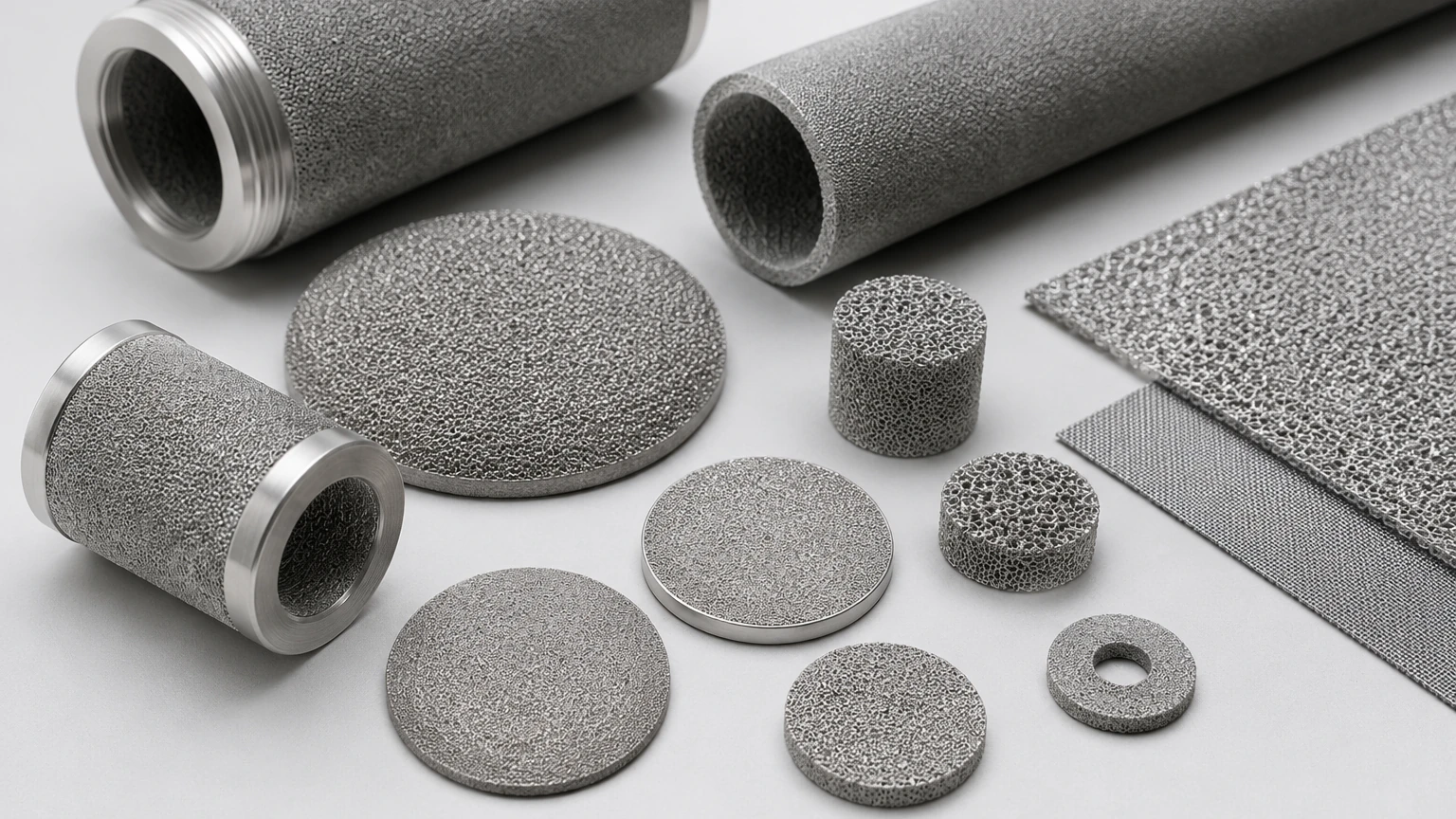
The versatility of the sintered mesh filter makes it a staple in various high-stakes industrial sectors. Its ability to be fabricated into various shapes—including cylinders, discs, cones, and pleated cartridges—allows it to be integrated into existing hardware seamlessly.
Chemical and Petrochemical Processing
In the chemical industry, filters must withstand aggressive solvents and high-pressure catalysts. Sintered mesh is used for catalyst recovery, where the filter must capture expensive catalyst particles from a high-temperature gas or liquid stream and then release them through backwashing.
Pharmaceutical and Biotechnology
Cleanliness and sterilization are paramount in pharmaceutical manufacturing. Sintered mesh filters are ideal because they do not shed fibers (media migration) and can withstand repeated Autoclaving or Steam-in-Place (SIP) cycles. They are frequently used in the filtration of active pharmaceutical ingredients (APIs) and in sterile air venting.
Food and Beverage Production
For the food industry, 316L stainless steel sintered filters provide a hygienic solution for filtering steam, water, and syrups. Their compliance with food safety standards and the ability to be cleaned using CIP (Clean-in-Place) chemicals makes them a low-maintenance choice for high-volume production lines.
Hydraulic and Aerospace Systems
In hydraulic systems, ultra-fine filtration is necessary to protect sensitive valves and actuators. Sintered mesh filters provide the high-collapse pressure ratings required to handle the sudden pressure spikes common in hydraulic circuits.
Maintenance, Cleaning, and Operational Longevity
One of the primary B2B advantages of a sintered mesh filter is that it is a permanent component rather than a disposable one. This significantly reduces the total cost of ownership (TCO) over the life of the equipment.
Cleaning Methodologies
Depending on the contaminant, several cleaning methods can be employed to restore the filter to its original differential pressure:
* Ultrasonic Cleaning: The most effective method for removing fine particles trapped within the mesh layers. High-frequency sound waves create cavitation bubbles that dislodge contaminants.
* Backwashing/Back-pulsing: Utilizing a reverse flow of clean fluid or gas to push particles out of the mesh. This can often be done in-situ without removing the filter from the housing.
* Chemical Cleaning: Using surfactants, acids, or caustics to dissolve organic or inorganic deposits. This is common in the food and chemical industries.
* Hydrodynamic Cleaning: High-pressure water jets can be used for surface-loaded contaminants.
Replacement Indicators
While these filters are durable, they are not indestructible. A filter should be inspected or replaced if the "clean pressure drop" begins to rise after successive cleaning cycles, indicating permanent fouling or "blinding." Additionally, any signs of mechanical deformation or breach in the mesh layers necessitate immediate replacement to prevent downstream contamination.
Customization and OEM Solutions for Specialized Filtration
Every industrial process has unique variables, and off-the-shelf filtration products often fall short of specific engineering requirements. Kaifil specializes in providing customized stainless steel filtration solutions that address these specific needs. From initial material selection to the final fabrication of complex geometries, customization ensures that the filter performs reliably within its intended environment.
Engineering Collaboration
When developing a custom sintered mesh filter, engineers must confirm the operating temperature, maximum differential pressure, fluid chemistry, and the desired particle retention efficiency. By working closely with a manufacturer that understands the nuances of wire mesh weave and sintering parameters, purchasing teams can acquire components that optimize process uptime.
Customization options often include:
* Custom End Fittings: Threaded connections, flanges, or NPT fittings integrated directly into the filter element.
* Reinforced Cores: For applications with extreme pressure differentials, internal perforated cores can be added for additional support.
* Pleated Designs: To maximize surface area in space-constrained housings.
* Specialty Coatings: In some cases, coatings can be applied to the sintered mesh to enhance hydrophobicity or further improve corrosion resistance.
For technical professionals looking to specify filtration components for new projects or to optimize existing systems, reviewing the capabilities on the Main Page of a dedicated manufacturer like Kaifil provides the necessary foundation for informed decision-making. High-performance filtration is not just about capturing particles; it is about ensuring the continuity, safety, and efficiency of the entire industrial process.
