


Skid Filtration
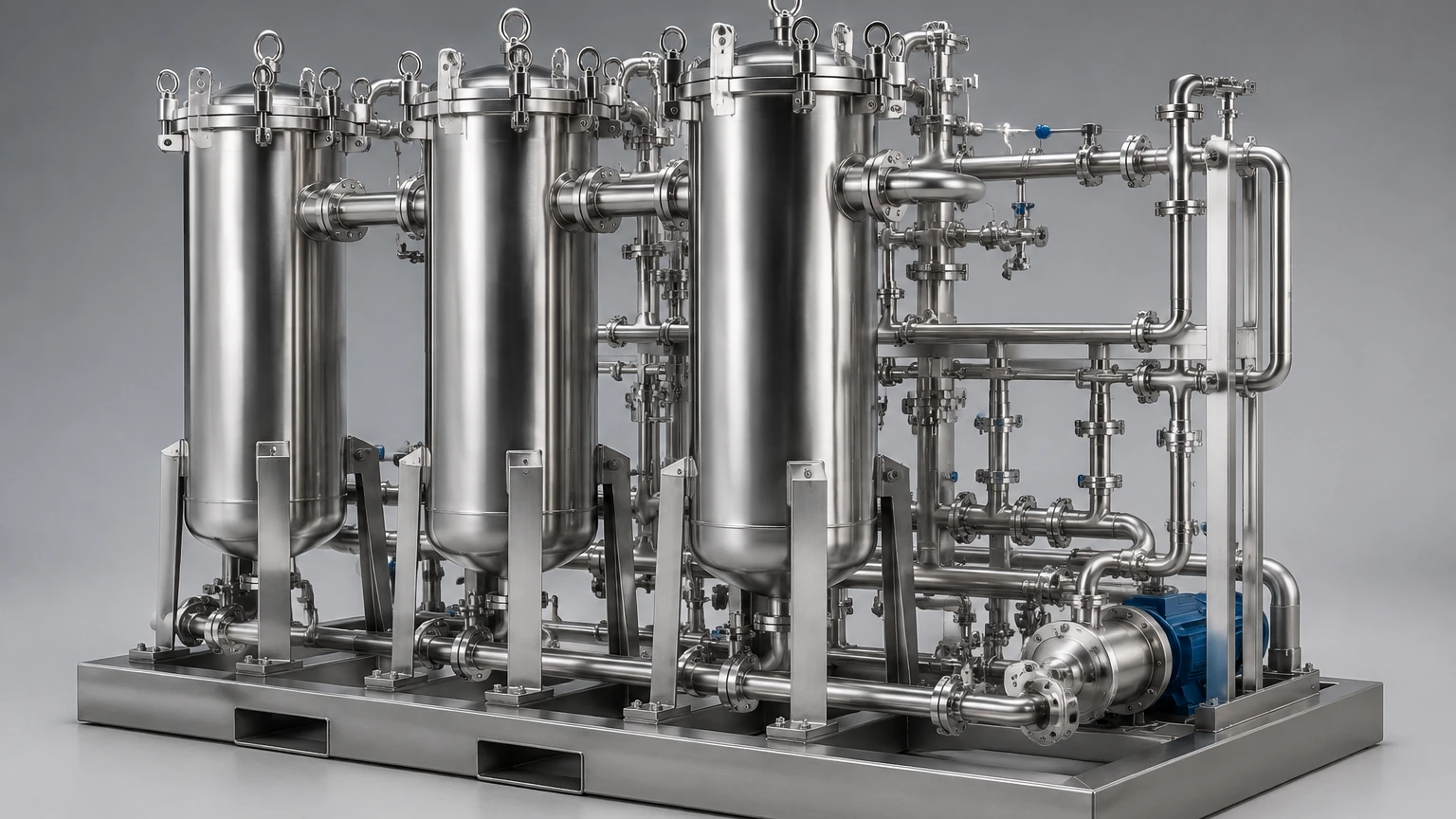
In modern industrial processing, the demand for modularity, efficiency, and rapid deployment has led to the widespread adoption of skid filtration systems. A filtration skid is a self-contained, pre-assembled unit that integrates filtration vessels, piping, valves, instrumentation, and often pumps and control systems onto a single structural frame. For engineers and facility managers in sectors such as chemical processing, pharmaceuticals, and water treatment, understanding the technical nuances of skid filtration is essential for optimizing process flow and ensuring long-term reliability.
Skid-mounted systems offer a "plug-and-play" solution, reducing on-site installation time and minimizing the risk of assembly errors. However, the performance of these systems is heavily dependent on the quality and specification of the internal filtration components. As a professional manufacturer, Kaifil specializes in the precision stainless steel filter cartridges and wire mesh components that form the core of high-performance skid filtration units.
Engineering Principles of Skid Filtration Systems
The design of a skid filtration system begins with a comprehensive analysis of the hydraulic requirements and the physical properties of the fluid being processed. Unlike static, built-in-place filtration banks, skid systems must balance high-efficiency filtration with a compact footprint.
Structural Integrity and Layout
Engineers must consider the structural rigidity of the skid frame, typically constructed from carbon steel or stainless steel, to withstand the vibrations of pumps and the weight of fluid-filled vessels. The layout is designed to allow for easy access to filter housings for maintenance and element replacement. In high-pressure applications, the piping must be engineered to minimize turbulent flow, which can lead to increased pressure drops and potential damage to sensitive filter media.
Modular Integration
One of the primary advantages of skid filtration is its ability to be integrated into existing process lines with minimal disruption. This requires precise engineering of inlet and outlet connections. For many industrial applications, the use of stainless steel components is non-negotiable due to the need for chemical compatibility and resistance to high temperatures. By utilizing standardized Main Page resources for component selection, engineers can ensure that the internal filter elements meet the specific mechanical tolerances required by the skid assembly.
Selecting Filtration Media for Skid-Mounted Units
The choice of filter media is the most critical factor in determining the success of a skid filtration project. While disposable polymer filters are common in some light-duty applications, industrial-grade skids frequently rely on stainless steel wire mesh and sintered metal cartridges for their durability and cleanability.
Stainless Steel Wire Mesh Filters
Wire mesh filters are ideal for removing coarse to fine particulates in high-flow environments. They offer high mechanical strength and can be manufactured in various weaves (such as plain, twill, or Dutch weave) to achieve specific filtration ratings. In a skid filtration context, these elements are often used as pre-filters to protect more sensitive downstream equipment or as the primary filtration stage in hydraulic and water treatment systems.
Sintered Metal Cartridges
For applications requiring high precision and the ability to withstand extreme differential pressures, sintered stainless steel cartridges are the preferred choice. These elements are created by bonding layers of wire mesh or metal powder through a thermal process, resulting in a porous structure that provides excellent depth filtration. Sintered media are particularly effective in chemical processing and pharmaceutical applications where purity and structural integrity are paramount.
Performance Metrics: Flow Rate, Efficiency, and Pressure Drop
When evaluating skid filtration solutions, engineers must look beyond the physical dimensions of the skid and focus on the performance characteristics of the filter elements.
Understanding Micron Ratings
Filtration accuracy is typically measured in microns (μm). It is important to distinguish between nominal and absolute filtration ratings. A nominal rating indicates the ability of the filter to retain a majority of particles of a certain size, while an absolute rating guarantees the retention of nearly all particles (typically 99.9% or higher) at that size. In a skid filtration system, the choice between nominal and absolute filtration depends on the sensitivity of the downstream process.
Managing Differential Pressure (ΔP)
Pressure drop is the difference in pressure between the inlet and outlet of the filter. As the filter element captures contaminants, the differential pressure increases. A well-designed skid filtration system includes instrumentation to monitor ΔP in real-time. Engineers must select filter media with a high dirt-holding capacity to extend the intervals between cleaning or replacement, thereby reducing the total cost of ownership. High-quality stainless steel filters from Kaifil are engineered to maintain low initial pressure drops, ensuring energy-efficient operation of the system pumps.
Customization and OEM Integration in Skid Design
No two industrial processes are identical, which makes customization a vital aspect of skid filtration. OEM (Original Equipment Manufacturer) capabilities allow for the development of filtration components that are tailored to the specific geometry and performance requirements of a unique skid design.
Tailored Filter Geometry
In many skid-mounted units, space is at a premium. Custom-designed filter cartridges can be manufactured in non-standard lengths, diameters, and connection types (such as NPT, flange, or quick-connect) to fit into compact housings. This flexibility allows engineers to maximize the filtration surface area within a limited volume.
Material Specification for Harsh Environments
While 304 stainless steel is suitable for many applications, 316L stainless steel is often required for its superior corrosion resistance, particularly in environments involving chlorides or acidic chemicals. For specialized skid filtration projects, materials like Monel, Inconel, or Hastelloy may be used for the filter elements to ensure longevity in highly aggressive media. Working with a manufacturer that understands these material properties is essential for ensuring the reliability of the skid.
Maintenance, Cleaning, and Total Cost of Ownership
The total cost of a skid filtration system is not just the initial purchase price; it includes the ongoing costs of maintenance, replacement parts, and energy consumption. Stainless steel filtration components offer a significant advantage in this regard due to their cleanability.
Clean-In-Place (CIP) and Backwashing
Many skid filtration systems are designed for automated cleaning. Backwashing involves reversing the flow of fluid through the filter to dislodge accumulated debris. In more intensive applications, Clean-In-Place (CIP) systems use chemical agents to clean the filter elements without removing them from the housing. Stainless steel wire mesh and sintered elements are robust enough to withstand these cleaning processes repeatedly, whereas disposable filters must be discarded and replaced, leading to higher waste and operational costs.
Replacement Cycles and Durability
The durability of metal filters means that the replacement cycle is significantly longer than that of synthetic media. In a skid filtration setup, this translates to less downtime and lower labor costs. When evaluating the total cost of ownership, engineers should factor in the lifespan of the filter elements and the potential for recycling or refurbishing stainless steel components.
Technical Considerations Before Procurement
Before finalizing the specifications for a skid filtration system, purchasing teams and engineers should confirm several key data points to ensure the system will perform as expected:
1. Fluid Characteristics: Confirm the viscosity, temperature, and chemical composition of the fluid. This dictates the material selection for both the skid piping and the filter elements.
2. Contaminant Profile: Identify the type, shape, and concentration of the solids to be removed. This information is critical for selecting the correct weave and micron rating of the wire mesh.
3. Flow Requirements: Define the minimum and maximum flow rates. The filtration area must be sized to handle peak flow without exceeding the maximum allowable pressure drop.
4. Regulatory Compliance: In industries like food and beverage or pharmaceuticals, ensure that all wetted parts meet FDA or other relevant sanitary standards.
5. Future Scalability: Consider whether the skid frame should allow for the addition of more filtration stages or larger vessels if production capacity increases in the future.
By addressing these technical factors early in the design phase, organizations can implement a skid filtration solution that provides reliable, high-performance filtration for years to come. For more detailed technical specifications and support in selecting the right components for your next project, please visit the Main Page to explore our range of custom stainless steel filtration solutions.
