


Slotted Pipes
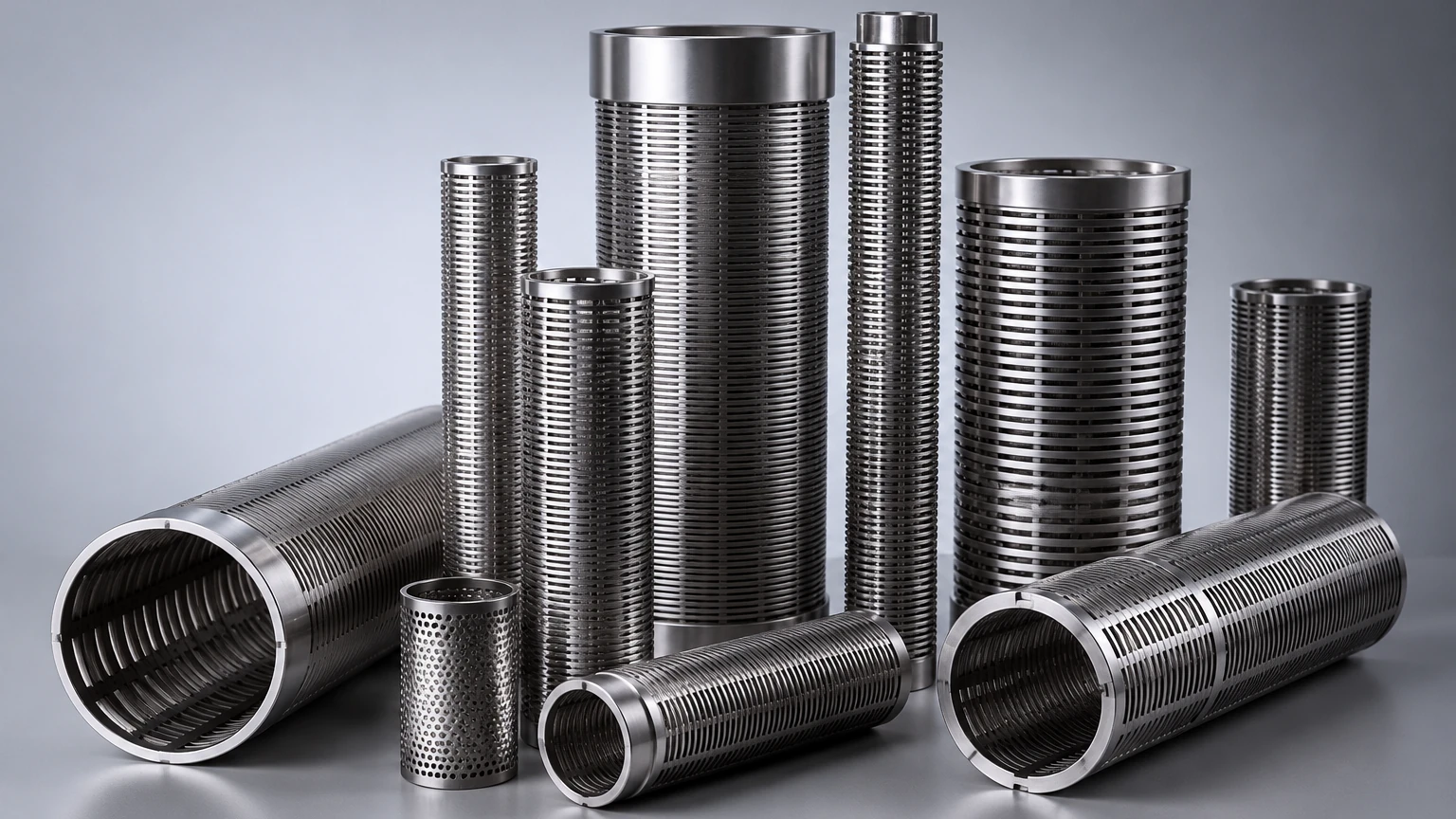
In the landscape of industrial filtration and fluid management, slotted pipes serve as a fundamental structural and functional component. Unlike fine wire mesh or sintered materials, slotted pipes provide a unique combination of high mechanical strength and precise primary filtration. For engineers and procurement specialists, selecting the right slotted pipe involves balancing hydraulic performance, structural integrity, and material compatibility. As a manufacturer specializing in custom stainless steel filtration solutions, Kaifil provides the technical expertise required to navigate these engineering variables.
Industrial slotted pipes are typically produced by creating longitudinal or transverse openings in a base pipe. These slots allow fluids to pass through while retaining larger particles, such as sand, gravel, or solid debris. While the concept is straightforward, the execution—involving laser cutting, milling, or punching—dictates the pipe's performance in high-pressure or corrosive environments.
Technical Engineering of Slotted Pipes
The performance of slotted pipes is governed by several geometric and mechanical factors. When designing a filtration system, engineers must consider the slot configuration, which directly impacts the flow rate and the pipe's ability to withstand external loads.
Slot Geometry and Patterns
Slots are generally categorized by their orientation and shape. The most common configurations include:
* Longitudinal Slots: These run parallel to the axis of the pipe. They are often preferred for their ease of manufacturing and are suitable for applications where axial strength is a priority.
* Transverse Slots: These run perpendicular to the pipe axis. While less common in some standard applications, they can offer specific advantages in certain flow regimes.
* Staggered vs. Straight Patterns: A staggered pattern distributes the slots more evenly across the surface area, which can help maintain the structural integrity of the pipe under collapse pressure compared to a straight-line pattern.
Manufacturing Methods
The method used to create the slots significantly affects the precision and the metallurgical properties of the pipe.
1. Laser Cutting: This is the modern standard for high-precision applications. Laser cutting allows for extremely narrow slot widths (down to 0.1mm or less) with high repeatability. It produces clean edges and minimizes the heat-affected zone (HAZ), which is critical for maintaining the corrosion resistance of stainless steel.
2. Mechanical Milling: Used for wider slots or thicker-walled pipes, milling involves physical cutting tools. While effective, it is generally slower and may leave burrs that require secondary finishing.
3. Plasma Cutting: Often used for larger pipes where high precision is less critical than speed and cost-effectiveness.
Material Selection for Durability
Material choice is perhaps the most critical factor in determining the service life of slotted pipes. In industrial filtration, stainless steel is the preferred material due to its resistance to oxidation, corrosion, and chemical degradation.
* Grade 304 Stainless Steel: Suitable for general industrial use and water treatment where high levels of chlorides are not present. It offers excellent formability and strength.
* Grade 316/316L Stainless Steel: The addition of molybdenum makes 316 stainless steel significantly more resistant to pitting and crevice corrosion in chloride-rich environments, such as seawater or chemical processing plants. The "L" (low carbon) variant is preferred for welded assemblies to prevent intergranular corrosion.
* Duplex Stainless Steels: For extremely demanding environments, such as high-pressure oil and gas wells or aggressive chemical reactors, duplex grades provide superior yield strength and resistance to stress corrosion cracking.
Calculating Open Area and Hydraulic Performance
One of the primary engineering challenges when specifying slotted pipes is the trade-off between the "open area" and the pipe's structural strength. The open area is the percentage of the pipe's surface that is occupied by slots.
The Open Area Equation
A higher open area reduces the entrance velocity of the fluid, which in turn minimizes pressure drop and reduces the risk of erosion around the slot edges. However, removing too much material weakens the pipe, making it susceptible to collapse under external pressure or buckling under axial loads.
Engineers typically aim for an open area that allows for a laminar flow regime at the slot interface. High entrance velocities can lead to "sand bridging" or premature clogging, as fine particles are forced into the slots at high speeds. By optimizing the slot density and width, Kaifil helps customers achieve a balance that ensures efficient throughput without compromising the pipe's lifespan.
Applications Across Key Industries
Slotted pipes are versatile components used across a wide range of sectors. Their primary role is often as a pre-filter or a support structure for finer filtration media.
Water Well Construction
In water well applications, slotted pipes act as well screens. They prevent the surrounding formation (sand and gravel) from entering the wellbore while allowing water to flow into the pump intake. The slot width must be carefully matched to the grain size of the surrounding aquifer material to prevent "sanding up" of the well.
Oil and Gas Sand Control
In the energy sector, slotted liners are a cost-effective method for sand control in horizontal completions. They are used to maintain the stability of the wellbore and protect downstream equipment from the abrasive effects of produced solids.
Chemical and Petrochemical Processing
Slotted pipes are used in reactors and catalyst vessels to retain catalyst beads while allowing liquid or gas reactants to pass through. In these applications, the precision of the slot width is paramount to prevent the loss of expensive catalyst materials.
Food and Beverage
In the processing of juices, oils, and dairy products, stainless steel slotted pipes serve as primary strainers to remove large organic solids. The smooth surface finish of laser-cut stainless steel is essential for maintaining hygienic standards and facilitating CIP (Clean-In-Place) processes.
Comparison: Slotted Pipes vs. Wedge Wire and Mesh
When evaluating filtration options, it is important to understand when a slotted pipe is the superior choice over other media like wedge wire (V-wire) or woven wire mesh.
| Feature | Slotted Pipe | Wedge Wire | Wire Mesh |
| :— | :— | :— | :— |
| Mechanical Strength | Very High (Base pipe integrity) | High | Low (Requires support) |
| Filtration Precision | Moderate (0.1mm+) | High (0.02mm+) | Very High (Micron level) |
| Clog Resistance | Moderate | Excellent (V-shape) | Low (Surface blinding) |
| Cost-Effectiveness | High for large diameters | Moderate/High | Moderate |
| Customization | High (Slot patterns) | Moderate | High (Weave types) |
Slotted pipes are often chosen when the primary requirement is structural robustness. For example, in deep-sea applications or high-pressure industrial housings, the thick wall of a slotted pipe can withstand forces that would collapse a wedge wire screen or tear a wire mesh filter.
Quality Assurance and Customization at Kaifil
As a professional manufacturer, Kaifil understands that standard off-the-shelf solutions rarely meet the specific needs of complex industrial systems. Customization is at the core of our manufacturing process. When sourcing slotted pipes, engineers should confirm the following technical specifications:
* Slot Width Tolerance: Precision is vital. For a 0.5mm slot, a tolerance of +/- 0.05mm may be required to ensure consistent filtration performance.
* Pipe Grade and Certification: Ensuring the raw material meets ASTM or ISO standards is the first step in quality control.
* Burr Removal and Surface Treatment: For many applications, internal and external deburring is necessary to prevent flow turbulence and ensure safety during handling. Options like pickling, passivating, or electropolishing can further enhance corrosion resistance.
At Kaifil, we work closely with global customers to develop high-performance filter products. From material selection and filtration accuracy to customized designs, our goal is to provide reliable OEM and customized filtration solutions that meet demanding industrial requirements. Whether you are designing a new water treatment system or upgrading a chemical processing line, our team provides the technical support needed to optimize your filtration strategy.
For more information on our full range of stainless steel filtration solutions, including wire mesh filters and precision metal components, please visit our Main Page.
Maintenance and Total Cost of Ownership
While slotted pipes are designed for durability, their long-term value is realized through proper maintenance and selection. The total cost of ownership (TCO) includes not just the initial purchase price, but also the costs associated with downtime, cleaning, and eventual replacement.
Cleaning Protocols
Because slotted pipes are typically made of robust stainless steel, they can be cleaned using aggressive methods that would damage finer media. High-pressure water jetting, chemical soaking, and mechanical brushing are all viable options. In many industrial settings, backwashing (reversing the flow) is used to dislodge particles trapped in the slots.
Replacement Cycles
The lifespan of a slotted pipe depends on the abrasiveness of the fluid and the corrosivity of the environment. Regularly monitoring the pressure drop (differential pressure) across the filter is the most effective way to determine when cleaning or replacement is necessary. A sudden increase in pressure drop usually indicates slot blinding, while a sudden decrease could indicate structural failure or erosion of the slot edges.
Conclusion
Slotted pipes are a critical link in the industrial filtration chain, providing the structural foundation and primary separation necessary for efficient fluid management. By understanding the nuances of slot geometry, material science, and hydraulic flow, engineering teams can specify components that enhance system reliability and reduce operational costs. Kaifil remains committed to delivering precision-engineered stainless steel filtration products that meet the highest standards of the chemical, pharmaceutical, and water treatment industries. To Review product options and application support, explore our technical resources and customized manufacturing capabilities.
