


Small Filter Press
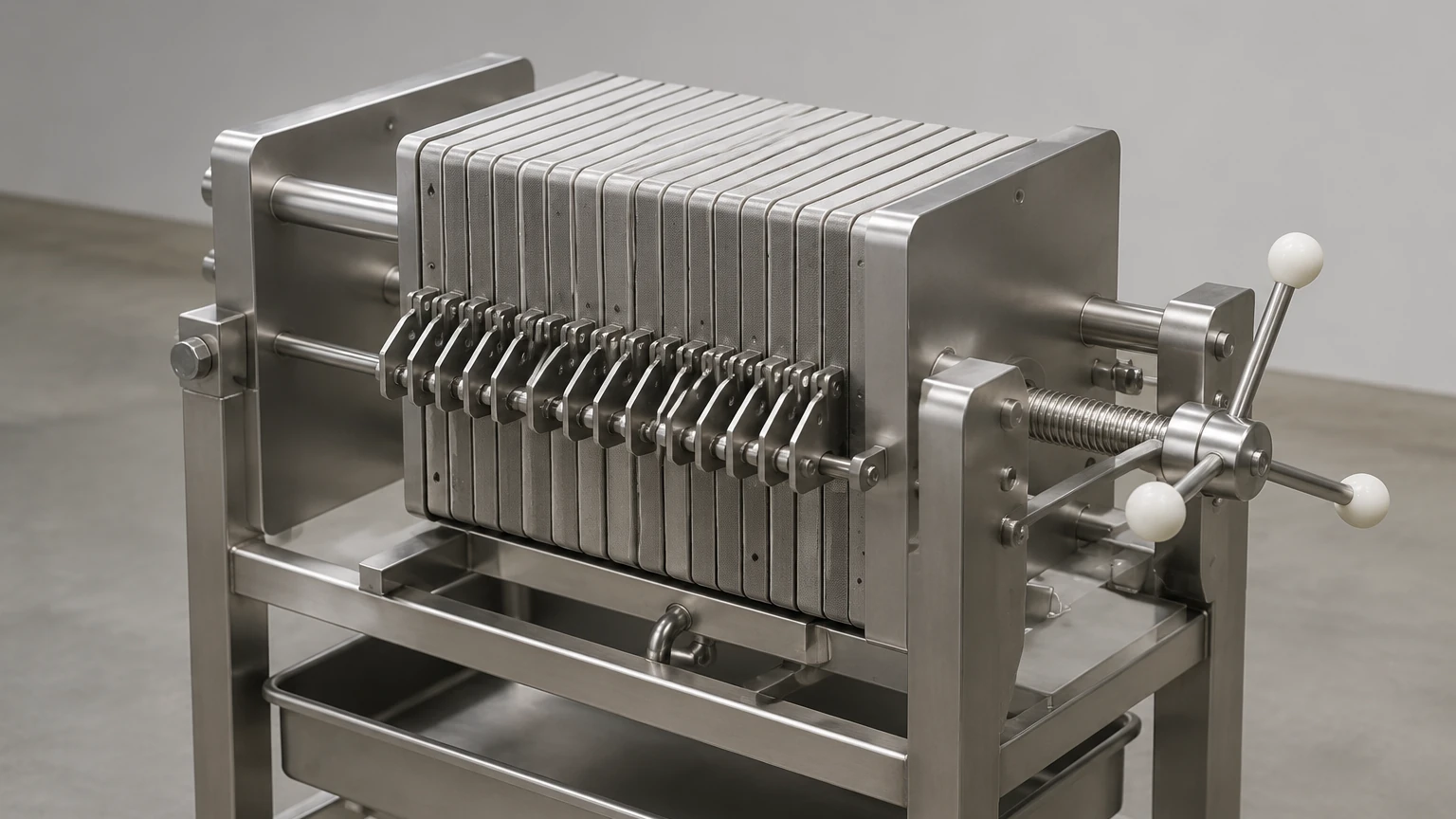
In industrial liquid-solid separation, the small filter press serves as a critical piece of equipment for batch processing, pilot plant testing, and small-scale production environments. Unlike large-scale industrial presses designed for massive wastewater treatment or mining operations, a small filter press is engineered for precision, flexibility, and high-efficiency filtration in sectors where product value is high or volume is limited. For engineers and procurement specialists, selecting the right small filter press involves more than just sizing the frame; it requires a deep understanding of the filtration media, material compatibility, and the specific mechanical requirements of the application.
As a specialized manufacturer of stainless steel filtration solutions, Kaifil understands that the performance of any filter press is fundamentally tied to the quality of its internal components. Whether the application involves pharmaceutical synthesis, food-grade oil purification, or chemical catalyst recovery, the integration of high-performance wire mesh filters and precision-engineered cartridges is what determines the final clarity and yield of the process.
Understanding the Role of Small Filter Presses in Industrial Applications
A small filter press is typically defined by its plate size—often ranging from 250mm to 630mm—and its chamber volume. These units are indispensable in laboratories and R&D facilities where they are used to determine the filtration characteristics of a slurry before scaling up to full production. By analyzing cake formation, filtration speed, and filtrate clarity on a smaller scale, engineers can calculate the necessary parameters for larger installations.
Beyond R&D, these presses are frequently employed in batch-oriented industries. In the pharmaceutical sector, for instance, high-purity ingredients are often produced in small batches that require rigorous separation. Similarly, in the specialty chemical industry, a small filter press may be used to recover expensive catalysts or to remove impurities from fine chemical solutions. The compact footprint and ease of sterilization make these units ideal for cleanroom environments or facilities with limited floor space.
Key Engineering Specifications and Design Considerations
When evaluating a small filter press, several technical specifications must be prioritized to ensure operational reliability and process efficiency.
Pressure Ratings and Closure Systems
Filtration is driven by pressure. Small presses may utilize manual hydraulic jacks, air-over-oil systems, or fully automatic hydraulic closures. For laboratory settings, manual systems are often sufficient, but for production environments where consistency is paramount, automatic systems ensure that the plate stack is sealed with a repeatable force, preventing bypass and leakage. Standard operating pressures usually range from 7 to 15 bar, though specialized high-pressure units can exceed these limits for difficult-to-dewater slurries.
Plate and Frame vs. Recessed Plate
The choice between plate-and-frame and recessed plate designs depends on the nature of the solids being filtered. Plate-and-frame designs are excellent for using thin filter media (like specialty paper or fine wire mesh) and offer high precision, though they are more labor-intensive to clean. Recessed plate designs are more common for general industrial use, providing a robust chamber for cake formation and easier cake discharge.
Material Compatibility
The metallurgy of the wetted parts is non-negotiable. While many standard presses use polypropylene plates, applications involving high temperatures or aggressive organic solvents require stainless steel plates and frames. Kaifil specializes in providing the precision metal filter components that interface with these plates, ensuring that the entire filtration assembly can withstand the chemical and thermal stresses of the process.
The Critical Importance of Filtration Media Selection
The "heart" of the small filter press is the filtration media. While traditional cloth filters are common, many modern industrial processes demand the durability and precision of stainless steel wire mesh filters.
Stainless steel mesh offers several advantages over synthetic fabrics:
1. Thermal Stability: It can operate at temperatures that would melt or degrade polypropylene or polyester.
2. Chemical Resistance: Using 304 or 316L stainless steel ensures compatibility with a wide range of acids, bases, and solvents.
3. Fixed Pore Structure: Unlike fabric, which can stretch or blind under high pressure, precision-woven wire mesh maintains a consistent micron rating, ensuring predictable filtration performance.
4. Ease of Cleaning: Metal media can be backwashed or ultrasonically cleaned, significantly extending the service life compared to disposable filter cloths.
For those seeking to optimize their filtration systems, reviewing the various Main Page options for custom-engineered mesh and cartridges can provide insights into how to enhance the throughput of a small filter press.
Evaluating Performance: Filtration Accuracy and Cake Formation
In a small filter press, the goal is usually twofold: achieving a clear filtrate and producing a dry, manageable cake. The efficiency of this process is governed by the particle size distribution of the slurry and the micron rating of the filter media.
Engineers must consider the "bridging" effect, where the initial layer of particles forms a secondary filter bed on the surface of the mesh. If the mesh opening is too large, the initial filtrate will be turbid; if it is too small, the press may blind prematurely, leading to short cycle times and high pressure differentials. Precision filtration components, such as those manufactured by Kaifil, allow for exact specification of micron ratings, enabling engineers to balance clarity and flow rate effectively.
Furthermore, the design of the drainage surface on the filter plate affects how quickly the liquid can exit the chamber. A well-designed drainage pattern reduces the pressure drop across the plate and ensures uniform cake thickness, which is essential for effective cake washing and air blowing (de-watering) steps.
Operational Challenges and Risk Mitigation
Operating a small filter press is not without risks. Understanding these challenges is essential for maintaining uptime and product quality.
* Cake Bypassing: This occurs when the plate stack is not properly aligned or when the sealing surfaces are damaged. It results in solids contaminating the filtrate. Regular inspection of the plates and the use of high-quality gaskets or precision-ground metal sealing surfaces can mitigate this.
* Corrosion and Erosion: In abrasive slurries, the high-velocity flow of particles can erode the filter media. Selecting hardened or higher-grade alloys (such as 316L or even exotic alloys) for the wire mesh can prevent premature failure.
* Blinding: This is the clogging of the filter media pores. In a small filter press, blinding can happen rapidly if the slurry characteristics change. Utilizing automated cleaning cycles or switching to multi-layered sintered mesh can help maintain flow rates over longer periods.
Customization Options for OEM and Specialty Applications
Many industrial applications require more than an "off-the-shelf" solution. Customization is often necessary to integrate a small filter press into an existing process line or to meet stringent regulatory standards (such as FDA compliance for food and beverage).
Customization can include:
* Specialized Manifolds: For multi-stage washing or air-drying of the cake.
* Integrated Cartridge Housings: Using a small filter press for primary separation followed by a stainless steel filter cartridge for polishing.
* Custom Mesh Laminates: Sintering multiple layers of wire mesh together to provide both high filtration accuracy and mechanical strength.
Kaifil works closely with global customers to develop these customized filtration components, ensuring that the filter press operates at peak efficiency regardless of the complexity of the application.
Total Cost of Ownership and Maintenance Cycles
While the initial purchase price of a small filter press is a factor, the total cost of ownership (TCO) is driven by maintenance, media replacement, and downtime. High-quality stainless steel filtration components may have a higher upfront cost than disposable cloths, but their longevity and cleanability often result in a lower TCO over the life of the equipment.
Maintenance cycles should be established based on the pressure differential across the press. A gradual increase in the baseline pressure after cleaning indicates that the media may need deep cleaning or replacement. By selecting durable components and following a structured maintenance program, facilities can ensure that their small filter press remains a reliable asset for years.
Conclusion: Selecting the Right Partner for Filtration Excellence
The successful implementation of a small filter press requires a synergy between the mechanical press and the filtration media. For engineers tasked with optimizing these systems, focusing on material quality, filtration precision, and customization is the key to achieving consistent results.
Kaifil's expertise in manufacturing custom stainless steel filtration solutions—from wire mesh filters to precision cartridges—provides the technical foundation needed for demanding industrial environments. By choosing high-performance components, companies can enhance the durability and efficiency of their filtration processes, ensuring that even the smallest batch meets the highest standards of quality. For more information on technical specifications and custom filtration designs, professionals are encouraged to explore the resources available on the Kaifil Main Page.
