


Spargers in Bioreactors
In the field of industrial biotechnology, the efficiency of gas-liquid mass transfer is often the primary bottleneck in achieving high cell densities and optimal product yields. Spargers in bioreactors serve as the critical interface where gas—typically air, oxygen, or carbon dioxide—is introduced into the liquid medium. For engineers and technical procurement teams, selecting the correct sparging system is not merely a matter of hardware choice but a fundamental engineering decision that affects oxygen transfer rates (OTR), shear stress on sensitive cells, and the overall scalability of the bioprocess.
As a manufacturer specializing in precision stainless steel filtration and fluid control components, Kaifil provides high-performance metal sparging solutions designed to meet the rigorous demands of chemical, pharmaceutical, and food processing environments. Understanding the technical nuances of sparger design is essential for optimizing the Main Page performance of any aerobic fermentation or cell culture system.
The Role of Spargers in Gas-Liquid Mass Transfer
The primary function of spargers in bioreactors is to maximize the volumetric mass transfer coefficient ($k_La$). This coefficient determines how effectively a gas can dissolve into the liquid phase where it becomes available to the microorganisms or cells. In aerobic processes, oxygen is frequently the limiting nutrient due to its low solubility in aqueous media.
To increase $k_La$, engineers must focus on two variables: the liquid-side mass transfer coefficient ($k_L$) and the specific interfacial area ($a$). While $k_L$ is largely influenced by the physical properties of the fluid, the interfacial area is directly controlled by the sparger. By producing smaller bubbles, a sparger increases the total surface area available for gas exchange per unit of volume. However, the design must balance the need for small bubbles with the potential for increased foam formation and the energy requirements of the system.
Types of Spargers and Their Mechanical Characteristics
There are several common designs for spargers in bioreactors, each offering distinct advantages depending on the sensitivity of the biological agent and the viscosity of the medium.
Porous and Sintered Metal Spargers
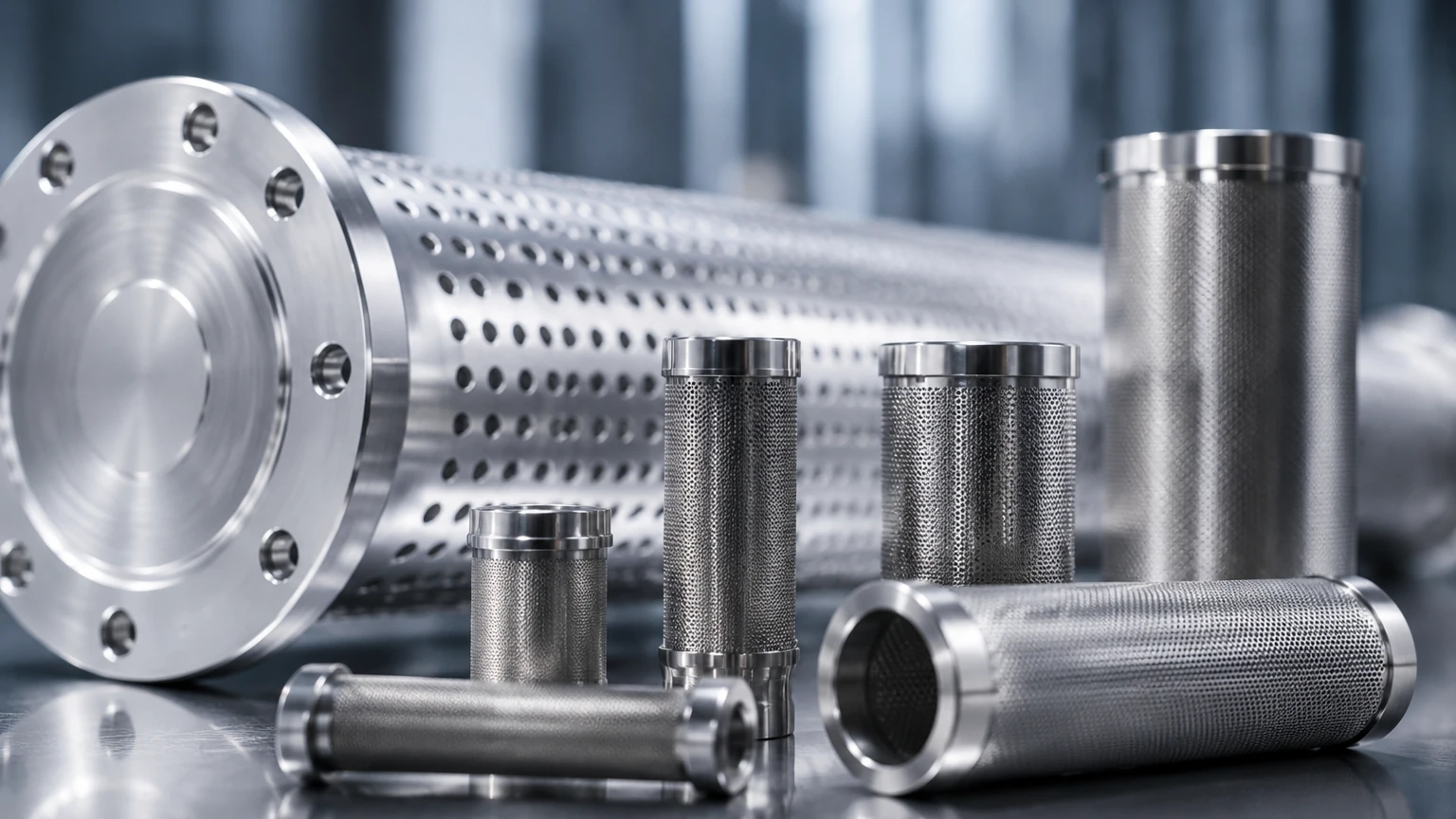
Sintered metal spargers, often constructed from 316L stainless steel, are the industry standard for applications requiring high oxygen transfer efficiency. These components are manufactured through powder metallurgy, creating a controlled, porous structure.
* Bubble Size: These spargers produce "micro-bubbles," typically ranging from 10 to 100 microns.
* Advantages: The high surface-area-to-volume ratio allows for rapid oxygenation even at low gas flow rates.
* Applications: Ideal for shear-sensitive mammalian cell cultures where high agitation speeds (which also break up bubbles) must be avoided.
Orifice and Drilled Pipe Spargers
Orifice spargers consist of a pipe or ring with precisely drilled holes. These are simpler in construction but produce significantly larger bubbles compared to porous media.
* Bubble Size: Generally in the millimeter range.
* Advantages: Lower risk of clogging and easier to clean. They are often used in large-scale microbial fermentations where high-speed impellers are used to shear the large bubbles into smaller ones.
* Disadvantages: Lower native mass transfer efficiency without significant mechanical agitation.
Nozzle Spargers
Nozzle spargers use a single opening or a series of nozzles to inject gas at high velocity. These are frequently found in airlift bioreactors where the gas flow itself provides the mixing energy for the vessel.
Engineering Considerations for Selection
When specifying spargers in bioreactors, engineers must evaluate several technical parameters to ensure long-term operational stability and process consistency.
Pore Size and Distribution
For sintered spargers, the mean pore size is the most critical specification. A pore size that is too small may lead to high pressure drops and a higher tendency for biofouling (the accumulation of cells or proteins on the sparger surface). Conversely, a pore size that is too large may fail to meet the required OTR. Kaifil offers customizable pore sizes to match the specific gas flow requirements and viscosity of the process fluid.
Gas Exit Velocity and Pressure Drop
The pressure drop across the sparger must be carefully calculated to ensure the gas supply system can maintain the desired flow rate. High exit velocities at the sparger surface can create localized zones of high shear, which may damage fragile cells. Engineers should aim for a uniform distribution of gas across the entire surface of the sparger to prevent "channeling," where gas escapes through a single path of least resistance.
Placement and Impeller Interaction
The physical location of the sparger relative to the bioreactor’s impellers significantly impacts performance. In most stirred-tank reactors (STRs), the sparger is placed beneath the bottom impeller (typically a Rushton turbine or a high-solidity hydrofoil). This placement ensures that the rising bubbles are immediately captured and dispersed by the impeller’s radial or axial flow, further breaking down the bubbles and increasing residence time.
Material Integrity and Regulatory Compliance
In the pharmaceutical and food industries, the materials used for spargers in bioreactors must meet strict regulatory standards, such as those set by the FDA and ASME BPE.
Stainless Steel 316L
316L stainless steel is the preferred material due to its excellent corrosion resistance and ability to withstand repeated sterilization cycles. The "L" denotes low carbon content, which minimizes carbide precipitation during welding, ensuring the structural integrity of the sparger assembly.
Surface Finish and Cleanability
Surface roughness (measured as Ra) is a critical factor in preventing microbial attachment. Spargers must be compatible with Clean-in-Place (CIP) and Steam-in-Place (SIP) protocols. Porous spargers, while highly efficient, require specialized cleaning validation because their internal structures can trap debris. High-quality manufacturing ensures that the internal channels are uniform, facilitating more effective chemical cleaning and steam penetration.
Common Risks and Mitigation Strategies
Implementing spargers in bioreactors involves managing several operational risks that can lead to batch failure or equipment downtime.
1. Biofouling and Clogging: Over time, proteins and cellular debris can block the pores of a sparger. This increases the backpressure and decreases the OTR. To mitigate this, engineers should specify spargers with surface treatments or pore geometries that resist attachment, and implement rigorous cleaning cycles between batches.
2. Gas Flooding: If the gas flow rate is too high for the impeller to handle, the impeller becomes "flooded" with gas, losing its ability to pump liquid and disperse bubbles. Proper sparger sizing ensures that the gas is introduced at a rate compatible with the vessel's agitation capacity.
3. Shear Damage: In micro-sparging, the burst of small bubbles at the liquid surface can create significant shear forces. This is often more damaging to mammalian cells than the movement of the impeller itself. Using anti-foaming agents or adjusting the sparger's pore size can help manage this effect.
Customization: Tailoring Spargers to the Process
Off-the-shelf sparging components rarely provide the optimal balance of OTR and shear protection for specialized bioprocesses. Customization is often necessary to integrate the sparger into existing vessel geometries or to meet specific flow requirements.
Key customization options include:
* Geometry: Ring spargers, pipe spargers, or flange-mounted probe spargers.
* Connection Types: Tri-clamp, NPT, or welded connections to ensure leak-proof integration with the bioreactor headplate or sidewall.
* Reinforcement: For large-scale reactors, spargers may require internal supports to withstand the hydraulic forces generated by high-power impellers.
Conclusion: Making Informed Purchasing Decisions
Selecting the right spargers in bioreactors is a balance of biological requirements and mechanical constraints. Engineers must confirm the required oxygen transfer rates, the shear sensitivity of their cell lines, and the cleaning capabilities of their facility before finalizing a design.
Kaifil’s expertise in custom stainless steel filtration and precision metal components allows us to support engineering teams in developing sparging solutions that are both durable and highly efficient. By focusing on material quality, precise pore control, and robust construction, we help ensure that your filtration and gas distribution systems contribute to a stable and productive bioprocess. For technical consultation on custom filtration components or to explore our manufacturing capabilities, visit our Main Page to review product options and application support.
