


Sparging Definition
In industrial engineering and chemical processing, a precise sparging definition refers to the technique of introducing a gas into a liquid through a controlled interface. This process, often called gas-liquid contact or aeration, is designed to facilitate the mass transfer of the gas into the liquid phase or to strip unwanted volatile components from the liquid. Unlike simple bubbling, industrial sparging relies on the creation of thousands of tiny bubbles to maximize the surface area-to-volume ratio, thereby increasing the efficiency of the gas-liquid interaction.
For engineers and procurement professionals, understanding the technical nuances of the sparging definition is critical when selecting equipment. The performance of a sparging system is heavily dependent on the hardware used to disperse the gas—most commonly porous metal components like sintered stainless steel or multi-layer wire mesh. These materials allow for the precise control of bubble size, which is the primary driver of mass transfer rates in bioreactors, chemical tanks, and carbonation systems.
The Physics of Mass Transfer: How Sparging Works
To move beyond a basic sparging definition, one must look at the underlying physics, specifically Henry’s Law and the principles of mass transfer. Henry’s Law states that the amount of dissolved gas in a liquid is proportional to its partial pressure above the liquid. Sparging facilitates this equilibrium by increasing the contact area between the two phases.
When gas is forced through a porous medium, it breaks into discrete bubbles. The total surface area available for gas exchange is inversely proportional to the bubble diameter. For example, replacing a single large bubble with thousands of micro-bubbles (typically in the range of 10 to 100 microns) can increase the contact surface area by several orders of magnitude. This increased area allows for faster dissolution of gases like oxygen, nitrogen, or carbon dioxide, or the more efficient removal of dissolved contaminants.
In industrial applications, the efficiency of this process is measured by the mass transfer coefficient (Kla). High-performance sparging systems aim to maximize Kla while minimizing gas consumption and energy expenditure. This is why precision-engineered porous metal is preferred over traditional drilled pipes; the latter produces large, turbulent bubbles that rise quickly to the surface with minimal gas absorption.
The Importance of Porous Media in Precision Sparging
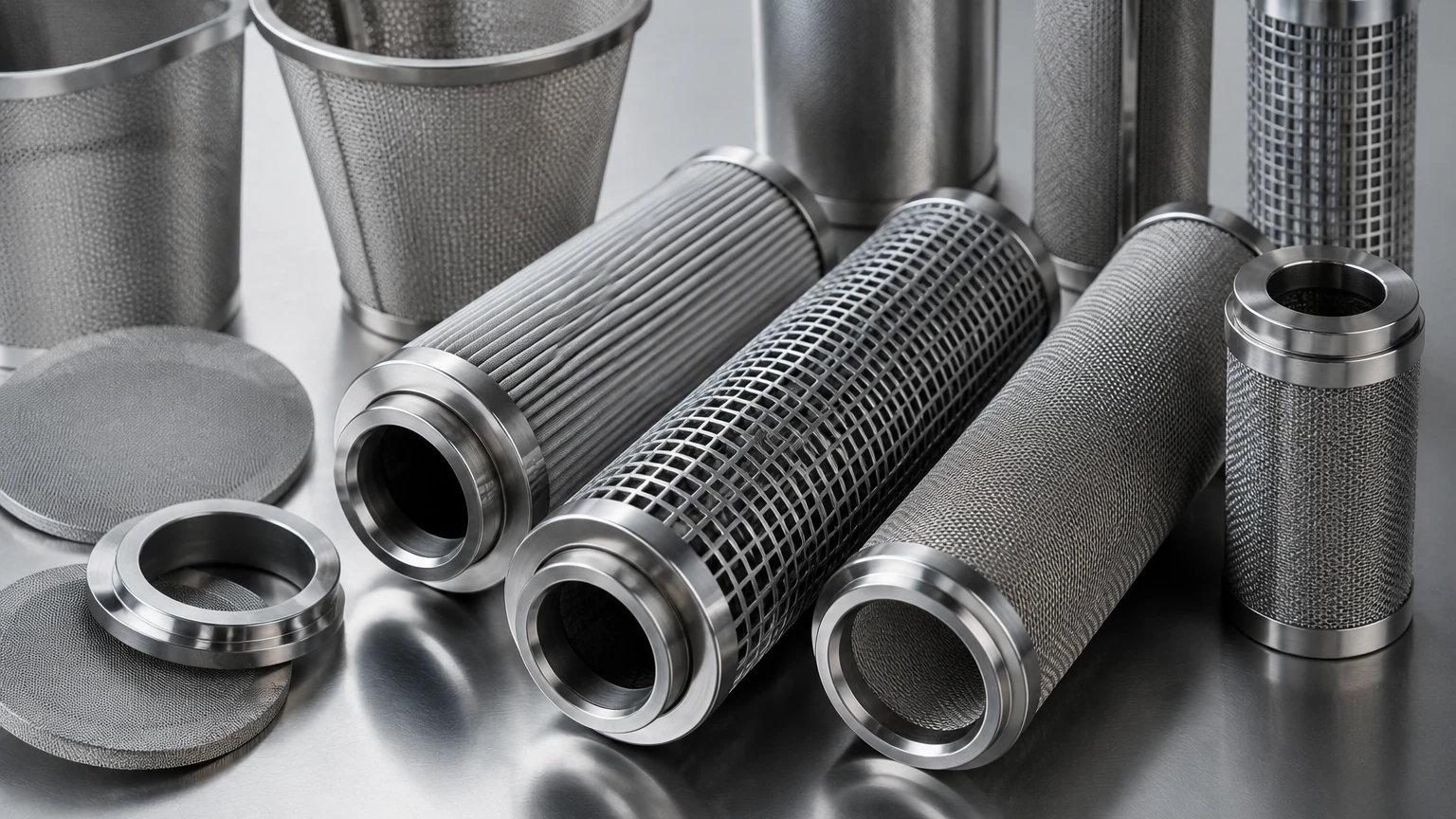
While the sparging definition covers the general act of gas injection, the "how" is defined by the sparger element itself. In demanding industrial environments, stainless steel filtration media and porous components are the standard. Materials such as 316L stainless steel are chosen for their corrosion resistance, mechanical strength, and ability to withstand high temperatures.
Sintered Metal Spargers
Sintered metal is created by compressing stainless steel powder or fine fibers and heating them until the particles bond without melting. This creates a rigid structure with a highly controlled, interconnected porosity. When used for sparging, these elements provide a uniform distribution of gas across the entire surface of the element. This uniformity prevents "channeling," where gas escapes through a single path of least resistance, which is a common failure point in lower-quality spargers.
Wire Mesh Spargers
Multi-layer sintered wire mesh is another critical component in the sparging definition. By laminating different grades of mesh together, manufacturers can create a sparging element that combines fine bubble generation with high structural integrity. These are often used in applications where high flow rates are required without sacrificing the precision of the bubble size. For more information on specialized metal components, you can visit the Main Page of leading manufacturers to review product options and application support.
Critical Engineering Parameters for Sparger Selection
When transitioning from a theoretical sparging definition to a practical installation, engineers must evaluate several technical parameters. Selecting the wrong sparger can lead to inefficient processing, high gas waste, or mechanical failure.
1. Pore Size and Bubble Diameter
The pore size of the metal media directly influences the initial bubble size. While smaller bubbles provide better mass transfer, they also require higher "exit pressure" to overcome the surface tension of the liquid and the resistance of the porous media. Engineers must balance the need for efficiency with the available gas pressure in the facility.
2. Pressure Drop (Delta P)
Pressure drop is the difference in pressure between the gas inlet and the liquid environment. A high pressure drop indicates that the sparger is providing significant resistance. While some resistance is necessary to ensure even gas distribution across the element, excessive pressure drop increases energy costs and may require more expensive compressor systems.
3. Gas Velocity and Flux
The flux, or the volume of gas passing through a unit area of the sparger per unit of time, must be carefully managed. If the gas velocity is too high, bubbles may coalesce (merge) immediately upon leaving the surface, negating the benefits of the porous media. Proper sizing of the sparger surface area is essential to maintain an optimal flux that prevents coalescence.
4. Chemical Compatibility
In chemical processing or pharmaceutical applications, the sparger must be compatible with both the gas being injected (e.g., ozone, which is highly oxidative) and the liquid in the tank. 316L stainless steel is the industry standard, but for highly aggressive environments, alloys like Hastelloy or Titanium may be required.
Industrial Applications of Gas-Liquid Sparging
The practical application of the sparging definition varies across industries, each with unique requirements for cleanliness, precision, and durability.
Biopharmaceutical Fermentation
In bioreactors, sparging is used to deliver oxygen to cell cultures. Because cells are sensitive to shear stress, the sparging system must provide enough oxygen without creating large, violent bubbles that could damage the cell membranes. Sintered micro-spargers are the preferred solution here because they generate the fine bubbles necessary for high oxygen transfer rates (OTR) at low flow velocities.
Food and Beverage Carbonation
The carbonation of beer, soda, and sparkling water is a classic example of sparging. Precision spargers allow for the rapid dissolution of CO2 into the liquid stream, often in an in-line configuration. This ensures consistent carbonation levels and reduces the time required for the gas to stabilize in the liquid.
Chemical Stripping and Deoxygenation
Sparging is frequently used to remove unwanted dissolved gases. For example, sparging nitrogen into a liquid can "strip" out dissolved oxygen, which prevents oxidation and extends the shelf life of chemicals or food products. This process relies on the concentration gradient between the nitrogen bubbles and the dissolved oxygen in the liquid.
Steam Injection
In some contexts, the sparging definition includes the injection of steam for direct heating of liquids. Porous metal spargers are used to ensure the steam is distributed evenly, preventing the "hammering" effect and localized overheating that can occur with simple pipe injectors.
Maintenance and Operational Best Practices for Metal Spargers
To maintain the performance defined by the initial system design, regular maintenance of the sparging elements is required. Because porous metal acts as a filter, it can become fouled over time by particulates in the gas stream or by biological/chemical buildup from the liquid side.
* Cleaning-in-Place (CIP): Many industrial spargers are designed to be cleaned without removal. This involves circulating cleaning agents through the system. The choice of 316L stainless steel allows for the use of caustic or acidic cleaners that would degrade other materials.
* Ultrasonic Cleaning: For heavy fouling, sparger elements may need to be removed and placed in an ultrasonic bath. This process uses high-frequency sound waves to dislodge particles from deep within the porous structure.
* Gas Filtration: To prevent internal fouling, the gas being fed into the sparger should be filtered to remove oil, moisture, and particulates. This protects the fine pores of the sparger and ensures a long service life.
Conclusion: Choosing the Right Filtration Partner
Understanding the technical sparging definition is only the first step in optimizing a process. The actual performance of the system depends on the quality of the porous metal components and the engineering expertise behind their design. Customization is often necessary to match the specific geometry of a tank or the unique flow requirements of a process.
Kaifil specializes in the manufacture of high-performance stainless steel filtration and sparging solutions. By focusing on precision pore control and durable construction, Kaifil provides the components necessary for efficient mass transfer in the most demanding industrial environments. When specifying your next sparging system, consider the total cost of ownership, including gas efficiency and maintenance intervals, to ensure a high-performing and cost-effective solution.
