


Specialty Reticulated Foam
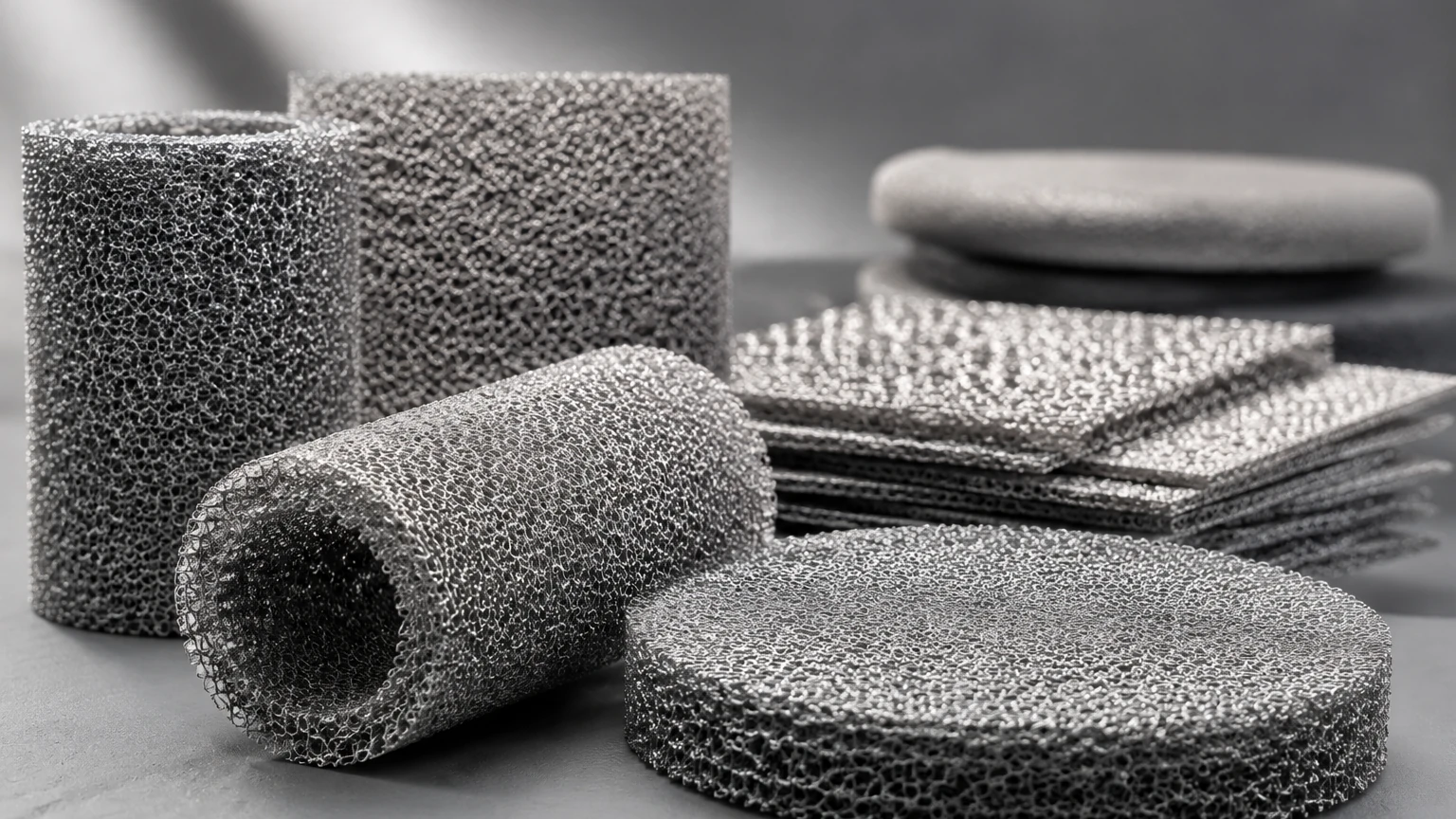
In the landscape of industrial filtration and material science, specialty reticulated foam represents a critical category of porous media. Unlike standard open-cell foams, which may retain thin membranes between their skeletal structures, reticulated foam undergoes a specific manufacturing process—typically thermal or chemical reticulation—to remove these membranes. The result is a highly permeable, three-dimensional dodecahedron structure that consists solely of a skeletal ligament network. For engineers and procurement specialists, understanding the technical nuances of specialty reticulated foam is essential when designing systems for fluid management, acoustic damping, or pre-filtration in demanding environments.
While manufacturers like Kaifil specialize in high-precision stainless steel filtration solutions, the industrial sector frequently utilizes specialty reticulated foam as a complementary material or a precursor in advanced manufacturing. This guide examines the engineering properties, selection criteria, and industrial applications of these specialty materials, providing the technical depth required for informed decision-making.
The Engineering of Reticulation: Structure and Porosity
The defining characteristic of specialty reticulated foam is its void volume, which often exceeds 95% and can reach as high as 98%. This high porosity is achieved through a process called "zapping" or thermal reticulation. In this process, a standard open-cell foam block is placed in a vacuum pressure vessel filled with an explosive gas mixture. Upon ignition, a controlled flame front sweeps through the foam, instantly melting and consuming the thin cell membranes (windows) while leaving the thicker structural ligaments intact.
Pores Per Inch (PPI) and Filtration Efficiency
The primary metric for classifying specialty reticulated foam is Pores Per Inch (PPI). This measurement dictates the material’s performance in various applications:
* 10 to 30 PPI (Coarse): Used primarily for heavy-duty pre-filtration, large particle impingement, and as a substrate for ceramic coating in foundry applications. These grades offer the lowest pressure drop.
* 45 to 70 PPI (Medium): Common in HVAC systems, small engine air filters, and acoustic applications. They balance dirt-holding capacity with airflow efficiency.
* 80 to 110 PPI (Fine): Utilized for fine mist elimination, medical grade filtration, and specialized liquid-phase separation where a high surface-area-to-volume ratio is required.
Engineers must recognize that PPI is a nominal rating. Unlike the absolute micron ratings found in stainless steel wire mesh, reticulated foam operates as a depth filter. It captures particles throughout its thickness rather than just on the surface, making it highly effective for applications where high dirt-holding capacity is prioritized over absolute precision.
Material Composition and Chemical Compatibility
Specialty reticulated foam is not a monolithic product; its performance is heavily dependent on the base polymer. The two most common types are Polyurethane (PU) Polyester and Polyurethane (PU) Polyether.
Polyester-Based Reticulated Foam
Polyester foams are characterized by high mechanical strength and excellent resistance to hydrocarbons, oils, and solvents. They are the preferred choice for automotive filtration and gasket applications. However, they are susceptible to hydrolysis—a chemical breakdown when exposed to long-term moisture or high humidity—which can lead to the "crumbling" of the foam structure over time.
Polyether-Based Reticulated Foam
Polyether foams offer superior resistance to water, moisture, and microbial growth. They are the standard for outdoor applications, water treatment systems, and medical devices. While they lack the solvent resistance of polyester, their stability in aqueous environments makes them indispensable for specialty reticulated foam applications involving liquid filtration.
Advanced Specialty Variants
Beyond standard polymers, specialty reticulated foam can be treated or impregnated to meet specific industrial requirements. This includes flame retardancy (meeting UL 94 standards), anti-static properties for electronics packaging, or carbon impregnation for odor and VOC (Volatile Organic Compound) removal. In extreme high-temperature or corrosive environments, reticulated foam serves as a sacrificial template for producing metal foams—where a metal like nickel or stainless steel is plated onto the foam structure, and the polymer is later burned away.
Performance Metrics in Industrial Applications
When evaluating specialty reticulated foam for a specific project, engineers must look beyond PPI and consider the following performance metrics:
Pressure Drop and Flow Resistance
Because of its open skeletal structure, reticulated foam offers remarkably low resistance to fluid flow. The pressure drop across the foam is a function of the PPI, the thickness of the media, and the face velocity of the fluid. In air filtration, maintaining a low pressure drop is critical for reducing energy consumption in fan-driven systems. Designers often use Darcy’s Law or the Ergun equation to model flow through these porous structures during the prototyping phase.
Dirt-Holding Capacity (DHC)
The tortuous path created by the interconnected pores ensures that particles are trapped deep within the foam. This depth-loading characteristic allows specialty reticulated foam to hold significantly more contaminants than surface-loading media before reaching a terminal pressure drop. This extends the service life of the filter and reduces maintenance frequency.
Thermal and Acoustic Properties
The high surface area of the foam ligaments makes it an excellent medium for heat exchange and acoustic absorption. In compressed air systems, specialty reticulated foam is used in mufflers to dissipate energy and reduce noise without creating excessive backpressure. Its thermal stability depends on the base polymer, with most PU foams operating safely between -40°C and 120°C.
Comparing Reticulated Foam and Stainless Steel Filtration
For many industrial applications, the choice between specialty reticulated foam and stainless steel filtration components is a matter of environment and longevity. As a manufacturer of precision metal filters, Kaifil often works with clients who are transitioning from foam to metal or using both in tandem.
| Feature | Specialty Reticulated Foam | Stainless Steel Mesh/Sintered Metal |
| :— | :— | :— |
| Filtration Type | Depth Filtration | Surface or Depth (Sintered) |
| Temperature Limit | Up to 120°C (Polymer) | Up to 800°C+ |
| Chemical Resistance | Limited by polymer type | Excellent (304, 316L, Inconel) |
| Cleanability | Limited (often disposable) | Excellent (Ultrasonic/Backwash) |
| Precision | Nominal (PPI) | Absolute (Micron) |
| Initial Cost | Low | High |
In a multi-stage filtration system, specialty reticulated foam often serves as the primary pre-filter. It removes larger debris and protects more expensive, high-precision stainless steel cartridges from premature clogging. This hybrid approach optimizes the total cost of ownership by extending the life of permanent filtration assets. For more information on high-performance metal filtration components, you can visit the Main Page to review product options and application support.
Engineering Considerations for Custom Integration
Integrating specialty reticulated foam into an OEM product requires careful attention to physical dimensions and housing design. Unlike rigid metal filters, foam is compressible. While this allows for a tight seal without complex gaskets, over-compression can collapse the pore structure, leading to localized high-pressure zones and reduced filtration efficiency.
Custom Shaping and Fabrication
Specialty foam can be fabricated using several methods:
1. Die-Cutting: Ideal for high-volume production of flat gaskets and simple shapes.
2. CNC Milling/Routing: Used for complex 3D geometries and recessed features.
3. Heat Bonding: Joining foam to other substrates or creating multi-layered composite filters with varying PPI grades.
Selection Checklist for Engineers
Before finalizing a specification for specialty reticulated foam, confirm the following parameters:
* Fluid Compatibility: Will the foam be exposed to oils, water, or aggressive chemicals?
* Operating Temperature: Does the application exceed the glass transition temperature of the polymer?
* Pore Size Accuracy: Is a nominal PPI rating sufficient, or does the application require the absolute precision of a stainless steel wire mesh?
* Environmental Regulations: Does the material need to be REACH or RoHS compliant?
Total Cost of Ownership and Replacement Cycles
While the initial purchase price of specialty reticulated foam is lower than that of custom stainless steel components, the total cost of ownership (TCO) must account for replacement labor, disposal costs, and system downtime. In many industrial processes, reticulated foam is treated as a consumable. However, in applications where the environment is highly corrosive or the temperatures are extreme, the frequent replacement of foam can quickly exceed the one-time investment in a durable stainless steel filter.
For engineers looking to optimize their filtration systems, it is often beneficial to consult with a manufacturer that understands both the flexible nature of specialty foams and the rigorous performance of metal filtration. By balancing these materials, facilities can achieve high-efficiency filtration while maintaining manageable operational costs.
Conclusion
Specialty reticulated foam remains a versatile and essential material in the industrial toolkit. Its unique skeletal structure provides a combination of high permeability and effective depth filtration that is difficult to replicate with other media. Whether used as a standalone filter, an acoustic damper, or a pre-filtration stage for high-precision stainless steel systems, understanding its technical limits and material properties is key to engineering success.
When your application demands higher durability, extreme temperature resistance, or absolute filtration precision beyond the capabilities of polymer foams, exploring custom metal solutions is the next logical step. To find the right balance for your specific industrial needs, visit the Main Page for technical resources and professional guidance on advanced filtration components.
