


Spin on Filter
In the landscape of industrial fluid management, the spin on filter represents one of the most efficient and widely adopted designs for maintaining system cleanliness. Characterized by its self-contained, screw-on canister, this filtration component is a staple in hydraulic systems, lubrication circuits, and fuel delivery lines. For engineers and procurement specialists, selecting the correct spin on filter involves more than simply matching thread sizes; it requires a deep understanding of fluid dynamics, material compatibility, and the specific demands of the operating environment.
As a specialized manufacturer of stainless steel filtration solutions, Kaifil provides high-performance components designed to withstand the rigors of industrial processing. Understanding the technical nuances of these filters is essential for optimizing machine uptime and protecting sensitive downstream components from particulate contamination.
Understanding the Spin-on Filter Architecture
The fundamental appeal of the spin on filter lies in its integrated design. Unlike cartridge-style filters that require a permanent housing and a replaceable internal element, a spin-on unit combines the filter media, the support structure, and the outer shell into a single, disposable or cleanable assembly.
The Canister and Base Plate
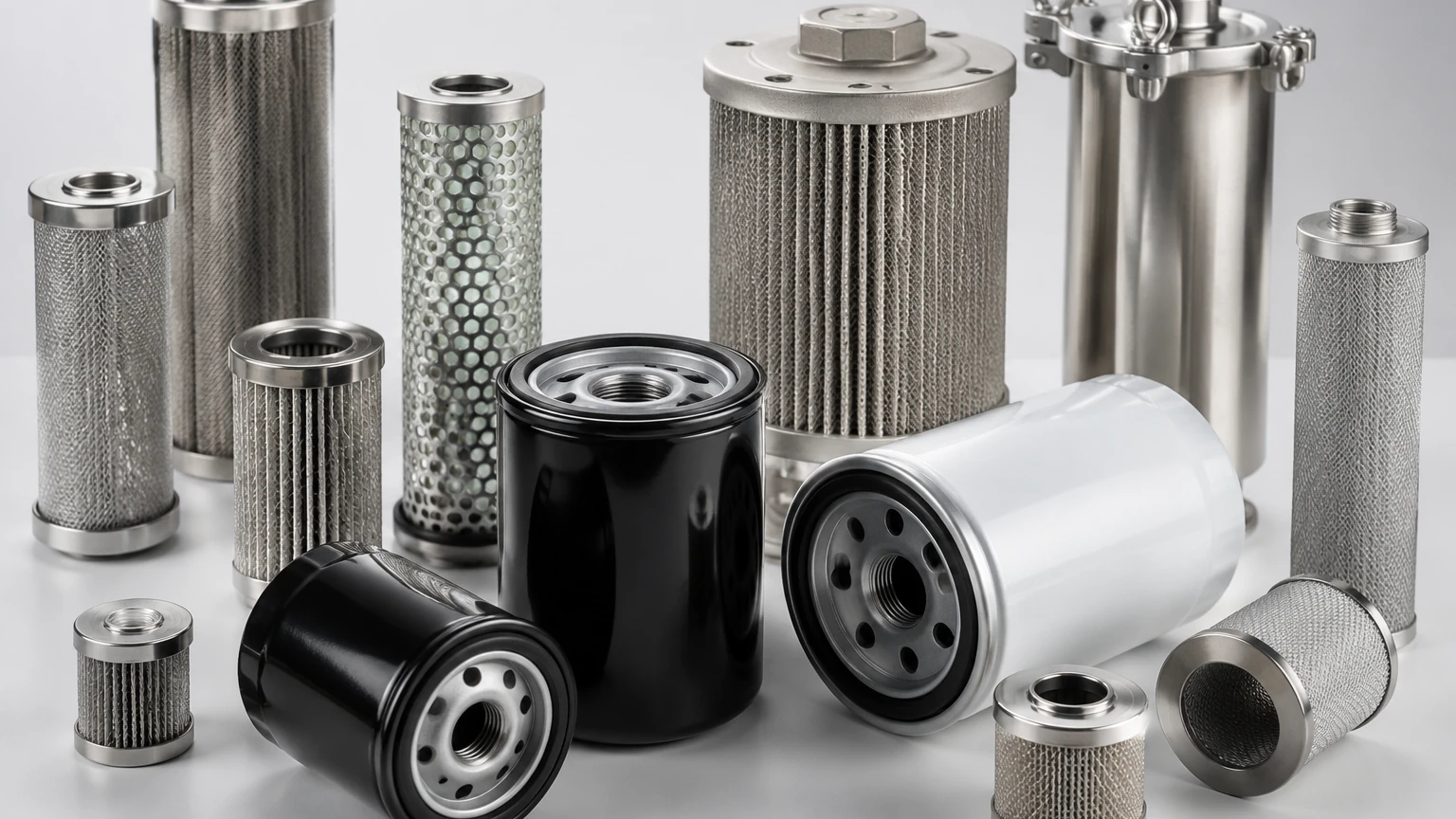
The outer housing, or canister, is typically constructed from deep-drawn steel or, in specialized high-pressure or corrosive environments, stainless steel. This housing must resist internal pressure pulses and external environmental factors. The base plate (or tapping plate) is the interface between the filter and the machine's filter head. It contains the central threaded exit port and a series of inlet holes through which the contaminated fluid enters the unit.
The Sealing Mechanism
A critical component of any spin on filter is the gasket. Usually made from elastomers like Nitrile (Buna-N) or Fluorocarbon (Viton), the gasket ensures a leak-proof seal against the filter head. Engineering teams must confirm that the gasket material is chemically compatible with the fluid being filtered, especially in chemical processing or high-temperature hydraulic applications.
Internal Components
Inside the canister, the filter media is wrapped around a center tube, which provides structural integrity against collapse. In many industrial designs, a bypass valve is integrated into the bottom of the canister. This valve is calibrated to open at a specific differential pressure (ΔP), allowing fluid to bypass the media if the filter becomes clogged, thereby preventing system starvation, albeit at the cost of temporary fluid contamination.
Filtration Media Selection: Stainless Steel vs. Traditional Materials
The performance of a spin on filter is primarily dictated by its media. While many standard filters use cellulose (paper) or synthetic glass fibers, industrial applications often demand the durability of metal mesh.
Cellulose and Synthetic Media
Cellulose is cost-effective but limited in its chemical resistance and structural strength. Synthetic glass fibers offer higher dirt-holding capacity and more consistent pore sizes, but they remain disposable. For many high-volume industrial processes, the frequent replacement of these filters leads to significant waste and recurring operational costs.
The Advantage of Stainless Steel Wire Mesh
Kaifil specializes in stainless steel wire mesh filtration, which offers several engineering advantages when integrated into spin-on designs:
- Reusability: Stainless steel elements can often be cleaned and returned to service, significantly reducing the total cost of ownership.
- Temperature Resistance: Metal mesh maintains its structural integrity at temperatures that would cause cellulose or synthetic fibers to degrade.
- Chemical Compatibility: Stainless steel is resistant to a wide array of aggressive fluids, making it ideal for chemical processing and pharmaceutical applications.
- Precision Filtration: Woven wire mesh provides absolute filtration ratings, ensuring that particles above a specific micron size are reliably captured.
Key Engineering Specifications for Industrial Applications
When specifying a spin on filter for a new system or looking for an OEM replacement, engineers must evaluate several performance metrics to ensure the component meets the application's demands.
Micron Rating and Efficiency
Filters are rated by the size of particles they can remove, measured in microns (µm). It is important to distinguish between "nominal" and "absolute" ratings. A nominal rating indicates the filter can trap a large percentage of particles of a certain size, while an absolute rating indicates the filter will trap essentially 100% of particles at that size. For critical hydraulic components, absolute ratings are often required to prevent accelerated wear.
Flow Rate and Pressure Drop (ΔP)
The flow rate is the volume of fluid passing through the filter per unit of time. Every filter introduces a degree of resistance, known as pressure drop. An ideal selection minimizes the initial pressure drop to ensure efficient system operation. As the filter accumulates contaminants, the ΔP increases. Engineers must ensure the selected filter can handle the maximum system flow without triggering the bypass valve prematurely.
Maximum Operating and Burst Pressure
Industrial systems often experience pressure spikes. A spin on filter must have a rated operating pressure that exceeds the system's standard pressure and a burst pressure rating that provides a sufficient safety margin. For high-pressure hydraulic lines, heavy-duty canisters with reinforced base plates are a necessity.
Operational Risks and Failure Modes
Failure to properly select or maintain a spin on filter can lead to catastrophic system failure. Understanding common risks allows maintenance teams to implement better monitoring strategies.
Gasket Blowout
If a filter is not properly torqued or if the system experiences a pressure surge beyond the filter's rating, the gasket may fail. This leads to immediate fluid loss and potential environmental hazards. Ensuring the gasket material is compatible with the system fluid prevents swelling or hardening that could lead to leaks.
Media Collapse
In high-viscosity applications (such as cold-start conditions in lubrication systems), the differential pressure across the media can become extreme. If the internal center tube or the media itself lacks sufficient structural strength, it may collapse, allowing unfiltered fluid and debris to enter the downstream circuit.
Bypass Valve Malfunction
If a bypass valve is set too low, it may open during normal operation, allowing contaminated fluid to circulate. Conversely, if it is set too high or fails to open, a clogged filter could starve the system of fluid, leading to pump cavitation and mechanical failure.
Customization and OEM Considerations for High-Performance Systems
Standard off-the-shelf filters often fall short in specialized industrial environments. This is where customized filtration solutions become necessary. Working with a manufacturer like Kaifil allows engineering teams to tailor every aspect of the filter to their specific needs.
Custom Micron Ratings and Media Layers
Depending on the fluid's particulate profile, a multi-layer stainless steel mesh might be required. This construction can combine a coarse outer layer for large particle removal with a fine inner layer for precision filtration, extending the service life of the unit.
Specialized Housing Materials
For offshore, marine, or chemical environments, standard carbon steel canisters will succumb to corrosion. Custom spin-on units can be manufactured using 304 or 316 stainless steel to ensure longevity in harsh conditions.
Tailored Threading and Interfaces
OEM applications often require non-standard mounting threads or specific gasket profiles to fit proprietary filter heads. Custom manufacturing ensures a perfect fit without the need for cumbersome adapters that can introduce additional leak points.
For those looking to explore the full range of customized metal filtration components, you can visit the Main Page to review product options and application support provided by Kaifil.
Total Cost of Ownership and Sustainability in Filtration
In a B2B procurement context, the initial purchase price of a spin on filter is only one part of the economic equation. The Total Cost of Ownership (TCO) includes the cost of replacement labor, disposal fees for contaminated filters, and the potential cost of system downtime.
The Shift to Cleanable Solutions
While disposable filters have a lower upfront cost, the cumulative expense of frequent replacements can be substantial. In many industrial sectors, there is a growing shift toward cleanable stainless steel spin-on elements. These units can be ultrasonically cleaned or backflushed, providing a service life that spans years rather than months. This not only reduces long-term costs but also aligns with corporate sustainability goals by reducing industrial waste.
Maintenance Monitoring
Implementing differential pressure gauges or electronic sensors on filter heads allows for "condition-based maintenance." Instead of replacing a spin on filter on a fixed schedule, it is only replaced (or cleaned) when the pressure drop indicates it is nearing capacity. This approach maximizes the utility of each filter and prevents the unnecessary opening of a closed system, which can introduce new contaminants.
Conclusion: Selecting the Right Filtration Partner
The selection of a spin on filter is a critical engineering decision that impacts the reliability and efficiency of industrial machinery. By focusing on technical specifications—such as absolute micron ratings, material compatibility, and pressure thresholds—engineers can ensure their systems remain protected against the damaging effects of contamination.
Kaifil’s expertise in precision stainless steel filtration provides the foundation for high-performance spin-on solutions that go beyond the capabilities of standard disposable units. Whether you are designing a new hydraulic circuit or seeking to optimize an existing chemical process, choosing a filter that is engineered for durability and precision is essential. To learn more about how customized filtration components can enhance your operations, visit the Main Page for detailed technical resources and product specifications.
