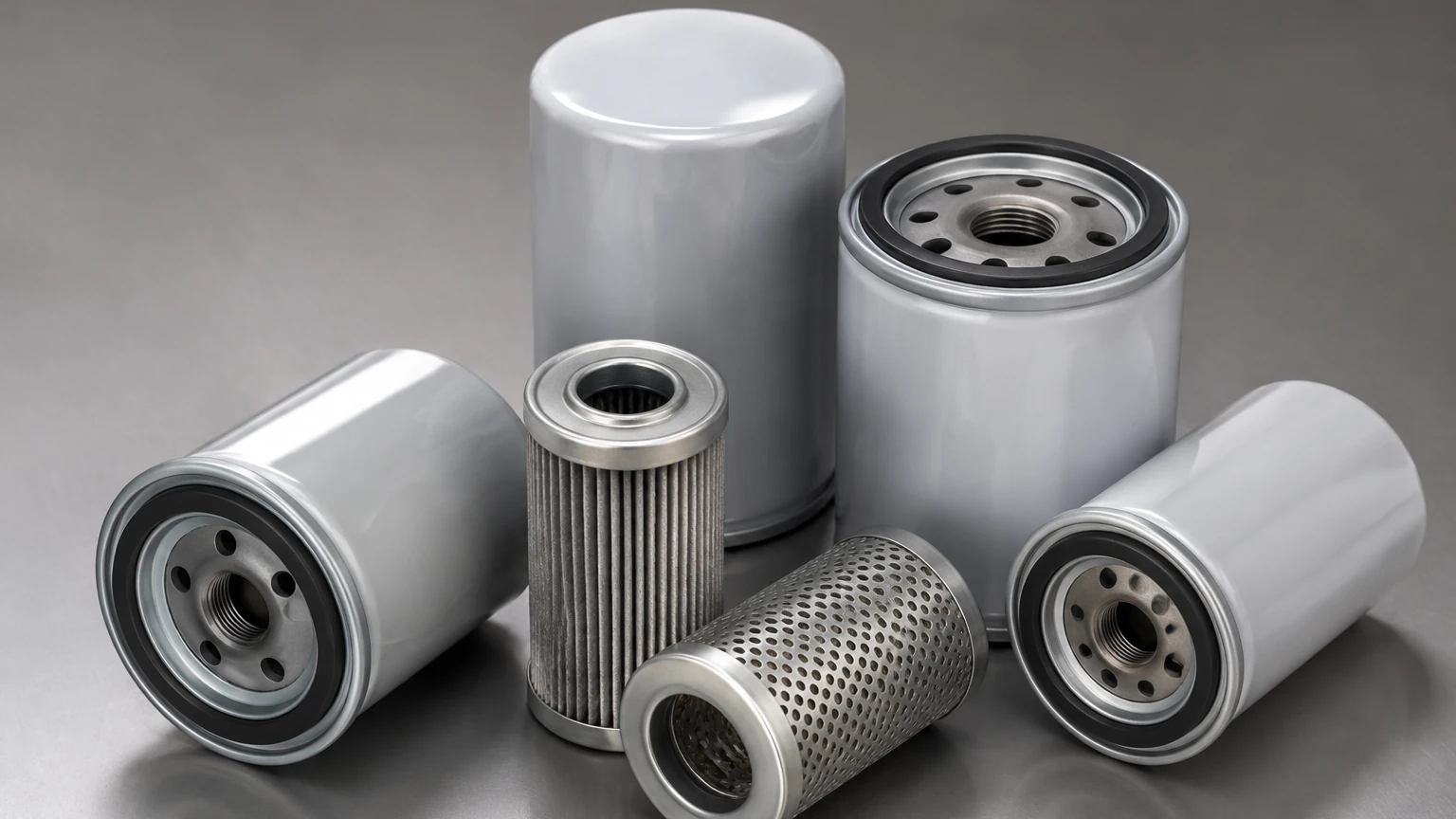
Spin on Filters
In the landscape of industrial fluid management, spin on filters represent a critical intersection of convenience and performance. These self-contained filtration units, consisting of a replacement element housed within a metal canister, are designed to be threaded directly onto a filter head or base. For engineers and procurement professionals managing hydraulic systems, lubrication circuits, and chemical processing lines, understanding the technical nuances of spin on filters is essential for maintaining system integrity and optimizing the total cost of ownership. As a specialized manufacturer, Kaifil provides high-performance filtration solutions that bridge the gap between standard off-the-shelf components and custom-engineered metal filter assemblies.
Engineering Fundamentals of Spin On Filters
The architecture of spin on filters is deceptively simple, yet it must withstand significant mechanical and thermal stresses. A standard unit comprises four primary components: the outer canister (or bowl), the internal filter media, the base plate (or nut plate), and the sealing gasket.
The canister is typically deep-drawn from steel or aluminum, providing the pressure vessel required to contain the fluid. The base plate is the structural interface, featuring a threaded center hole for mounting and a series of inlet holes arranged in a circular pattern. Fluid enters through these outer holes, passes through the filter media from the outside in, and exits through the central threaded stud. This "outside-in" flow pattern maximizes the surface area of the media exposed to the contaminant-laden fluid.
Internally, the filter element is supported by a center tube, which prevents the media from collapsing under high differential pressure. In many industrial applications, particularly those involving cold starts or high-viscosity fluids, a bypass valve is integrated into the filter head or the filter itself. This valve opens when the differential pressure exceeds a predetermined threshold, ensuring that the system downstream is never starved of fluid, even if the filter is clogged or the fluid is too thick to pass through the media efficiently.
Material Selection and Chemical Compatibility
One of the most critical decisions in specifying spin on filters is the selection of the filter media and sealing materials. While many automotive-grade filters use cellulose (paper) media, industrial applications often demand more robust materials to handle aggressive chemicals, high temperatures, and high pressures.
1. Stainless Steel Wire Mesh: For applications requiring durability and cleanability, stainless steel wire mesh is the gold standard. Kaifil specializes in integrating precision-woven wire mesh into filtration components. Stainless steel offers exceptional resistance to corrosion and can operate at temperatures far exceeding the limits of synthetic or organic media. Furthermore, wire mesh provides a consistent pore size, which is vital for absolute filtration requirements.
2. Synthetic and Glass Fiber: These materials offer high dirt-holding capacity and are often used for fine filtration in hydraulic systems. However, they are generally disposable and may not be compatible with certain solvents or high-pH fluids.
3. Sealing Gaskets: The interface between the filter and the mounting head is sealed by an elastomeric gasket. The choice of material—whether Nitrile (Buna-N), Viton (FKM), or EPDM—depends entirely on the fluid chemistry and the operating temperature. For instance, Viton is preferred for high-temperature applications and systems using synthetic lubricants, while EPDM is often required for phosphate ester hydraulic fluids.
By visiting our Main Page, technical teams can explore the various material configurations available for custom filtration projects that require the convenience of a spin-on design with the durability of stainless steel components.
Performance Criteria: Micron Ratings and Beta Ratios
When evaluating spin on filters, engineers must look beyond the physical dimensions and thread size. The performance of a filter is defined by its ability to remove particles of a specific size and its efficiency in doing so.
Micron Rating (Nominal vs. Absolute): A nominal rating is an arbitrary value indicating the filter's ability to trap a percentage of particles of a given size. An absolute rating, however, implies that the filter will trap 99.9% (or a specific high percentage) of particles at that micron size. In precision industrial systems, absolute ratings are necessary to protect sensitive components like servo valves and high-pressure pumps.
Beta Ratio (β): The Beta Ratio is a more precise measure of filtration efficiency, derived from Multi-Pass Testing (ISO 16889). It is the ratio of the number of particles of a specific size upstream of the filter to the number of particles of the same size downstream. For example, a Beta Ratio of 200 (βx = 200) means that for every 200 particles entering the filter, only one passes through, representing a 99.5% efficiency. Understanding these ratios allows engineers to predict the cleanliness levels (ISO 4406) that the system can achieve.
Pressure Considerations: Static and Fatigue
Spin on filters are subject to two types of pressure: static and cyclic. Static pressure is the constant operating pressure of the system. However, many hydraulic systems experience pressure spikes or pulsations—known as cyclic pressure.
A filter canister might have a static burst pressure of 600 PSI, but its fatigue rating might be significantly lower. If a system pulses from 0 to 200 PSI thousands of times per day, the metal canister can suffer from work hardening and eventual stress cracking. In these environments, it is crucial to specify heavy-duty canisters with reinforced base plates. Kaifil’s engineering approach ensures that the housing and internal elements are matched to the specific pressure profile of the application, preventing catastrophic housing failure and fluid loss.
Customization and OEM Integration
For many equipment manufacturers, standard spin on filters do not meet the specific spatial or performance requirements of a new machine design. Customization becomes necessary to ensure the filtration system is optimized for the intended environment.
Customization options include:
* Thread Specifications: While NPT and BSP threads are common, many global applications require specific Metric or UNF threads to match existing manifolds.
* Canister Dimensions: Adjusting the height or diameter of the canister to fit into tight engine compartments or industrial cabinets.
* Internal Bypass Settings: Customizing the cracking pressure of the bypass valve to protect sensitive downstream components while allowing for high-viscosity startup conditions.
* Branding and Labeling: For OEM partners, spin on filters can be produced with custom branding, part numbers, and installation instructions printed directly on the canister.
At Kaifil, we work closely with engineering teams to develop these customized solutions, ensuring that the final product meets the exact filtration efficiency and mechanical footprint required by the project.
Maintenance, Replacement Cycles, and Total Cost
The primary advantage of spin on filters is the ease of maintenance. Replacing a filter involves unscrewing the old unit and threading on a new one, a process that minimizes downtime and reduces the risk of introducing external contaminants into the system. However, determining the correct replacement cycle is vital.
Relying solely on a calendar-based maintenance schedule can lead to either premature replacement (wasting money) or late replacement (risking system damage). The most effective method for monitoring filter health is the use of differential pressure indicators. These devices measure the pressure drop across the filter; as the media becomes loaded with contaminants, the pressure drop increases. Once it reaches a certain level, the indicator signals that a change is required.
When calculating the total cost of ownership, engineers should consider the cost of the filter, the labor for replacement, the cost of fluid lost during the change, and the potential cost of system failure if a low-quality filter is used. While a stainless steel wire mesh element may have a higher initial cost, its ability to be cleaned and reused, or its superior protection of expensive downstream machinery, often results in a lower total cost over the life of the equipment.
Industry-Specific Applications for Spin On Filters
Spin on filters are utilized across a diverse range of sectors, each with unique challenges:
* Chemical Processing: In this sector, the primary concern is chemical compatibility. Filters must withstand aggressive solvents and corrosive fluids. Stainless steel internals are often required to prevent the media from breaking down and contaminating the process stream.
* Food and Beverage: Filtration in this industry requires materials that are FDA-compliant and resistant to the high-temperature washdowns used in CIP (Clean-In-Place) processes. Spin-on designs are favored here for their ability to be changed quickly without exposing the system to the environment.
* Mobile Hydraulics: Construction and agricultural machinery operate in extremely dirty environments. Spin on filters used here must have high dirt-holding capacity and the physical ruggedness to withstand vibration and mechanical impact.
* Power Generation: In large turbine lubrication systems, maintaining oil cleanliness is paramount. Spin on filters are often used in kidney-loop systems to continuously polish the oil, removing fine particulates that could cause bearing wear.
Conclusion
Selecting the right spin on filters involves a deep dive into fluid dynamics, material science, and mechanical engineering. By focusing on absolute filtration ratings, appropriate pressure fatigue limits, and chemical compatibility, organizations can significantly improve the reliability of their industrial systems. Whether you are looking for a standard replacement or a highly customized stainless steel filtration component, understanding these technical boundaries is the first step toward optimized performance.
For engineers and purchasing teams seeking reliable, high-performance filtration components tailored to demanding industrial environments, we invite you to review product options and application support on our Main Page. Kaifil remains committed to delivering precision-engineered solutions that meet the rigorous standards of modern industry.