


Spin on Lube Oil Filter
In industrial machinery maintenance and hydraulic system design, the spin on lube oil filter represents a critical component for ensuring the longevity and efficiency of moving parts. Unlike cartridge-style filters that require a separate permanent housing, a spin-on filter is a self-contained unit comprising the filtration media, a pressure-regulating bypass valve, and a sealing gasket, all housed within a metal canister. This design is favored in B2B sectors—ranging from chemical processing to heavy hydraulic equipment—due to its ease of replacement and minimized risk of system contamination during servicing.
For engineers and procurement professionals, selecting the appropriate spin on lube oil filter involves more than matching thread sizes. It requires a deep understanding of fluid dynamics, material compatibility, and the specific rigors of the industrial environment. As a specialist in custom stainless steel filtration, Kaifil provides the technical expertise necessary to bridge the gap between standard off-the-shelf components and high-performance, customized filtration solutions.
Understanding the Architecture of a Spin on Lube Oil Filter
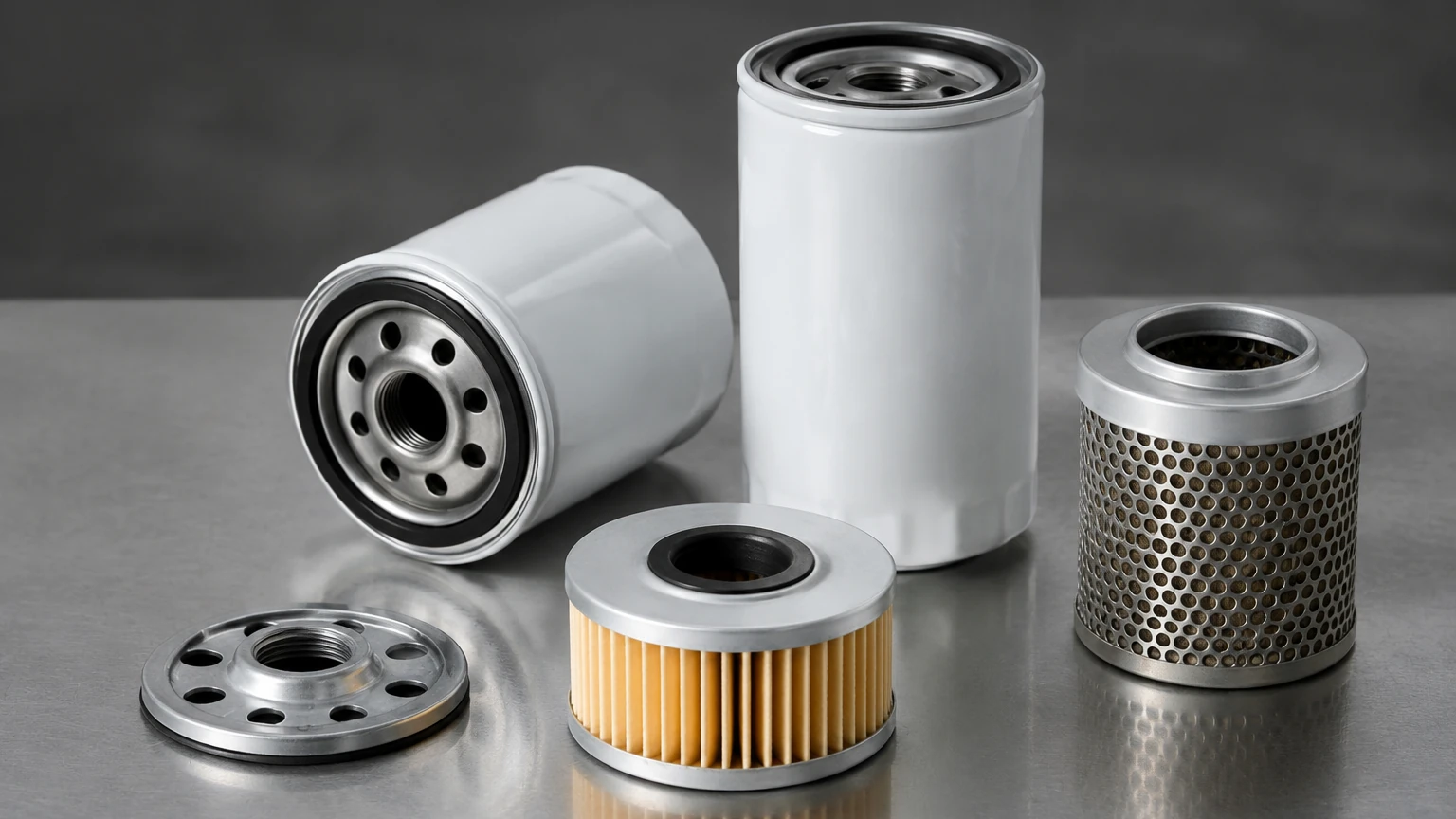
The fundamental advantage of the spin-on design is its "all-in-one" nature. The assembly typically consists of a base plate, a center tube, the filter media, a positioning spring, and the outer canister.
1. The Base Plate: This is the interface between the filter and the machine. It contains the threaded mounting hole and the inlet ports through which dirty oil enters. Precision machining of the base plate is vital to prevent cross-threading and ensure a leak-proof seal under high-pressure pulses.
2. The Filter Media: While many commercial filters use cellulose or synthetic fibers, industrial-grade spin-on filters often utilize stainless steel wire mesh or pleated metal elements. These materials offer superior resistance to high temperatures and aggressive chemical additives found in modern lubricants.
3. The Bypass Valve: A critical safety feature, the bypass valve ensures that the engine or hydraulic system is never starved of oil. If the filter becomes clogged or if the oil is too viscous (such as during a cold start), the valve opens to allow unfiltered oil to circulate. Engineering the correct opening pressure is essential to balance component protection with system lubrication requirements.
4. The Anti-Drainback Valve: This prevents oil from draining out of the filter when the system is shut down, ensuring immediate lubrication upon restart and reducing "dry start" wear.
Material Science in Industrial Filtration Media
The choice of media within a spin on lube oil filter dictates its efficiency, dirt-holding capacity, and service life. In demanding industrial applications, traditional paper-based media often fails due to moisture absorption or chemical degradation.
Stainless steel wire mesh, a core competency of Kaifil, provides a robust alternative. Metal media can be engineered with precise micron ratings, ranging from coarse straining to fine filtration. The use of 304 or 316L stainless steel ensures that the filter media does not react with synthetic lubricants or hydraulic fluids. Furthermore, pleated stainless steel designs significantly increase the surface area within the compact canister, allowing for lower pressure drops and extended intervals between replacements.
In the context of the Main Page of industrial filtration, the transition toward metal-based spin-on elements is driven by the need for durability in environments where pressure spikes and thermal cycling are common.
Critical Specifications for Engineering Selection
When specifying a spin on lube oil filter for an OEM project or a facility-wide maintenance upgrade, several technical parameters must be verified:
Micron Rating: Nominal vs. Absolute
Engineers must distinguish between nominal ratings (an approximate value) and absolute ratings (the diameter of the largest spherical particle that can pass through the filter). For high-precision hydraulic systems, an absolute rating is often required to protect sensitive servo valves and pumps.
Beta Ratio (β)
The Beta Ratio provides a more accurate picture of filtration efficiency than a simple percentage. It represents the ratio of particles of a given size in the upstream fluid versus the downstream fluid. A higher Beta Ratio indicates superior particle capture efficiency.
Maximum Operating Pressure and Burst Pressure
Industrial systems often operate at higher pressures than automotive systems. A spin-on filter must be rated for the maximum system pressure, including potential surges. The burst pressure—the point at which the canister physically fails—should typically be at least 1.5 to 2 times the maximum operating pressure to provide a necessary safety margin.
Flow Rate and Pressure Drop (ΔP)
Every filter introduces a restriction to the flow. A high pressure drop can lead to energy inefficiency and premature activation of the bypass valve. Selecting a filter with a high-permeability media, such as precision-woven wire mesh, helps maintain high flow rates with minimal resistance.
Customization and OEM Integration
Standard spin-on filters often fall short in specialized industrial applications. For instance, in food processing or pharmaceutical manufacturing, the materials used in the filter must comply with strict regulatory standards. This is where custom manufacturing becomes indispensable.
Customization options for a spin on lube oil filter include:
* Custom Threading: Adapting the filter to non-standard metric or imperial mounting heads.
* Specialized Gaskets: Utilizing Viton, EPDM, or PTFE gaskets to handle extreme temperatures or corrosive fluids where standard Nitrile (Buna-N) would fail.
* Reinforced Canisters: Increasing the wall thickness of the outer shell to withstand high-vibration environments or external impacts in mining and construction applications.
* Integrated Sensors: Incorporating ports for differential pressure sensors to enable real-time monitoring of filter health.
Kaifil specializes in these tailored solutions, ensuring that the filtration component integrates seamlessly into the broader mechanical system while meeting specific performance benchmarks.
Operational Maintenance and Lifecycle Management
The total cost of ownership (TCO) of a spin on lube oil filter is not merely the purchase price, but the sum of the unit cost, the labor for replacement, and the cost of potential system downtime.
Predictive Maintenance
Rather than replacing filters on a fixed calendar schedule, many industrial operators now use predictive maintenance. By monitoring the pressure differential across the filter, teams can replace the spin-on unit exactly when it reaches its dirt-holding capacity. This prevents the unnecessary disposal of functional filters and protects the system from running in bypass mode.
Signs of Failure
Engineers should be trained to recognize signs of filter failure beyond a simple clog. These include:
* Canister Deformation: Indicating that the system has experienced pressure spikes exceeding the filter's rating.
* Gasket Leaks: Often a result of improper installation torque or chemical incompatibility.
* Metallic Debris in the Media: A secondary diagnostic tool; analyzing the particles trapped in the filter can provide early warning of internal component wear elsewhere in the machinery.
Selecting the Right Partner for Filtration Solutions
Choosing a spin on lube oil filter is a decision that impacts the reliability of multi-million dollar industrial assets. Relying on a manufacturer with a deep understanding of metal filtration ensures that the components provided are capable of withstanding the rigors of the field.
Kaifil’s commitment to quality manufacturing means that every component, from the precision-woven mesh to the final canister assembly, is engineered for durability. Whether you are designing a new hydraulic power unit or optimizing the filtration for a chemical processing line, technical support is vital for selecting the right micron rating and material composition.
For detailed product specifications, custom engineering inquiries, or to explore the full range of stainless steel filtration components, professionals are encouraged to review the resources available on the Kaifil Main Page.
Conclusion
The spin on lube oil filter is a deceptively simple component that performs a vital role in industrial operations. By moving beyond generic options and focusing on high-quality materials like stainless steel, and by paying close attention to technical specifications such as Beta ratios and burst pressures, engineering teams can significantly improve system uptime. In an era where industrial efficiency is paramount, the transition to precision-engineered filtration solutions is a strategic investment in equipment longevity and operational reliability.
