


Spin on Transmission Filter
In industrial transmission and hydraulic systems, maintaining fluid cleanliness is the single most critical factor in ensuring component longevity and operational reliability. The spin on transmission filter has become a standard solution across various sectors—including heavy machinery, chemical processing, and industrial gearboxes—due to its ease of maintenance and effective contaminant removal. For engineers and maintenance professionals, selecting the correct filter involves more than matching a thread size; it requires a deep understanding of filtration media, pressure dynamics, and material compatibility.
As a manufacturer specializing in precision filtration, Kaifil provides customized stainless steel and wire mesh solutions designed to meet the rigorous demands of industrial environments. Understanding the technical nuances of these components is essential for optimizing system performance and reducing the total cost of ownership.
The Engineering Behind Spin On Transmission Filters
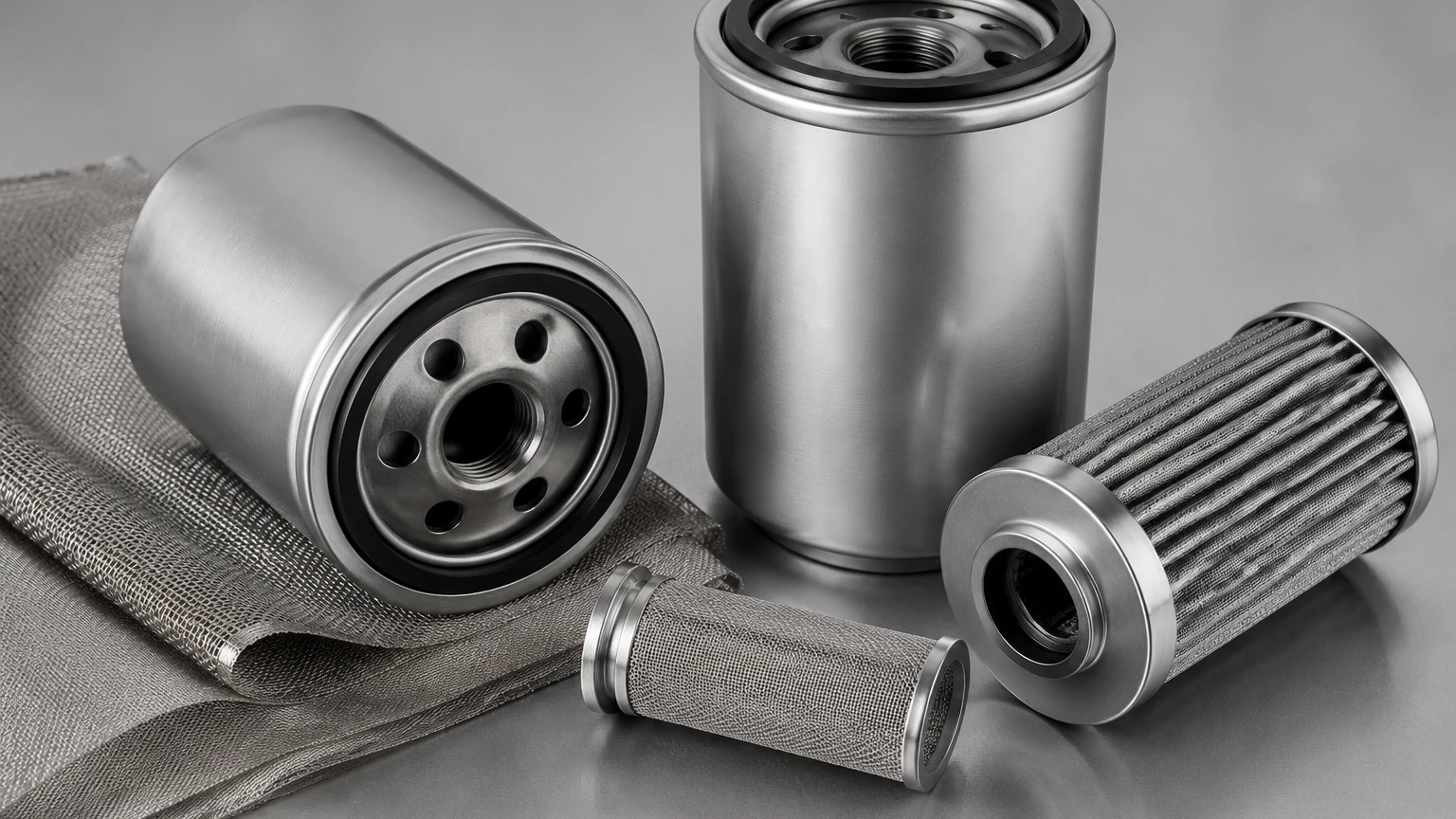
A spin on transmission filter is a self-contained filtration unit consisting of a filter element housed within a metal canister. The design is engineered for rapid replacement, where the entire assembly is threaded onto a permanent mounting head. This "canister" approach protects the filter media from external damage and simplifies the service process, minimizing downtime in critical industrial applications.
Internal Components and Functionality
The internal architecture of a high-quality spin on filter typically includes several key components:
1. Filter Media: The core of the unit, which may consist of synthetic fibers, cellulose, or, in high-performance industrial applications, stainless steel wire mesh. This media is usually pleated to maximize the surface area for contaminant capture.
2. Center Tube: A perforated metal or high-strength plastic core that provides structural support to the filter media, preventing it from collapsing under high differential pressure.
3. Bypass Valve: A critical safety feature designed to open when the filter becomes clogged or when the fluid is too viscous (such as during cold starts). This ensures that the transmission is never starved of lubrication, even if the fluid bypasses the filtration media temporarily.
4. Anti-Drainback Valve: Usually a rubber or silicone flap that prevents fluid from draining out of the filter when the system is shut down, ensuring immediate lubrication upon restart.
5. Sealing Gasket: A heavy-duty O-ring or flat gasket that ensures a leak-proof seal between the filter canister and the mounting base.
Media Selection: Stainless Steel vs. Traditional Materials
When specifying a spin on transmission filter for industrial use, the choice of filtration media significantly impacts the filter's efficiency, service life, and compatibility with different fluids. While many standard filters use cellulose or synthetic glass fibers, industrial applications often require the durability of metal mesh.
Stainless Steel Wire Mesh
For demanding environments—such as those involving high temperatures, aggressive chemicals, or high-viscosity fluids—stainless steel wire mesh is often the superior choice. Kaifil specializes in integrating precision-woven wire mesh into filter cartridges and spin-on designs. The advantages of metal mesh include:
* Reusability: Unlike disposable paper filters, stainless steel mesh can often be cleaned and reused, depending on the specific housing design and application.
* Chemical Resistance: Stainless steel is compatible with a wide range of hydraulic fluids, synthetic oils, and chemical additives that might degrade traditional cellulose media.
* High Temperature Stability: Metal mesh maintains its structural integrity at temperatures where synthetic fibers might soften or fail.
* Fixed Pore Size: Woven wire mesh provides a consistent, absolute micron rating, ensuring that the filtration performance does not fluctuate under varying pressure conditions.
Synthetic and Cellulose Media
Synthetic glass fibers are common in high-efficiency hydraulic filters due to their high dirt-holding capacity and low resistance to flow. Cellulose (paper) is a cost-effective option for light-duty applications but is susceptible to water absorption and chemical breakdown over time. For engineers, the choice depends on the specific ISO cleanliness codes required for the transmission system.
Critical Performance Metrics for Industrial Filters
Evaluating a spin on transmission filter requires looking beyond the physical dimensions. Engineers must confirm that the filter meets the specific hydraulic and mechanical requirements of the system.
Micron Rating: Nominal vs. Absolute
The micron rating indicates the size of particles the filter can trap. However, it is vital to distinguish between nominal and absolute ratings. A nominal rating is an average or "commercial" estimate of efficiency, whereas an absolute rating (often expressed via the Beta Ratio) indicates the filter's ability to trap 99% or more of particles at a specific size. In precision industrial transmissions, an absolute rating is generally required to protect sensitive valves and bearings.
Beta Ratio ($β$)
The Beta Ratio is the industry standard (ISO 16889) for measuring filtration efficiency. It is calculated by comparing the number of particles of a specific size upstream of the filter to the number of particles downstream. For example, a $β_{10} = 200$ means that for every 200 particles of 10 microns entering the filter, only one passes through. High-performance systems typically demand a Beta Ratio of 200 or 1000 for critical particle sizes.
Flow Rate and Pressure Drop ($ΔP$)
Every filter creates a resistance to flow, known as pressure drop. If the pressure drop is too high, it can trigger the bypass valve prematurely or cause cavitation in the pump. Factors affecting $ΔP$ include the viscosity of the fluid, the surface area of the media, and the pore size. When selecting a spin on transmission filter, the flow capacity must be rated significantly higher than the system's maximum flow to account for the eventual accumulation of contaminants.
Customization and OEM Solutions
In many industrial contexts, off-the-shelf filters do not meet the specialized requirements of unique machinery. This is where custom manufacturing becomes essential. For organizations looking for tailored solutions, you can Review product options and application support to find configurations that match specific engineering blueprints.
Custom Threading and Housing
Industrial equipment often uses non-standard mounting heads. Custom spin-on filters can be manufactured with specific thread types (BSP, NPT, Metric) and canister materials (such as reinforced steel or aluminum) to withstand high-pressure spikes or corrosive external environments.
Specialized Gasket Materials
The standard Buna-N (Nitrile) gasket is suitable for many oils, but applications involving high heat or synthetic fire-resistant fluids may require Viton (FKM) or EPDM seals. Customizing the gasket material ensures the filter remains leak-proof throughout its entire service life.
Risks of Improper Filter Selection
Using an incorrect or low-quality spin on transmission filter can lead to catastrophic system failure. The risks include:
* Media Migration: In low-quality filters, the media itself can break down and release fibers into the fluid stream, causing blockages in precision components.
* Bypass Failure: If the bypass valve is set at the wrong pressure, it may remain closed when it should open (starving the system) or open too early (allowing dirty fluid to circulate).
* Canister Bursting: In systems with high-pressure spikes, a standard-duty canister may suffer from fatigue and eventually burst, leading to fluid loss and environmental hazards.
* Incompatibility: If the filter media or seals are not compatible with the transmission fluid, they can swell, shrink, or dissolve, resulting in total filtration failure.
Maintenance and Replacement Best Practices
To ensure the longevity of an industrial transmission, a proactive maintenance schedule is required. The replacement of a spin on transmission filter should be dictated by either a fixed service interval (hours of operation) or, more ideally, by a differential pressure indicator.
Installation Steps
1. Clean the Mounting Head: Ensure no old gasket material or debris remains on the sealing surface.
2. Lubricate the Gasket: Apply a thin film of clean transmission fluid to the new filter's gasket to prevent it from binding or tearing during installation.
3. Hand Tighten: Most spin-on filters should be tightened by hand until the gasket makes contact, then turned an additional 3/4 to 1 full turn. Over-tightening with a wrench can deform the gasket or damage the threads.
4. Verification: After installation, run the system and check for leaks. Re-check the fluid level, as the new filter canister will absorb a portion of the system's fluid volume.
Conclusion: Selecting a Reliable Filtration Partner
For engineers and procurement teams, the spin on transmission filter is a small but vital component of a much larger industrial ecosystem. Achieving the right balance between filtration efficiency, flow capacity, and durability requires technical expertise and high-quality manufacturing.
Kaifil's commitment to precision engineering and custom stainless steel filtration ensures that industrial systems operate at peak efficiency. Whether you require standard replacements or a completely customized OEM filtration solution, focusing on technical specifications and material quality is the key to preventing downtime and extending the life of your equipment. For further technical details and to explore our range of custom metal filtration components, visit our Main Page to connect with our engineering team.
