


Water Oil Separator System
In industrial processing, the management of fluid purity is a critical engineering challenge. A water oil separator system is a specialized piece of equipment designed to isolate and remove non-emulsified oils, hydrocarbons, and suspended solids from water or process fluids. These systems are essential across diverse sectors, including chemical processing, food and beverage production, hydraulic maintenance, and large-scale water treatment. Achieving high-efficiency separation requires an understanding of fluid dynamics, material science, and the specific mechanical components that facilitate the transition from a contaminated mixture to a refined output.
For engineers and procurement teams, selecting the right water oil separator system involves more than comparing flow rates. It requires a deep dive into the physical properties of the fluids involved, the desired output purity, and the durability of the filtration media used within the system. As a professional manufacturer of stainless steel filtration solutions, Kaifil provides the precision components necessary to ensure these systems operate within their designed parameters under demanding industrial conditions.
Engineering Principles of the Water Oil Separator System
The fundamental operation of a water oil separator system relies on the principle of differential specific gravity. Most oils have a lower density than water, meaning they naturally tend to float to the surface if given sufficient time in a low-turbulence environment. This process is governed by Stokes' Law, which calculates the settling (or rising) velocity of a droplet based on its size, the density difference between the two fluids, and the viscosity of the continuous phase.
Gravity Separation vs. Coalescence
In basic gravity separators, such as API (American Petroleum Institute) separators, the fluid resides in a large tank where velocity is reduced, allowing larger oil droplets to rise. However, gravity alone is often insufficient for removing smaller oil droplets (typically those under 150 microns).
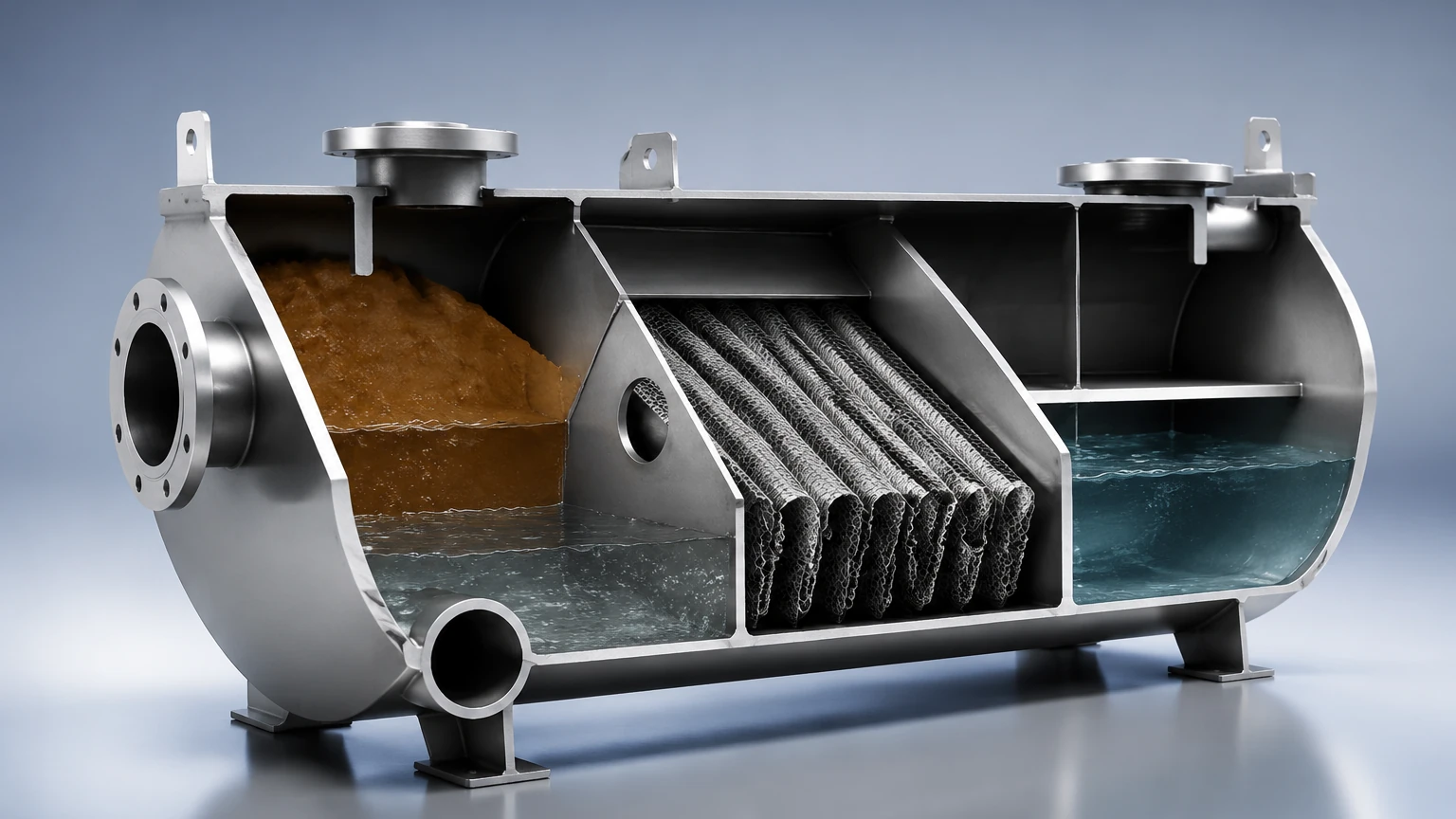
To address finer contaminants, a modern water oil separator system incorporates coalescing media. Coalescence is the process where small droplets collide and merge into larger droplets on the surface of a filter medium. As these droplets grow, their buoyancy increases, allowing them to rise more rapidly to the surface for removal. This is where the quality of the internal filtration components becomes paramount. High-surface-area stainless steel wire mesh or specialized metal cartridges are often used to provide the necessary impingement surfaces for effective coalescence.
Critical Components and Filtration Media
The efficiency of any water oil separator system is dictated by its internal hardware. While the tank design provides the environment, the filtration media performs the separation. Stainless steel is the preferred material for these components due to its mechanical strength and resistance to the corrosive nature of many industrial fluids.
Stainless Steel Wire Mesh Filters
Precision-woven wire mesh is a cornerstone of industrial separation. In a coalescing environment, the mesh must be engineered with specific pore sizes to capture oil droplets without causing excessive pressure drops. Stainless steel mesh offers the advantage of being "oleophilic" (oil-attracting) or "hydrophobic" (water-repelling) depending on surface treatments, which can significantly enhance the separation of tight emulsions.
Sintered Metal Cartridges
For applications requiring high-pressure durability or extremely fine filtration, sintered metal cartridges are utilized. These components consist of multiple layers of stainless steel mesh that are fused together through a high-temperature sintering process. This creates a porous structure that is physically robust and capable of maintaining its integrity even when subjected to back-washing or chemical cleaning cycles.
Baffles and Distribution Plates
Internal baffles are used to direct flow and minimize turbulence. If the fluid enters the system too quickly or with too much agitation, the oil droplets can break down into smaller, harder-to-separate particles. Precision-cut metal distribution plates ensure that the fluid is spread evenly across the coalescing media, maximizing the contact time and improving overall system throughput.
Key Evaluation Criteria for System Selection
When evaluating a water oil separator system for a specific industrial application, technical professionals must confirm several variables to ensure long-term performance and compliance with environmental standards.
1. Inlet Oil Concentration and Droplet Size: The system must be sized based on the maximum expected oil load. If the oil is heavily emulsified (droplets smaller than 20 microns), a standard gravity separator will fail, and a high-performance coalescing system with fine stainless steel media will be required.
2. Chemical Compatibility: The presence of solvents, surfactants, or varying pH levels can degrade lower-quality materials. Utilizing 304 or 316L stainless steel components ensures that the internal structures of the separator do not corrode or leach contaminants into the process stream.
3. Operating Temperature: High temperatures can lower the viscosity of oil, which generally aids separation, but it can also weaken plastic or polymer-based filter media. Stainless steel components remain stable at elevated temperatures, making them ideal for steam-cleaned systems or high-heat chemical processes.
4. Flow Rate and Retention Time: The system must provide adequate residence time for the separation to occur. Oversizing a system can lead to unnecessary costs, while undersizing will result in oil carryover in the effluent.
To explore specific hardware configurations and technical specifications for these components, engineers can visit the Main Page for detailed product data.
Maintenance, Performance Monitoring, and Total Cost of Ownership
A common pitfall in industrial procurement is focusing solely on the initial capital expenditure (CAPEX) while overlooking the operational expenditure (OPEX). A water oil separator system requires consistent monitoring to maintain its efficiency.
Pressure Drop Monitoring
As the filtration media captures solids and facilitates oil coalescence, the differential pressure across the filter will increase. Monitoring this pressure drop is essential for determining when the internal components need cleaning or replacement. High-quality stainless steel filters are designed to handle significant pressure differentials without collapsing, providing a safety margin for the system.
Cleaning and Reusability
Unlike disposable plastic filters, stainless steel filtration elements are often cleanable. Depending on the contaminant, they can be cleaned via ultrasonic baths, chemical soaking, or back-pulsing. This reusability significantly reduces the total cost of ownership by extending the life of the internal components and reducing waste disposal costs.
Replacement Cycles
While stainless steel is durable, it is not infinite. Factors such as erosion from high-velocity particles or fatigue from pressure cycling will eventually necessitate replacement. Establishing a clear maintenance schedule based on the specific fluid characteristics of the plant is vital for preventing unscheduled downtime.
Customization and OEM Integration
No two industrial processes are identical, and off-the-shelf solutions often require modification to meet specific site constraints. Customization is a key factor in optimizing a water oil separator system. This includes tailoring the micron rating of the mesh, adjusting the physical dimensions of the filter cartridges to fit existing housings, and selecting the appropriate grade of stainless steel for the specific chemical environment.
Kaifil works closely with OEM partners and plant engineers to develop bespoke filtration components. Whether the application involves separating hydraulic oil from cooling water or recovering fats in a food processing line, the geometry and material properties of the filter can be engineered to maximize recovery rates and minimize maintenance intervals.
Industry-Specific Applications
Hydraulic and Lubrication Systems
In heavy machinery, water contamination in hydraulic oil can lead to component failure, corrosion, and fluid degradation. A water oil separator system integrated into the oil kidney loop removes moisture and prevents the formation of sludge, significantly extending the life of pumps and valves.
Chemical and Petrochemical Processing
In these environments, separators must handle aggressive hydrocarbons and volatile organic compounds (VOCs). The use of 316L stainless steel and precision-welded components ensures that the system remains leak-proof and resistant to chemical attack, maintaining safety and environmental compliance.
Food and Beverage Industry
Separators in this sector must meet stringent sanitary standards. Stainless steel is the material of choice due to its non-porous surface and ability to withstand Clean-in-Place (CIP) procedures. Removing oils and greases from wash water before discharge is not only an environmental requirement but often a prerequisite for water recycling programs.
Conclusion
Implementing an effective water oil separator system is a strategic investment in operational efficiency and environmental responsibility. By focusing on the technical merits of the separation media—specifically the use of high-grade stainless steel wire mesh and cartridges—engineers can ensure that their systems deliver consistent performance in the most demanding industrial landscapes. Understanding the balance between flow dynamics, material durability, and maintenance requirements allows for the selection of a system that provides the lowest total cost of ownership while meeting all regulatory and process purity standards.
For further technical details on custom filtration components and engineering support for separation systems, Review product options and application support to find the right solution for your specific industrial requirements.
