


Spiral Heat Exchanger Manufacturers
In the landscape of industrial thermal management, spiral heat exchangers (SHEs) represent a specialized solution for handling challenging fluids, such as slurries, high-viscosity liquids, and media prone to fouling. Selecting the right spiral heat exchanger manufacturers requires a deep understanding of engineering specifications, material science, and the integration of protective components like high-precision filtration systems. This guide examines the technical criteria for evaluating manufacturers and the operational considerations essential for engineers and procurement teams in the chemical, pharmaceutical, and food processing sectors.
Understanding the Engineering of Spiral Heat Exchangers
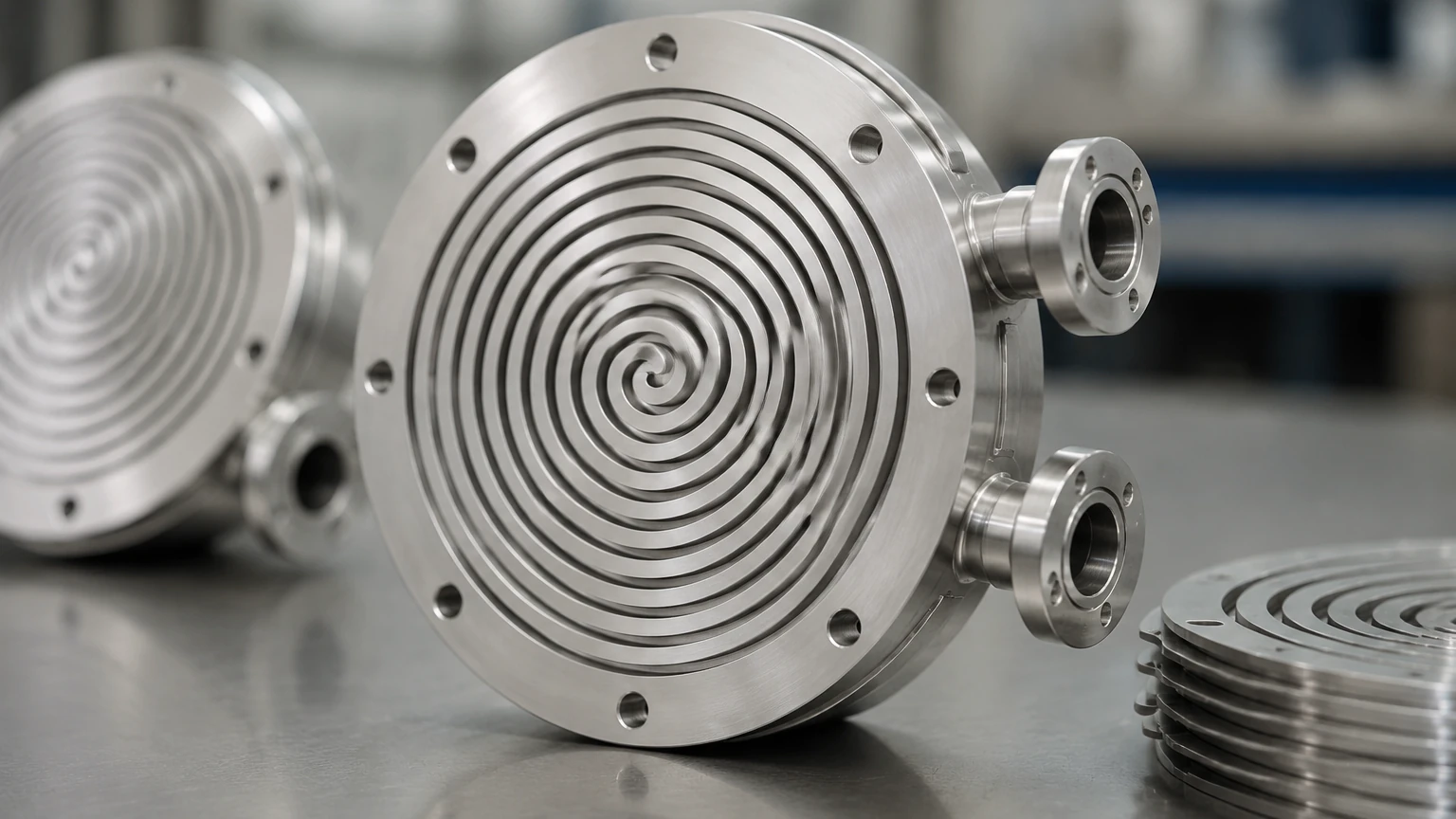
A spiral heat exchanger is constructed by rolling two long metal plates around a central core to create two concentric spiral channels. These channels allow two fluids to flow in counter-current or co-current directions, facilitating efficient heat transfer. The primary advantage of this design is its ability to maintain high turbulence even at low velocities, which enhances the heat transfer coefficient and provides a "self-cleaning" effect.
When vetting spiral heat exchanger manufacturers, technical teams must evaluate the manufacturer’s ability to manage channel spacing and plate thickness. Standard designs often utilize channel gaps ranging from 5mm to 25mm. A manufacturer’s precision in maintaining these gaps during the rolling and welding process is critical; any deviation can lead to uneven flow distribution, localized hot spots, or premature fouling. Furthermore, the choice of closure—whether welded or gasketed—depends on the pressure and temperature requirements of the specific application.
Key Criteria for Evaluating Manufacturers
Selecting a partner for thermal equipment involves more than comparing price points. For industrial-grade spiral heat exchangers, manufacturers must demonstrate competence in several core areas:
1. Fabrication Standards and Certifications
Reliable manufacturers adhere to international pressure vessel codes, such as ASME Section VIII, PED (Pressure Equipment Directive), or ISO 9001. These certifications ensure that the welding techniques, material traceability, and non-destructive testing (NDT) protocols meet safety and performance benchmarks. Engineers should request documentation on hydro-testing and helium leak testing to verify the integrity of the spiral welds.
2. Material Expertise
Given that SHEs are frequently used with corrosive or abrasive media, the manufacturer’s proficiency with diverse alloys is paramount. While 304 and 316L stainless steel are standard, demanding applications in the chemical industry may require Duplex stainless steel, Titanium, or Nickel alloys. The manufacturer must have experience in welding these specific materials to prevent intergranular corrosion or embrittlement in the heat-affected zones (HAZ).
3. Thermal Design and Simulation
Top-tier spiral heat exchanger manufacturers utilize advanced thermal modeling software to predict performance under varying load conditions. They should be able to provide detailed calculations for the Heat Transfer Coefficient (U), pressure drop (ΔP), and the Reynolds number within the spiral channels. Accurate modeling ensures that the unit is neither undersized (leading to process bottlenecks) nor oversized (leading to unnecessary capital expenditure).
The Role of Filtration in Protecting Heat Exchanger Integrity
One of the most significant risks to the longevity of a spiral heat exchanger is the accumulation of particulates within the narrow spiral channels. While the design is naturally resistant to fouling compared to shell-and-tube exchangers, large particles or fibrous materials can still cause blockages. This is where the integration of high-performance filtration becomes essential.
Manufacturers of filtration solutions, such as Kaifil, provide the necessary stainless steel wire mesh filters and cartridges that serve as the first line of defense for thermal equipment. By installing a precision filter upstream of the heat exchanger, operators can prevent debris from entering the spiral channels, thereby maintaining thermal efficiency and extending the intervals between manual cleanings. For detailed specifications on compatible filtration components, engineers can visit the Main Page of professional filtration manufacturers to review material compatibility and micron ratings.
Application-Specific Considerations
The requirements for spiral heat exchanger manufacturers vary significantly depending on the industry:
* Chemical Processing: Manufacturers must account for high-pressure ratings and aggressive chemical compatibility. The focus is often on leak prevention and the ability to handle exothermic reactions.
* Food and Beverage: In this sector, hygienic design is non-negotiable. Manufacturers must provide smooth surface finishes (often Ra < 0.8 μm) and ensure that the unit can be effectively cleaned using Clean-in-Place (CIP) protocols. Gasket materials must be FDA-compliant.
* Wastewater Treatment: Here, the ability to handle high solids content is the priority. Manufacturers often design "wide-gap" spirals to allow for the passage of sludge without clogging.
* Pharmaceutical: High levels of documentation and material certification (MTRs) are required to meet regulatory standards. Electropolishing of internal surfaces is frequently requested to prevent bacterial growth.
Common Risks and Mitigation Strategies
Even when working with reputable spiral heat exchanger manufacturers, certain operational risks must be addressed during the procurement phase:
Differential Pressure Management
Spiral heat exchangers are sensitive to large pressure differentials between the two channels, which can cause the internal plates to deform. Manufacturers should provide clear limits on maximum allowable working pressure (MAWP) and differential pressure. In systems where pressure spikes are common, engineers should consider incorporating pressure relief valves or reinforced plate designs.
Thermal Expansion
Because the spiral body is a single welded assembly, thermal expansion can create mechanical stress on the nozzles and the central core. Experienced manufacturers design the mounting supports and piping connections to accommodate this expansion, preventing fatigue cracks over long-term operation.
Fouling and Maintenance Access
While SHEs are marketed as self-cleaning, they are not maintenance-free. Manufacturers should offer designs that allow for easy access to the channels. This may include removable covers or hinged doors. If the media is known to be particularly difficult, the manufacturer should recommend specific cleaning agents or mechanical cleaning tools that will not damage the internal plate surfaces.
Customization and OEM Capabilities
In many industrial settings, a standard "off-the-shelf" heat exchanger is insufficient. Customization is often required to fit existing piping layouts or to meet unique thermal profiles. When evaluating spiral heat exchanger manufacturers, inquire about their OEM capabilities. Can they modify nozzle orientations? Can they integrate sensors for real-time temperature and pressure monitoring?
Furthermore, the synergy between the heat exchanger manufacturer and the filtration supplier is vital. For instance, if a manufacturer specifies a maximum particle size of 500 microns for their spiral channel, the procurement team must ensure that the stainless steel filter cartridges sourced from providers like Kaifil are rated accordingly. This holistic approach to system design prevents mismatched components that could lead to system failure.
Total Cost of Ownership (TCO)
The initial purchase price of a spiral heat exchanger is only one component of the total cost of ownership. Engineers must also factor in:
1. Energy Efficiency: A more efficient heat exchanger reduces utility costs (steam, cooling water) over the life of the unit.
2. Maintenance Costs: Units that are easier to clean and have higher-quality welds will incur lower labor costs and less downtime.
3. Replacement Cycles: High-quality materials and superior fabrication techniques extend the service life of the equipment, delaying the need for capital reinvestment.
4. Filtration Costs: Investing in robust, cleanable stainless steel filters can significantly reduce the frequency of expensive heat exchanger teardowns.
Conclusion: Making an Informed Selection
Selecting from the available pool of spiral heat exchanger manufacturers requires a balance of technical scrutiny and operational foresight. By focusing on fabrication standards, material expertise, and the integration of protective filtration systems, industrial professionals can ensure their thermal processes remain efficient and reliable.
For those seeking to optimize their filtration setup to protect critical thermal equipment, reviewing the technical resources and product specifications on the Main Page of a specialized manufacturer is a recommended next step. Ensuring that your filtration components—such as wire mesh filters and custom cartridges—are engineered to the same high standards as your heat exchanger is the most effective way to guarantee long-term process stability and performance in demanding industrial environments.
