


Stainless Cartridge Filter Housing
In industrial filtration, the performance of a filtration system is determined not only by the filter media itself but also by the vessel that contains it. A stainless cartridge filter housing serves as the critical pressure vessel designed to hold filter cartridges securely, directing fluid flow through the media while maintaining system integrity under varying pressures and temperatures. For engineers and procurement professionals in industries such as chemical processing, pharmaceuticals, and food and beverage, selecting the appropriate housing is a foundational step in ensuring process efficiency and equipment longevity.
Stainless steel is the industry standard for these housings due to its exceptional mechanical strength, resistance to corrosion, and ability to withstand rigorous cleaning protocols. As a specialized manufacturer, Kaifil provides engineered solutions that address the specific demands of high-purity and high-pressure applications. To make an informed decision, it is essential to understand the technical nuances of material grades, design standards, and configuration options.
Technical Foundations of Stainless Steel Selection
The choice of material for a stainless cartridge filter housing is dictated by the chemical composition of the process fluid and the environmental conditions of the facility. The most common grades used in industrial filtration are 304, 316, and 316L stainless steel.
Grade 304 Stainless Steel
304 stainless steel is a versatile and cost-effective option for general industrial applications, such as water treatment and pre-filtration for non-corrosive fluids. It offers good oxidation resistance but may be susceptible to pitting in high-chloride environments.
Grade 316 and 316L Stainless Steel
For more demanding environments, 316 stainless steel is preferred. The addition of molybdenum enhances its resistance to chlorides and acetic acids, making it suitable for chemical processing and marine applications. 316L, the low-carbon version, is specifically chosen for housings that require extensive welding. The lower carbon content minimizes carbide precipitation during welding, which prevents intergranular corrosion and ensures the structural integrity of the housing seams over time.
In sanitary applications, such as pharmaceutical or biotechnology manufacturing, the internal surface finish is as important as the material grade. Electropolishing is often employed to achieve a surface roughness (Ra) of less than 0.8 μm (32 μin) or even 0.4 μm (16 μin). This smooth finish prevents bacterial growth and facilitates thorough Clean-in-Place (CIP) procedures.
Engineering Design and Pressure Ratings
A stainless cartridge filter housing must be engineered to handle the maximum operating pressure of the system, including potential pressure spikes. Design standards such as the ASME Boiler and Pressure Vessel Code (Section VIII) provide the framework for ensuring safety and reliability. For professionals looking to integrate these components into complex systems, reviewing technical specifications on the Kaifil Main Page can provide insights into standard and custom pressure ratings.
Flow Rate and Sizing
Sizing a housing solely based on the inlet/outlet pipe size is a common engineering error. Proper sizing must account for the total flow rate, the viscosity of the fluid, and the maximum allowable pressure drop (Delta P). A housing that is too small will cause high fluid velocity, leading to increased turbulence, potential damage to the filter cartridges, and shortened service life. Conversely, an oversized housing may lead to stagnant zones where contaminants can settle.
Temperature Considerations
Stainless steel maintains its structural integrity across a wide temperature range. However, the operating temperature affects the selection of seals and gaskets. While the steel vessel may handle 200°C, the O-rings must be rated accordingly to prevent bypass or external leaks.
Closure Mechanisms and Operational Efficiency
The method used to seal the housing head to the body significantly impacts maintenance downtime and safety. The choice of closure is often a balance between pressure requirements and the frequency of cartridge replacement.
1. Swing Bolt Closures: These are the preferred choice for high-pressure applications or large multi-round housings. They provide a robust, high-integrity seal and are designed for durability in heavy-duty industrial environments. While they take longer to open than other types, they offer the highest level of safety.
2. V-Band Clamp Closures: Ideal for low to medium pressure applications, V-clamps allow for quick access to the cartridges without the need for specialized tools. They are commonly used in water filtration and light chemical applications where frequent cartridge changes are required.
3. Threaded/Nut Closures: Typically found on small, single-cartridge housings, these are simple and effective for low-flow laboratory or point-of-use applications.
Effective venting and draining are also critical. Every stainless cartridge filter housing should be equipped with a vent port at the highest point to release trapped air during startup and a drain port at the lowest point to allow for complete fluid removal before cartridge replacement. This ensures a safer working environment for operators and prevents cross-contamination between batches.
Sealing Integrity and Gasket Compatibility
Internal bypass is one of the most common causes of filtration failure. This occurs when fluid bypasses the filter media through gaps in the cartridge seating or the housing seals. To prevent this, the housing must feature a precision-engineered seat plate or spring-loaded cap that maintains constant pressure on the cartridge gaskets.
Selection of the external housing seal (O-ring) must be based on chemical compatibility and temperature. Common materials include:
* EPDM: Excellent for hot water, steam, and dilute acids.
* Viton (FKM): Preferred for hydrocarbons, oils, and many aggressive chemicals.
* PTFE/Teflon: Used for the most extreme chemical environments, though it lacks the elasticity of elastomers and requires careful installation.
* Silicone: Commonly used in food and beverage applications due to its low toxicity and high-temperature resistance.
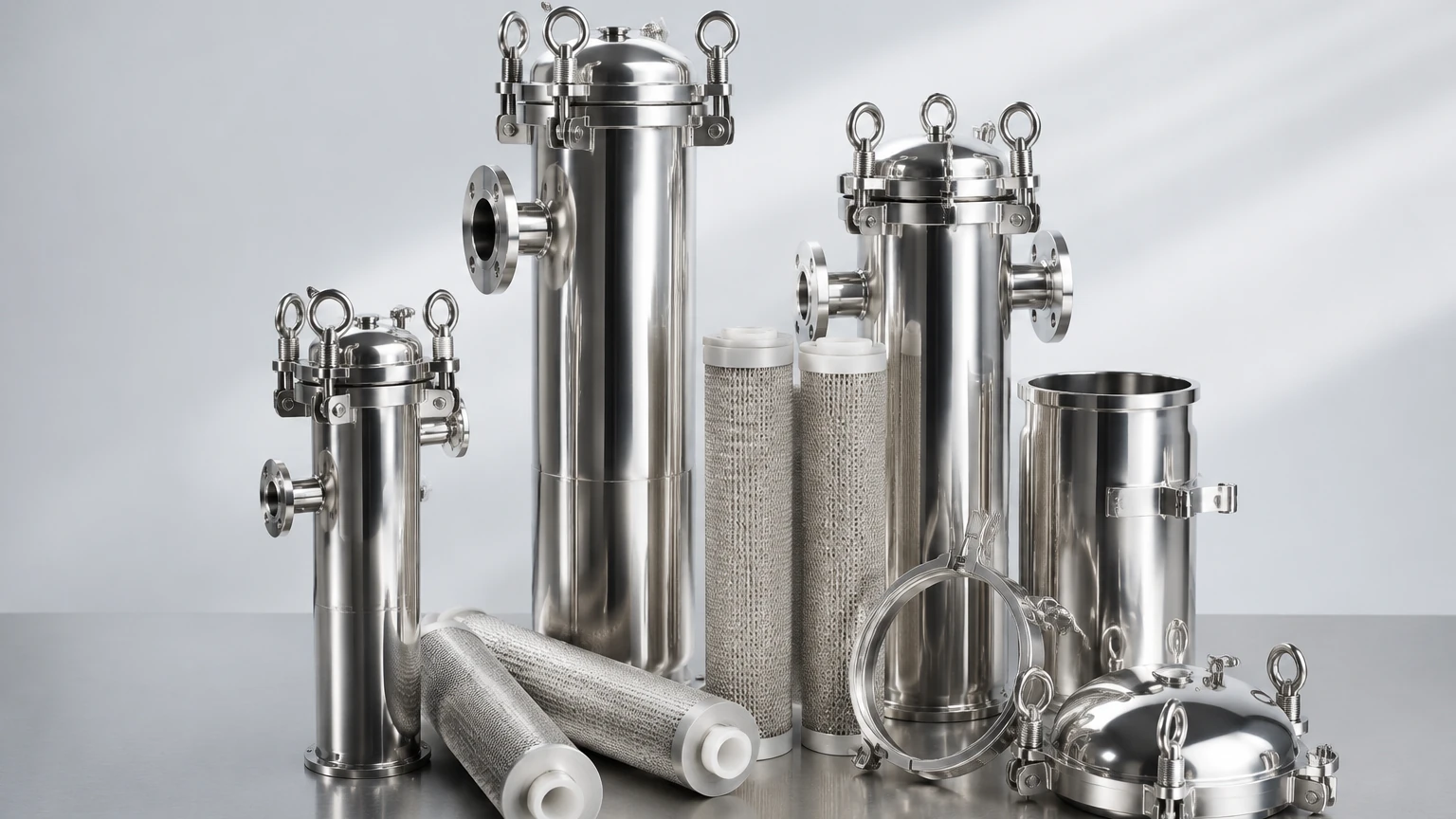
Multi-Round vs. Single-Round Configurations
The scale of the operation determines whether a single-round or multi-round stainless cartridge filter housing is required.
* Single-Round Housings: These contain a single filter cartridge and are used for low flow rates or side-stream filtration. They are compact and easy to install in tight spaces.
* Multi-Round Housings: Designed to hold anywhere from 3 to over 100 cartridges, these vessels handle high flow rates and high dirt-loading capacities. In multi-round designs, the internal geometry is critical to ensure even flow distribution across all cartridges. Uneven flow can lead to some cartridges clogging prematurely while others remain underutilized, resulting in inefficient filtration and increased operational costs.
Customization and Integration into Industrial Processes
Standard off-the-shelf housings may not always meet the unique constraints of a specific industrial process. Customization is often necessary to accommodate specific footprint requirements, unique connection types, or specialized instrumentation.
Connection Types
While NPT threaded connections are standard for smaller units, larger industrial housings often utilize ANSI or DIN flanges for secure integration into piping systems. In the pharmaceutical and food sectors, Tri-clamp (sanitary) fittings are mandatory to ensure there are no threads or crevices where material can accumulate.
Instrumentation and Automation
Modern filtration systems often incorporate differential pressure gauges or transmitters. These instruments monitor the pressure drop across the housing in real-time. By setting clear thresholds for "dirty" pressure drop, maintenance teams can replace cartridges based on actual performance data rather than arbitrary time intervals, optimizing the total cost of ownership.
Maintenance and Total Cost of Ownership
While the initial capital expenditure for a stainless cartridge filter housing is higher than plastic alternatives, the long-term value is significantly greater. Stainless steel housings are non-leaching, UV-resistant, and capable of decades of service if maintained correctly.
Maintenance protocols should include:
* Regular Inspection of Seals: O-rings should be inspected during every cartridge change and replaced if they show signs of compression set, swelling, or cracking.
* Passivation: Periodically treating the housing with a mild oxidant to restore the protective chromium oxide layer, especially after aggressive cleaning or exposure to corrosive chemicals.
* Cleaning Procedures: For housings used in food or pharma, ensuring the design is free of "dead legs" where fluid can stagnate is vital for maintaining hygiene.
By focusing on high-quality manufacturing and precise engineering, Kaifil ensures that each housing provides a reliable foundation for industrial filtration. For engineers evaluating system requirements, confirming the compatibility of the housing design with the intended cartridge type (e.g., DOE, Code 7, or 222/Flat) is a critical final step before procurement.
In summary, a stainless cartridge filter housing is a precision-engineered component that must be selected based on a rigorous analysis of flow dynamics, chemical compatibility, and safety standards. Whether for a simple water pre-filtration task or a complex pharmaceutical manufacturing process, the integrity of the housing is paramount to the success of the filtration strategy.
