


Stainless Steel Bag Filter Housings
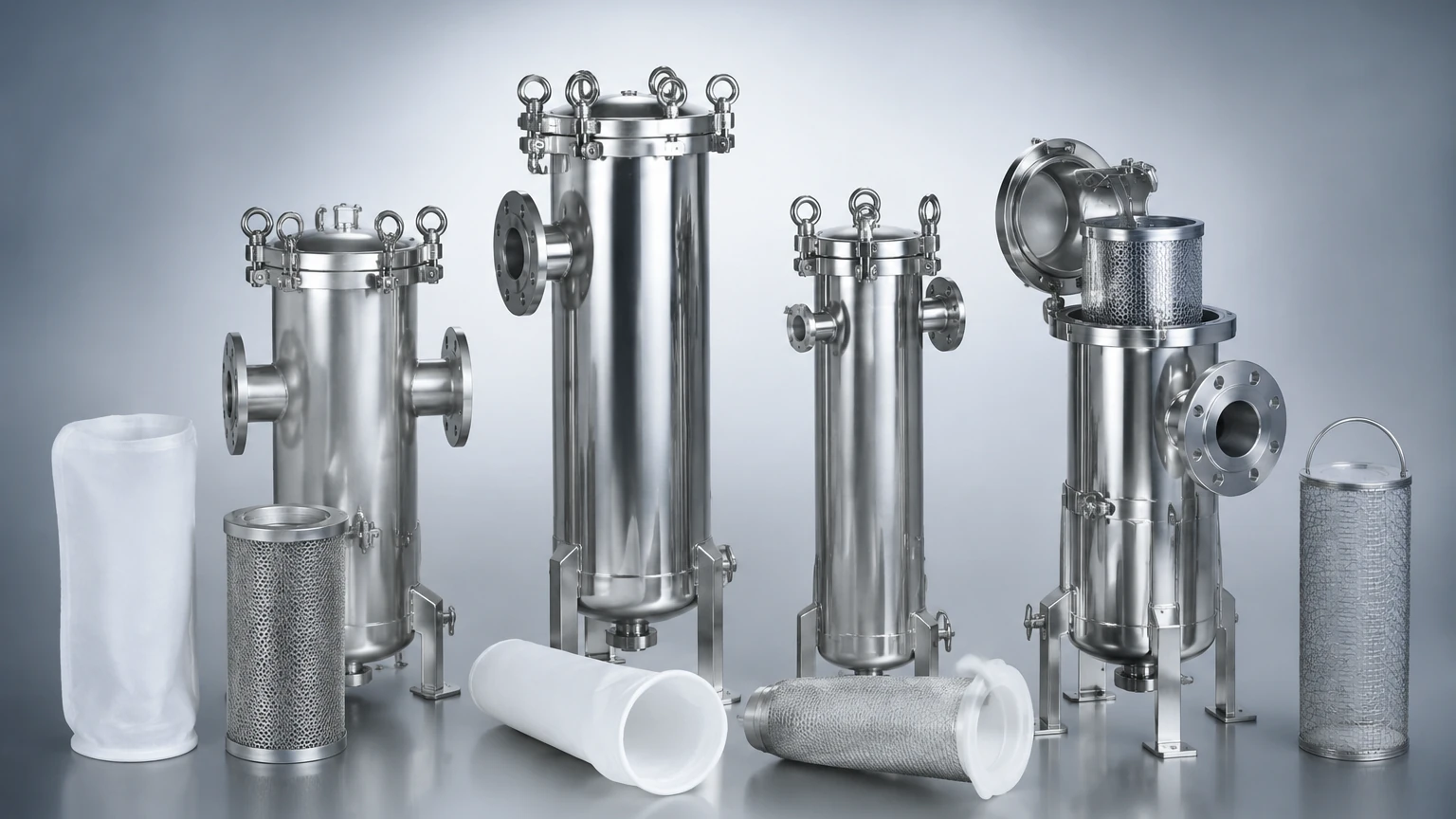
In industrial liquid filtration, the selection of a pressure vessel is as critical as the selection of the filter media itself. Stainless steel bag filter housings serve as the primary containment system for filter bags, providing the structural integrity required to handle high flow rates and significant differential pressures. For engineers and procurement teams, understanding the technical nuances of these housings—ranging from material grades to closure mechanisms—is essential for ensuring system longevity and process efficiency.
Stainless steel is the industry standard for high-performance filtration due to its mechanical strength, thermal stability, and resistance to a broad spectrum of chemicals. Whether used in chemical processing, water treatment, or food and beverage production, these housings must be engineered to meet specific operational parameters to prevent bypass, leaks, or structural failure.
Material Selection: SS304 vs. SS316L
The choice between Grade 304 and Grade 316L stainless steel is primarily dictated by the chemical composition of the fluid being processed and the environmental conditions of the facility.
Grade 304 Stainless Steel
SS304 is the most common material used for industrial filter housings. It offers excellent durability and good corrosion resistance for most water-based applications and mild chemicals. It is a cost-effective solution for general industrial use where the risk of chloride-induced pitting or high-acid exposure is low.
Grade 316L Stainless Steel
SS316L contains molybdenum, which significantly enhances its resistance to pitting and crevice corrosion, particularly in environments containing chlorides or high-salinity fluids. The "L" stands for low carbon, which improves weldability and reduces the risk of carbide precipitation during the welding process—a critical factor in maintaining the structural integrity of a pressure vessel. SS316L is typically specified for pharmaceutical, marine, and aggressive chemical applications.
Structural Design and Flow Configurations
The mechanical design of stainless steel bag filter housings determines how easily a system can be maintained and how effectively it handles fluid dynamics. There are two primary configurations for fluid entry: side-entry and top-entry.
Side-Entry Housings
In a side-entry design, the fluid enters through a nozzle on the side of the housing. This design is often more economical and allows for a simpler lid construction. However, it requires the fluid to travel over the top of the filter bag, which can sometimes lead to more turbulence or difficulty in ensuring a perfect seal if the bag is not seated correctly.
Top-Entry Housings
Top-entry housings are engineered for high-purity applications. The inlet is located directly in the center of the top cover. When the lid is closed, it compresses the filter bag's sealing ring directly, creating a 360-degree positive seal. This design virtually eliminates the risk of bypass, ensuring that all fluid must pass through the filter media. It also simplifies bag changes, as there is less residual fluid trapped above the bag seal.
Single vs. Multi-Bag Housings
* Single Bag Housings: Ideal for batch processing or lower flow rate applications. They are compact and easy to integrate into existing piping systems.
* Multi-Bag Housings: Designed for high-volume applications where flow rates exceed the capacity of a single bag. These units can house anywhere from 2 to 24 bags (or more), allowing for continuous operation and longer intervals between maintenance cycles. They often feature a davit arm or hydraulic lift to assist in opening the heavy top covers.
Technical Specifications and Performance Criteria
When evaluating stainless steel bag filter housings, engineers must look beyond the physical dimensions and focus on the technical performance limits of the vessel.
Pressure Ratings and Safety Standards
Most industrial housings are designed to operate at pressures up to 150 PSI (10 bar) or 300 PSI (20 bar), depending on the wall thickness and closure type. It is essential to confirm that the housing complies with relevant pressure vessel codes, such as ASME Section VIII, which ensures the unit has been tested for safety under extreme conditions.
Sealing Mechanisms and O-Rings
The integrity of the filtration process depends on the seal between the housing and the filter bag, as well as the seal of the housing lid. Common O-ring materials include:
* Buna-N (Nitrile): Standard for water and oil applications.
* EPDM: Preferred for steam, hot water, and certain acids.
* Viton (FKM): High-temperature and chemical resistance.
* PTFE Encapsulated: Used for the most aggressive chemical environments where universal compatibility is required.
Surface Finish
In industries like food, beverage, and pharmaceuticals, the internal and external surface finish of the housing is critical. A standard industrial finish may suffice for water treatment, but sanitary applications require electropolishing or a high-grit mechanical polish (measured in Ra) to prevent bacterial growth and ensure ease of cleaning (CIP/SIP compatibility).
Engineering Considerations for Sizing and Selection
Correctly sizing a housing involves more than just matching the pipe diameter. The following factors must be calculated to ensure the system does not fail prematurely:
1. Viscosity Impact: High-viscosity fluids (like resins or syrups) create higher resistance. This requires larger housings or multiple bags to keep the "flux rate" (flow per unit of surface area) within manageable limits.
2. Particulate Loading: If the fluid has a high concentration of solids, a larger housing or a multi-stage filtration approach may be necessary to avoid frequent downtime for bag changes.
3. Differential Pressure (Delta P): Every housing has a clean pressure drop. The goal is to select a size where the clean Delta P is low (typically under 2 PSI), allowing the maximum possible room for the pressure to rise as the bag loads with contaminants before reaching the change-out point (usually 15-25 PSI).
4. Footprint and Clearance: Multi-bag housings require significant overhead clearance for lid opening and bag removal. Engineers must account for these spatial requirements during the facility layout phase.
Customization and OEM Capabilities
Standard off-the-shelf housings may not always meet the specific requirements of a complex industrial system. Customization options provided by manufacturers like Kaifil allow for better integration and performance. Common custom modifications include:
* Connection Types: Beyond standard NPT or BSP threads, housings can be fitted with ANSI flanges, DIN flanges, or sanitary Tri-Clamp connections.
* Heating Jackets: For fluids that must be maintained at a specific temperature to remain pumpable (such as waxes or heavy oils), steam or hot water jackets can be integrated into the housing wall.
* Instrumentation Ports: Adding extra ports for pressure gauges, vent valves, or sample taps allows for better process monitoring.
* Material Upgrades: For highly specialized applications, exotic alloys or specific interior coatings can be applied to standard stainless steel structures.
To explore specific configurations and technical data for your project, you can visit the Main Page for a comprehensive overview of available filtration components.
Maintenance and Total Cost of Ownership (TCO)
While the initial purchase price of a stainless steel bag filter housing is a factor, the total cost of ownership is determined by its durability and the ease of maintenance. A well-constructed housing should last for decades if maintained properly.
Bag Replacement Cycles
The housing design should facilitate quick bag changes to minimize downtime. Features like swing-bolt closures are preferred over standard hex nuts because they do not require specialized tools and are less likely to be lost during maintenance.
Cleaning and Inspection
Regular inspection of the internal support basket is necessary. If the basket becomes damaged or clogged, it can cause the filter bag to burst under pressure, leading to downstream contamination. Stainless steel baskets should be cleaned thoroughly to ensure the perforated area remains open for maximum flow.
Corrosion Monitoring
Even stainless steel can succumb to corrosion if process conditions change (e.g., increased temperature or concentration of chemicals). Periodic ultrasonic thickness testing or visual inspections for pitting can prevent catastrophic vessel failure.
Conclusion
Stainless steel bag filter housings are the backbone of many industrial filtration systems. By focusing on material compatibility, mechanical design, and precise sizing, engineering teams can ensure that their filtration processes remain efficient and cost-effective. Whether you are managing a high-volume water treatment plant or a precision chemical batching process, the housing must be viewed as a critical engineered component rather than a simple commodity. Selecting a manufacturer with the expertise to provide customized, high-quality stainless steel solutions is the first step toward achieving long-term operational success.
