


Sintered Stainless
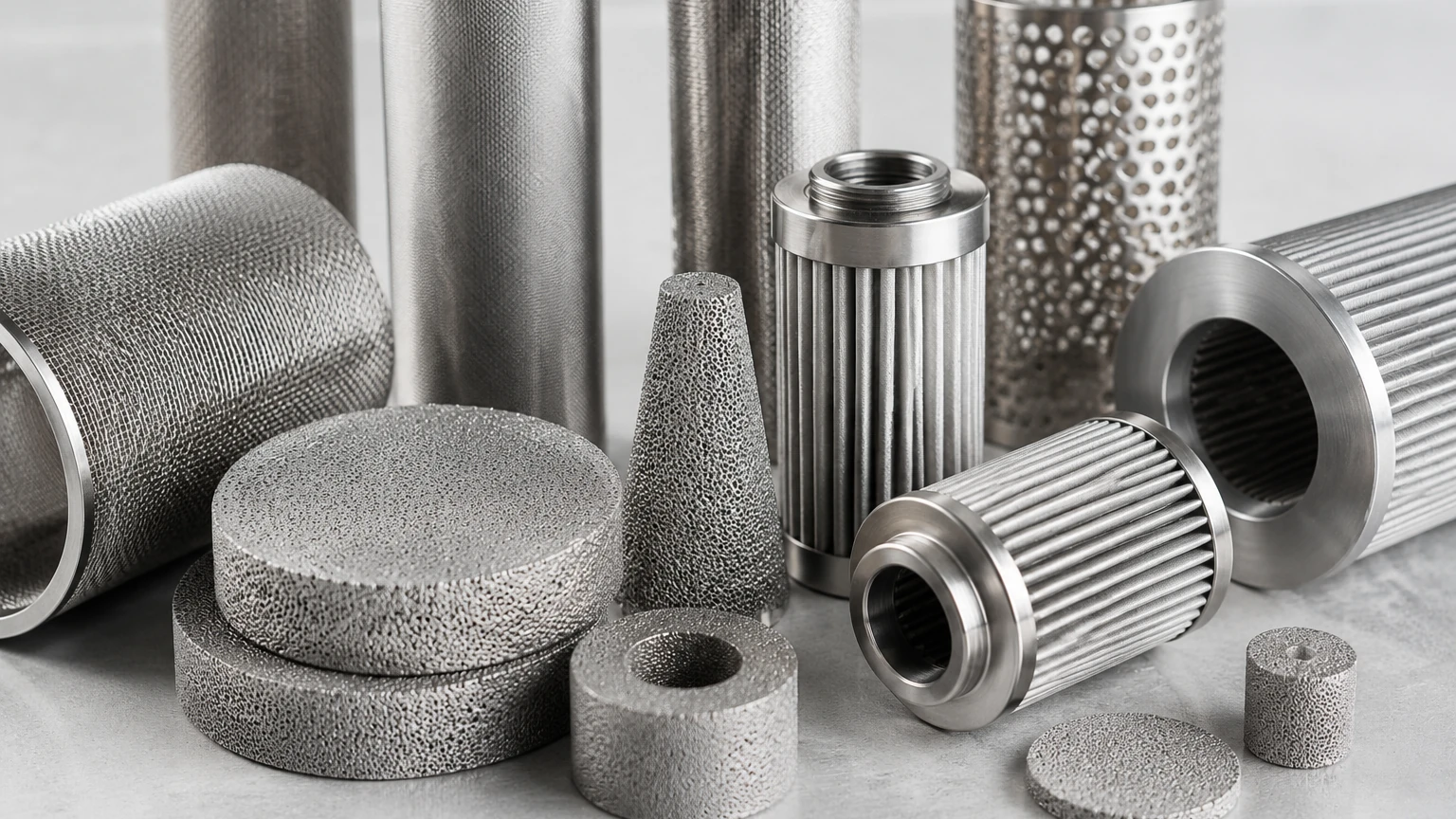
In the landscape of industrial filtration, the term "sintered stainless" refers to a category of high-performance materials engineered through a thermal bonding process. Unlike traditional woven wire mesh or non-metallic filter media, sintered stainless steel components are created by fusing multiple layers of metal mesh, fibers, or powders under controlled heat and pressure. This process, known as sintering, occurs at temperatures just below the melting point of the alloy, causing the contact points of the material to bond molecularly. The result is a porous, rigid, and exceptionally durable structure that maintains the chemical and thermal resistance of stainless steel while providing precise filtration capabilities.
For engineers and procurement teams, understanding the nuances of sintered stainless is critical for optimizing system longevity and process efficiency. Whether used in chemical processing, pharmaceutical manufacturing, or high-pressure hydraulic systems, these components offer a level of structural integrity that standard filters cannot match. As a specialized manufacturer, Kaifil provides a range of these solutions, which can be further explored on our Main Page.
The Engineering Process: How Sintered Stainless is Created
The production of sintered stainless steel filtration media is a precise metallurgical exercise. The process typically begins with the selection of the base material, most commonly Grade 316L stainless steel due to its superior corrosion resistance and low carbon content, which prevents intergranular corrosion after welding. Other alloys like 304L, 904L, or Hastelloy may be used for specific chemical environments.
1. Layering and Alignment
In the case of sintered wire mesh, multiple layers of woven cloth are stacked. These layers often include a fine filtration layer, a protective layer, and several support layers of coarser mesh to provide mechanical rigidity. The orientation of these layers is carefully calculated to achieve the desired pore distribution and flow characteristics.
2. Vacuum Sintering
The stack is placed in a vacuum furnace or a controlled-atmosphere furnace (often using hydrogen to prevent oxidation). Under high temperature and mechanical pressure, the wires at every contact point diffuse into one another. This creates a monolithic structure where the individual wires are no longer capable of shifting or fraying.
3. Calendering and Finishing
After sintering, the material is often "calendered"—passed through heavy rollers—to achieve a specific thickness and to lock in the micron rating. This ensures that the pore sizes are uniform across the entire surface of the sheet. The final product can then be pleated, welded into cartridges, or formed into custom shapes.
Key Performance Characteristics of Sintered Stainless
When evaluating filtration media, engineers must weigh the trade-offs between permeability, strength, and dirt-holding capacity. Sintered stainless excels in several specific categories that make it the preferred choice for demanding industrial applications.
Mechanical Stability and Integrity
One of the primary advantages of sintered stainless is its rigidity. In high-pressure applications, standard wire mesh can deform, leading to "pore migration" where the openings enlarge under stress, allowing contaminants to pass through. Sintered media eliminates this risk. Because the wires are fused, the pore geometry remains constant even under significant differential pressure.
Thermal and Chemical Resistance
Sintered stainless steel components can typically operate in temperatures ranging from -200°C to over 600°C (depending on the alloy and atmospheric conditions). This makes them indispensable for steam filtration and high-temperature gas processing. Furthermore, their resistance to a wide range of acids and alkalis allows for consistent performance in aggressive chemical environments where polymer-based filters would degrade.
Cleanability and Longevity
Unlike disposable depth filters, sintered stainless is designed for reuse. The robust nature of the material allows for various cleaning protocols, including:
* Backpulsing/Backwashing: Using reverse flow to dislodge surface cake.
* Ultrasonic Cleaning: Using high-frequency sound waves in a detergent bath to remove fine particulates from deep within the pores.
* Chemical Cleaning: Using solvents or caustic burns to dissolve organic or inorganic scaling.
This cleanability significantly reduces the total cost of ownership by extending the replacement cycle from weeks to years.
Comparison of Sintered Media Types
Not all sintered stainless products are created equal. The specific form of the starting material—whether mesh, fiber, or powder—dictates the filter’s performance profile.
Sintered Wire Mesh
This is the most common form, consisting of 2 to 20+ layers of woven wire. It provides excellent surface filtration and is easy to clean. It is the standard choice for polymer melt filtration, hydraulic oil, and water treatment. Its predictable pore structure allows for very accurate micron ratings ranging from 1 to 200 microns.
Sintered Metal Fiber Felt (Non-Woven)
Produced from extremely fine stainless steel fibers (down to 2 microns in diameter) that are laid into a random web and sintered. This creates a high-porosity media (up to 80%) which offers a much higher dirt-holding capacity and lower pressure drop than sintered mesh. It is ideal for gas filtration and applications where deep bed filtration is required.
Sintered Metal Powder
Created by sintering spherical or irregular stainless steel powders. This results in a very dense and rigid component with tortuous flow paths. While it has a higher pressure drop than mesh or fiber, it is exceptionally strong and is often used for gas sparging, flame arrestors, and very fine liquid filtration in the pharmaceutical industry.
Selection Criteria: Engineering Considerations
Choosing the right sintered stainless filter requires a detailed analysis of the operating environment. Engineers should confirm the following parameters before finalizing a specification:
1. Micron Rating (Absolute vs. Nominal)
In sintered media, the rating is typically "absolute," meaning the largest particle that can pass through the filter. Because the pores are fixed, these filters offer much higher reliability than "nominal" filters, which rely on a statistical average of particle retention.
2. Differential Pressure (ΔP)
The initial pressure drop across a clean filter is a function of the media's permeability and the fluid's viscosity. For sintered stainless, engineers must ensure the system pump can handle the ΔP as the filter loads with contaminants. Sintered fiber felt is often chosen when a low initial ΔP is a priority.
3. Flow Velocity and Viscosity
High-viscosity fluids, such as polymers or heavy oils, require sintered media with high structural strength to withstand the forces required to push the fluid through the pores. Conversely, high-velocity gas applications must account for potential erosion or vibration, which sintered stainless naturally resists.
4. Housing Compatibility
The interface between the filter element and the housing is a common failure point. Sintered stainless elements are typically TIG welded to end fittings (such as 222, 226, or NPT threaded connectors) to ensure a bypass-free seal. Ensuring the metallurgy of the fitting matches the element is vital for preventing galvanic corrosion.
Common Risks and Implementation Challenges
While sintered stainless is a robust solution, improper implementation can lead to premature failure or system inefficiency. One common risk is "over-specification." Choosing a micron rating that is significantly finer than necessary will lead to rapid clogging and excessive cleaning cycles, increasing operational downtime.
Another risk involves the cleaning process itself. While these filters are durable, aggressive mechanical cleaning or the use of incompatible chemicals can eventually fatigue the metal or cause localized corrosion. It is essential to establish a cleaning protocol based on the specific contaminants being filtered. For instance, if the filter is capturing biological material, a heat-based sterilization or enzymatic cleaner may be required alongside physical backwashing.
Finally, engineers must be wary of "media migration" in lower-quality sintered products. If the sintering process was not performed under the correct vacuum and temperature conditions, individual wires or particles may break loose and enter the downstream flow. Sourcing from a manufacturer with rigorous quality control and bubble-point testing protocols is the only way to mitigate this risk.
Customization and OEM Integration
In many industrial settings, off-the-shelf filtration units fail to meet the specific geometric or performance constraints of a proprietary process. This is where the versatility of sintered stainless becomes a major asset. The material can be machined, pleated, and welded into nearly any configuration.
Customization options often include:
* Variable Layering: Combining different mesh counts to create a gradient-density filter that captures larger particles on the surface and finer particles in the core.
* Reinforced Structures: Adding internal cores or external shrouds to withstand extreme pressure spikes or mechanical impact.
* Surface Coatings: Applying specialized treatments to the stainless steel to enhance hydrophobicity or to provide additional resistance to specific chemical vapors.
As a manufacturer specializing in these technical requirements, Kaifil works with engineering teams to develop bespoke filtration components that integrate seamlessly into existing machinery. For more information on our manufacturing capabilities and to view our full range of industrial filtration solutions, please visit our Main Page.
Conclusion
Sintered stainless steel represents the pinnacle of industrial filtration technology for harsh and demanding environments. By fusing the inherent strengths of stainless steel with advanced sintering techniques, manufacturers create a medium that is precise, cleanable, and virtually indestructible under normal operating conditions.
When selecting a sintered solution, technical professionals must look beyond the initial purchase price and consider the total lifecycle value. The ability to clean and reuse a filter, combined with the security of an absolute micron rating and high thermal stability, often makes sintered stainless the most cost-effective choice for critical process industries. By focusing on material grade, pore structure, and proper maintenance, facilities can achieve optimized filtration performance that protects downstream equipment and ensures product purity.
