


Stainless Steel Bottle with Filter
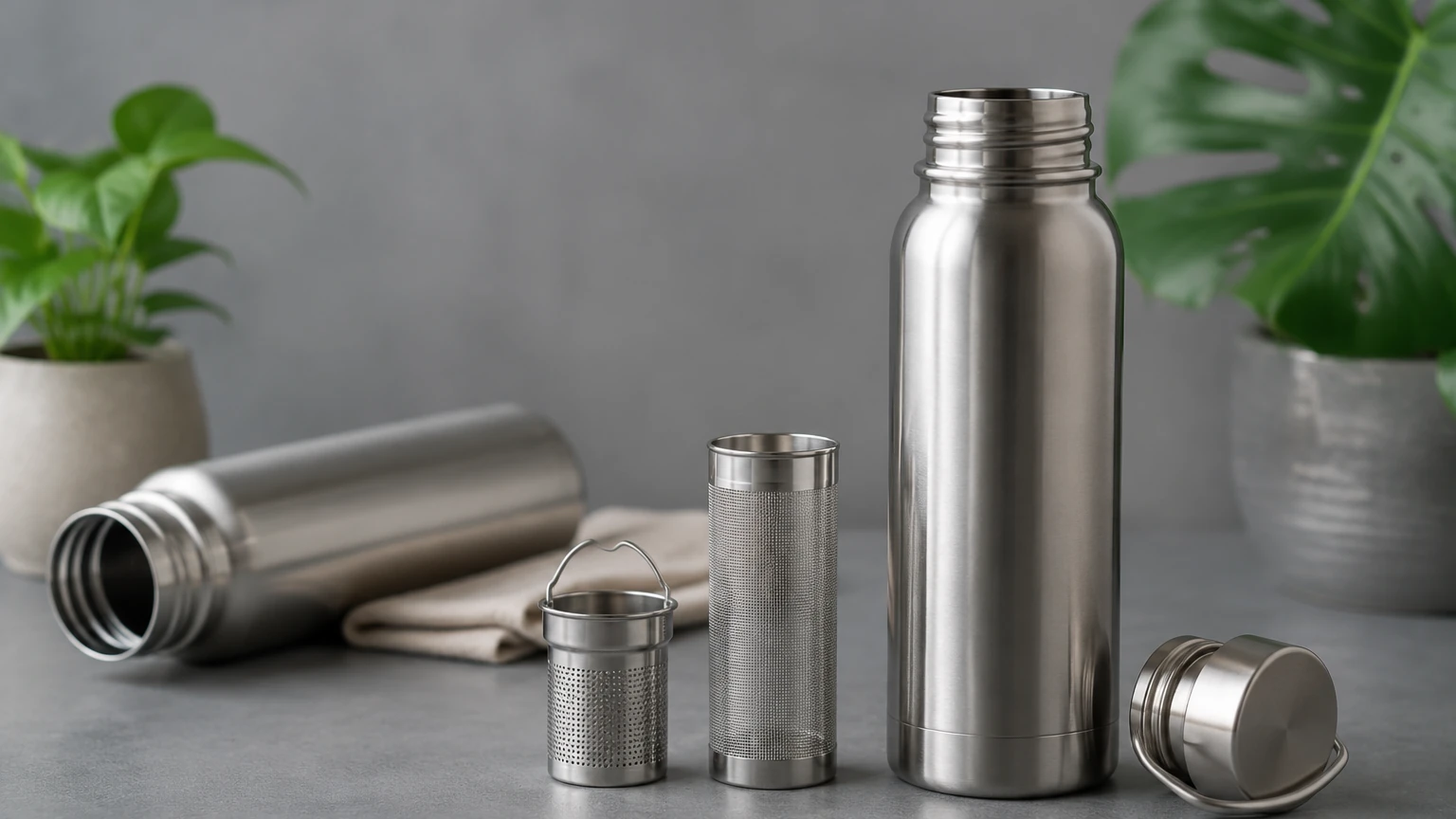
In industrial environments, the term "stainless steel bottle with filter" often transcends consumer-grade hydration products, referring instead to specialized filtration vessels, high-pressure sampling containers, and portable filtration units used in laboratory, pilot plant, and field-testing applications. For engineers and procurement professionals in the chemical, pharmaceutical, and food processing sectors, selecting a stainless steel bottle with filter requires a deep understanding of material science, filtration physics, and mechanical integrity. These components are critical for ensuring fluid purity, protecting sensitive analytical equipment, and maintaining the integrity of samples under varying thermal and chemical conditions.
As a professional manufacturer of custom stainless steel filtration solutions, Kaifil specializes in the engineering and production of precision metal filter components that meet the rigorous demands of industrial processing. Understanding the technical nuances of these systems is essential for optimizing performance and ensuring long-term reliability in the field.
Engineering Fundamentals of Stainless Steel Filtration
The performance of a stainless steel bottle with filter is primarily dictated by the characteristics of the filter media and the structural integrity of the container. Unlike polymer-based filters, stainless steel offers superior mechanical strength, wide temperature tolerance, and exceptional chemical resistance.
Material Selection: 304 vs. 316L
The choice of alloy is the first critical decision in the design process. While Grade 304 stainless steel is suitable for general-purpose applications and many food-grade environments, Grade 316L is the standard for more demanding industrial applications. The addition of molybdenum in 316L provides enhanced resistance to pitting and crevice corrosion, particularly in environments containing chlorides or acidic compounds. For pharmaceutical and high-purity chemical applications, the low-carbon content of 316L also minimizes carbide precipitation during welding, ensuring the structural integrity of the filter housing and mesh interfaces.
Filter Media Types
Industrial filter bottles typically utilize one of three types of stainless steel media:
1. Woven Wire Mesh: Available in various weaves (plain, twill, or dutch), woven mesh provides precise pore sizes and is easily cleaned. It is ideal for surface filtration where particles are retained on the mesh surface.
2. Sintered Metal Mesh: This involves bonding multiple layers of wire mesh through a high-temperature diffusion process. Sintering significantly increases mechanical strength and provides a stable pore structure that does not shift under high pressure.
3. Sintered Metal Fiber: Produced from non-woven stainless steel fibers, this media offers high porosity (up to 80%) and excellent dirt-holding capacity, making it suitable for depth filtration applications.
Design Considerations for Integrated Filter Bottles
When integrating a filtration element into a bottle or small-scale pressure vessel, several engineering factors must be balanced to ensure the system functions correctly within its intended application.
Micron Ratings and Filtration Efficiency
The micron rating defines the size of particles the filter is designed to remove. It is vital to distinguish between nominal and absolute ratings. A nominal rating indicates the filter's ability to retain a majority of particles at a specific size, whereas an absolute rating represents the diameter of the largest spherical particle that can pass through the media. For critical industrial sampling, absolute-rated stainless steel filters are preferred to ensure consistent results and prevent downstream contamination.
Pressure Drop and Flow Rates
Every filter introduces a degree of resistance to fluid flow, known as pressure drop (ΔP). In a stainless steel bottle with filter, the design must account for the initial clean pressure drop and the terminal pressure drop (the point at which the filter is considered fouled). Engineers must ensure that the available system pressure—whether gravity-fed, hand-pumped, or pressurized via gas—is sufficient to overcome the resistance of the filter media while maintaining the required flow rate. Factors influencing ΔP include the effective filtration area (EFA), the viscosity of the fluid, and the pore size of the mesh.
Seal Compatibility and Connection Types
The interface between the filter element and the bottle body must be leak-proof. Common sealing materials include EPDM, Viton (FKM), and PTFE. The choice depends entirely on the chemical composition of the fluid and the operating temperature. Furthermore, the connection type—whether NPT threads, Tri-Clamp fittings, or custom compression seals—must align with existing piping or sampling hardware to ensure a secure fit.
Applications in Industrial Sampling and Portable Processing
The versatility of a stainless steel bottle with filter makes it indispensable across several specialized industrial sectors. These are not merely storage containers but active components in a process chain.
Chemical and Petrochemical Sampling
In chemical plants, obtaining a representative sample of a process stream often requires filtration at the point of collection to remove suspended solids that could interfere with laboratory analysis. A stainless steel bottle equipped with a high-pressure filter allows technicians to capture samples safely, even from volatile or corrosive lines, while ensuring the sample remains free of pipe scale or catalyst fines.
Pharmaceutical and Biotech Processing
For pharmaceutical manufacturing, cleanliness and sterilization are paramount. Stainless steel filter bottles are frequently used for the small-scale transfer of buffers, media, or active pharmaceutical ingredients (APIs). Because these units can be autoclaved or subjected to Steam-In-Place (SIP) cycles, they provide a reusable and reliable alternative to single-use plastic systems, reducing long-term waste and validation complexity.
Food and Beverage Quality Control
In the production of oils, spirits, and liquid flavorings, portable filtration units are used to test batches for clarity and purity. The inert nature of stainless steel ensures that no flavors or odors are leached into the product, which is a common risk with plastic-lined containers. The ability to use fine wire mesh filters allows for the removal of microscopic precipitates that could affect the final product's shelf stability.
Customization and OEM Capabilities
Standard off-the-shelf solutions rarely meet the specific needs of complex industrial systems. This is where the expertise of a manufacturer like Kaifil becomes essential. Customization allows engineers to tailor every aspect of the stainless steel bottle with filter to the application's unique parameters.
Tailored Filtration Geometry
Depending on the space constraints of the sampling station or the portable unit, the filter element can be designed as a pleated cartridge to maximize surface area, a simple disc for low-flow applications, or a cylindrical strainer for high-solids loading. Custom lengths and diameters ensure that the filter fits perfectly within the bottle housing without bypassing.
Advanced Surface Finishes
For applications involving sticky fluids or those requiring high-level sanitation, surface finishes such as electropolishing can be applied. Electropolishing reduces surface roughness (Ra), making the interior of the bottle and the filter mesh more resistant to bacterial adhesion and easier to clean during maintenance cycles.
To explore the full range of custom filtration components and engineering support available, technical teams should visit the Main Page to review product options and application support.
Performance Evaluation and Maintenance
To maintain the efficiency of a stainless steel bottle with filter, a structured maintenance and evaluation protocol must be established. Unlike disposable filters, stainless steel elements are designed for longevity, but their performance depends on proper care.
Cleaning and Regeneration
One of the primary advantages of stainless steel is its cleanability. Depending on the contaminant, filters can be regenerated using several methods:
* Backwashing: Reversing the flow of fluid through the filter to dislodge particles trapped on the surface.
* Chemical Cleaning: Using acids, alkalis, or specialized detergents to dissolve organic or inorganic fouling.
* Ultrasonic Cleaning: Utilizing high-frequency sound waves in a solvent bath to remove deeply embedded particles from complex mesh structures.
Integrity Testing
In critical applications, it is necessary to verify that the filter has not been damaged during use or cleaning. Bubble point testing is a common non-destructive method used to determine the pore size and integrity of the filter. By measuring the pressure required to force air through a liquid-saturated filter, engineers can confirm that the mesh remains within its specified micron rating.
Total Cost of Ownership (TCO)
While the initial investment in a stainless steel bottle with filter is higher than plastic or disposable alternatives, the TCO is often significantly lower. The durability of the materials, the ability to reuse the filter hundreds of times, and the elimination of disposal costs for contaminated plastic waste make stainless steel a more sustainable and cost-effective choice for industrial operations.
Selection Criteria for Technical Buyers
Before finalizing a purchase or starting a custom design project, purchasing teams and engineers should confirm the following data points to ensure the selected filtration solution is fit for purpose:
1. Fluid Characteristics: What is the chemical composition, viscosity, and temperature of the fluid? This dictates material and seal selection.
2. Contaminant Profile: What is the nature of the solids being removed? Are they hard, soft, fibrous, or abrasive? This influences the choice between surface and depth filtration.
3. Operating Pressure: What is the maximum pressure the bottle and filter will encounter? This determines the wall thickness and the need for sintered reinforcement of the mesh.
4. Regulatory Compliance: Does the application require FDA, 3A, or pharmaceutical-grade certification for food and drug contact?
5. Desired Service Life: How often can the process be stopped for filter cleaning or replacement?
By addressing these technical requirements early in the procurement process, organizations can avoid costly downtime and ensure that their filtration systems provide reliable, precise performance in even the most demanding industrial environments. Kaifil remains committed to providing the engineering expertise and manufacturing precision required to deliver these high-performance stainless steel filtration solutions to a global clientele.
