


Stainless Steel Filter Element
In the landscape of industrial processing, the reliability of filtration systems often dictates the efficiency of the entire production line. A stainless steel filter element serves as a critical component in these systems, providing a robust, heat-resistant, and chemically stable medium for separating solids from liquids or gases. Unlike disposable polymer or paper filters, stainless steel elements offer the structural integrity required for high-pressure environments and the longevity afforded by cleanability.
For engineers and procurement specialists, selecting the right filtration media involves a deep understanding of fluid dynamics, material science, and the specific mechanical demands of the application. As a specialized manufacturer, Kaifil focuses on delivering precision-engineered filtration solutions that address these complex variables. This guide examines the technical specifications, construction methods, and selection criteria essential for optimizing industrial filtration performance.
The Engineering Behind Stainless Steel Filter Elements
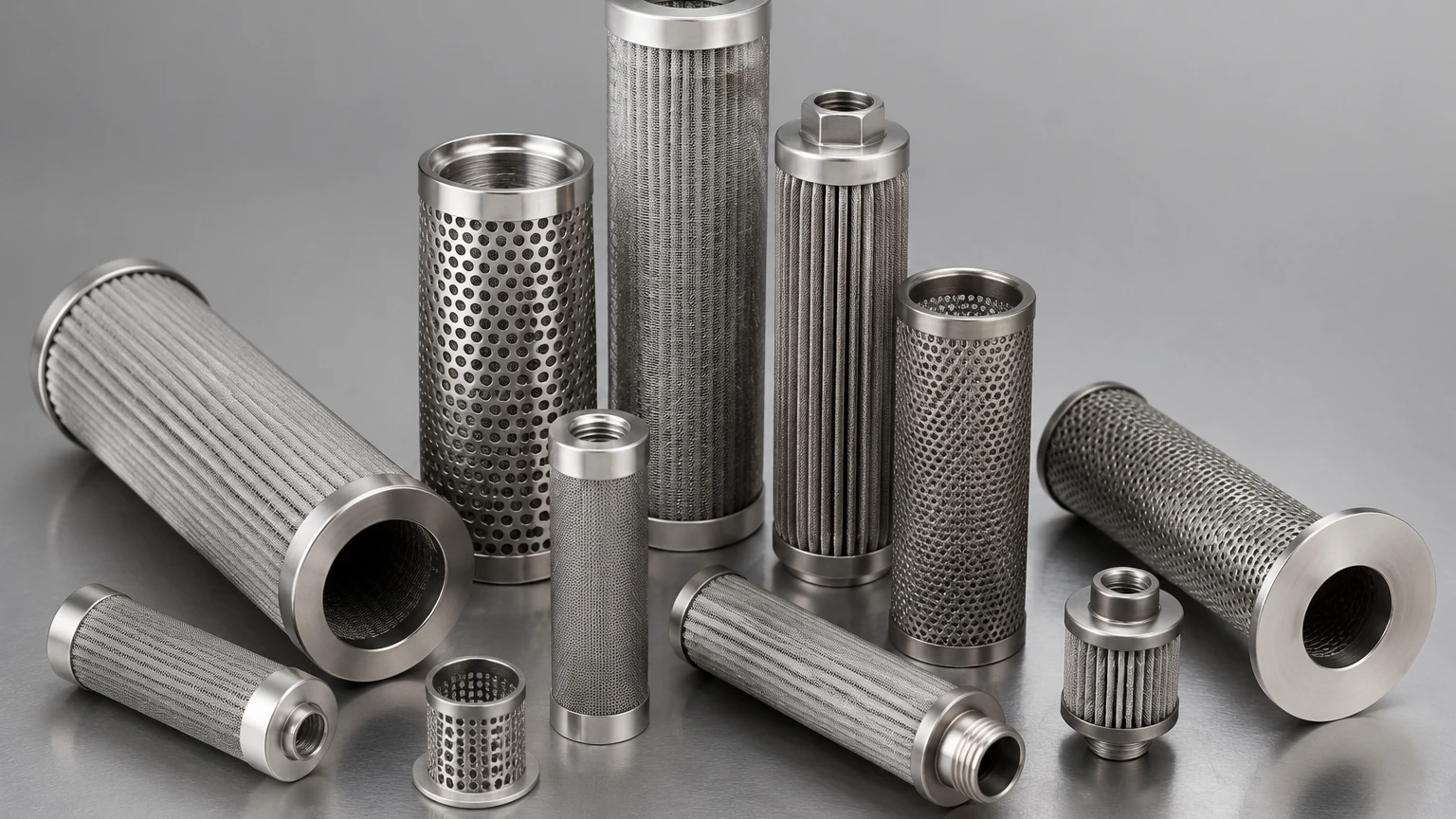
The performance of a stainless steel filter element is primarily determined by its construction method and the configuration of the filtration media. Industrial applications typically utilize three main types of stainless steel media: woven wire mesh, sintered metal mesh, and pleated metal felt.
Woven Wire Mesh Elements
Woven wire mesh is the most common form of stainless steel filtration media. It consists of metallic wires woven into various patterns, such as plain weave, twill weave, or dutch weave. The primary advantage of woven mesh is its predictable pore size and high open area, which facilitates high flow rates with minimal initial pressure drop. However, for finer filtration requirements, woven mesh may lack the structural depth needed to capture irregular particles, making it more suitable for surface filtration and straining applications.
Sintered Metal Mesh Elements
Sintering is a process where multiple layers of stainless steel wire mesh are bonded together through heat and pressure in a vacuum furnace. This creates a monolithic structure that is significantly stronger than a single layer of mesh. Sintered elements are ideal for high-pressure differentials and applications where media migration—the shedding of filter fibers into the filtrate—must be strictly prevented. The multi-layer construction allows for a combination of a fine filtration layer protected by coarser drainage and support layers.
Pleated Filter Elements
To maximize the effective filtration area within a limited housing volume, stainless steel media can be pleated. By folding the mesh or metal felt, the surface area is increased significantly—often by a factor of three to five compared to a cylindrical element of the same dimensions. This increased area results in lower flux rates (flow per unit area), which extends the service life between cleaning cycles and reduces the overall pressure drop across the system.
Material Selection and Chemical Compatibility
Choosing the correct alloy for a stainless steel filter element is a prerequisite for ensuring long-term durability. While "stainless steel" is a broad category, the specific grade determines the element’s resistance to pitting, crevice corrosion, and stress corrosion cracking.
1. Grade 304: The standard austenitic stainless steel, suitable for most water treatment and general industrial applications where high-level corrosion resistance is not the primary concern.
2. Grade 316L: Containing molybdenum, 316L offers superior resistance to chlorides and acids. The "L" denotes low carbon content, which is essential for components that require welding, as it prevents carbide precipitation that can lead to intergranular corrosion.
3. 904L and Duplex Steels: For highly aggressive environments, such as seawater filtration or concentrated chemical processing, specialized alloys like 904L or Duplex stainless steels provide the necessary resistance to extreme localized corrosion.
When evaluating a stainless steel filter element, engineers must confirm the compatibility of the alloy with the process fluid at its maximum operating temperature. Temperature fluctuations can also affect the structural integrity of the filter housing and the seals (O-rings) used to secure the element.
Technical Performance Metrics
To accurately specify a filter element, technical teams must look beyond simple dimensions and focus on performance metrics that impact the total cost of ownership.
Micron Rating: Absolute vs. Nominal
A common point of confusion in filtration procurement is the distinction between nominal and absolute micron ratings. A nominal rating refers to an efficiency of approximately 60% to 90% at a given particle size. In contrast, an absolute rating implies that 99.9% (or higher) of particles at that size will be captured. For critical applications in the pharmaceutical or food and beverage industries, an absolute-rated stainless steel filter element is often mandatory to ensure product purity.
Pressure Drop ($ΔP$)
The pressure drop is the difference in pressure between the upstream and downstream sides of the filter. An optimized filter design balances the required filtration fineness with an acceptable initial pressure drop. A high initial $ΔP$ suggests that the filter is either undersized for the flow rate or that the media is too dense for the application, leading to premature clogging and increased energy consumption by pumps.
Dirt Holding Capacity
This metric defines the total mass of contaminants a filter can retain before the pressure drop reaches a terminal level, necessitating cleaning or replacement. Elements with pleated designs typically offer higher dirt-holding capacities due to their increased surface area.
Industrial Applications and Use Cases
Stainless steel filtration components are utilized across a broad spectrum of industries where synthetic media would fail due to temperature, pressure, or chemical attack.
* Chemical and Petrochemical Processing: Used for the filtration of catalysts, polymers, and aggressive solvents. The ability of stainless steel to withstand high temperatures (up to 500°C or higher depending on the alloy) is vital here.
* Food and Beverage: Stainless steel elements are preferred for their hygienic properties. They can be sterilized using Steam-in-Place (SIP) or Clean-in-Place (CIP) protocols, ensuring they meet FDA and other regulatory requirements for food contact.
* Hydraulic Systems: In high-pressure hydraulic circuits, metal filters protect sensitive valves and actuators from particulate wear. The high collapse pressure rating of a stainless steel filter element ensures the system remains protected even during cold starts or pressure surges.
* Pharmaceutical Manufacturing: Precision filtration is required to ensure the removal of bacteria and pyrogens. Sintered fiber felt elements are frequently used here for their high efficiency and lack of media migration.
Customization and Engineering Considerations
Off-the-shelf filtration solutions rarely meet the specific needs of complex industrial systems. Customization is often required to ensure the filter element integrates seamlessly with existing hardware and meets specific process goals. When consulting with a manufacturer like Kaifil, engineers should be prepared to discuss several customization factors:
* End Cap Configurations: Whether the system requires Double Open End (DOE), Single Open End (SOE) with 222 or 226 O-ring fittings, or threaded connections, the end cap design is crucial for preventing bypass.
* Reinforcement: For applications involving high-viscosity fluids or high-pressure differentials, the filter element may require an internal support core or an outer protective shroud to prevent mechanical deformation.
* Surface Treatments: Processes such as electro-polishing can be applied to the stainless steel surface to improve cleanability and reduce the risk of bacterial growth in food or pharma applications.
Maintenance and the Advantage of Cleanability
One of the most significant advantages of a stainless steel filter element over disposable alternatives is the ability to clean and reuse the media. This not only reduces the volume of waste generated but also lowers the long-term operational costs. However, the effectiveness of cleaning depends on the nature of the contaminant and the filter structure.
Cleaning Methods
1. Backwashing: Reversing the flow of fluid through the filter to dislodge surface-level contaminants. This is often automated in continuous process systems.
2. Ultrasonic Cleaning: Using high-frequency sound waves in a cleaning solvent to create cavitation bubbles that remove deeply embedded particles from the mesh pores.
3. Chemical Cleaning: Using acids, alkalis, or specialized detergents to dissolve organic or mineral deposits. This requires careful selection of chemicals to ensure they do not degrade the stainless steel alloy or the seals.
4. Burn-off (Pyrolysis): For organic contaminants, heating the element in a controlled atmosphere to carbonize and remove the debris. This is typically reserved for sintered metal elements.
Conclusion: Selecting the Right Partner
The selection of a stainless steel filter element is an engineering decision that impacts the reliability, safety, and profitability of industrial operations. By focusing on material integrity, precise micron ratings, and structural design, technical teams can ensure their filtration systems perform as intended under the most demanding conditions.
As a professional manufacturer, Kaifil provides the technical expertise and manufacturing capabilities required to develop customized filtration solutions. Whether you are addressing a high-temperature chemical process or a high-purity food application, understanding the nuances of metal filtration is the first step toward optimized performance. For detailed technical specifications and support in selecting the appropriate filtration components for your project, you can Review product options and application support to find a solution tailored to your specific industrial requirements.
