


Stainless Steel Filter Housing
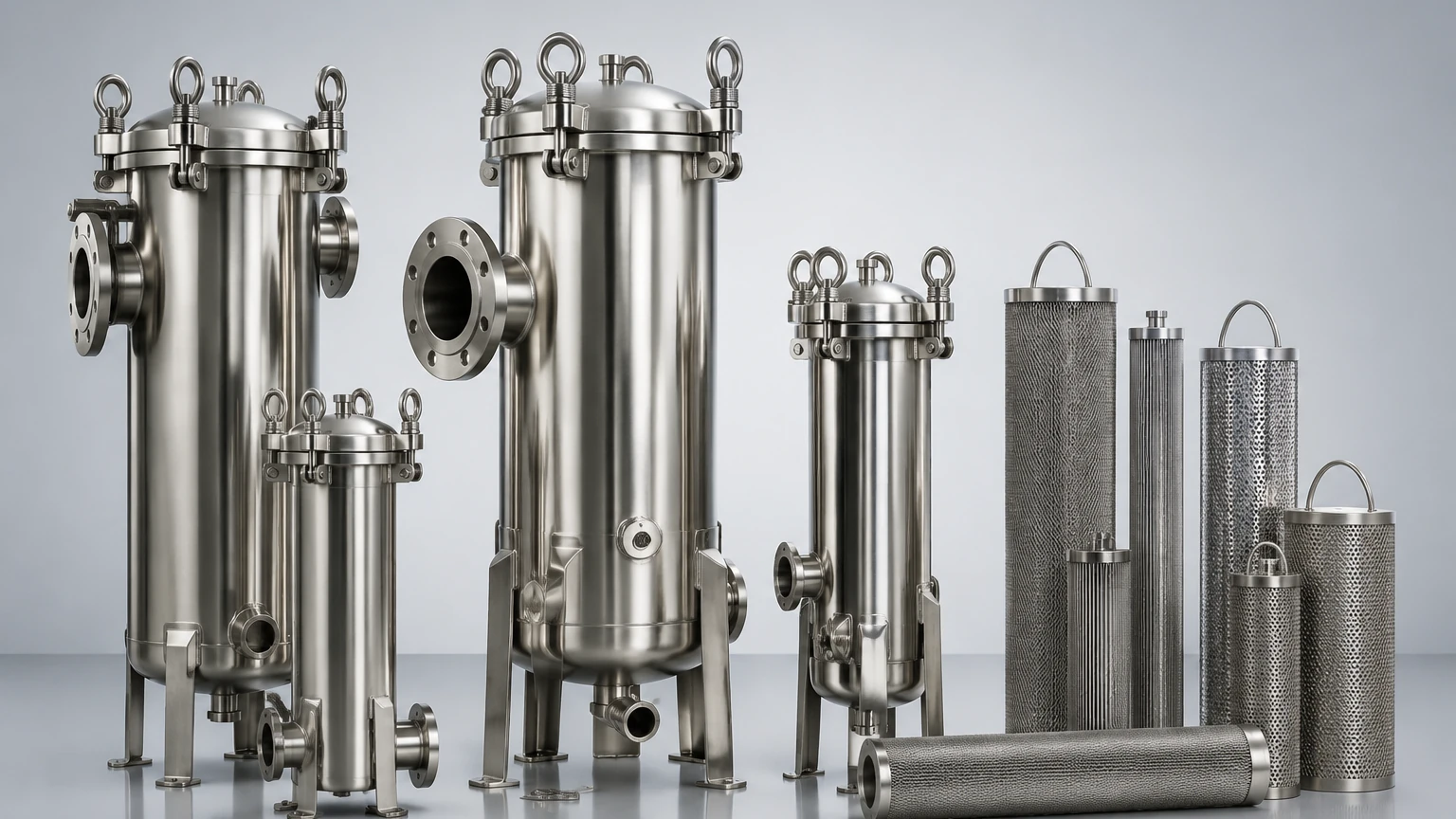
In industrial filtration, the performance of a system is as dependent on the vessel that contains the process as it is on the filter media itself. A stainless steel filter housing serves as the critical pressure vessel designed to hold filter cartridges or bags, ensuring that the fluid or gas stream is forced through the filtration media without bypass. For engineers and procurement specialists, selecting the correct housing involves a complex evaluation of material compatibility, pressure ratings, flow dynamics, and maintenance requirements.
As a specialized manufacturer, Kaifil provides precision-engineered filtration components designed to meet the rigorous demands of chemical processing, pharmaceutical manufacturing, and food and beverage production. Understanding the technical nuances of a stainless steel filter housing is essential for optimizing system uptime and ensuring product purity.
Understanding the Role of Stainless Steel Filter Housing in Industrial Systems
The primary function of a stainless steel filter housing is to provide a secure, leak-proof environment for the filtration process. Unlike plastic or carbon steel alternatives, stainless steel offers superior mechanical strength, thermal stability, and chemical resistance. This makes it the standard choice for high-pressure applications and environments where corrosion or contamination must be strictly controlled.
Within a process loop, the housing acts as the interface between the piping system and the filter element. It must manage the hydraulic stresses of the fluid flow, accommodate pressure spikes, and facilitate easy access for filter element replacement. A poorly specified housing can lead to structural failure, fluid bypass, or excessive pressure drops, all of which compromise the efficiency of the industrial process.
Material Selection: 304 vs. 316L Stainless Steel
The choice of material is the first technical hurdle in specifying a stainless steel filter housing. While several alloys exist, the industry standard focuses on two primary grades: AISI 304 and AISI 316L.
AISI 304 Stainless Steel
Grade 304 is an austenitic stainless steel containing chromium and nickel. It provides excellent corrosion resistance for general industrial applications, such as water treatment, hydraulic oil filtration, and cooling water systems. It is cost-effective and offers good weldability. However, it is susceptible to chloride-induced pitting, making it less suitable for marine environments or highly concentrated chemical processes.
AISI 316L Stainless Steel
Grade 316L is the preferred choice for more aggressive environments. The addition of molybdenum enhances its resistance to pitting and crevice corrosion, particularly in chloride-rich solutions. The "L" denotes low carbon content, which minimizes carbide precipitation during welding, ensuring the integrity of the housing’s joints and preventing intergranular corrosion. This grade is mandatory in pharmaceutical and food applications where stringent cleaning protocols (such as CIP/SIP) and corrosive sanitizing agents are used.
Engineering Design and Pressure Ratings
A stainless steel filter housing must be engineered to withstand the maximum operating pressure of the system, including potential surges. Engineering teams typically refer to standards such as the ASME Boiler and Pressure Vessel Code to ensure safety and reliability.
Design Pressure and Temperature
Housings are rated based on their ability to maintain structural integrity at specific temperature and pressure combinations. As temperature increases, the allowable stress of the stainless steel decreases. Therefore, a housing rated for 150 PSI at 25°C may have a significantly lower rating at 150°C. Engineers must confirm the "Maximum Allowable Working Pressure" (MAWP) for the highest expected operating temperature of their process.
Closure Mechanisms
The method used to seal the housing lid is a critical design feature. Common types include:
- V-Band Clamps: Suitable for low-to-medium pressure applications. They allow for quick access but have lower pressure limits compared to bolted designs.
- Swing Bolts: The industry standard for high-pressure and heavy-duty applications. They provide a robust seal and are easier to operate than standard hex nuts during frequent filter changes.
- Threaded Caps: Often found in smaller, single-cartridge housings used for point-of-use filtration.
Sanitary vs. Industrial Grade Configurations
The internal and external finish of a stainless steel filter housing determines its suitability for specific industries. The distinction between sanitary and industrial grades is primarily defined by surface roughness and the absence of "dead legs."
Industrial Grade Housings
Industrial housings are designed for durability and performance in sectors like power generation, mining, and general manufacturing. The internal surfaces are usually bead-blasted or pickled. While functional, these surfaces may have microscopic pits where bacteria or contaminants can accumulate. They are ideal for pre-filtration and non-sterile fluid processing.
Sanitary Grade Housings
In the pharmaceutical and food and beverage sectors, housings must meet sanitary standards (such as 3A or EHEDG). These vessels feature internally polished surfaces, often reaching a Ra (Roughness Average) of <0.8 μm or even <0.4 μm through electropolishing. Electropolishing removes the outer layer of the metal, creating a smooth, mirror-like finish that is easy to sterilize. Sanitary housings also feature specialized tri-clamp connections and are designed to be completely self-draining to prevent microbial growth.
Sizing and Flow Rate Optimization
Correctly sizing a stainless steel filter housing is a balance between flow requirements, desired pressure drop, and the dirt-holding capacity of the filter elements. Over-sizing a housing results in unnecessary capital expenditure and increased fluid loss during changeouts, while under-sizing leads to high differential pressure and frequent filter replacements.
Flow Dynamics
The internal geometry of the housing should minimize turbulence. The inlet and outlet sizes must be matched to the flow rate to prevent excessive velocity, which can cause erosion or mechanical stress on the filter elements. Engineers typically aim for a clean pressure drop (ΔP) of less than 2-3 PSI across the housing and clean filter element combined.
Cartridge Capacity
Housings are available in single-round (holding one cartridge) or multi-round configurations. Multi-round housings can hold anywhere from 3 to over 100 cartridges. By increasing the number of cartridges, the total filtration surface area increases, allowing for higher flow rates and longer intervals between maintenance cycles. When selecting a multi-round housing, the internal support plate (riser) design must ensure even flow distribution across all elements to prevent premature clogging of the cartridges closest to the inlet.
Maintenance, Sealing, and Operational Longevity
The longevity of a stainless steel filter housing depends on regular maintenance and the selection of appropriate sealing components. The O-rings or gaskets are the most common failure points in a filtration system.
Seal Compatibility
Seal materials must be compatible with the process fluid and the operating temperature. Common options include:
- EPDM: Excellent for water and steam but poor for oils.
- Viton (FKM): High temperature and chemical resistance, suitable for oils and fuels.
- Silicone: Preferred for pharmaceutical applications due to low extractables.
- PTFE/Teflon: Near-universal chemical resistance but lacks elasticity, often requiring an encapsulated core.
Venting and Draining
Every stainless steel filter housing should be equipped with a vent valve at the highest point and a drain valve at the lowest point. Venting is necessary to remove trapped air during startup, which can cause air locks or pressure surges. Draining is essential before opening the housing to ensure operator safety and to prevent the loss of process fluid.
Customization and OEM Integration
Standard off-the-shelf housings may not always meet the specific spatial or functional requirements of a complex industrial skid. Customization is often necessary to integrate the housing into existing infrastructure or to meet unique process parameters.
Kaifil specializes in providing customized filtration solutions that go beyond standard configurations. This includes modifying port orientations, adding differential pressure gauge ports, or designing specialized internal supports for non-standard filter elements. By working closely with a manufacturer that understands both the housing and the precision metal filter components, engineers can ensure a seamless fit and optimized performance. For more information on technical specifications and custom engineering, visit the Main Page to review product options and application support.
Conclusion: Selecting the Right Housing for Long-Term Efficiency
Specifying a stainless steel filter housing is a technical decision that impacts the safety, purity, and cost-effectiveness of an industrial operation. By focusing on material integrity (316L vs. 304), adhering to pressure vessel standards, and ensuring appropriate surface finishes, engineers can mitigate the risks of corrosion and contamination.
Whether the application involves high-purity chemicals or large-scale water treatment, the housing must be viewed as a long-term asset. Investing in a precision-manufactured vessel ensures that the filtration system remains reliable under demanding conditions. Before finalizing a purchase, technical teams should confirm the chemical compatibility of all wetted parts, verify the pressure-temperature ratings, and evaluate the total cost of ownership, including the ease of element replacement and seal maintenance.
