


Stainless Steel Filter Manufacturer
In industrial processing, the efficiency and reliability of filtration systems are paramount to product quality, equipment longevity, and operational safety. Selecting a specialized stainless steel filter manufacturer is a critical decision for engineers and procurement teams across the chemical, pharmaceutical, food and beverage, and hydraulic sectors. Unlike standard off-the-shelf components, industrial-grade stainless steel filters must be engineered to withstand extreme temperatures, corrosive environments, and high-pressure differentials while maintaining precise filtration accuracy.
As a professional manufacturer, Kaifil specializes in providing high-performance filtration components tailored to these demanding environments. Understanding the technical nuances of material selection, weave patterns, and structural design is essential for optimizing filtration performance and achieving a low total cost of ownership. This guide explores the engineering considerations and manufacturing capabilities necessary to produce reliable stainless steel filtration solutions.
Engineering Fundamentals of Stainless Steel Filtration
The performance of a stainless steel filter is defined by its ability to remove contaminants of a specific size while maintaining a manageable pressure drop. When evaluating a stainless steel filter manufacturer, it is vital to understand the technical specifications that govern filter performance.
Material Selection and Chemical Compatibility
Stainless steel is the material of choice for industrial filtration due to its inherent strength and resistance to oxidation. The two most common alloys used are Grade 304 and Grade 316L.
* Grade 304: Provides excellent durability and is suitable for most general industrial applications, including water treatment and standard hydraulic systems.
* Grade 316L: Contains molybdenum, which significantly enhances resistance to pitting and crevice corrosion in chloride-rich environments. This makes it the standard for chemical processing and marine applications. The "L" denotes low carbon content, which is crucial for preventing carbide precipitation during the welding process, ensuring the structural integrity of the filter housing and mesh.
Micron Ratings and Filtration Efficiency
Filtration accuracy is typically measured in microns (µm). A professional manufacturer must distinguish between nominal and absolute filtration ratings. A nominal rating indicates the ability of the filter to retain a majority of particles of a certain size, whereas an absolute rating identifies the size of the largest particle that can pass through the filter under specific test conditions. For critical applications in the pharmaceutical or semiconductor industries, absolute ratings are often required to ensure zero bypass of contaminants.
Pressure Drop and Flow Rates
The permeability of the filter media determines the initial pressure drop across the system. Engineers must balance the need for fine filtration with the requirement for high flow rates. A filter with too high a resistance will increase energy consumption and may lead to premature system failure or bypass. A skilled manufacturer uses advanced engineering calculations to design filter elements that maximize surface area—often through pleating—to reduce the flux rate and extend the service life between cleanings.
Key Manufacturing Capabilities for Custom Filtration Solutions
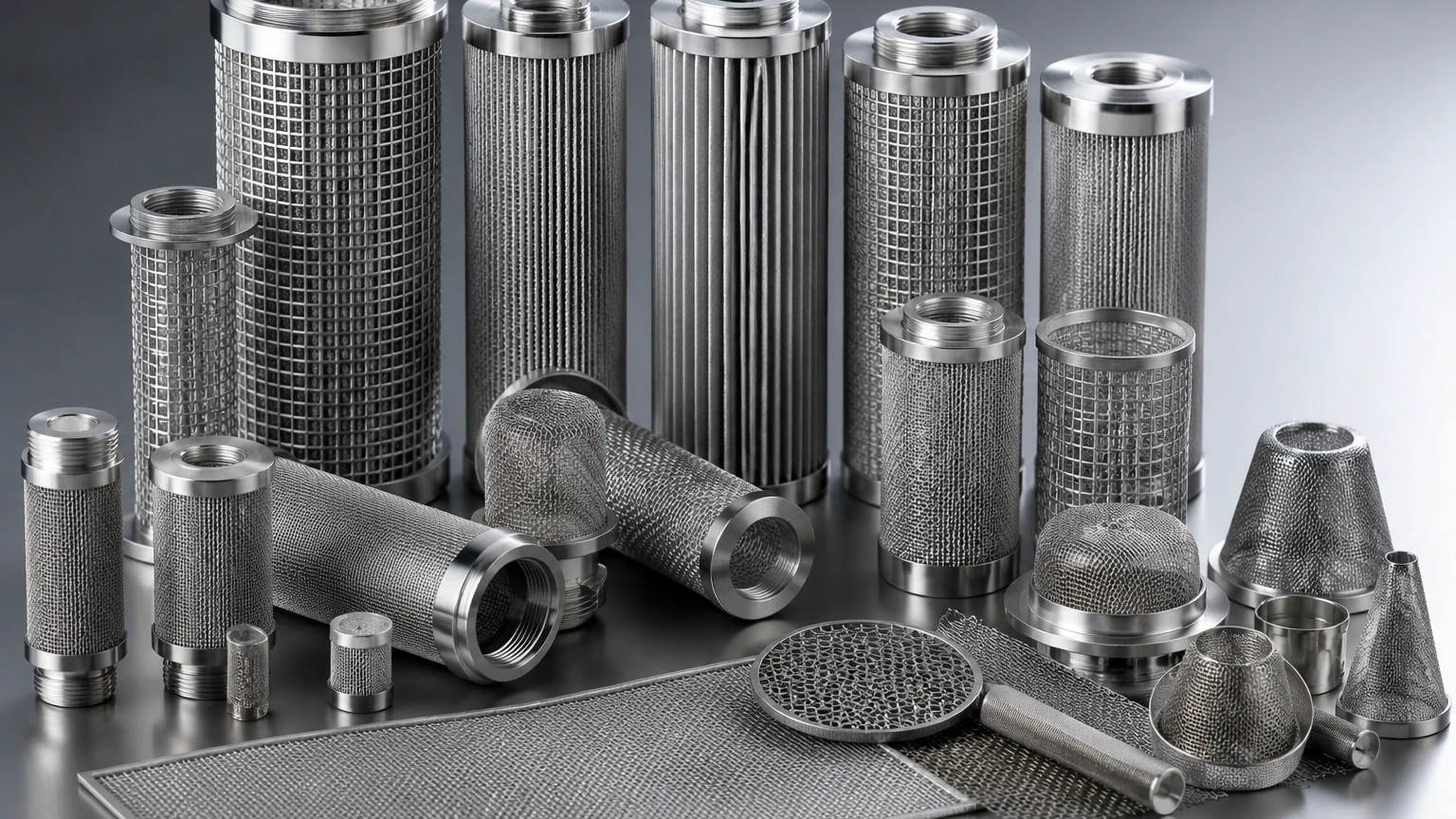
Industrial filtration requirements are rarely universal. A versatile stainless steel filter manufacturer must offer a range of manufacturing techniques to address specific mechanical and chemical challenges. At Kaifil, the focus is on precision engineering and customized designs that meet the unique needs of global industrial clients.
Wire Mesh and Weave Patterns
The geometry of the wire mesh determines the filter's pore size and mechanical strength. Common weave types include:
* Plain Weave: The simplest form, where wires cross over and under each other. It offers high flow rates but is generally limited to coarser filtration.
* Twill Weave: Allows for a heavier wire diameter in a given mesh count, providing increased strength for high-pressure applications.
* Dutch Weave: Features a higher density of wires in one direction, creating a tortuous path for particles. This results in very fine filtration capabilities and high mechanical stability, making it ideal for high-pressure filtration and fuel systems.
Sintered Metal Technology
For applications involving extreme pressure or high-velocity flows, sintered metal filters are often the preferred solution. Sintering involves bonding multiple layers of wire mesh or metal powder through a high-temperature thermal process without melting the material. This creates a porous structure that is incredibly rigid and resistant to media migration. Sintered filters can be cleaned and reused multiple times, providing a sustainable alternative to disposable cartridges.
Precision Welding and Assembly
The structural integrity of a filter element depends heavily on the quality of its joints. Advanced welding techniques, such as TIG (Tungsten Inert Gas) welding and plasma welding, are used to ensure leak-proof seals between the filter media and the end caps. This prevents unfiltered fluid from bypassing the media, which is a common failure point in lower-quality components.
Application-Specific Requirements for Industrial Filters
Different industries impose unique demands on filtration components. A manufacturer must be well-versed in these specific requirements to provide effective solutions.
Chemical and Petrochemical Processing
In these environments, filters are exposed to aggressive solvents, acids, and high temperatures. The primary concern is chemical compatibility and the prevention of corrosion-induced failure. Stainless steel filters are used for catalyst recovery, polymer filtration, and the removal of impurities from process streams.
Food and Beverage Industry
Filtration in the food and beverage sector requires adherence to strict sanitary standards. Filters must be designed with smooth surfaces to prevent bacterial growth and must be capable of withstanding Clean-in-Place (CIP) procedures. Applications range from the filtration of edible oils and syrups to the removal of particulates in steam used for sterilization.
Pharmaceutical and Biotechnology
Precision is the hallmark of pharmaceutical filtration. Manufacturers must provide filters with high-purity materials and documented traceability. These filters are often used for gas filtration, solvent purification, and as pre-filters for sensitive membrane systems.
Hydraulic and Lubrication Systems
In hydraulic systems, the goal is to protect sensitive valves and pumps from wear-inducing particles. High-pressure stainless steel filter cartridges are designed to handle rapid pressure fluctuations and high viscosity fluids without collapsing or deforming.
Criteria for Selecting a Stainless Steel Filter Manufacturer
Choosing a supplier goes beyond comparing price points. Technical professionals should evaluate a stainless steel filter manufacturer based on their ability to support the entire lifecycle of the product.
1. Technical Expertise and Engineering Support: Can the manufacturer assist in the selection of the correct micron rating and material? Do they provide CAD drawings and performance simulations? A reliable partner acts as an extension of your engineering team.
2. Customization Capabilities: Many industrial systems have space constraints or unique connection requirements. The ability to produce Main Page custom-sized cartridges, unique end-cap configurations, and specialized mesh combinations is essential for seamless integration.
3. Quality Assurance and Testing: Does the manufacturer perform bubble point testing to verify filtration accuracy? Are they capable of providing material test reports (MTRs) to verify the alloy composition? Rigorous quality control ensures that the filters perform as specified in the field.
4. OEM Experience: For equipment manufacturers, a supplier with OEM experience can provide consistent quality and reliable lead times, which are critical for maintaining production schedules.
Optimizing Performance: Maintenance and Total Cost of Ownership
While the initial cost of a stainless steel filter is higher than that of plastic or paper alternatives, the total cost of ownership (TCO) is often significantly lower. Stainless steel filters are characterized by their durability and cleanability.
Cleaning and Regeneration
Unlike disposable filters, stainless steel elements can be cleaned using ultrasonic baths, backwashing, or chemical cleaning. This eliminates the recurring cost of replacement filters and reduces the environmental impact associated with waste disposal. A manufacturer should provide clear guidelines on the maximum allowable pressure drop before cleaning is required to prevent permanent deformation of the mesh.
Replacement Cycles
Even durable metal filters have a finite lifespan. Factors such as fatigue from pressure cycling, erosion from abrasive particles, and potential chemical degradation over many years must be monitored. By working with a knowledgeable manufacturer, engineers can establish predictive maintenance schedules that minimize downtime.
Conclusion: Advancing Your Filtration Infrastructure
The selection of a stainless steel filter manufacturer is a strategic decision that impacts the efficiency and reliability of industrial operations. By focusing on technical specifications, material integrity, and customization capabilities, purchasing teams can ensure they receive filtration components that meet the rigorous demands of their specific applications.
Kaifil remains committed to delivering high-quality, precision-engineered stainless steel filtration solutions. Whether you require standard wire mesh filters or complex, custom-designed cartridges, our manufacturing expertise ensures that your systems operate at peak performance. To explore our full range of capabilities and discuss your specific application needs, we invite you to review product options and application support on our Main Page.
