


Hydraulic Oil Filter Assembly
In industrial hydraulic systems, the integrity of fluid power is directly proportional to the cleanliness of the medium. Contamination is the primary cause of component wear, valve stiction, and premature pump failure. A robust hydraulic oil filter assembly serves as the critical line of defense, ensuring that particulate matter—ranging from microscopic wear debris to external environmental ingress—is captured before it can compromise sensitive downstream components. Selecting the correct assembly requires a deep understanding of fluid dynamics, material science, and the specific operational demands of the application.
Anatomy of a Hydraulic Oil Filter Assembly
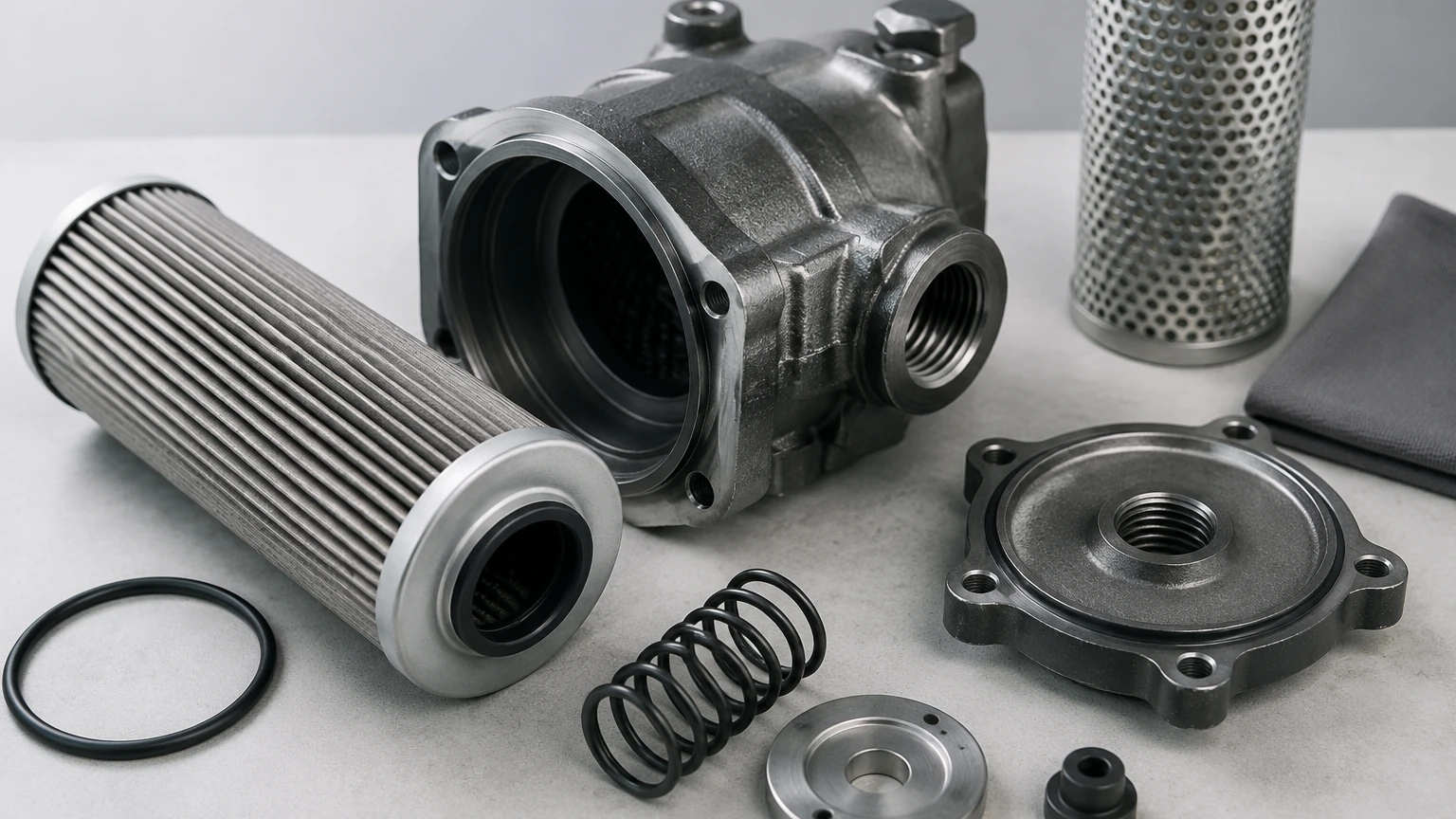
A complete hydraulic oil filter assembly is more than just a housing and a filter element; it is an engineered system designed to manage pressure, flow, and contaminant retention simultaneously. Understanding the individual components is essential for technical professionals when specifying a solution for a new system or upgrading an existing one.
The Filter Housing
The housing consists of a filter head and a filter bowl (or canister). The head typically contains the inlet and outlet ports and provides the mounting interface for the system. In high-pressure applications, the housing must be constructed from materials capable of withstanding significant fatigue cycles and pressure spikes. While aluminum is common for low-pressure return lines, stainless steel housings are preferred for corrosive environments or high-pressure circuits where durability is paramount.
The Filter Element
The element is the functional core of the assembly. Depending on the application, this may utilize various media, including inorganic glass fiber, cellulose, or stainless steel wire mesh. For many industrial applications, stainless steel elements are favored due to their structural integrity and ability to be cleaned and reused, which can significantly lower the total cost of ownership in specific processes.
Bypass Valves and Indicators
To prevent system starvation or element collapse, a hydraulic oil filter assembly often incorporates a bypass valve. When the pressure differential ($\\Delta P$) across the element reaches a predetermined limit due to contaminant loading, the bypass valve opens to allow fluid to flow around the element. Differential pressure indicators—either visual, electrical, or both—provide real-time data to maintenance teams, signaling when an element change-out is required before the bypass state is reached.
Technical Selection Criteria for Industrial Systems
Choosing a hydraulic oil filter assembly is an engineering task that must account for the physical properties of the fluid and the mechanical requirements of the system. A mismatched assembly can lead to excessive pressure drops, insufficient filtration, or even catastrophic housing failure.
Flow Rate and Viscosity
The flow capacity of an assembly is not a static number; it is heavily influenced by fluid viscosity. As temperature drops, oil viscosity increases, leading to a higher pressure drop across the filter media. Engineers must size the assembly based on the maximum expected flow rate at the lowest operating temperature (highest viscosity) to ensure the system does not enter a bypass state during cold starts.
Pressure Ratings
Assemblies are categorized by their placement within the hydraulic circuit:
* Suction Side: Low-pressure housings designed to protect the pump from large particles.
* Pressure Side: High-pressure housings (often rated up to 420 bar or higher) placed after the pump to protect sensitive valves and actuators.
* Return Line: Medium-pressure housings that filter fluid before it returns to the reservoir.
It is vital to confirm that the assembly’s maximum allowable working pressure (MAWP) and fatigue pressure ratings align with the system's peak performance requirements.
Material Selection and Chemical Compatibility
In sectors such as chemical processing, pharmaceutical manufacturing, and offshore oil and gas, the standard materials used in general-purpose hydraulic assemblies may be insufficient. Material compatibility is a primary concern for long-term reliability.
Stainless Steel Construction
For applications involving aggressive fluids or extreme temperatures, a stainless steel hydraulic oil filter assembly is often the only viable solution. Stainless steel (specifically 304 or 316L grades) provides superior resistance to oxidation and chemical degradation. Furthermore, in food and beverage or pharmaceutical applications, stainless steel is required to meet stringent hygiene and sanitation standards.
Seal Selection
The seals within the assembly—typically O-rings between the head and bowl and at the element interface—must be compatible with the hydraulic fluid. While Nitrile (Buna-N) is standard for mineral oils, synthetic fluids or high-temperature environments may necessitate Viton (FKM), EPDM, or PTFE seals to prevent leaks and bypass issues caused by seal swelling or degradation.
Performance Evaluation: Understanding Beta Ratios
When evaluating a hydraulic oil filter assembly, the "micron rating" is often the first metric discussed, but it is frequently misunderstood. To make an informed decision, engineers must look at the Beta Ratio ($\\beta$), which defines the filtration efficiency.
Nominal vs. Absolute Filtration
A nominal rating is an arbitrary value indicating the filter's ability to capture a percentage of particles of a given size. In contrast, an absolute rating (usually defined as $\\beta_x \\geq 75$ or $\\beta_x \\geq 1000$) provides a mathematically verifiable efficiency. For example, a $\\beta_{10} = 1000$ rating means that for every 1000 particles of 10 microns entering the filter, only one passes through. For high-precision hydraulic systems, specifying absolute-rated elements within the assembly is critical for maintaining ISO 4406 cleanliness codes.
Dirt-Holding Capacity
Beyond efficiency, the dirt-holding capacity (DHC) determines the service life of the filter element. A higher DHC means the element can trap more grams of contaminant before reaching the terminal pressure drop. This directly impacts the frequency of maintenance intervals and the overall operational efficiency of the plant.
Customization and OEM Engineering Considerations
Off-the-shelf filtration solutions do not always meet the spatial or functional requirements of complex industrial machinery. In these instances, working with a manufacturer capable of providing customized filtration components is essential. Customization can involve:
* Porting Configurations: Modifying inlet/outlet sizes or types (NPT, SAE, Flanged) to fit existing piping without additional adapters.
* Integrated Manifolds: Designing the assembly to integrate directly into a hydraulic manifold to reduce leak points and save space.
* Specialized Media: Engineering custom wire mesh or multi-layered media to handle unique particulate shapes or high-viscosity fluids.
For those seeking specific technical data or tailored designs, it is advisable to Review product options and application support on the Kaifil Main Page to understand how custom manufacturing can solve unique filtration challenges.
Maintenance and Total Cost of Ownership (TCO)
The initial purchase price of a hydraulic oil filter assembly is only a fraction of its total cost over its lifecycle. A well-engineered assembly reduces TCO by extending the life of expensive hydraulic pumps and valves, and by optimizing the replacement cycle of the filter elements themselves.
Monitoring and Replacement Cycles
Relying on a fixed calendar schedule for filter replacement is often inefficient. It can lead to replacing elements that still have useful life or, conversely, allowing a system to run in bypass mode for weeks. The use of differential pressure sensors allows for "condition-based maintenance." When the indicator moves from green to red, or triggers an alarm in the control room, the team knows exactly when the element has reached its capacity.
The Risk of Low-Quality Elements
Using non-OEM or low-quality replacement elements in a high-performance assembly is a common risk. These elements may lack the structural integrity to withstand pressure surges, leading to media migration—where the filter material itself breaks off and enters the hydraulic stream—causing more damage than the contaminants it was meant to stop.
Conclusion
A hydraulic oil filter assembly is a fundamental component for any industrial system relying on fluid power. By focusing on technical specifications such as Beta ratios, pressure ratings, and material compatibility, engineers can ensure their systems remain productive and reliable. Whether managing a standard hydraulic circuit or a complex chemical processing line, the right filtration assembly prevents downtime and protects the long-term investment in machinery. For professionals looking to optimize their filtration performance, consulting with specialists in custom stainless steel and precision metal filtration is the most effective way to ensure that every component of the assembly is perfectly matched to the operational environment.
