


Start Up Strainer
In the lifecycle of an industrial piping system, the initial commissioning phase represents the period of highest risk for downstream equipment. During construction, fabrication, and installation, contaminants such as welding slag, metal shavings, scale, sand, and even forgotten tools or rags often accumulate within the pipeline. If these materials reach sensitive components like pumps, valves, flow meters, or heat exchangers during the first fluid circulation, the resulting damage can lead to catastrophic failure and significant financial losses. A start up strainer, often referred to as a temporary strainer, is the primary engineering solution designed to mitigate these risks by capturing construction debris before it can compromise the system.
As a specialized manufacturer of stainless steel filtration solutions, Kaifil provides high-precision wire mesh and structural components essential for the performance of these temporary filtration units. Understanding the technical nuances of start up strainer design, material selection, and operational limits is critical for engineers tasked with ensuring a smooth transition from construction to full-scale production.
The Engineering Purpose of Temporary Filtration
The primary function of a start up strainer is to act as a sacrificial barrier during the "flushing" or "clean-out" phase of a new or modified piping system. Unlike permanent filtration systems, which are designed for continuous operation and long-term maintenance cycles, a temporary strainer is typically installed for a short duration—ranging from a few hours to several days—until the system fluid reaches an acceptable level of cleanliness.
From an engineering perspective, the start up strainer serves several critical roles:
1. Asset Protection: By intercepting large particulate matter (tramp material), the strainer prevents mechanical abrasion of pump impellers and the clogging of fine-tolerance valve seats.
2. Verification of System Cleanliness: The amount and type of debris captured by the strainer provide a visual and quantifiable metric of the pipeline's internal condition.
3. Cost Mitigation: The cost of a temporary stainless steel strainer is negligible compared to the repair costs of a high-pressure centrifugal pump or the downtime associated with a system-wide contamination event.
Classification and Design Variations
Start up strainers are categorized based on their geometry and how they interface with the piping flanges. The selection of a specific design depends on the available space within the pipe run, the expected debris load, and the allowable pressure drop across the unit.
Conical Strainers (Witch’s Hats)
Conical strainers are the most common type used in industrial startups. Their shape allows for a significant surface area relative to the pipe diameter, which helps maintain flow even as debris begins to accumulate. They are typically installed between two flanges, with the "hat" pointing either upstream or downstream depending on the flow dynamics and debris characteristics. When pointing downstream, the cone naturally collects debris at its tip, which can simplify removal but may increase the risk of the cone collapsing if the differential pressure becomes too high.
Basket Strainers (Top Hats)
Basket strainers, or "top hat" strainers, feature a flat bottom rather than a tapered point. This design is often preferred in applications where the axial space within the pipe is limited. While they typically offer a slightly lower open area ratio than a long conical strainer, they are robust and can handle higher volumes of heavy debris without the risk of the tip piercing or folding.
Plate and Flat Strainers
For systems where space is extremely restricted, a simple flat plate strainer may be used. These consist of a perforated metal disc or a wire mesh screen reinforced by a metal frame. While easy to install, they have a limited surface area and can cause a significant pressure drop if the fluid contains a high concentration of construction debris.
Technical Specifications: Mesh, Perforation, and Open Area
The performance of a start up strainer is defined by its filtration accuracy and its impact on system hydraulics. Engineers must balance the need for fine filtration with the requirement to maintain adequate flow rates.
Open Area Ratio (OAR)
The Open Area Ratio is the ratio of the total area of the holes in the strainer to the cross-sectional area of the inlet pipe. A standard start up strainer usually aims for an OAR of at least 100% to 150%, though 200% or 300% is often specified for high-flow systems to minimize the initial pressure drop. A higher OAR allows the system to operate longer before the strainer becomes blinded by debris.
Filtration Media
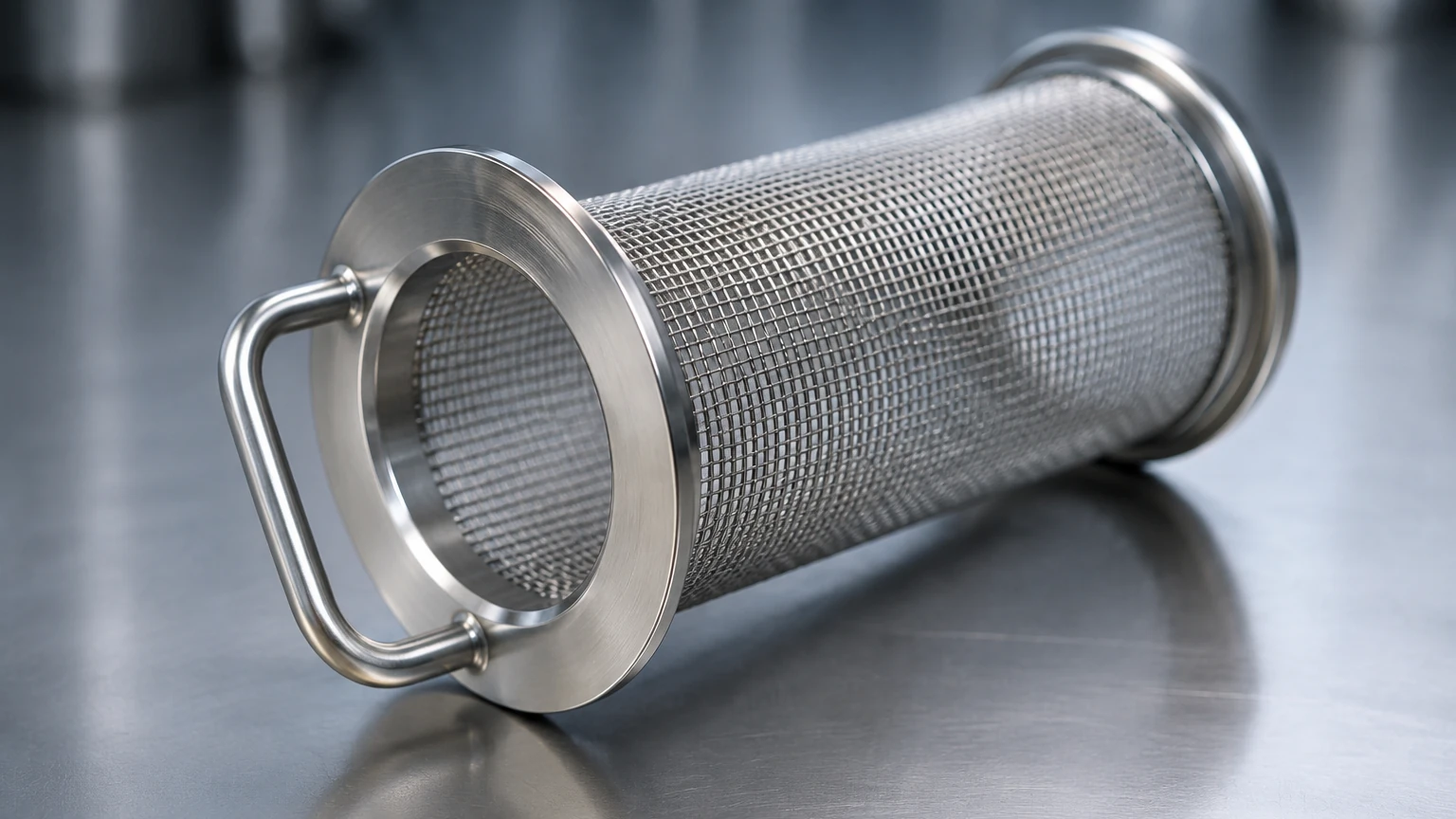
Kaifil specializes in the production of stainless steel wire mesh and perforated metals that serve as the functional core of these strainers. For most startup applications, a combination of materials is used:
* Perforated Metal: Provides the structural skeleton of the strainer, capable of withstanding the mechanical stresses of high-velocity flow.
* Wire Mesh Lining: A finer mesh (ranging from 20 mesh to 100 mesh or finer) is often lined inside or outside the perforated metal to capture smaller particles. The choice of mesh size must be coordinated with the tolerances of the downstream equipment.
For more detailed technical data on material compatibility and filtration grades, engineers can visit the Main Page to review product options and application support.
Material Selection and Environmental Considerations
While start up strainers are temporary, they must be constructed from materials that can withstand the chemical and thermal environment of the process fluid. Stainless steel—specifically Grade 304 and Grade 316—is the industry standard for several reasons:
* Corrosion Resistance: Many industrial startups involve water-based flushing or chemical cleaning agents. Stainless steel ensures that the strainer itself does not introduce rust or oxidation products into the system.
* Mechanical Strength: During startup, fluid velocities can be unpredictable. Stainless steel provides the tensile strength necessary to prevent the mesh from tearing or the frame from deforming under sudden pressure surges.
* Temperature Stability: In steam systems or high-temperature chemical lines, stainless steel maintains its structural integrity far better than carbon steel or synthetic alternatives.
In highly corrosive environments, such as those found in pharmaceutical or offshore oil and gas applications, specialized alloys or 316L stainless steel may be required to prevent localized pitting during the commissioning phase.
Installation and Operational Best Practices
The effectiveness of a start up strainer is highly dependent on proper installation and monitoring. Failure to follow established protocols can result in the strainer becoming a liability rather than a safeguard.
Orientation and Flow Direction
For conical strainers, the orientation (point upstream vs. point downstream) is a frequent point of debate among engineers. Pointing the cone upstream allows debris to settle around the outer perimeter of the pipe, which can keep the center of the flow path clear for longer. However, pointing the cone downstream is often preferred because it concentrates the debris in the center of the cone, making it easier to recover the material once the strainer is removed. The decision should be based on the specific piping geometry and the nature of the expected contaminants.
Differential Pressure Monitoring
The most critical operational requirement is the monitoring of differential pressure (ΔP). As the strainer captures debris, the pressure drop across the unit will increase. If the ΔP exceeds the design limit of the strainer, the mesh may rupture, sending both the captured debris and fragments of the strainer into the downstream equipment. Engineers should install temporary pressure gauges on either side of the strainer and establish a clear "pull limit" (e.g., 5-10 psi) at which the system must be shut down and the strainer cleaned.
The Cleaning Cycle
Start up strainers are not designed for automated cleaning. When the pressure drop reaches the limit, the flow must be bypassed or stopped, the flanges unbolted, and the strainer manually removed and cleaned. This process is repeated until the pressure drop remains stable over a set period, indicating that the bulk of the construction debris has been removed.
Transitioning to Permanent Filtration
A common mistake in industrial facility management is leaving a start up strainer in the line indefinitely. Because these units are designed with a thin profile to fit between flanges, they do not have the structural longevity of permanent T-type or Y-type strainers. Over time, vibration and flow-induced stress can cause the temporary strainer to fatigue and break apart.
Once the commissioning team confirms that the system is clean—usually verified by a "clean" pull where no significant debris is found—the temporary strainer should be replaced with a permanent spacer ring or a dedicated permanent filtration housing. This ensures the long-term hydraulic efficiency of the system and eliminates the risk of a temporary component failing during standard operation.
Customization and OEM Solutions
Every industrial project has unique requirements based on pipe diameter, pressure rating (ANSI/ASME classes), and fluid characteristics. Off-the-shelf strainers may not always provide the necessary OAR or filtration fineness required for sensitive modern equipment.
Kaifil works closely with engineering firms and OEMs to design and manufacture custom start up strainers that meet specific project benchmarks. By leveraging advanced manufacturing techniques in stainless steel fabrication, Kaifil ensures that every component—from the precision of the wire mesh to the durability of the support frame—is optimized for the rigors of industrial startup. Whether the application requires a high-capacity conical strainer for a large-diameter water main or a precision-lined basket strainer for a pharmaceutical process line, custom solutions provide the reliability needed to protect multi-million dollar investments.
For engineers and purchasing teams seeking reliable filtration components, exploring the full range of manufacturing capabilities is the first step toward a successful system commissioning. You can find more information on custom designs and technical specifications by visiting the Main Page.
Conclusion
The start up strainer is a small but vital component in the complex process of industrial commissioning. By understanding the different design types, the importance of the open area ratio, and the necessity of rigorous differential pressure monitoring, engineers can effectively safeguard their equipment from construction-related damage. Choosing high-quality stainless steel components ensures that the temporary filtration phase is a success, paving the way for years of reliable, clean, and efficient system operation.
