


Filtro De Vapor
In industrial thermal energy management, steam serves as a primary medium for heat transfer, sterilization, and motive power. However, the efficacy of a steam system is intrinsically linked to the purity of the steam itself. A "filtro de vapor" (steam filter) is not merely a peripheral component but a critical engineering safeguard designed to remove solid contaminants, such as pipe scale, rust, and sediment, which can compromise downstream equipment and product integrity. For engineers and facility managers, understanding the technical nuances of steam filtration is essential for maintaining system efficiency and meeting stringent regulatory standards.
The Critical Role of Steam Filtration in Industrial Processes
Steam is generated in boilers where water is heated to its boiling point. During this process and the subsequent distribution through carbon steel or stainless steel piping, various contaminants enter the stream. These include boiler feed-water chemicals, rust from aging pipes, and mineral deposits known as scale. Without a high-quality filtro de vapor, these particles act as abrasives, eroding valve seats, clogging spray nozzles, and fouling heat exchanger surfaces.
In industries such as food and beverage or pharmaceuticals, the requirements are even more rigorous. Here, steam often comes into direct contact with the product or the surfaces that touch the product. In these "clean steam" or "culinary steam" applications, the filtration system must ensure that 95% of all particles larger than 2 microns are removed. This level of precision prevents sensory defects in food products and ensures the sterility of medical components.
Engineering Considerations: Material Selection and Durability
The harsh environment of a steam system—characterized by high temperatures, varying pressures, and the potential for chemical corrosion—demands robust materials for filtration media. Stainless steel is the industry standard due to its exceptional thermal stability and mechanical strength.
Stainless Steel 304 vs. 316L
While Type 304 stainless steel is suitable for many general industrial applications, Type 316L is preferred for steam filtration. The addition of molybdenum in 316L provides superior resistance to pitting and crevice corrosion, particularly in systems where boiler chemicals or chlorides are present. Furthermore, the low carbon content (the "L" in 316L) minimizes carbide precipitation during welding, ensuring the structural integrity of the filter cartridge over thousands of thermal cycles.
Sintered Metal vs. Pleated Wire Mesh
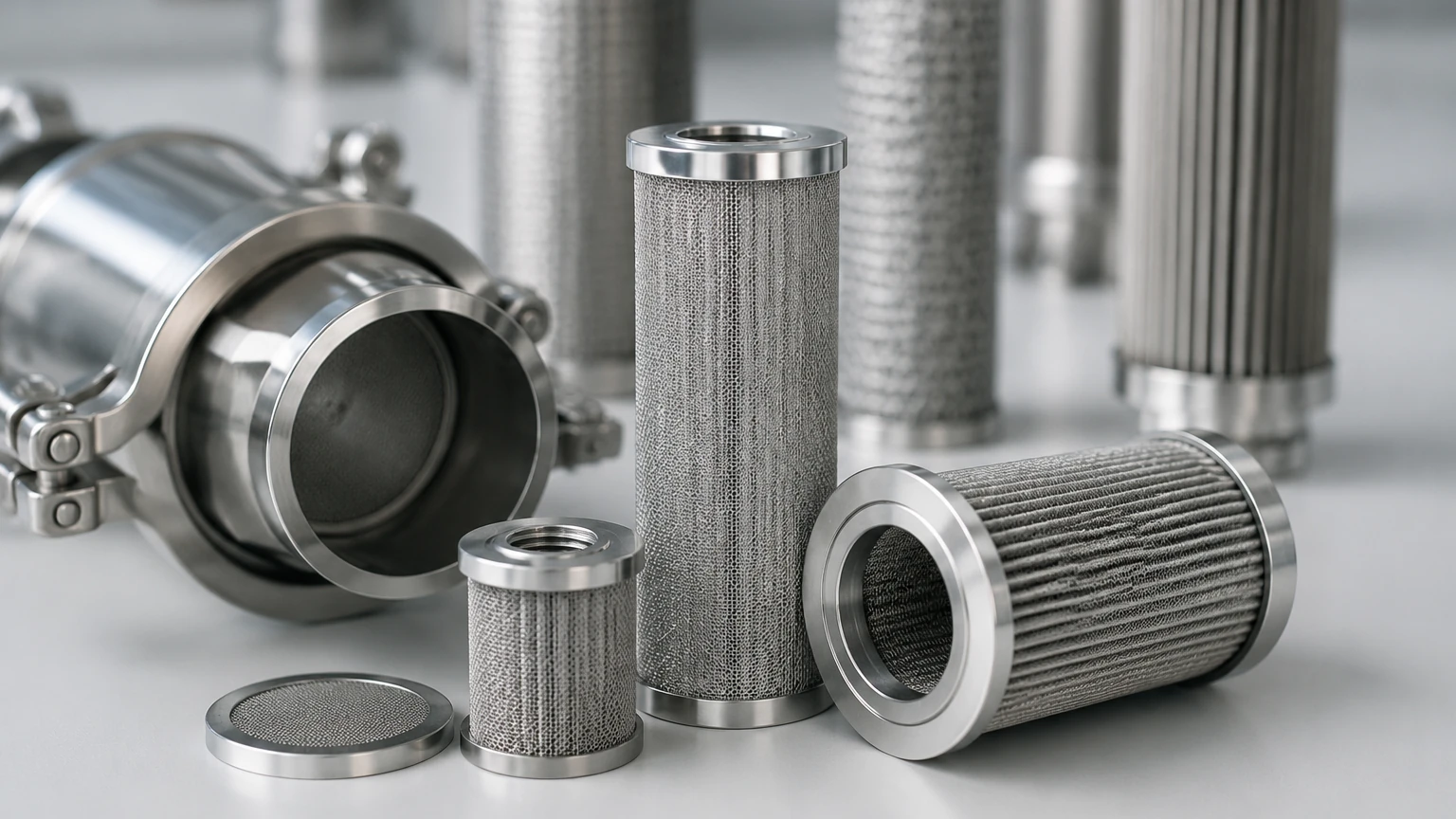
Two primary structures dominate the filtro de vapor market:
1. Sintered Metal Powder: These filters are created by fusing metal spheres together under high heat and pressure. They offer high structural rigidity and excellent filtration depth, making them ideal for removing fine particulates in high-pressure steam lines.
2. Pleated Wire Mesh: Utilizing multiple layers of stainless steel wire cloth, these filters provide a significantly larger surface area within the same footprint. This design results in a lower initial pressure drop and a higher dirt-holding capacity, which is advantageous for systems with high flow rates.
Technical Specifications and Filtration Ratings
When specifying a filtro de vapor, engineers must distinguish between nominal and absolute filtration ratings. A nominal rating indicates the filter's ability to retain a majority of particles of a certain size, whereas an absolute rating guarantees the retention of 99.9% of particles at that micron level. For critical sterilization processes, absolute-rated filters are mandatory.
Another vital metric is the differential pressure ($ΔP$). As the filter captures debris, the resistance to flow increases. A high $ΔP$ not only reduces the steam pressure available for the process but also indicates that the filter element is reaching its saturation point. Most industrial steam systems are designed to operate with an initial clean pressure drop of less than 1-2 psi. Monitoring this value is the most effective way to determine when maintenance or replacement is required.
To explore specific technical configurations and custom filtration components, engineers can Review product options and application support to align their system requirements with precision-manufactured solutions.
Application-Specific Requirements: Culinary and Process Steam
The design of a filtro de vapor often depends on the intended use of the steam. The industry generally categorizes steam into three grades:
1. Plant Steam (Process Steam)
This is the lowest grade, used primarily for indirect heating in jackets or heat exchangers. The filtration goal here is equipment protection. A mesh size of 25 to 50 microns is usually sufficient to protect valves and regulators from large-scale debris.
2. Culinary Steam
Governed by standards such as the 3-A Sanitary Standards in the US, culinary steam must be free of entrained liquid water and filtered to remove 95% of particles 2 microns or larger. This grade is used for direct injection into food products or for cleaning food-contact surfaces. The filter housing must also be designed for easy cleaning and inspection.
3. Pure Steam (Clean Steam)
Used in the pharmaceutical and biotech industries, pure steam is produced from deionized or distilled water. The filtration requirements are extremely stringent, often involving 0.2-micron absolute-rated filters to ensure the steam is pyrogen-free. In these applications, the entire filtration housing and element must be constructed from high-grade 316L stainless steel with specialized surface finishes to prevent bacterial growth.
Maintenance, Cleaning, and Total Cost of Ownership
One of the primary advantages of a stainless steel filtro de vapor over disposable polymer alternatives is its cleanability. In a B2B industrial context, the total cost of ownership is significantly reduced when filter elements can be regenerated rather than replaced.
Cleaning Methods
* Ultrasonic Cleaning: This is the most effective method for sintered metal filters. High-frequency sound waves create cavitation bubbles that dislodge deeply embedded particles from the pore structure.
* Backwashing: For mesh-based filters, reversing the flow of clean water or air can remove surface-level contaminants. This can often be performed in-situ, reducing downtime.
* Chemical Cleaning: In cases where mineral scale has fouled the filter, mild acidic or alkaline solutions may be used, provided the chemical compatibility with 316L stainless steel is verified.
Replacement Cycles
While stainless steel filters are durable, they are not infinite. Repeated cleaning cycles eventually fatigue the metal or result in permanent pore blockage. Engineers should establish a replacement schedule based on the number of cleaning cycles or when the stabilized pressure drop after cleaning exceeds the initial clean pressure drop by more than 50%.
Common Risks and Selection Pitfalls
Selecting an inappropriate filtro de vapor can lead to catastrophic system failures. A common mistake is undersizing the filter to save on initial capital costs. An undersized filter leads to high steam velocities, which can cause "slugs" of condensate to hit the filter media at high speed, potentially tearing the wire mesh or fracturing sintered structures.
Furthermore, neglecting the installation of a steam trap upstream of the filter is a frequent oversight. A filter is designed to remove solids, not large volumes of liquid water. Excessive condensate can cause water hammer, which generates immense mechanical stress on the filter element. Ensuring that the steam entering the filter is "dry" (high steam quality) is paramount for the longevity of the filtration media.
Customization and OEM Integration
In many specialized industrial applications, standard off-the-shelf filters do not meet the spatial or performance constraints of the machinery. This is where custom-manufactured filtration solutions become necessary. Customization can involve unique end-cap configurations (such as Code 7 or DOE), specialized diameters, or multi-layered media structures designed for specific flow dynamics.
For manufacturers of industrial equipment, integrating a high-performance filtro de vapor as an OEM component adds significant value to the end product. It ensures that the equipment operates under optimal conditions and reduces warranty claims related to particle damage. Working with a manufacturer that understands the complexities of metal filtration allows for the development of components that balance filtration efficiency with the mechanical rigors of the specific application.
Conclusion: Selecting the Right Solution
The selection of a filtro de vapor is a decision that impacts the safety, efficiency, and regulatory compliance of an entire industrial facility. By focusing on material quality, precise micron ratings, and the specific needs of the application—whether it be culinary steam for a dairy plant or process steam for a chemical refinery—engineers can ensure long-term operational success.
When evaluating providers, it is crucial to confirm their capabilities in material certification, pressure testing, and custom design. A reliable filtration partner provides more than just a product; they provide the technical expertise required to optimize steam quality and protect the system's most sensitive components. For comprehensive details on industrial filtration components and to find the right fit for your specific engineering requirements, please Review product options and application support.
