


Steel Filter Mesh
In industrial filtration, the selection of media determines the efficiency, longevity, and safety of the entire process. Steel filter mesh, specifically manufactured from high-grade stainless steel alloys, serves as a cornerstone for critical separation tasks across diverse sectors. From chemical processing to food production, the structural integrity and chemical resistance of stainless steel provide a level of performance that synthetic media cannot match. For engineers and procurement teams, understanding the technical nuances of mesh specifications is essential for optimizing system performance and reducing long-term operational costs.
As a specialized manufacturer, Kaifil provides comprehensive technical support and custom manufacturing for industrial filtration components. By visiting the Main Page, technical professionals can explore a wide range of filtration solutions designed for demanding environments.
Material Science: Choosing the Right Alloy
The performance of a steel filter mesh begins with the metallurgy of the wire. While "stainless steel" is a broad category, the specific alloy grade dictates the mesh's resistance to corrosion, temperature, and mechanical stress.
304 Stainless Steel
Grade 304 is the most common choice for general industrial applications. It offers excellent strength and good corrosion resistance for many environments. However, it is susceptible to pitting and crevice corrosion in chloride-rich environments. It is frequently used in hydraulic systems and basic water treatment where chemical exposure is moderate.
316 and 316L Stainless Steel
For more aggressive environments, 316 stainless steel is the industry standard. The addition of molybdenum (2-3%) significantly enhances resistance to chlorides and acidic solutions. The "L" in 316L stands for "Low Carbon," which is critical for components that require welding. Lower carbon content prevents carbide precipitation during the welding process, maintaining the corrosion resistance of the mesh at the joints and seams. This makes 316L the preferred choice for pharmaceutical and chemical processing where hygiene and structural purity are paramount.
Specialized Alloys
In extreme cases involving high temperatures or highly corrosive chemicals, specialized alloys like 310S (high temperature) or 904L (high acid resistance) may be required. Selecting the correct alloy is the first step in ensuring a filter's reliability and preventing premature failure due to material degradation.
Weave Patterns and Their Impact on Filtration
The method by which the steel wires are interlaced defines the mesh's filtration accuracy, flow rate, and mechanical strength. Engineers must match the weave type to the specific particle size and pressure requirements of their application.
Plain Weave
This is the simplest and most common weave, where each warp wire crosses over and under each shute wire. Plain weave steel filter mesh provides a high percentage of open area, resulting in low pressure drops and high flow rates. It is typically used for coarse filtration and sieving applications.
Twill Weave
In a twill weave, each shute wire passes over and under two warp wires. This allows for the use of heavier wires for a given mesh count, increasing the mechanical strength of the mesh. It is often used when a combination of fine filtration and high durability is required.
Dutch Weave (Plain and Twill)
Dutch weaves utilize different wire diameters for the warp and shute. The shute wires are driven close together, creating a dense, wedge-shaped opening. This results in a very robust mesh with high filtration precision (down to several microns). Plain Dutch weave offers good flow rates, while Twill Dutch weave provides the finest filtration levels and highest strength, making it ideal for high-pressure hydraulic and fuel filtration.
Engineering Considerations for Filtration Precision
When specifying steel filter mesh, several technical parameters must be balanced to achieve the desired outcome. These factors directly influence the efficiency of the filtration system and the frequency of maintenance cycles.
Micron Rating: Absolute vs. Nominal
Understanding the difference between absolute and nominal micron ratings is vital. A nominal rating indicates the ability of the mesh to retain a certain percentage of particles of a specific size. An absolute rating, common in precision steel mesh, refers to the diameter of the largest spherical particle that can pass through the mesh under laboratory conditions. For critical applications like pharmaceutical manufacturing, absolute ratings are necessary to ensure process consistency.
Open Area and Flow Velocity
The percentage of open area determines the flow capacity of the filter. A higher open area reduces the initial pressure drop ($ΔP$) across the filter, which lowers energy consumption for pumps. However, increasing the open area often requires thinner wires, which can compromise the mechanical strength of the mesh. Engineers must calculate the optimal balance based on the viscosity of the fluid and the anticipated solid loading.
Differential Pressure (ΔP) and Collapse Strength
As the steel filter mesh captures contaminants, the differential pressure increases. The mesh and its supporting structure must be engineered to withstand the maximum expected $ΔP$ without deforming or rupturing. In high-pressure systems, the mesh is often sintered or pleated to increase its surface area and structural rigidity.
Customization and OEM Integration
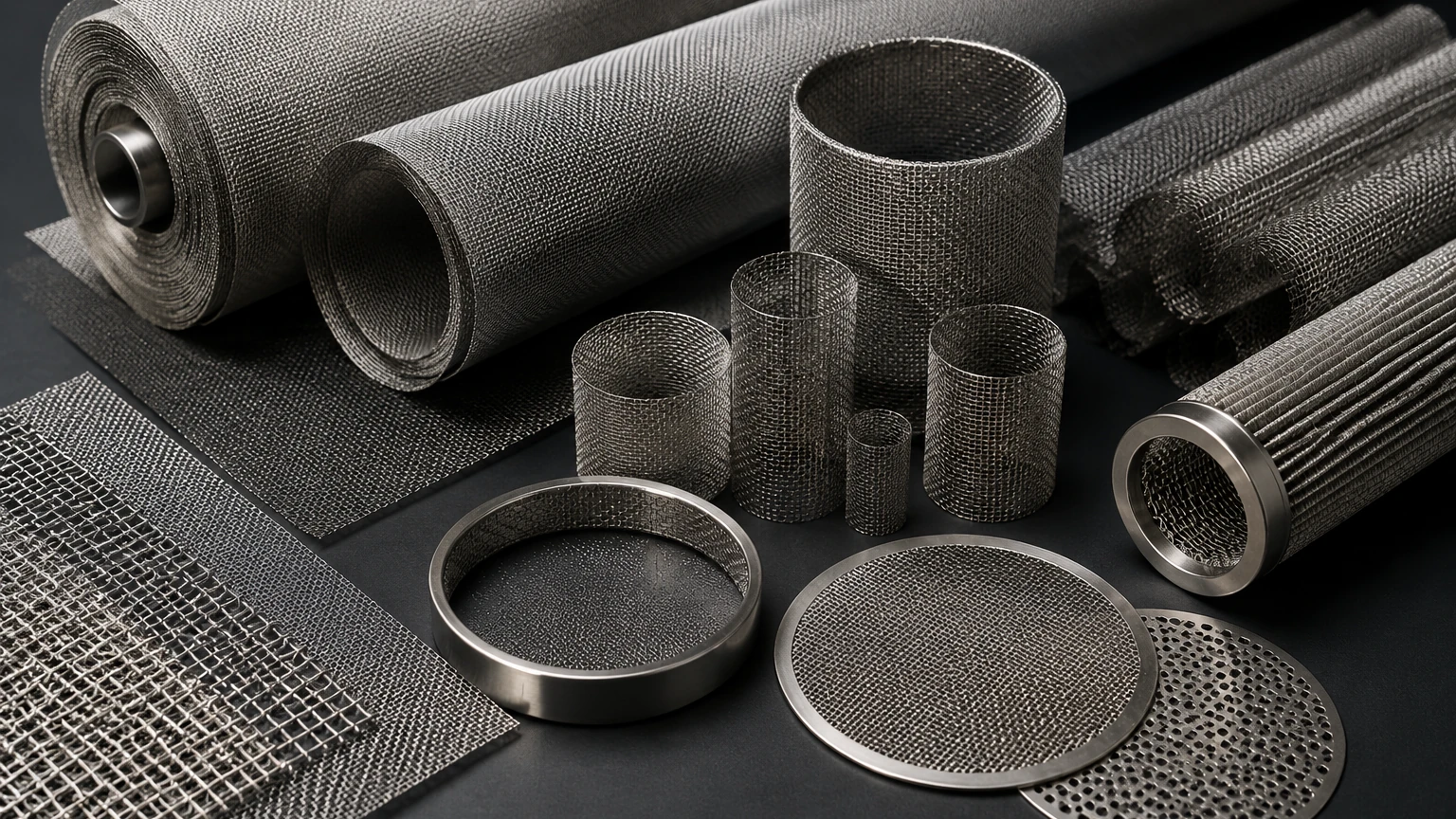
Industrial applications rarely rely on off-the-shelf solutions. Customization is often required to fit specific housing geometries or to meet unique performance criteria. Kaifil specializes in the design and production of custom filtration components, ensuring that the steel filter mesh is integrated seamlessly into the final product.
Pleated vs. Cylindrical Designs
Pleating the mesh significantly increases the effective filtration area within the same footprint. This leads to lower flux rates per square inch, which extends the time between cleaning cycles. Cylindrical designs, while simpler, are easier to clean and are often used in applications with high solid concentrations where frequent backwashing is required.
Multi-Layer Sintered Mesh
For the most demanding environments, multiple layers of steel filter mesh are sintered together. This process uses heat and pressure to fuse the wires at their contact points without melting them. The result is a porous metal plate that combines the fine filtration of a Dutch weave with the mechanical support of a coarse mesh and the overall strength of a solid plate. Sintered mesh is virtually immune to wire migration and can withstand extreme pressure and temperature fluctuations.
Operational Maintenance and Cleaning Methods
One of the primary advantages of steel filter mesh over disposable media is its cleanability. A well-maintained stainless steel filter can last for years, significantly reducing the total cost of ownership (TCO).
1. Backwashing: This involves reversing the flow of the fluid to dislodge particles trapped on the surface of the mesh. It is the most common method for automated systems.
2. Ultrasonic Cleaning: For fine meshes or stubborn contaminants, ultrasonic baths use high-frequency sound waves to create cavitation bubbles that strip away particles from deep within the weave.
3. Chemical Cleaning: In industries like food and beverage, chemical CIP (Clean-In-Place) cycles use acids or alkalis to dissolve organic or mineral deposits without disassembling the filter housing.
4. Thermal Cleaning: In certain polymer or chemical applications, the mesh may be heated in a controlled environment to burn off organic residues.
Proper maintenance requires monitoring the differential pressure. Establishing a baseline $ΔP$ for a clean filter allows operators to schedule cleaning before the pressure reaches a critical level that could damage the mesh or the system pumps.
Industry-Specific Applications
The versatility of steel filter mesh allows it to solve complex filtration challenges across various sectors. Each industry has specific regulatory and performance requirements that dictate mesh selection.
Chemical and Petrochemical
In these sectors, resistance to aggressive solvents and high temperatures is paramount. Steel mesh is used for catalyst recovery, polymer filtration, and protecting downstream equipment from particulates. The ability of stainless steel to maintain its properties at temperatures exceeding 500°C makes it indispensable for hot gas filtration.
Food and Beverage
Filtration in this industry must comply with strict hygiene standards (such as FDA or EHEDG). Stainless steel 316L is the material of choice due to its smooth surface and resistance to the corrosive cleaning agents used in sanitization. Common applications include the filtration of syrups, edible oils, and beverages, where the mesh must remove impurities without affecting the flavor or color of the product.
Pharmaceuticals
Precision is the defining requirement for pharmaceutical filtration. Steel filter mesh is used in the production of Active Pharmaceutical Ingredients (APIs) and in sterile air filtration. The mesh must be free of any media migration, ensuring that no wire fragments or contaminants enter the product stream. Sintered mesh laminates are frequently used here for their extreme stability and precision.
Selecting a Manufacturing Partner
Choosing the right steel filter mesh is only half the challenge; selecting a reliable manufacturing partner is equally important. Engineers should look for partners who offer:
* Material Traceability: Ensuring that the alloy used meets the specified standards (MTRs).
* Technical Expertise: The ability to assist in calculating flow rates, pressure drops, and micron requirements.
* Quality Control: Rigorous testing, including bubble point tests and dimensional inspections, to ensure the mesh meets absolute micron ratings.
* Customization Capabilities: The flexibility to produce custom shapes, sizes, and multilayer configurations.
Kaifil's commitment to quality and engineering excellence makes them a preferred partner for global industrial leaders. For more information on custom stainless steel filtration solutions, visit the Main Page to review product options and application support.
By focusing on the technical fundamentals—material grade, weave pattern, and mechanical design—engineers can implement steel filter mesh solutions that enhance process efficiency, ensure product purity, and deliver long-term reliability in the most demanding industrial environments.
