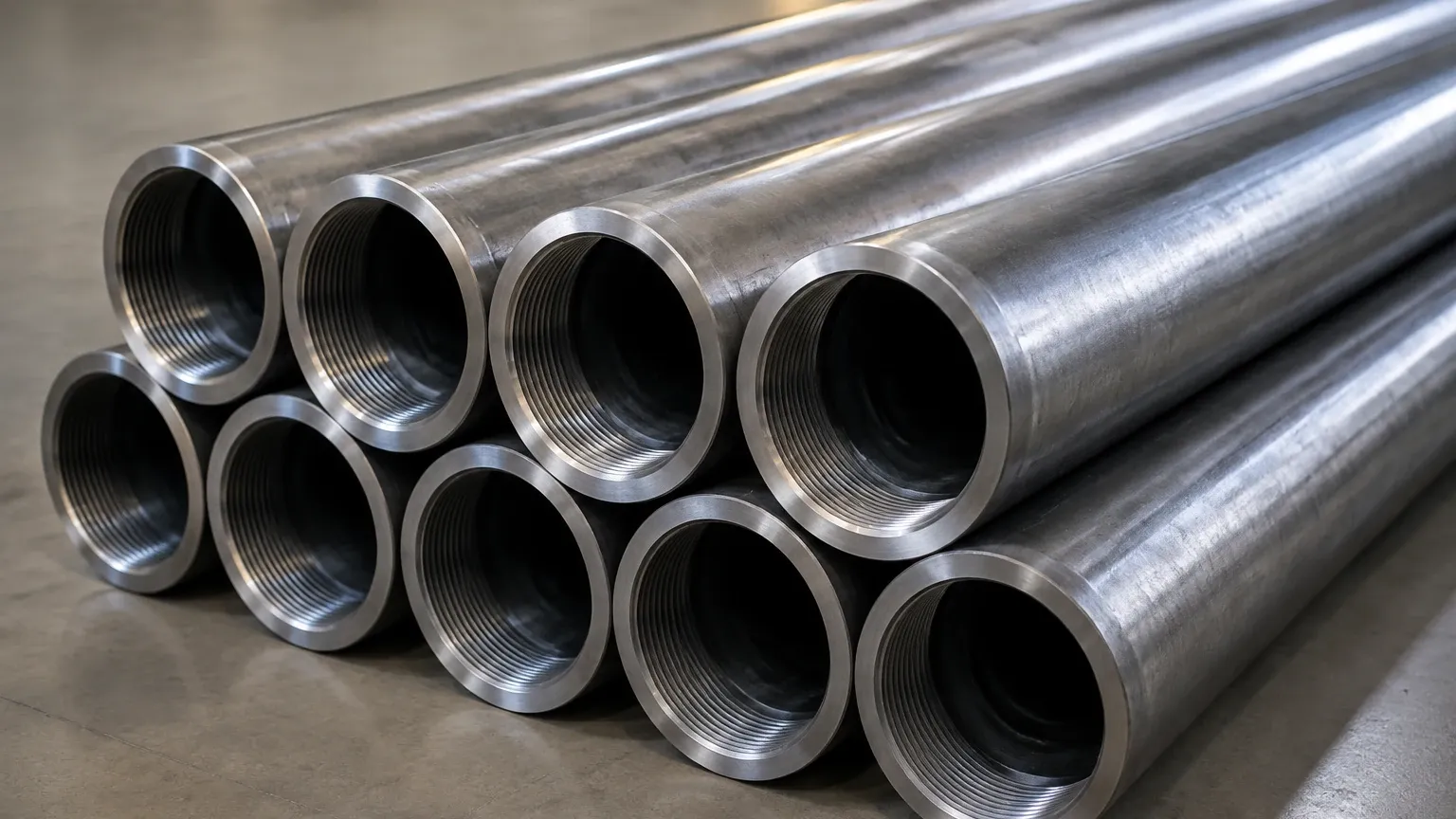
Steel Well Casing
In industrial water extraction, chemical processing, and environmental monitoring, the integrity of a borehole is entirely dependent on the quality and specification of the steel well casing. As a structural liner, the casing serves several critical functions: it prevents the collapse of the borehole walls, seals off high-pressure zones from different strata, and provides a stable conduit for the installation of internal filtration components and pumps. For engineers and procurement teams, selecting the appropriate grade and design of steel well casing is not merely a matter of structural support but a fundamental decision that affects the long-term filtration efficiency and maintenance costs of the entire system.
Material Selection for Steel Well Casing
The choice of material for steel well casing is the most significant factor in determining the lifespan of a well, particularly in corrosive environments. While carbon steel is often used for its cost-effectiveness in benign conditions, industrial applications frequently demand the superior properties of stainless steel.
Carbon Steel vs. Stainless Steel
Carbon steel casing is suitable for temporary wells or environments where the groundwater chemistry is non-corrosive. However, in the presence of high chloride levels, low pH, or dissolved oxygen, carbon steel is susceptible to rapid pitting and scaling. This corrosion not only weakens the structural integrity of the well but also introduces iron oxides into the fluid stream, which can clog downstream filtration systems and contaminate the process water.
In contrast, stainless steel well casing—typically manufactured from grades 304, 316, or 316L—offers exceptional resistance to corrosion. Grade 304 is the standard for most water well applications, providing a balance of strength and chemical resistance. For more aggressive environments, such as chemical processing or brackish water extraction, 316L stainless steel is preferred due to its molybdenum content, which enhances resistance to chloride-induced pitting. Choosing the right material at the outset reduces the total cost of ownership by extending the replacement cycle and minimizing downtime.
Structural Integrity and Engineering Standards
Steel well casing must be engineered to withstand significant physical stresses, including axial tension from its own weight and external hydrostatic or lithostatic pressure. Failure to account for these forces can lead to casing collapse or joint failure, which often results in the total loss of the well.
Wall Thickness and Collapse Pressure
The wall thickness of the casing must be calculated based on the depth of the well and the expected pressure differentials. Engineers use the collapse pressure rating to determine the maximum external pressure a casing can withstand before buckling. In deep-well applications, high-strength alloys and increased wall thicknesses are necessary to ensure the conduit remains open throughout its service life.
Connection Methods
The method used to join sections of steel well casing is equally critical. Common options include:
- Threaded and Coupled (T&C): Provides a reliable, leak-proof seal and allows for easier disassembly if required. Standards such as API 5CT or ASTM A589 often govern these designs.
- Welded Joints: Preferred in large-diameter industrial wells where a permanent, high-strength connection is needed. Proper welding techniques, particularly for stainless steel, are essential to prevent "sensitization," which can lead to intergranular corrosion at the weld site.
The Interface Between Casing and Filtration Systems
While the steel well casing provides the primary structure, it must work in tandem with filtration components to ensure the delivery of clean, sediment-free fluid. In many industrial designs, the lower portion of the casing string consists of a well screen or a perforated pipe wrapped with high-precision wire mesh.
Integrating Wire Mesh Filters
In unconsolidated formations (such as sand or gravel), the casing alone cannot prevent fine particles from entering the well. This is where precision-engineered filtration becomes vital. Stainless steel wire mesh filters, often custom-manufactured by specialists like Kaifil, are integrated into the casing assembly. These filters are designed with specific micron ratings to bridge the gap between the coarse structural openings of the casing and the fine requirements of the process equipment. By selecting a mesh that matches the particle size distribution of the aquifer, engineers can prevent sand pumping, which protects pumps from abrasive wear and prevents the clogging of downstream heat exchangers or membranes.
For a comprehensive look at how these components integrate into a complete filtration solution, technical professionals can consult the Main Page for detailed product specifications and engineering support.
Customization and Precision Manufacturing
Industrial projects rarely follow a one-size-fits-all approach. Steel well casing often requires extensive customization to meet the specific hydraulic and geological demands of a site. Customization options typically include:
1. Variable Diameters and Lengths: Standard industrial casing diameters range from 4 inches to over 20 inches, with custom lengths produced to minimize the number of joints required in deep installations.
2. Perforation Patterns: For intake sections, the casing may be laser-cut or mechanically slotted. The percentage of open area must be carefully balanced to allow for high flow rates while maintaining the structural hoop strength of the pipe.
3. Surface Treatments: Depending on the application, casing may undergo passivation (for stainless steel) to enhance the protective oxide layer or specialized coating to provide an extra barrier against aggressive chemicals.
Manufacturing precision is paramount. Even minor deviations in the straightness of the casing or the concentricity of the threads can lead to installation difficulties, such as "dog-legging," which prevents the pump or internal filter cartridges from being lowered to the required depth.
Maintenance and Longevity in Industrial Applications
The long-term performance of steel well casing is influenced by how well it is maintained and the compatibility of the materials with cleaning protocols. Over time, wells may suffer from biofouling (the buildup of bacterial films) or mineral encrustation.
Chemical Cleaning Compatibility
When a well’s yield drops, chemical rehabilitation is often necessary. This usually involves the injection of acids or chlorine-based biocides. Stainless steel well casing is highly advantageous in these scenarios because it can withstand aggressive chemical treatments that would severely degrade carbon steel or PVC alternatives. This chemical resilience allows for more effective cleaning, ensuring that the well can be restored to its original specific capacity multiple times over its decades-long lifespan.
Monitoring and Replacement Cycles
Regular downhole camera inspections can identify early signs of corrosion or structural deformation in the steel well casing. In a properly designed system using high-grade stainless steel, the casing should last 30 to 50 years. However, if the casing is integrated with finer filtration components, such as stainless steel filter cartridges, these internal elements may have shorter replacement cycles (typically 5 to 10 years depending on the solids loading). Designing the casing string to allow for the easy retrieval and replacement of these internal filters is a hallmark of a well-engineered industrial system.
Selecting the Right Solution for Your Project
When specifying steel well casing for a B2B industrial project, engineers should prepare a detailed data sheet that addresses the following questions:
- What is the fluid chemistry? (pH, chloride levels, presence of H2S or CO2)
- What are the depth and pressure requirements? (Determines wall thickness and grade)
- What is the required flow rate? (Determines diameter and open area requirements for intake sections)
- What downstream equipment needs protection? (Determines the micron rating of the integrated wire mesh filters)
By focusing on these technical parameters rather than just the initial purchase price, procurement teams can avoid the catastrophic costs associated with well failure or frequent pump repairs. High-quality steel well casing is an investment in the reliability of the entire industrial water or process fluid circuit.
Kaifil supports these engineering efforts by providing custom-manufactured stainless steel filtration components that complement structural casing systems. From precision wire mesh to robust filter cartridges, our solutions are designed to meet the rigorous demands of the chemical, pharmaceutical, and water treatment industries. To review our full range of capabilities and application support, please visit our Main Page.
Conclusion
Steel well casing is the backbone of any deep-well industrial installation. Its role extends far beyond simply lining a hole; it is a critical engineering component that dictates the structural safety, chemical compatibility, and filtration efficiency of the system. By prioritizing high-grade materials like stainless steel and ensuring precise manufacturing standards, industrial operators can ensure a consistent supply of process water or chemicals while minimizing the risks of corrosion and structural failure. Integrating these structural components with high-performance filtration solutions ensures that the entire system operates at peak efficiency for its intended service life.