


Stirred Tank Reactors
Stirred tank reactors (STRs) serve as the backbone of modern chemical, pharmaceutical, and food processing industries. These vessels, designed to facilitate controlled chemical reactions, mixing, and biological processes, rely heavily on the precise integration of mechanical agitation and fluid management. For engineers and technical procurement teams, understanding the nuances of reactor design is only half the battle; the success of a process often hinges on the quality and compatibility of the internal components, particularly the filtration systems that ensure product purity and catalyst recovery.
In industrial environments, stirred tank reactors are favored for their versatility. Whether operating in batch, semi-batch, or continuous modes, these systems must maintain uniform composition and temperature. However, the introduction of solid catalysts, the formation of precipitates, or the presence of impurities in raw feedstocks necessitates robust filtration solutions. High-performance stainless steel filtration components are critical in these applications, providing the durability and precision required to withstand the high pressures and corrosive environments often found within the reactor vessel.
Understanding the Mechanics of Stirred Tank Reactors
The primary function of stirred tank reactors is to provide a controlled environment for mass and heat transfer. At its core, an STR consists of a vessel equipped with an agitator (impeller) and often baffles to prevent vortexing and promote efficient mixing. The choice of impeller—whether axial flow, radial flow, or high-shear—depends on the viscosity of the fluid and the specific requirements of the reaction, such as gas dispersion or solid suspension.
From a filtration perspective, the mechanical action within stirred tank reactors creates a dynamic environment. The turbulence generated by the agitator can impact how particles interact with filter media. For instance, in processes where a solid catalyst is suspended in a liquid phase, the filtration system must be capable of capturing fine particles without becoming prematurely blinded by the high-velocity flow. Engineering these systems requires a deep understanding of fluid dynamics to ensure that the filter elements do not interfere with the mixing patterns while still providing the necessary separation efficiency.
Furthermore, the thermal management of STRs often involves jackets or internal coils. These components must coexist with filtration hardware. When selecting filtration components, engineers must account for the thermal expansion of materials and the potential for localized temperature fluctuations that could affect the integrity of the filter seals or the mesh itself.
The Critical Role of Filtration in Reactor Performance
Filtration within or immediately following stirred tank reactors is not merely a peripheral concern; it is a fundamental requirement for process stability and product quality. There are several key areas where high-quality filtration components, such as those found on the Main Page of specialized manufacturers, become indispensable:
1. Catalyst Recovery and Retention
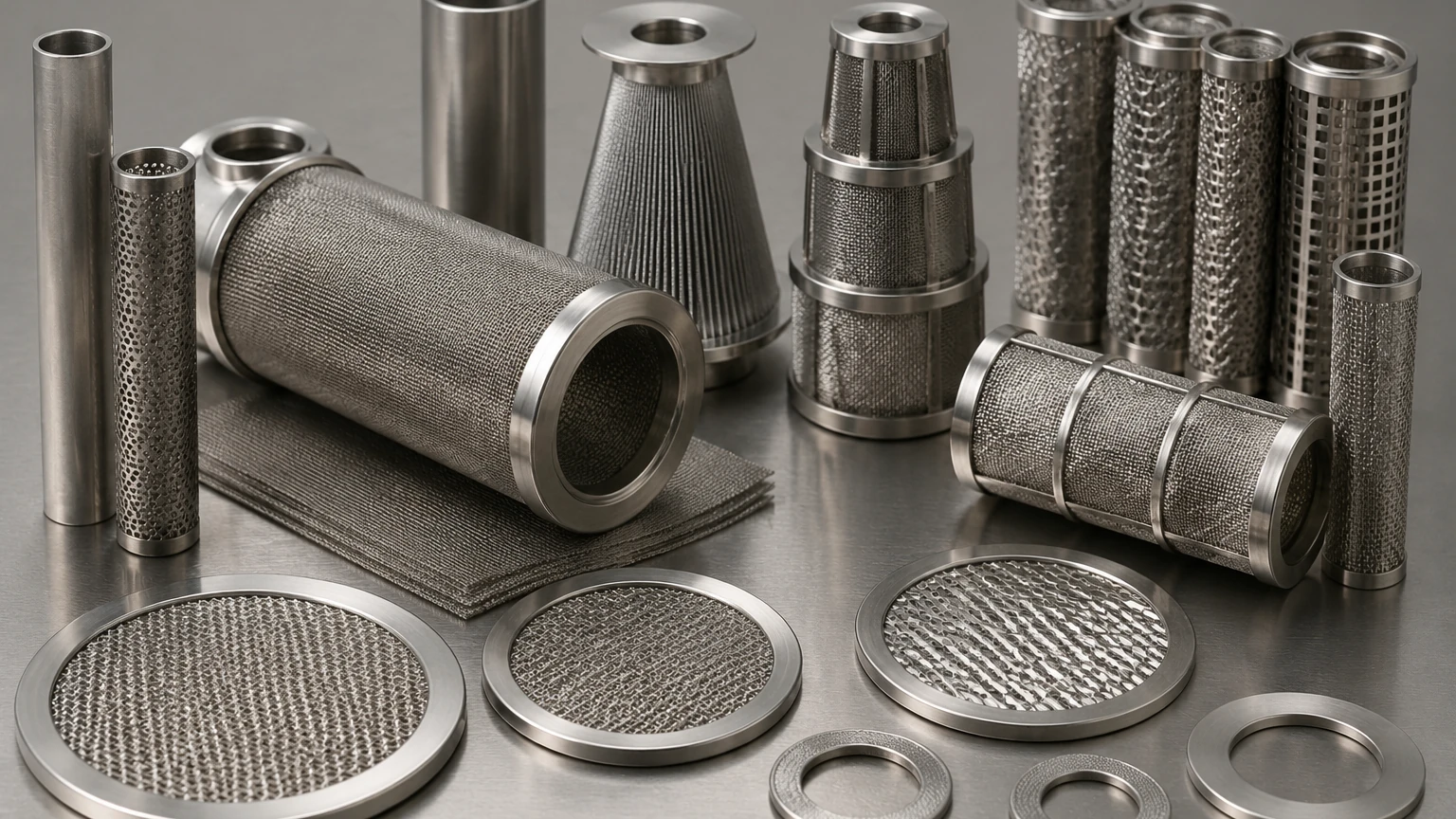
Many reactions in stirred tank reactors utilize expensive catalysts to drive chemical transformations. Losing these catalysts through the discharge stream is not only a financial loss but can also contaminate downstream products. Stainless steel wire mesh filters and sintered metal cartridges are frequently used to retain these catalysts within the reactor or to capture them during the discharge phase. The high mechanical strength of stainless steel allows these filters to withstand the abrasive nature of many industrial catalysts.
2. Impurity Removal from Feedstocks
To prevent side reactions and protect the integrity of the final product, raw materials must be filtered before entering the reactor. Any particulate matter in the feed can act as a site for unwanted crystal growth or can foul the internal surfaces of the reactor and the agitator. Precision metal filter components ensure that only the specified reactants enter the system.
3. Downstream Equipment Protection
Stirred tank reactors are often part of a larger process train that includes pumps, heat exchangers, and sensitive analytical instruments. If solids are allowed to escape the reactor, they can cause significant damage to this equipment. Implementing robust filtration at the reactor outlet is a proactive measure to reduce maintenance costs and prevent unplanned downtime across the entire production line.
Material Selection and Engineering Considerations
When specifying filtration components for stirred tank reactors, material selection is the most critical decision an engineer will make. The environment inside a reactor is often characterized by extreme pH levels, high temperatures, and high pressures.
Stainless Steel: The Industrial Standard
Stainless steel, particularly grades 304 and 316L, is the preferred material for reactor filtration. 316L stainless steel offers superior corrosion resistance, especially against chlorides and acidic environments, making it ideal for pharmaceutical and chemical processing. Beyond chemistry, the physical properties of stainless steel allow for the manufacture of complex filter geometries, such as pleated cartridges or multi-layered sintered mesh, which provide a high surface area in a compact footprint.
Filtration Accuracy and Micron Ratings
Determining the correct micron rating is a balance between flow rate (flux) and separation efficiency. In stirred tank reactors, a filter that is too fine may lead to rapid pressure buildup and frequent cleaning cycles, while a filter that is too coarse will fail to protect product purity. Engineers must evaluate the particle size distribution of the solids involved in the reaction to select a mesh size that provides optimal performance. Precision-woven wire mesh allows for exact control over pore size, ensuring consistent results batch after batch.
Pressure and Temperature Ratings
Filtration components must be engineered to handle the maximum operating pressure of the reactor, including potential pressure surges during discharge. Sintered metal components are particularly effective here, as the sintering process bonds the metal wires together, creating a rigid structure that does not deform under high differential pressure. Similarly, the filters must maintain their structural integrity at the reactor's operating temperature, which can range from cryogenic levels to several hundred degrees Celsius.
Customization and OEM Integration for Specialized Reactor Designs
No two industrial processes are identical, and often, off-the-shelf filtration solutions are insufficient for the specific demands of unique stirred tank reactors. This is where customization and OEM (Original Equipment Manufacturer) capabilities become vital. Custom-designed filter elements can be tailored to fit the specific dimensions of a reactor's discharge port or internal housing, ensuring a leak-proof fit and maximizing the effective filtration area.
Customization options often include:
- Custom End Fittings: Ensuring compatibility with existing piping and reactor flanges.
- Variable Mesh Layers: Combining different layers of wire mesh to provide both fine filtration and structural support.
- Specialized Coatings: In extremely aggressive environments, additional coatings or treatments can be applied to the stainless steel to further enhance its chemical resistance.
- Reinforced Structures: For reactors with high-intensity agitation, internal support cores can be added to the filter cartridges to prevent collapse or vibration-induced fatigue.
By working closely with a manufacturer that understands these engineering constraints, purchasing teams can procure components that are not only functional but optimized for the specific fluid dynamics of their stirred tank reactors.
Optimizing Maintenance Cycles and Total Cost of Ownership
In a B2B context, the total cost of ownership (TCO) is a more significant metric than the initial purchase price. For filtration components in stirred tank reactors, TCO is heavily influenced by the durability of the filter and the ease with which it can be cleaned.
Cleanability and Reusability
Unlike disposable plastic or fiber filters, stainless steel filtration components are designed for long-term use. They can be cleaned using various methods, including backpulsing, ultrasonic cleaning, or chemical CIP (Clean-in-Place) processes. The ability to restore the filter to its original pressure drop multiple times significantly reduces the cost per liter of product processed. For engineers, this means fewer filter changes and less process interruption.
Durability in Harsh Conditions
The mechanical robustness of metal filters means they are less likely to suffer from bypass or structural failure compared to softer materials. In the high-shear environment of stirred tank reactors, where particles are constantly being accelerated by the agitator, the erosion resistance of stainless steel ensures that the filter maintains its rated accuracy over a long service life.
Predicting Replacement Cycles
While stainless steel filters are durable, they are not infinite. Engineers should monitor the differential pressure across the filter as a key performance indicator. A gradual increase in the baseline pressure after cleaning cycles indicates that the filter is reaching the end of its functional life. Establishing a predictable maintenance schedule based on these technical observations helps prevent emergency shutdowns and ensures the reactor operates at peak efficiency.
Application-Specific Requirements Across Key Industrial Sectors
The requirements for filtration in stirred tank reactors vary significantly depending on the industry.
Pharmaceutical and Biotechnology
In these sectors, the focus is on sterility and the prevention of cross-contamination. Filtration components must be manufactured to high sanitary standards, often requiring 316L stainless steel with high-quality surface finishes (Ra < 0.4 µm) to prevent bacterial growth. The filters must also be compatible with SIP (Steam-in-Place) sterilization.
Chemical Processing
Chemical reactors often deal with highly aggressive solvents and reagents. The primary concern here is chemical compatibility and the ability to handle high-temperature reactions. Filtration systems must be designed to capture fine catalysts and prevent the carry-over of unreacted solids into downstream distillation or purification columns.
Food and Beverage
In food processing, stirred tank reactors are used for mixing ingredients, enzymatic reactions, and fermentation. Filtration components must comply with food safety regulations (such as FDA or EU standards). The emphasis is on removing particulates while maintaining the sensory characteristics of the product, such as clarity and texture.
Conclusion for Engineering and Purchasing Teams
Selecting the right filtration components for stirred tank reactors is a technical challenge that requires a holistic view of the process. From the mechanical stresses of agitation to the chemical demands of the reaction media, every factor must be considered to ensure reliable performance. By prioritizing high-quality materials like stainless steel and seeking customized OEM solutions, industrial operators can achieve superior filtration accuracy, protect downstream equipment, and optimize their total cost of ownership.
For those seeking to enhance their reactor performance, reviewing technical specifications and consulting with filtration experts is the recommended next step. Detailed product information and application support are available through specialized manufacturing partners, ensuring that the components you integrate into your stirred tank reactors are engineered for the most demanding industrial environments.
