


Strainer Mesh Size Chart
In industrial filtration, selecting the correct mesh size is critical for protecting downstream equipment, ensuring product purity, and maintaining system efficiency. A strainer mesh size chart serves as an essential reference for engineers and procurement teams to convert between mesh counts, microns, and inches. Understanding these relationships allows for precise specification of stainless steel filter components in demanding environments such as chemical processing, water treatment, and food production.
At Kaifil, we specialize in manufacturing high-performance stainless steel filtration solutions tailored to specific industrial requirements. By utilizing a technical approach to mesh selection, engineers can optimize flow rates while ensuring that particulate contaminants are effectively removed from the process stream.
Defining Mesh Count and Micron Equivalents in Industrial Filtration
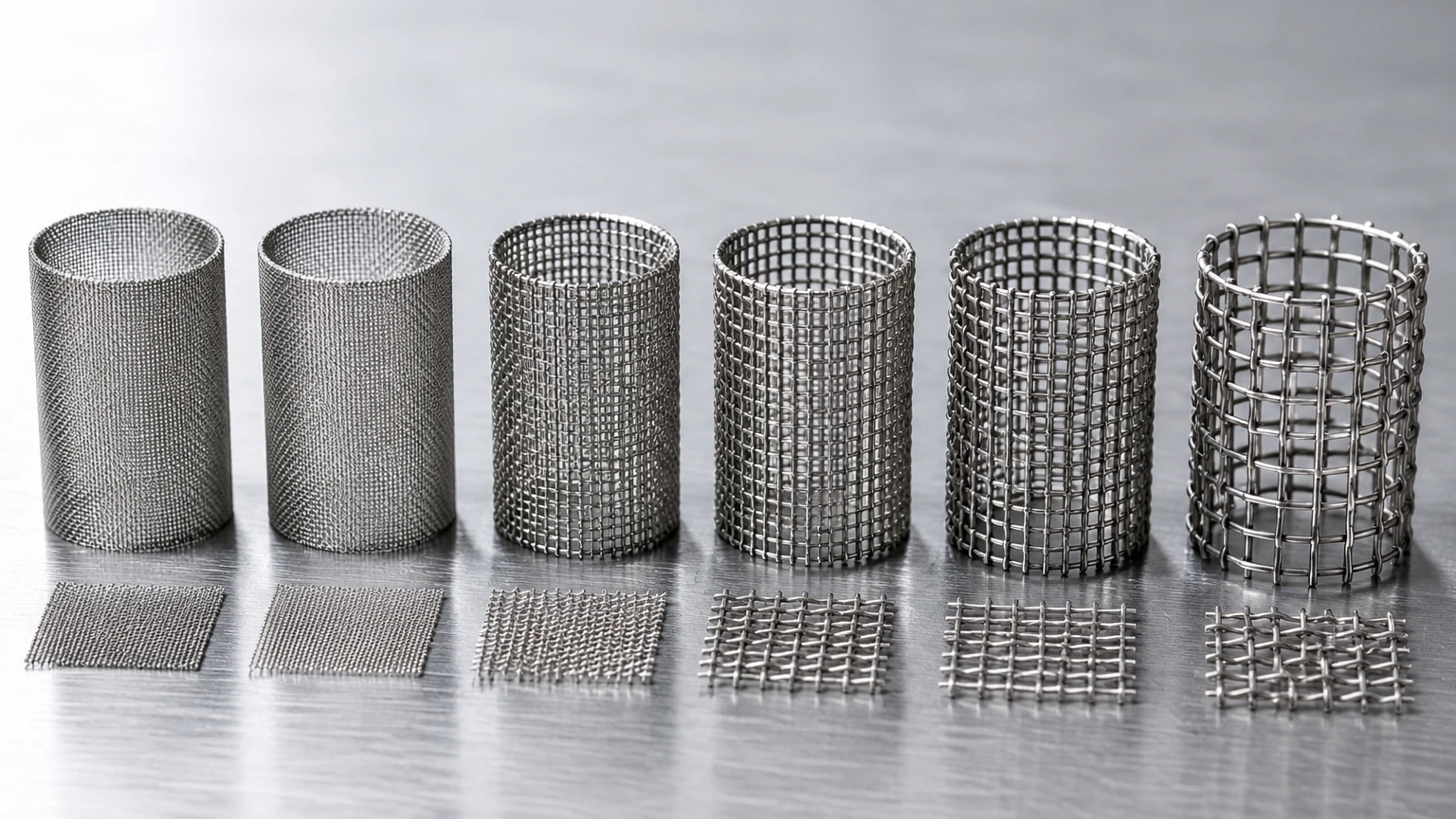
The term "mesh" refers to the number of openings per linear inch of a wire cloth or screen. For example, a 20-mesh screen has 20 openings per inch in both directions. However, mesh count alone does not provide the full picture of filtration capability because it does not account for the diameter of the wire used in the weave.
A more precise measurement used in technical specifications is the micron (μm). One micron is equal to one-millionth of a meter (0.001 mm). In the context of a strainer mesh size chart, the micron rating indicates the smallest particle size that the mesh is designed to retain.
There is an inverse relationship between mesh count and micron size: as the mesh count increases, the size of the openings decreases. A 10-mesh screen has relatively large openings (approximately 2,000 microns), whereas a 400-mesh screen has very fine openings (approximately 37 microns). When selecting a filter, engineers must balance the need for fine filtration with the allowable pressure drop and the physical characteristics of the fluid.
Comprehensive Strainer Mesh Size Chart for Engineering Reference
The following table provides a standard conversion for stainless steel wire mesh. Note that these values are based on standard wire diameters; variations in wire thickness will affect the actual micron rating and the percentage of open area.
| Mesh Count | Opening (Inches) | Opening (Microns) | Opening (Millimeters) |
| :— | :— | :— | :— |
| 2 | 0.437 | 11,100 | 11.10 |
| 4 | 0.187 | 4,760 | 4.76 |
| 10 | 0.0787 | 2,000 | 2.00 |
| 20 | 0.0331 | 841 | 0.841 |
| 30 | 0.0232 | 595 | 0.595 |
| 40 | 0.0165 | 400 | 0.400 |
| 50 | 0.0117 | 297 | 0.297 |
| 60 | 0.0098 | 250 | 0.250 |
| 80 | 0.0070 | 177 | 0.177 |
| 100 | 0.0059 | 149 | 0.149 |
| 150 | 0.0041 | 105 | 0.105 |
| 200 | 0.0029 | 74 | 0.074 |
| 325 | 0.0017 | 44 | 0.044 |
| 400 | 0.0015 | 37 | 0.037 |
For more complex filtration needs or custom specifications, you can visit our Main Page to explore our full range of stainless steel filter cartridges and precision components.
Factors Influencing Filtration Performance: Wire Diameter and Open Area
While the strainer mesh size chart provides a baseline for opening sizes, the "Open Area" percentage is equally vital for system design. The open area is the ratio of the total area of the openings to the total area of the mesh. It is calculated using the following formula:
Percentage of Open Area = (O² / (O + D)²) × 100
*Where:*
* O = Opening size (width of the aperture)
* D = Wire diameter
A higher open area results in a lower pressure drop and higher flow capacity, which is generally desirable in industrial strainers. However, using thinner wire to increase the open area may reduce the structural integrity of the filter element. In high-pressure hydraulic or chemical applications, a balance must be struck between the required filtration fineness and the mechanical strength of the mesh to prevent deformation or media migration.
Material Selection: Stainless Steel 304 vs. 316 for Industrial Strainers
The effectiveness of a strainer mesh is not solely dependent on its dimensions but also on its material composition. Stainless steel is the industry standard due to its durability and resistance to corrosion.
1. Grade 304 Stainless Steel: This is the most common grade used for industrial filtration. It offers excellent resistance to many chemicals and atmospheric conditions. It is suitable for water treatment, general industrial processing, and some food and beverage applications.
2. Grade 316 Stainless Steel: Containing molybdenum, Grade 316 provides superior resistance to chlorides and acids. It is the preferred choice for marine environments, pharmaceutical manufacturing, and highly corrosive chemical processing.
Kaifil utilizes high-quality raw materials to ensure that every wire mesh filter meets the rigorous standards of the industry. Choosing the right alloy ensures that the mesh maintains its aperture precision over a long service life, even in harsh operating conditions.
Application-Specific Selection Criteria for Strainer Mesh
Selecting the correct value from a strainer mesh size chart requires an understanding of the specific application goals. Engineers should consider the following criteria:
Particle Morphology and Concentration
Spherical particles are easily captured by square mesh openings. However, elongated or needle-like particles may pass through a mesh that is technically rated smaller than the particle's length. If the fluid has a high concentration of solids, a larger surface area or a multi-layered sintered mesh may be required to prevent rapid clogging.
Flow Rate and Velocity
High-velocity fluids can cause turbulence and increased wear on the mesh wires. If the flow rate is high, selecting a mesh with a larger open area or reinforcing the filter with a perforated metal support core is often necessary to maintain structural stability.
Allowable Pressure Drop (Delta P)
Every filter introduces some resistance to flow. As the mesh captures contaminants, the pressure drop across the filter increases. Engineers must determine the maximum allowable pressure drop before the filter requires cleaning or replacement. A finer mesh will reach this limit faster than a coarser mesh.
Custom Engineering and OEM Solutions for Precision Filtration
Standard off-the-shelf strainers do not always meet the unique challenges of specialized industrial processes. Customization allows for the optimization of filter geometry, mesh weave type, and reinforcement structures.
At Kaifil, we provide OEM services for a wide range of filtration components, including:
* Sintered Wire Mesh: Multiple layers of mesh bonded together for extreme pressure resistance and fine filtration.
* Dutch Weave Mesh: A specialized weave where the warp and weft wires have different diameters, creating a dense, strong filter medium for high-pressure applications.
* Pleated Filter Cartridges: Increasing the surface area within a standard footprint to extend the time between maintenance cycles.
By consulting a strainer mesh size chart during the design phase, our engineering team works with clients to develop filtration solutions that precisely match their technical specifications, ensuring reliability in critical systems.
Maintenance, Cleaning, and Replacement Cycles for Metal Mesh Filters
One of the primary advantages of stainless steel mesh over disposable media is cleanability. However, improper maintenance can lead to mesh damage or permanent fouling.
* Differential Pressure Monitoring: The most reliable way to determine when a strainer needs cleaning is by monitoring the differential pressure. Once the pressure drop reaches a predetermined threshold (often 10-15 psi depending on the system), the mesh should be serviced.
* Cleaning Methods: Depending on the contaminant, stainless steel mesh can be cleaned using ultrasonic baths, backwashing, or chemical cleaning. It is essential to ensure that the cleaning process does not abrade the wire or alter the opening sizes.
* Inspection for Wear: During cleaning, the mesh should be inspected for signs of "blinding" (permanent blockage), wire thinning, or mechanical fatigue. If the mesh openings have stretched or the wires have frayed, the filter element must be replaced to prevent bypass of contaminants.
Conclusion
Utilizing a strainer mesh size chart is the first step in designing an effective industrial filtration system. By understanding the relationship between mesh count, microns, and open area, engineers can select components that protect sensitive equipment and maintain process integrity.
Kaifil remains committed to providing the technical expertise and manufacturing precision required for high-performance stainless steel filtration. Whether you require standard wire mesh or a fully customized filter assembly, our team is equipped to support your application needs. For detailed product specifications and selection advice, please visit our Main Page to learn more about our industrial filtration solutions.
