


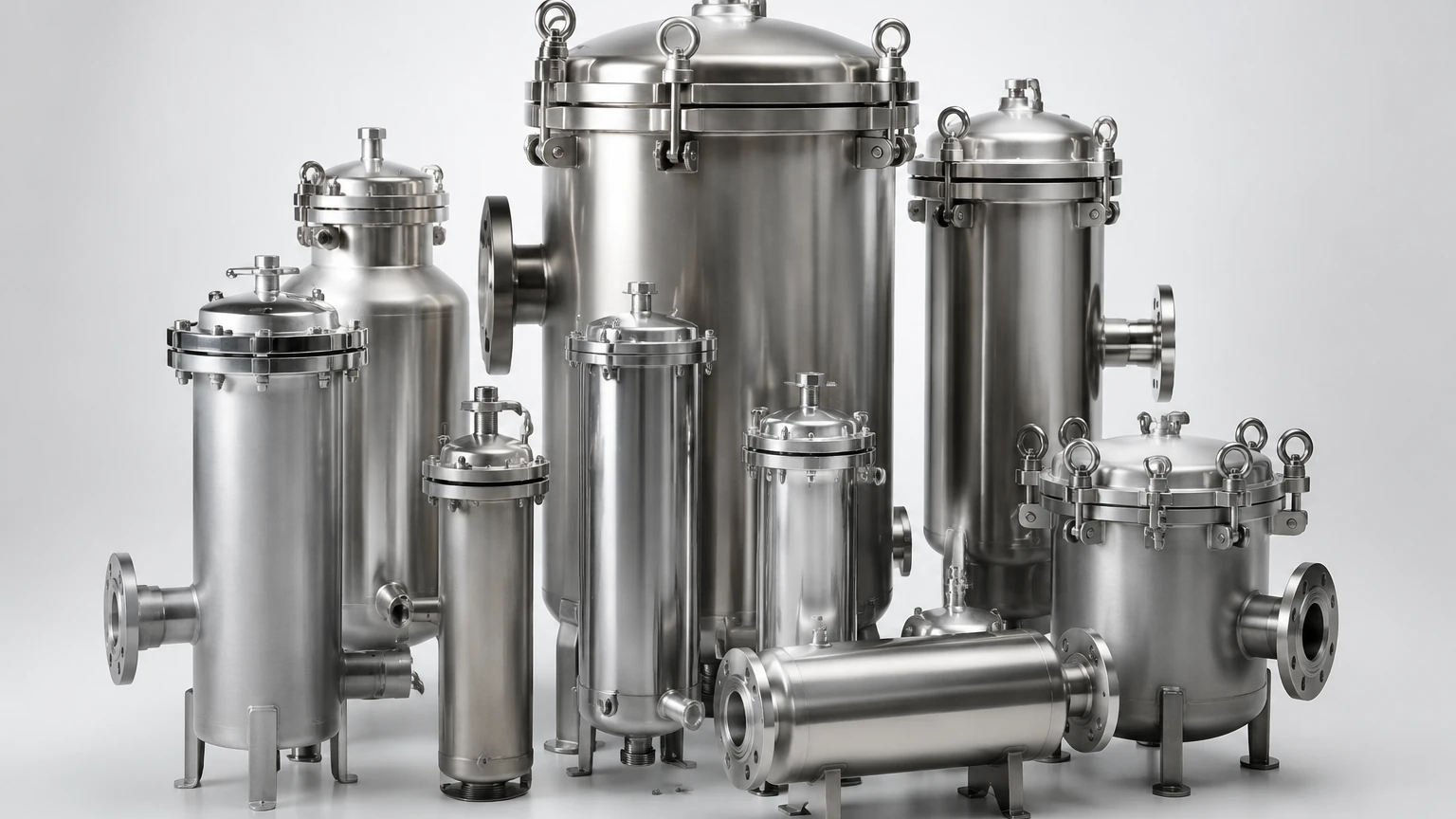
Tanks Vessels
In the landscape of industrial processing, tanks vessels serve as the primary containment units where critical chemical reactions, mixing, storage, and separation occur. However, the utility of these vessels is often dictated by the efficiency of the internal components integrated into them, particularly filtration and straining systems. For engineers and procurement specialists, understanding the synergy between vessel design and filtration performance is essential to ensuring product purity, protecting downstream equipment, and maintaining operational safety.
Industrial tanks and vessels are rarely passive storage units; they are active environments where fluids are subjected to varying pressures, temperatures, and chemical stresses. To maintain the integrity of the media within these systems, high-performance stainless steel filtration components are required. Kaifil specializes in providing these precision-engineered solutions, ensuring that the internal filtration elements within tanks vessels meet the rigorous demands of modern industrial applications.
Understanding the Integration of Filtration in Industrial Tanks and Vessels
The relationship between tanks vessels and filtration systems is fundamental to process engineering. Filtration within a vessel typically serves one of three purposes: intake protection, in-process clarification, or discharge purification.
Intake filtration ensures that raw materials entering the vessel do not introduce contaminants that could compromise the batch or damage internal agitators and sensors. In-process clarification involves the removal of precipitates or catalysts during a reaction, while discharge filtration ensures the final product meets specific micron-rating requirements before moving to packaging or further processing.
When selecting filtration components for tanks vessels, engineers must consider the vessel's internal geometry. The placement of filter cartridges or wire mesh strainers must account for flow patterns to avoid stagnant zones where bacteria could grow or solids could accumulate. Furthermore, the mechanical interface—how the filter attaches to the vessel’s nozzles or internal manifolds—must be robust enough to withstand the hydraulic forces present during filling and emptying cycles.
Engineering Parameters for High-Performance Vessel Filtration
Designing filtration for tanks vessels requires a deep dive into technical specifications. It is not enough to simply select a filter based on micron size; several engineering variables must be harmonized to achieve optimal performance.
Flow Rate and Pressure Drop
The flow rate through a vessel is a primary driver of filter selection. A filter that is too small will create an excessive pressure drop (differential pressure), which can lead to pump strain, reduced throughput, and even structural failure of the filter element. Conversely, an oversized filter may lead to inefficient use of space and higher capital costs. Engineers must calculate the "clean pressure drop" and establish a maximum allowable "dirty pressure drop" to determine the appropriate surface area for the filtration media.
Temperature and Viscosity
Industrial processes often involve high-temperature fluids or high-viscosity liquids like resins, oils, or syrups. As temperature increases, the structural integrity of certain materials may degrade. Stainless steel is the preferred material for tanks vessels filtration because it maintains mechanical strength at elevated temperatures. Viscosity also plays a role; thicker fluids require larger pore sizes or greater surface areas to maintain flow, necessitating custom-designed wire mesh or pleated cartridge configurations.
Filtration Accuracy (Micron Rating)
Determining the required filtration accuracy is a balance between product quality and maintenance frequency. Nominal ratings provide a general guide, but for critical applications in the pharmaceutical or food industries, absolute ratings are often required. This ensures that 99.9% of particles above a specific size are captured, providing a reliable barrier within the vessel system.
Material Selection: Ensuring Durability in Corrosive Environments
The longevity of filtration components within tanks vessels is heavily dependent on material science. Because these vessels often handle corrosive chemicals, abrasive slurries, or high-purity ingredients, the choice of stainless steel grade is a critical decision.
* 304 Stainless Steel: This is the standard grade for general-purpose applications. It offers good corrosion resistance and is cost-effective for water treatment or mild chemical storage.
* 316/316L Stainless Steel: For more demanding environments, 316L is the industry standard. The addition of molybdenum enhances resistance to pitting and crevice corrosion, particularly in chloride-rich environments. The "L" (low carbon) designation is crucial for components that require welding, as it prevents carbide precipitation that can lead to corrosion at the weld joints.
* Specialty Alloys: In extreme cases involving highly acidic or alkaline media, specialty alloys or duplex stainless steels may be employed to ensure the filter does not become a point of failure within the vessel.
By visiting the Main Page, technical teams can explore the various material options and manufacturing standards that Kaifil employs to ensure these components withstand the harshest industrial conditions.
Customization and OEM Solutions for Specialized Tanks and Vessels
Standard off-the-shelf filters rarely meet the precise needs of complex tanks vessels. Customization is often necessary to accommodate unique vessel dimensions, specific mounting requirements, or unconventional flow paths.
Custom Geometry and Fittings
Filters must often be designed to fit within specific footprints inside a vessel. This might involve elongated cartridges, multi-basket strainers, or cone-shaped filters designed for bottom-discharge vessels. Custom fittings, such as NPT threads, flanged connections, or sanitary Tri-Clamp fittings, ensure a leak-proof integration with the vessel’s existing infrastructure.
Reinforced Structures
In high-pressure vessels, standard wire mesh may collapse under the weight of the fluid or the force of the pump. Custom filtration solutions include internal support cores or external perforated cages that provide the necessary rigidity without significantly impeding flow. For vacuum-rated vessels, the filter must also be designed to resist implosion forces during degassing or vacuum-assisted filtration processes.
OEM Collaboration
For manufacturers of tanks vessels, partnering with an OEM filtration specialist like Kaifil allows for the integration of filtration as a built-in feature rather than an afterthought. This collaborative approach ensures that the filter and the vessel function as a single, optimized unit, reducing the risk of bypass or mechanical interference.
Operational Performance and Maintenance Protocols
The total cost of ownership for tanks vessels is significantly impacted by the maintenance requirements of their internal filters. A well-designed filtration system should not only perform effectively but also be easy to maintain.
Cleaning and Reusability
Unlike disposable plastic or paper filters, stainless steel filtration elements are cleanable and reusable. This is a major advantage in industrial B2B environments where minimizing waste and reducing recurring consumable costs are priorities. Methods such as ultrasonic cleaning, backwashing, or chemical CIP (Clean-In-Place) cycles allow the filters to be restored to near-original condition, extending the service life of the vessel's internals.
Monitoring Replacement Cycles
Even the most durable filters eventually require replacement. Engineers should implement differential pressure monitoring systems on their tanks vessels. A sudden spike in pressure indicates a blinded filter, while a sudden drop could indicate a breach in the filter media. Establishing a predictable maintenance schedule based on these metrics prevents unplanned downtime and protects product quality.
Application-Specific Requirements Across Industries
Different industries impose different standards on the filtration components used within tanks vessels. Understanding these nuances is vital for compliance and performance.
* Chemical Processing: The focus here is on chemical compatibility and the ability to handle hazardous materials safely. Filters must resist degradation from solvents, acids, and bases while maintaining precise separation of catalysts.
* Food and Beverage: Sanitary design is paramount. Filters within these vessels must have smooth surface finishes (often electropolished) to prevent bacterial attachment. They must also be compatible with high-temperature steam sterilization.
* Pharmaceuticals: This industry requires the highest level of documentation and precision. Filtration components must meet stringent regulatory standards, ensuring zero leaching of materials into the product and absolute retention of contaminants.
* Hydraulic and Industrial Systems: In these applications, the primary goal is protecting sensitive pumps and valves from particulate wear. Filters in these tanks vessels must handle high flow rates and capture metallic debris or environmental dust.
Conclusion: Selecting the Right Partner for Vessel Filtration
Integrating filtration into tanks vessels is a complex engineering task that requires a balance of material science, fluid dynamics, and manufacturing precision. Selecting the wrong filter can lead to process inefficiencies, product contamination, and costly equipment damage. Conversely, a correctly specified stainless steel filtration system enhances the reliability and lifespan of the entire vessel assembly.
For engineers and purchasing managers, the key to success lies in working with a manufacturer that understands these technical boundaries. From initial material selection to the final customized design, professional filtration solutions provide the foundation for efficient industrial processing. To learn more about how custom stainless steel filters can optimize your vessel operations, visit the Main Page for detailed product specifications and technical support. By focusing on quality and durability, Kaifil ensures that your industrial filtration needs are met with precision and expertise.
