


Baghouse Dust Collector System
In industrial environments, maintaining air quality and recovering valuable particulate matter are critical operational requirements. A baghouse dust collector system serves as one of the most efficient and versatile solutions for large-scale air pollution control. Designed to handle high volumes of dust-laden air, these systems utilize fabric or metal filter media to separate particles from gas streams. For engineers and facility managers, understanding the technical nuances of these systems—from media selection to cleaning mechanisms—is essential for optimizing filtration efficiency and ensuring long-term structural integrity.
While traditional baghouses often rely on synthetic fabric bags, demanding industrial applications involving high temperatures, corrosive chemicals, or abrasive materials often require specialized components. Manufacturers like Kaifil provide the precision stainless steel filtration elements necessary to enhance the durability and performance of these complex systems.
Understanding the Fundamentals of a Baghouse Dust Collector System
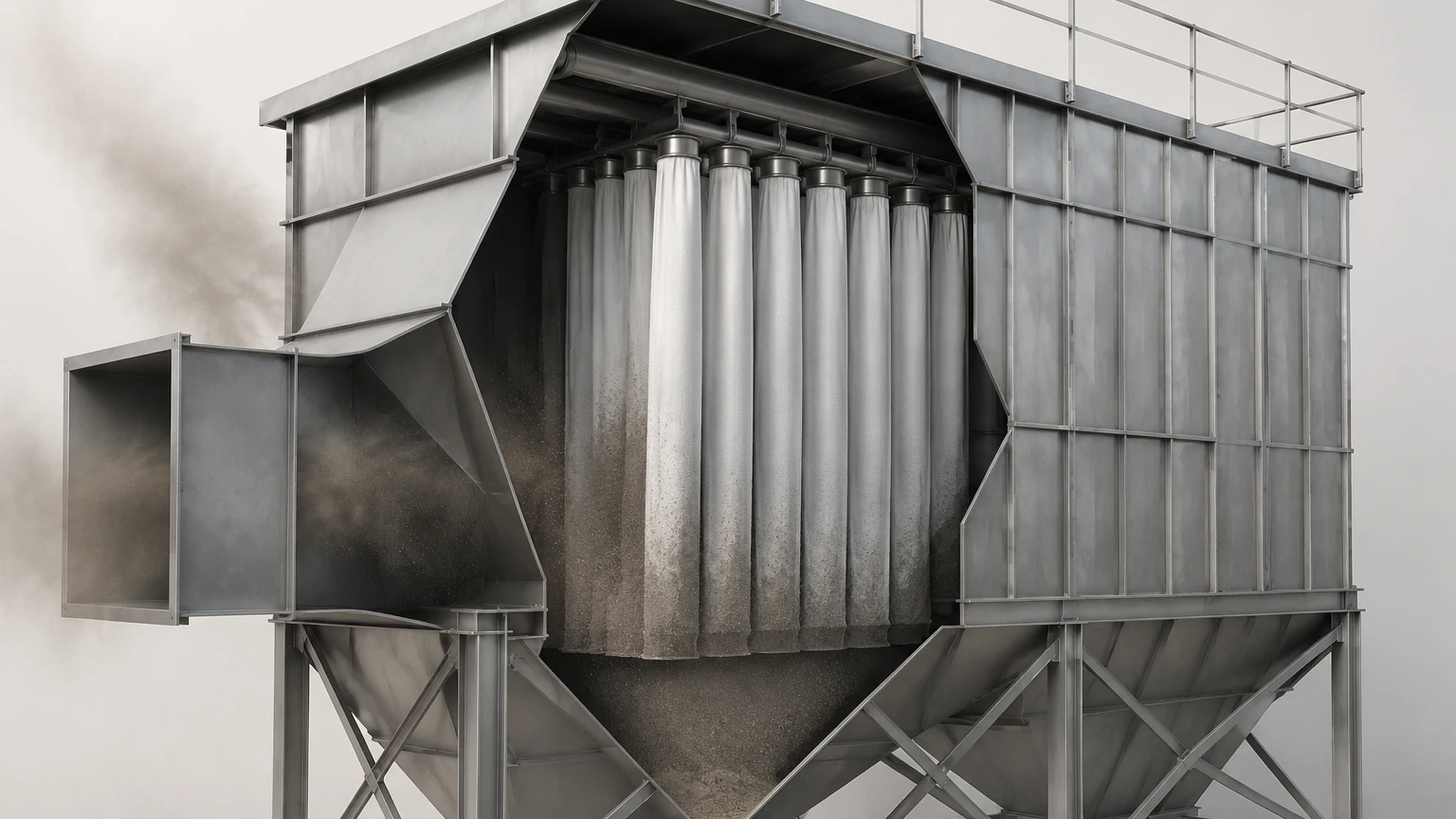
A baghouse dust collector system operates on the principle of pressure differential. Dust-laden air is drawn into the system by a powerful fan, where it passes through a series of long, cylindrical filters (bags or cartridges). As the air moves through the filter media, the dust particles are trapped on the surface, while the cleaned air exits through the exhaust.
The filtration process involves several physical mechanisms:
* Inertial Impaction: Larger particles, unable to follow the streamlined flow of air, strike the filter fibers directly.
* Interception: Medium-sized particles follow the airflow but come close enough to the fibers to be captured.
* Diffusion: Very fine particles move erratically due to Brownian motion, increasing the likelihood of contact with the filter media.
As dust accumulates on the filter surface, it forms a "dust cake." While this cake increases the filtration efficiency by acting as a secondary filter layer, it also increases the resistance to airflow, known as pressure drop. Managing this balance is the core challenge of baghouse engineering.
Primary Components and Structural Engineering
A robust baghouse dust collector system is comprised of several integrated components, each designed to withstand specific mechanical and thermal stresses.
The Housing and Hoppers
The outer shell, or housing, must be airtight and often insulated to prevent condensation, especially in applications involving hot gases. The bottom of the housing features one or more hoppers, which are funnel-shaped compartments where the collected dust settles before being discharged via rotary valves or screw conveyors.
The Tube Sheet
This is a heavy-duty metal plate that separates the clean air plenum from the dirty air plenum. The filter bags are suspended from holes in the tube sheet. A precise fit is mandatory to prevent "leakage," where unfiltered air bypasses the media.
Filter Support Cages
In systems where air flows from the outside of the bag to the inside, internal wire cages are used to prevent the bags from collapsing. These cages must be manufactured with high precision to avoid burrs or sharp edges that could tear the filter media. For corrosive environments, stainless steel cages are preferred over galvanized steel to prevent rust-related failures.
Filter Media Selection: Fabric vs. Stainless Steel Solutions
The choice of filter media is the most critical factor in the performance of a baghouse dust collector system. The selection depends on the operating temperature, the chemical composition of the gas, and the physical properties of the dust.
Synthetic Fabric Media
Common materials include Polyester (for dry, low-temperature applications), Nomex (for high-heat environments), and PTFE (for superior chemical resistance and dust release). These are typically used in standard industrial dust collection.
Stainless Steel and Precision Metal Media
In extreme environments where temperatures exceed 500°F (260°C) or where the gas stream is highly acidic or alkaline, synthetic fibers may degrade. This is where stainless steel wire mesh or sintered metal filter cartridges become indispensable. These components, often sourced from specialized manufacturers like Kaifil, offer:
* Thermal Stability: Capability to operate in temperatures that would melt or char synthetic fabrics.
* Mechanical Strength: High resistance to high-pressure pulses and abrasive dust particles.
* Cleanability: Stainless steel media can be cleaned and reused more effectively in certain chemical processes, reducing the total cost of ownership.
Cleaning Mechanisms: Pulse-Jet, Shaker, and Reverse Air
To maintain a consistent pressure drop, the baghouse dust collector system must periodically remove the accumulated dust cake. There are three primary methods used in the industry:
Pulse-Jet Cleaning
This is the most common method for modern industrial applications. A high-pressure blast of compressed air is shot down the length of the filter bag. This creates a shockwave that causes the bag to expand rapidly and سپس contract, dislodging the dust cake. Pulse-jet systems allow for continuous operation because individual rows of bags can be cleaned while the rest of the system remains online.
Shaker Systems
The tops of the bags are attached to a motorized horizontal bar that vibrates or shakes. This mechanical action loosens the dust, which falls into the hopper. Shaker systems generally require the airflow to be stopped during the cleaning cycle, making them less suitable for continuous, high-volume processes.
Reverse Air Cleaning
In this design, the bags are cleaned by blowing a low-pressure stream of clean air in the opposite direction of the normal filtration flow. This causes the bags to partially collapse, cracking the dust cake. Like shaker systems, reverse air units are often divided into compartments so that one section can be cleaned while others remain in operation.
Critical Design Parameters: Air-to-Cloth Ratio and Can Velocity
Engineers must calculate several key metrics to ensure the baghouse is sized correctly for the application.
Air-to-Cloth (A/C) Ratio
The A/C ratio, also known as the filtration velocity, is the ratio of the volume of air entering the collector (in Cubic Feet per Minute, CFM) to the total square footage of the filter media. A lower A/C ratio generally leads to higher filtration efficiency and longer bag life but requires a larger, more expensive housing.
Can Velocity
Can velocity refers to the upward speed of the air within the baghouse housing. If the can velocity is too high, it can prevent dislodged dust from falling into the hopper, causing it to be pulled back onto the filters (re-entrainment). This leads to a rapid increase in pressure drop and reduced system capacity.
Addressing High-Temperature and Corrosive Applications
Standard baghouse designs often fail when exposed to the harsh conditions found in chemical processing, smelting, or waste-to-energy plants. In these scenarios, the baghouse dust collector system must be modified with specialized materials.
Corrosion is a primary concern when the gas stream contains sulfur oxides or chlorides. If the temperature drops below the acid dew point, liquid acid can form, eating through carbon steel housings and rotting synthetic filter bags. Utilizing stainless steel internal components and high-grade metal mesh filters ensures that the system maintains its structural integrity. Furthermore, metal filters provide a level of fire resistance that is essential when handling spark-prone dust or flammable particulates.
Maintenance Protocols and Troubleshooting Differential Pressure
Monitoring the differential pressure ($\\Delta P$) across the tube sheet is the most effective way to gauge the health of a baghouse dust collector system. A sudden drop in pressure may indicate a torn bag ("bleeding"), while a steady, unrecoverable increase in pressure suggests "blinding," where dust particles have become deeply embedded in the filter media and cannot be removed by the cleaning cycle.
Routine maintenance should include:
1. Visual Inspections: Checking the clean air plenum for dust streaks, which indicate leaking bags.
2. Diaphragm Valve Testing: Ensuring the pulse-jet valves are firing correctly and that compressed air is dry and oil-free.
3. Hopper Discharge: Verifying that rotary valves are functioning to prevent dust buildup in the hoppers, which can lead to fires or structural collapse.
Custom OEM Filtration Components for Industrial Systems
For many specialized industrial processes, off-the-shelf filtration solutions do not provide the necessary precision or durability. Custom-engineered components are often required to meet specific micron ratings or to fit unique housing configurations.
Whether the application involves hydraulic systems, chemical reactors, or large-scale air treatment, the integration of high-quality metal filtration media is vital. For engineers seeking specialized metal filtration components to integrate into a larger baghouse dust collector system, reviewing product options and application support on the Main Page of a professional manufacturer like Kaifil provides insights into custom stainless steel solutions. These precision-manufactured wire mesh filters and cartridges are designed to operate where standard media fails, providing the reliability required for demanding B2B industrial environments.
By focusing on material compatibility, precise engineering of support structures, and optimized cleaning cycles, companies can ensure their dust collection systems remain compliant with environmental regulations while minimizing downtime and maintenance costs.
