


Temporary Basket Strainer
In the initial stages of industrial plant commissioning or after significant system maintenance, the integrity of downstream equipment is at its most vulnerable. Debris such as welding slag, scale, rust, and construction materials left within the piping can cause catastrophic failure to sensitive components like pumps, valves, and flow meters. The temporary basket strainer serves as a critical, cost-effective safeguard designed to capture these contaminants during the startup phase. Unlike permanent filtration systems, these components are engineered for short-term use, providing high-capacity filtration until the system reaches a steady, clean state.
As a specialized manufacturer of stainless steel filtration solutions, Kaifil understands that the selection of a temporary basket strainer is not merely a secondary consideration but a vital engineering decision. Ensuring the correct specifications—ranging from material grade to mesh fineness—is essential for maintaining system pressure and protecting high-value assets.
Understanding the Role of Temporary Basket Strainers in Industrial Piping
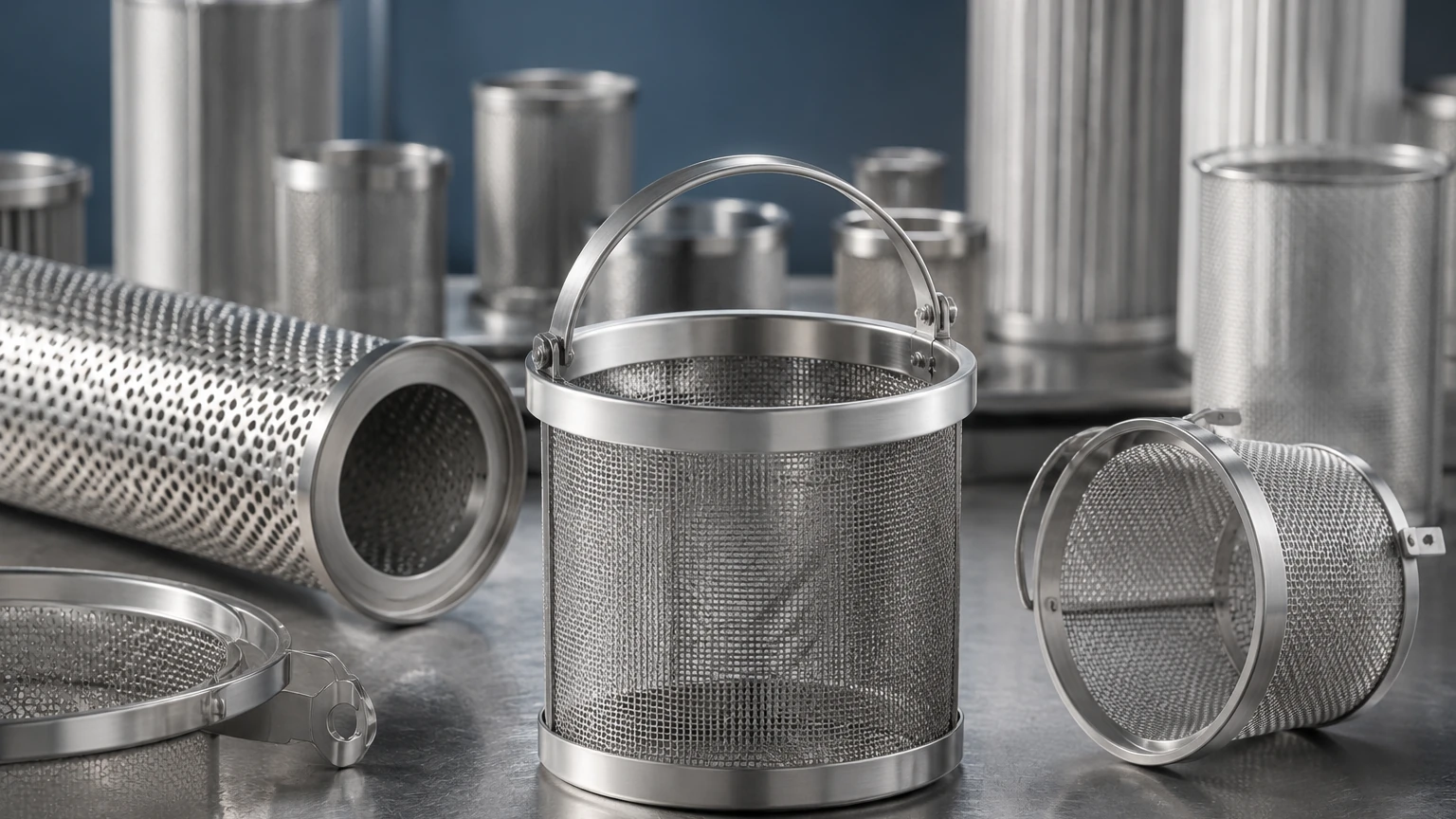
A temporary basket strainer, often referred to as a startup strainer, is a removable filtration device installed between flanges in a piping system. Its primary function is the removal of solid particles from liquids or gases during the commissioning period. While permanent strainers are designed for long-term operation with easy-access cleaning ports, temporary strainers are typically intended for removal once the initial "flush" of the system is complete.
The basket design offers a significant advantage over cone or plate strainers: a larger surface area. This increased area allows for a higher dirt-holding capacity and a lower initial pressure drop. In industrial environments where flow rates are high, such as in chemical processing or oil and gas pipelines, the ability to capture a large volume of debris without immediate clogging is paramount. For engineers, the goal is to balance effective particle removal with the operational necessity of maintaining flow.
Key Design Features and Material Selection
The performance of a temporary basket strainer is fundamentally tied to its construction. At Kaifil, the focus is on utilizing high-grade stainless steel to ensure durability and chemical compatibility across diverse industrial applications.
Material Grades
Stainless steel is the standard material for industrial strainers due to its resistance to corrosion and high temperatures. Common grades include:
* 304 Stainless Steel: Suitable for general industrial use, water treatment, and food-grade applications where moderate corrosion resistance is required.
* 316/316L Stainless Steel: Preferred for chemical processing, pharmaceutical manufacturing, and marine environments. The addition of molybdenum provides superior resistance to chlorides and acidic environments.
Construction Types
Temporary basket strainers are usually constructed from perforated metal or a combination of perforated metal and wire mesh.
* Perforated Metal Only: Used for coarse filtration where only large debris needs to be captured.
* Mesh-Lined: For finer filtration requirements, a stainless steel wire mesh is spot-welded to the interior or exterior of the perforated basket. This provides the structural strength of the perforated plate with the precision of the mesh.
Flange Facings
These strainers are designed to be sandwiched between standard ANSI or DIN flanges. They can be manufactured to fit various flange faces, including raised face (RF), flat face (FF), or ring-type joint (RTJ), ensuring a leak-proof seal during the startup process.
Engineering Considerations: Flow Rate and Pressure Drop
One of the most critical aspects of specifying a temporary basket strainer is calculating the allowable pressure drop (ΔP). Every filtration element introduces resistance to the flow. If the strainer is undersized or the mesh is too fine for the application, the pressure drop can exceed the system's design limits, potentially leading to pump cavitation or structural failure of the strainer basket itself.
Open Area Ratio
Engineers must consider the "Net Open Area" of the strainer. This is the total area of the holes in the mesh or perforated plate relative to the cross-sectional area of the inlet pipe. A common industry standard for temporary basket strainers is a 100% to 300% open area ratio. A higher ratio means the strainer can handle more debris before the pressure drop becomes critical, extending the interval between cleanings during the startup flush.
Structural Integrity
During startup, the velocity of the fluid can be unpredictable. The temporary basket strainer must be robust enough to withstand the differential pressure caused by debris buildup. If the basket collapses, the captured debris and pieces of the strainer itself will be sent downstream, defeating the purpose of the installation. High-quality manufacturing ensures that the weld points and the gauge of the stainless steel are sufficient for the intended flow conditions.
Applications Across Critical Industries
Temporary basket strainers are utilized across a broad spectrum of industries where fluid purity and equipment protection are non-negotiable. Their versatility makes them a staple in both new construction and system overhauls.
Chemical and Petrochemical Processing
In these sectors, piping systems are often extensive and complex. During the construction of a new refinery or chemical plant, thousands of feet of pipe may contain scale and slag. Temporary strainers protect expensive control valves and sensitive instrumentation from damage during the initial circulation of process fluids.
Food and Beverage Industry
Hygiene is the priority in food and beverage production. Stainless steel temporary strainers are used to ensure that no metallic fragments or construction debris remain in the lines before the system is sterilized and put into production. The use of 316L stainless steel is often required to meet strict sanitary standards.
Pharmaceutical Manufacturing
Precision is key in pharmaceutical applications. Temporary filtration ensures that high-purity water systems (WFI) and chemical feed lines are completely free of particulate matter before the validation process begins.
Power Generation and Hydraulic Systems
In power plants, temporary strainers protect turbine components and boiler feed pumps. In large-scale hydraulic systems, they prevent contaminants from entering high-pressure pumps and actuators, which could cause immediate mechanical failure.
Installation and Maintenance Best Practices
Proper installation is essential for the effective operation of a temporary basket strainer. Because these components are often installed in tight spaces between flanges, certain procedural steps must be followed.
1. Orientation: Ensure the basket is oriented correctly relative to the flow direction. In a basket-style temporary strainer, the fluid should enter the open end of the basket so that debris is collected inside, making it easier to remove the contaminants when the strainer is pulled.
2. Gasket Selection: Use new gaskets on both sides of the strainer flange to prevent leaks. The thickness of the strainer's flange ring must be accounted for in the piping layout.
3. Monitoring: During the initial flush, pressure gauges should be installed upstream and downstream of the strainer. A rapid increase in differential pressure indicates that the strainer is doing its job and is becoming loaded with debris.
4. Cleaning and Removal: Once the differential pressure reaches a predetermined limit, the system should be shut down, and the strainer removed for cleaning. If the system has been thoroughly flushed and the pressure remains stable over a set period, the temporary strainer can be removed and replaced with a permanent spacer or a permanent filtration unit.
Customization and OEM Solutions for Filtration
No two industrial piping systems are identical, and off-the-shelf solutions often fall short of specific engineering requirements. Customization is a core strength of professional manufacturers like Kaifil. Whether the application requires a non-standard flange size, a specific length-to-diameter ratio to fit into existing piping, or a unique mesh combination for specialized particle retention, custom engineering ensures the strainer performs as intended.
For purchasing teams and engineers, working directly with a manufacturer allows for the integration of specific design features, such as reinforced handles for easier removal or heavy-duty backing plates for high-pressure steam applications. For more information on tailored filtration components, you can visit the Main Page to explore technical capabilities and product options.
Conclusion: The Value of Precision Manufacturing
While the term "temporary" might suggest a component of lesser importance, the temporary basket strainer is a fundamental insurance policy for industrial operations. The cost of a high-quality stainless steel strainer is negligible compared to the cost of repairing a damaged centrifugal pump or replacing a fouled heat exchanger.
By selecting a strainer manufactured with technical expertise and high-grade materials, engineers can ensure a smooth transition from construction to full-scale production. Kaifil’s commitment to quality and precision in stainless steel filtration provides the reliability needed for these demanding startup environments, ensuring that debris is captured effectively and system integrity is maintained from day one.
