


Where to Buy Foam Air Filter Material
In industrial filtration, selecting the appropriate media is a balance between efficiency, pressure drop, and environmental durability. Foam air filter material, specifically reticulated polyurethane foam, is a staple in pre-filtration, small engine intake systems, and electronic cabinet cooling. For procurement officers and mechanical engineers, knowing where to buy foam air filter material is only half the challenge; the other half is ensuring the technical specifications match the rigors of the application.
This guide examines the technical properties of industrial foam filters, the primary sourcing channels available to B2B buyers, and the engineering considerations that dictate whether foam or a more robust alternative, such as stainless steel mesh, is required for a specific system.
Understanding Foam Air Filter Material Specifications
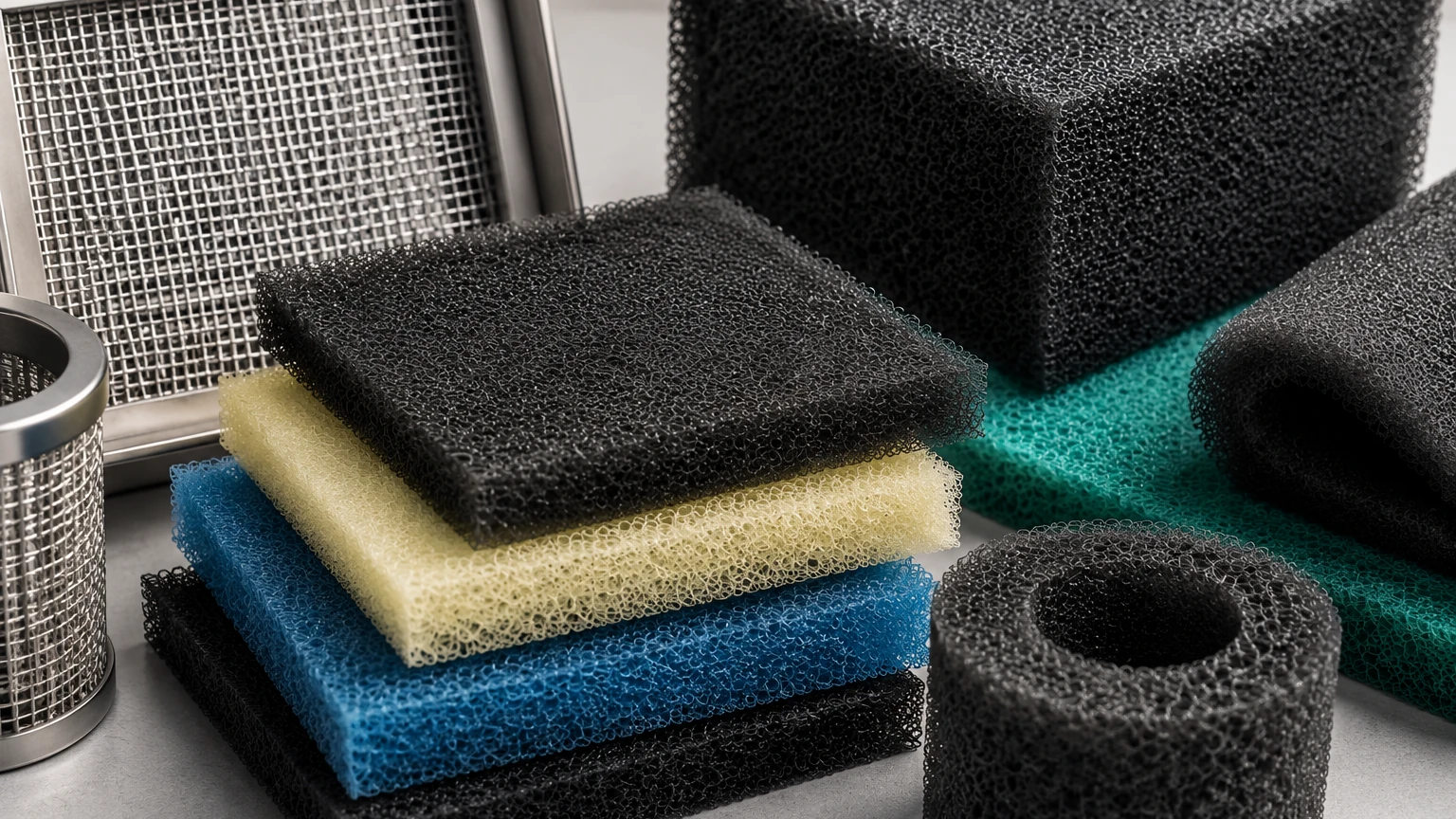
Before identifying a supplier, it is essential to define the material requirements. Not all "foam" is suitable for industrial filtration. Most high-performance air filters utilize reticulated foam, a process that removes the cell membranes (windows) of the foam, leaving only a skeletal structure. This creates a highly porous material with a large surface area for trapping particulates.
PPI (Pores Per Inch)
Filtering foam is categorized by its PPI rating, which typically ranges from 10 PPI to 100 PPI.
- 10 to 30 PPI: Large pores, used for high-velocity air intake and large particle pre-filtration. These offer the lowest pressure drop.
- 45 to 60 PPI: Medium density, often used in HVAC systems and small equipment air cleaners.
- 80 to 100 PPI: Fine pores, used for high-efficiency filtration where fine dust capture is critical, though at the cost of higher initial resistance to airflow.
Chemical Composition: Polyester vs. Polyether
Industrial buyers must choose between two primary chemical types:
1. Polyester Foam: Offers superior physical strength and resistance to oils, hydrocarbons, and many solvents. However, it is susceptible to hydrolysis (breakdown) in high-humidity or moist environments.
2. Polyether Foam: Highly resistant to moisture and microbial growth. It is the preferred choice for outdoor applications or environments with high humidity, though it generally has lower tensile strength than polyester variants.
Key Performance Metrics for Industrial Foam Filters
When evaluating where to buy foam air filter material, engineers must request data sheets that confirm specific performance metrics. A failure to verify these can lead to premature filter failure or equipment damage.
Dust Holding Capacity (DHC)
The open-cell structure of reticulated foam allows for depth filtration. Unlike surface filters that clog quickly, foam allows particles to penetrate the media and be trapped throughout its thickness. Buyers should look for materials that demonstrate a high DHC to extend maintenance intervals.
Pressure Drop and Face Velocity
The resistance to airflow (static pressure) is a critical factor in fan selection and energy consumption. Suppliers should provide a pressure drop curve (usually measured in inches of water gauge or Pascals) relative to the air velocity (feet per minute or meters per second). High-quality reticulated foam maintains a linear relationship between velocity and pressure drop, allowing for predictable system performance.
Flame Retardancy and UL Ratings
For electronics cooling and HVAC applications, foam must often meet specific fire safety standards. Look for materials that carry a UL 94 HF-1 or HBF rating, indicating the foam is self-extinguishing and meets stringent safety protocols for industrial equipment.
Sourcing Strategies: Where to Buy Foam Air Filter Material
The sourcing landscape for foam filtration media is divided into three primary tiers: master manufacturers, specialized converters, and industrial distributors.
1. Master Foam Manufacturers
These are large-scale chemical companies that produce the raw foam buns or rolls. Buying directly from a manufacturer is usually reserved for high-volume OEM (Original Equipment Manufacturer) requirements. While the unit cost is lowest at this level, the minimum order quantities (MOQs) are often prohibitive for individual projects.
2. Specialized Foam Converters
Converters buy raw foam from manufacturers and use precision equipment to die-cut, split, or laminate the material into final components. For engineers requiring custom shapes, adhesive backings, or multi-layered composite filters, converters are the most effective sourcing channel. They offer technical expertise in material selection and can provide prototypes for testing.
3. Industrial Distributors
For standard sheet sizes or small-batch maintenance requirements, global industrial distributors like Grainger or McMaster-Carr are the most common answer to where to buy foam air filter material. They provide immediate availability but offer limited customization and higher per-unit costs compared to direct sourcing from a converter or manufacturer.
Comparing Foam to Stainless Steel Mesh in Industrial Environments
While foam is an excellent cost-effective solution for many applications, it has inherent limitations in demanding industrial environments. In sectors such as chemical processing, high-temperature manufacturing, or heavy-duty hydraulics, foam may degrade rapidly.
Temperature and Chemical Resistance
Foam filters generally have a maximum operating temperature of approximately 200°F (93°C). Beyond this, the polymer structure begins to soften and lose its integrity. In contrast, stainless steel wire mesh filters can withstand temperatures exceeding 800°F (427°C) and are impervious to most industrial solvents and corrosive chemicals.
Durability and Reusability
Foam is often marketed as "washable," but repeated cleaning cycles eventually break down the cell structure, leading to "shedding" where foam particles enter the clean air stream. Stainless steel components are permanent filtration solutions. They can be ultrasonically cleaned or backflushed indefinitely without loss of filtration accuracy. For organizations looking to optimize their long-term filtration strategy, reviewing product options and application support on the Kaifil Main Page can provide insights into more durable metal-based alternatives.
Critical Factors to Confirm Before Purchasing
Before finalizing a purchase order for foam air filter material, technical professionals should confirm the following details with their supplier to avoid integration issues.
Dimensional Tolerances
Foam is a flexible material, and cutting it to precise tolerances can be difficult. Ensure the supplier uses CNC die-cutting or water-jet cutting if the filter must fit into a tight-tolerance housing. Standard tolerances for industrial foam are usually +/- 1/16 of an inch, but tighter specs can be achieved with specialized tooling.
Outgassing Requirements
In cleanroom environments or sensitive electronics cooling, the outgassing of Volatile Organic Compounds (VOCs) from the foam can be a significant concern. Specifically, request "low-outgassing" or medical-grade foam if the application is sensitive to chemical vapors.
Packaging and Storage
Foam is susceptible to UV degradation and oxidation. If purchasing in bulk, confirm that the material is shipped in UV-opaque packaging. Long-term storage should be in a cool, dry, dark environment to prevent the foam from becoming brittle or yellowing.
The Role of Customization in Filtration Efficiency
In many B2B applications, a standard off-the-shelf foam sheet is insufficient. Customization allows for the optimization of the filtration system. This can include:
* Graduated Density: Laminating a 30 PPI foam layer to a 60 PPI foam layer to create a dual-stage filter that captures large debris on the outer surface and fine dust in the inner core.
* Frame Integration: Bonding foam to a rigid plastic or metal frame for easier installation and removal during maintenance cycles.
* Impregnation: Some foam materials can be impregnated with activated carbon for odor control or antimicrobial agents to prevent mold growth in HVAC systems.
Conclusion: Making an Informed Procurement Decision
Determining where to buy foam air filter material is the first step in a larger engineering process. Whether you are sourcing for a new product design or a facility maintenance schedule, the focus must remain on the technical compatibility of the media with the environment.
Reticulated foam offers a versatile and economical solution for air filtration, provided the PPI, chemical base, and safety ratings are correctly specified. However, for applications involving extreme temperatures, high pressures, or corrosive agents, the limitations of foam often necessitate a move toward precision metal filtration components. By understanding the strengths and weaknesses of different media, engineering teams can ensure the longevity and efficiency of their industrial systems.
