


Titanium Mesh
In the landscape of industrial filtration and material science, titanium mesh represents a pinnacle of performance for environments where standard alloys, such as stainless steel, reach their metallurgical limits. As industries push toward more aggressive chemical processes, higher temperatures, and the burgeoning requirements of green energy production, the selection of filtration media becomes a critical engineering decision. Titanium mesh, characterized by its exceptional strength-to-weight ratio and unparalleled corrosion resistance, has transitioned from a niche aerospace material to a fundamental component in global industrial infrastructure.
For engineers and procurement specialists, understanding the technical nuances of titanium mesh—from its electrochemical properties to its mechanical behavior under pressure—is essential for optimizing system longevity and filtration efficiency. This guide examines the engineering considerations, manufacturing standards, and application-specific advantages of utilizing titanium mesh in demanding industrial environments.
Technical Properties and Material Advantages
The primary driver behind the adoption of titanium mesh is its inherent resistance to corrosion, particularly in chloride-rich and highly acidic environments. Unlike stainless steels, which rely on a chromium oxide layer that can be compromised by pitting in the presence of halides, titanium forms a tenacious, self-healing oxide film (TiO2) almost instantaneously upon exposure to oxygen.
Corrosion Resistance in Extreme Media
Titanium mesh is virtually immune to corrosion in seawater, brine, and moist chlorine gas. In chemical processing, it demonstrates remarkable stability against oxidizing acids, such as nitric and chromic acids, as well as organic acids. This stability ensures that the mesh maintains its structural integrity and filtration accuracy over extended service cycles, reducing the frequency of unplanned maintenance and the total cost of ownership.
Strength-to-Weight Ratio and Thermal Stability
Titanium possesses a density approximately 60% that of steel, yet it maintains comparable strength. This high specific strength allows for the design of lightweight filtration components that can withstand significant differential pressures. Furthermore, titanium mesh retains its mechanical properties at temperatures ranging from cryogenic levels up to approximately 400°C (750°F), making it suitable for high-temperature gas filtration and heat exchange applications.
Manufacturing Methods: Woven vs. Expanded Mesh
When specifying titanium mesh, engineers must choose between different manufacturing structures based on the intended application: woven wire mesh and expanded metal mesh. Each offers distinct characteristics regarding porosity, structural rigidity, and filtration precision.
Woven Titanium Wire Mesh
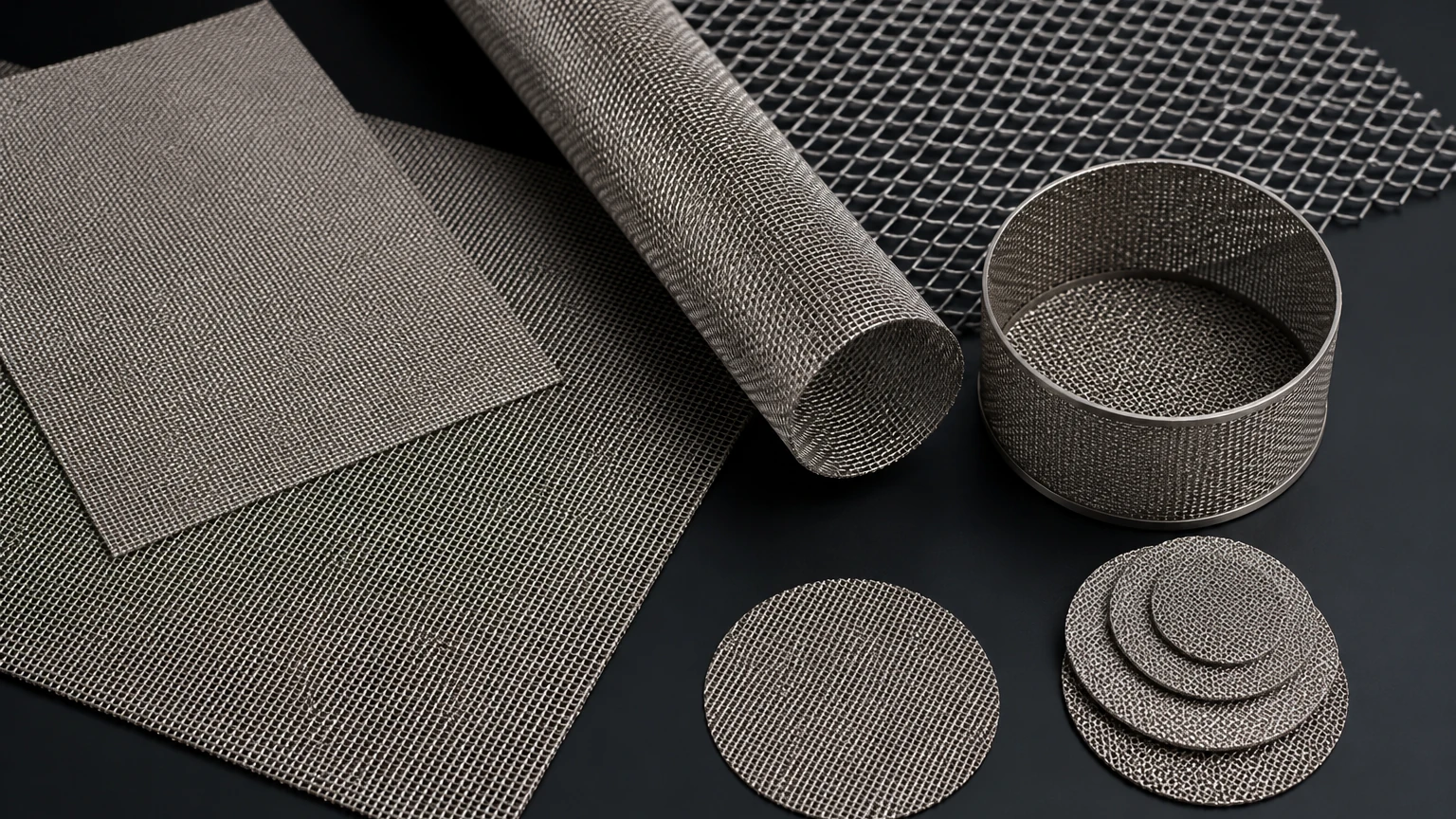
Woven mesh is produced by interlacing titanium wires in various patterns, such as plain weave, twill weave, or Dutch weave. This method allows for extremely precise control over aperture size (pore size) and open area. Woven mesh is the preferred choice for fine filtration tasks where specific micronic ratings are required to capture particulate matter without excessive pressure drop.
Expanded Titanium Mesh
Expanded mesh is manufactured by slit-and-stretch processes from a solid titanium sheet. This results in a jointless, monolithic structure with diamond-shaped openings. While less precise for fine filtration than woven mesh, expanded titanium is exceptionally rigid and cost-effective. It is frequently utilized as a substrate for catalysts, an electrode in electrolytic cells, or a support structure for finer filter media.
For organizations seeking specific configurations, consulting the Main Page of a specialized manufacturer like Kaifil provides insights into the customization capabilities available for both woven and expanded formats.
Critical Applications in Modern Industry
The unique properties of titanium mesh facilitate its use in sectors where material failure is not an option. Its role extends beyond simple filtration into electrochemical and structural functions.
Hydrogen Production and Electrolysis
In the transition to green energy, titanium mesh has become a cornerstone of Proton Exchange Membrane (PEM) electrolyzers. It serves as a Liquid/Gas Diffusion Layer (LGDL), facilitating the transport of water to the catalyst layer and the removal of oxygen gas. The mesh must provide high electrical conductivity and resist the highly oxidative environment at the anode, a requirement that titanium meets more effectively than almost any other industrial metal.
Chemical and Petrochemical Processing
Titanium mesh filters are used in the production of chlorine and caustic soda, as well as in the filtration of corrosive catalysts. In these environments, the mesh prevents downstream contamination and protects sensitive equipment from debris while resisting the degrading effects of the process fluids.
Seawater Desalination and Marine Engineering
Due to its total resistance to seawater corrosion, titanium mesh is used in intake screens, heat exchangers, and desalination membranes. Its bio-compatibility also prevents the rapid buildup of marine organisms (biofouling) compared to other metallic substrates, maintaining flow rates and reducing cleaning requirements.
Engineering Selection Criteria
Selecting the correct titanium mesh involves more than identifying a pore size. Engineers must evaluate several variables to ensure the component meets the operational demands of the system.
1. Material Grade Selection: Most industrial titanium mesh is produced from Commercially Pure (CP) grades. Grade 1 is the most ductile and is used for complex forming, while Grade 2 is the "workhorse" grade, offering a balance of strength and weldability. For highly acidic environments, palladium-stabilized grades (such as Grade 7) may be specified to enhance resistance to reducing acids.
2. Aperture and Wire Diameter: The relationship between wire diameter and aperture size determines the mesh's open area and mechanical strength. A higher open area reduces pressure drop but may decrease the mesh's ability to withstand high-velocity flows.
3. Surface Treatment: Depending on the application, titanium mesh may undergo pickling to remove surface oxides from the manufacturing process or be coated with precious metal oxides (such as Iridium or Ruthenium) for use as Dimensionally Stable Anodes (DSA) in electrochemistry.
Performance Evaluation and Quality Assurance
To ensure reliable performance in industrial filtration, titanium mesh must be evaluated against standardized metrics. High-performance filtration components are typically validated through:
* Bubble Point Testing: This non-destructive test determines the largest pore size and ensures the integrity of the mesh structure.
* Flow Rate vs. Pressure Drop Analysis: Engineers must calculate the clean pressure drop across the mesh to ensure the system's pump or compressor capacity is sufficient.
* Chemical Compatibility Validation: Confirming that the specific grade of titanium is suitable for the concentration and temperature of the process fluid.
Reliable manufacturers provide comprehensive documentation, including material test reports (MTRs) that verify the chemical composition and mechanical properties of the titanium wire or sheet used in production.
Maintenance, Cleaning, and Replacement
While titanium mesh is highly durable, its service life depends on proper maintenance. Unlike disposable polymer filters, titanium mesh is often cleanable and reusable, which contributes to a lower total cost of ownership over time.
Cleaning Protocols
Common cleaning methods include ultrasonic cleaning, backwashing, or chemical cleaning with compatible solvents. Because titanium is resistant to many aggressive chemicals, it can be cleaned with acids that would dissolve or damage stainless steel filters, allowing for the removal of stubborn organic or inorganic fouling.
Monitoring for Replacement
Replacement cycles are typically dictated by irreversible fouling (where the pressure drop no longer returns to baseline after cleaning) or mechanical wear in high-vibration environments. Regular inspection for wire fatigue or frame bypass is recommended in critical process applications.
Conclusion: The Strategic Value of Titanium Mesh
Titanium mesh is a strategic investment for industrial operations facing the challenges of corrosion and extreme environments. Its ability to maintain filtration precision while resisting chemical attack ensures process stability and protects downstream assets. By partnering with a manufacturer that understands the complexities of metal filtration, engineering teams can develop customized solutions that align with their specific flow rates, pressure requirements, and chemical profiles.
For technical professionals evaluating filtration media for their next project, visiting the Main Page offers a gateway to expert consultation and high-precision manufacturing services. Whether the application involves hydrogen electrolysis, pharmaceutical purification, or aggressive chemical processing, the correct specification of titanium mesh remains a fundamental pillar of industrial engineering excellence.
