


Titanium Wire Mesh
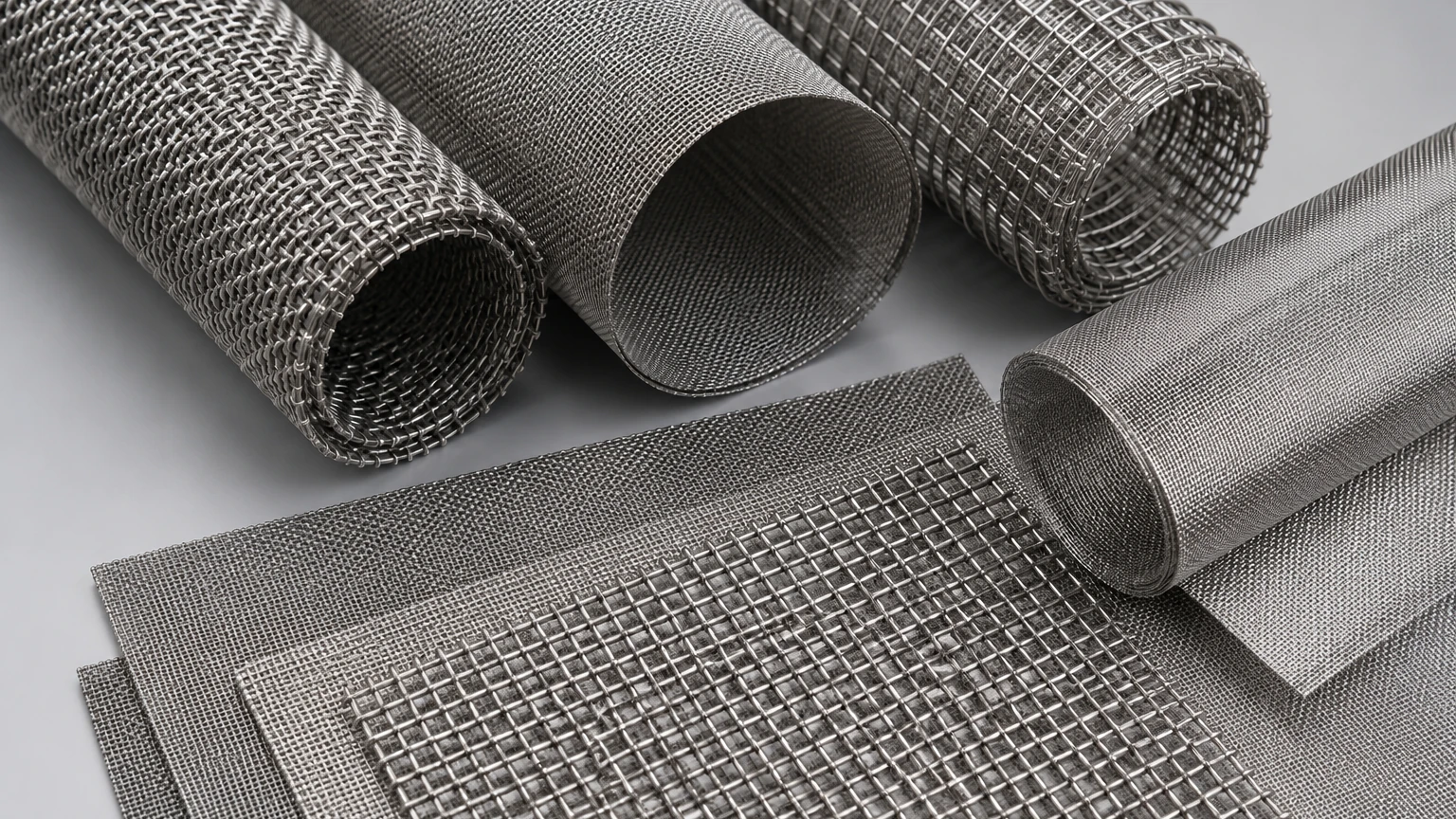
In the landscape of industrial filtration and separation, titanium wire mesh represents a high-performance solution designed for environments where standard stainless steel alloys fail. As industries push the boundaries of chemical processing, deep-sea exploration, and aerospace engineering, the demand for materials that offer a superior strength-to-weight ratio combined with exceptional corrosion resistance has increased. Titanium, specifically in its commercially pure and alloyed forms, provides a unique set of metallurgical properties that make it indispensable for critical filtration components.
For engineers and technical procurement teams, selecting titanium wire mesh is not merely about choosing a durable material; it is about ensuring the longevity of a filtration system under extreme conditions. This guide examines the technical specifications, material grades, weaving techniques, and application-specific considerations essential for integrating titanium mesh into industrial workflows. To explore specific product configurations and technical support, professionals can visit the Main Page of our filtration resource center.
Technical Properties of Titanium in Filtration
The primary driver behind the adoption of titanium wire mesh is its chemical stability. Unlike stainless steels, which rely on a chromium oxide layer that can be compromised in high-chloride environments, titanium forms a tenacious, instantaneous, and highly stable protective oxide film (TiO2) when exposed to oxygen. This film is self-healing; if the surface is scratched or damaged, it reforms immediately in the presence of even trace amounts of moisture or air.
Corrosion Resistance
Titanium wire mesh is virtually immune to atmospheric corrosion and is highly resistant to seawater, brackish water, and a wide array of industrial chemicals. It excels in environments containing wet chlorine, chlorates, hypochlorites, nitric acid, and chromic acids. In the chlor-alkali industry, where brine electrolysis is a standard process, titanium is often the only viable material for electrodes and filtration screens due to its resistance to nascent chlorine.
Strength-to-Weight Ratio
Titanium is approximately 45% lighter than steel but maintains comparable tensile strength. In aerospace and mobile hydraulic applications, this weight reduction directly translates to fuel efficiency and increased payload capacity without sacrificing the structural integrity of the filter element.
Thermal Stability
While titanium is not a high-temperature alloy in the same sense as Inconel, it maintains its mechanical properties at temperatures up to 300°C to 400°C (depending on the grade and environment). It also exhibits excellent cryogenic properties, remaining ductile and tough at extremely low temperatures, which is critical for liquefied natural gas (LNG) processing.
Material Grades for Titanium Wire Mesh
Not all titanium mesh is created equal. The selection of the specific grade of titanium wire is determined by the required balance of ductility, strength, and corrosion resistance.
1. Grade 1 (CP1): This is the most ductile and softest grade of commercially pure titanium. It offers the highest cold formability, making it ideal for intricate weaving patterns and deep-drawn filter components. It provides excellent corrosion resistance in mildly reducing to highly oxidizing environments.
2. Grade 2 (CP2): This is the "workhorse" of the industrial filtration industry. Grade 2 titanium offers a superior balance of moderate strength and excellent ductility. It is widely available and provides the best cost-to-performance ratio for most chemical and marine applications.
3. Grade 5 (Ti-6Al-4V): Although less common in fine mesh weaving due to its high hardness and difficulty in drawing into fine wires, Grade 5 is used for structural support grids or coarse screens where high tensile strength is the primary requirement. It is an alpha-beta alloy that can be heat-treated to achieve very high strength levels.
Weaving Patterns and Filtration Accuracy
The performance of titanium wire mesh is heavily influenced by the weaving method. The choice of weave affects the aperture size (pore size), flow rate, and mechanical stability of the mesh.
Plain Weave
In a plain weave, each warp wire passes alternately over and under each weft wire. This is the most common and simplest weaving pattern. It results in square openings and is typically used for general-purpose filtration where a high open area is required. Plain weave titanium mesh is often used in seawater intake screens and basic chemical strainers.
Twill Weave
In a twill weave, each warp wire passes alternately over and under two weft wires. This allows for a heavier wire diameter to be used for a given mesh count, resulting in a more robust mesh. Twill weaving is often employed for finer meshes where the wire is too thick to be woven in a plain pattern without compromising the material's integrity.
Dutch Weave (Plain and Twill)
Dutch weaves utilize a larger diameter warp wire and a smaller diameter weft wire woven closely together. This creates a "tortuous path" for the fluid, providing much finer filtration levels than square mesh. Plain Dutch weaves offer high flow rates with good filtration accuracy, while Twill Dutch weaves allow for the highest density of wires, enabling filtration ratings down to the micron level. These are essential for precision hydraulic systems and pharmaceutical processing.
Critical Applications of Titanium Wire Mesh
Chemical and Petrochemical Processing
Titanium mesh is a staple in the production of chlorine and its derivatives. It is used in diaphragm cells, membrane cells, and as catalyst support in reactors. Its resistance to organic acids, such as acetic acid and terephthalic acid, makes it a preferred choice for the production of plastics and synthetic fibers.
Desalination and Marine Engineering
Seawater is highly corrosive to most metals due to its high chloride content. Titanium wire mesh is used in desalination plants for pre-filtration and in seawater cooling systems for power plants. Its resistance to biofouling and pitting corrosion ensures that maintenance cycles are significantly extended compared to copper-nickel or stainless steel alternatives.
Aerospace and Defense
In aerospace, titanium mesh is used for EMI shielding, lightning strike protection on composite airframes, and as a filtration medium in high-pressure hydraulic systems. The material's ability to withstand vibration and thermal cycling without fatigue is a critical safety factor.
Medical and Pharmaceutical
Titanium is biocompatible and non-toxic. Titanium wire mesh is used in the manufacture of medical implants and as a filtration medium in the production of high-purity pharmaceuticals where metal ion contamination must be strictly avoided.
Engineering Considerations for Selection
When specifying titanium wire mesh for a project, engineers must evaluate several variables to ensure the filter performs as expected over its operational lifespan.
Mesh Count vs. Aperture Size
The mesh count (the number of openings per linear inch) must be balanced against the wire diameter. A higher mesh count with a thinner wire provides finer filtration but may result in a more fragile mesh. Conversely, a thicker wire increases durability but reduces the open area, leading to higher pressure drops across the filter.
Pressure Drop and Flow Rate
Calculating the pressure drop is essential to ensure the filtration system does not exceed the pump's capacity. Titanium's smooth surface and the precision of the weave contribute to predictable flow characteristics, but the accumulation of contaminants (filter cake) must be factored into the design.
Mechanical Loading
In high-pressure applications, the mesh may require support. Engineers often design multi-layer filter elements where the fine titanium mesh is sintered or mechanically bonded to a coarser titanium support grid. This provides the necessary micron rating while maintaining the structural integrity required to withstand differential pressures.
Fabrication and Welding
Titanium requires specialized handling during fabrication. It is highly reactive at high temperatures and must be welded under an inert gas shield (usually Argon) to prevent embrittlement from oxygen and nitrogen. When integrating titanium mesh into a housing, it is often necessary to use titanium-to-titanium welding or specialized mechanical seals to prevent galvanic corrosion that could occur if joined with dissimilar metals.
Quality Assurance and Standards
For industrial procurement, verifying the quality of titanium wire mesh is paramount. Material certifications (MTRs) should always accompany the product to confirm the chemical composition and mechanical properties align with ASTM B265 (for strip/plate) or ASTM B348 (for wire).
Key quality checks include:
* Dimensional Accuracy: Verifying mesh count, wire diameter, and aperture size using calibrated optical equipment.
* Material Purity: Spectrographic analysis to ensure the titanium grade meets the specified purity levels, particularly regarding interstitial elements like oxygen and iron.
* Weave Integrity: Inspection for weaving defects such as broken wires, streaks, or irregular spacing that could lead to bypass or premature failure.
Conclusion
Titanium wire mesh is a specialized material that solves the most difficult filtration challenges in modern industry. While the initial capital expenditure may be higher than stainless steel, the total cost of ownership is often lower due to reduced downtime, fewer replacement cycles, and the elimination of corrosion-related failures. By understanding the nuances of titanium grades and weaving patterns, engineers can specify filtration solutions that provide reliability in the most aggressive environments.
As a manufacturer of custom filtration solutions, Kaifil provides the technical expertise required to navigate these material choices. From material selection to the production of precision metal filter components, we support global industries in achieving optimized filtration performance. For more information on our capabilities and to discuss specific application requirements, please visit our Main Page.
