


Hydraulic Spin-on Filters
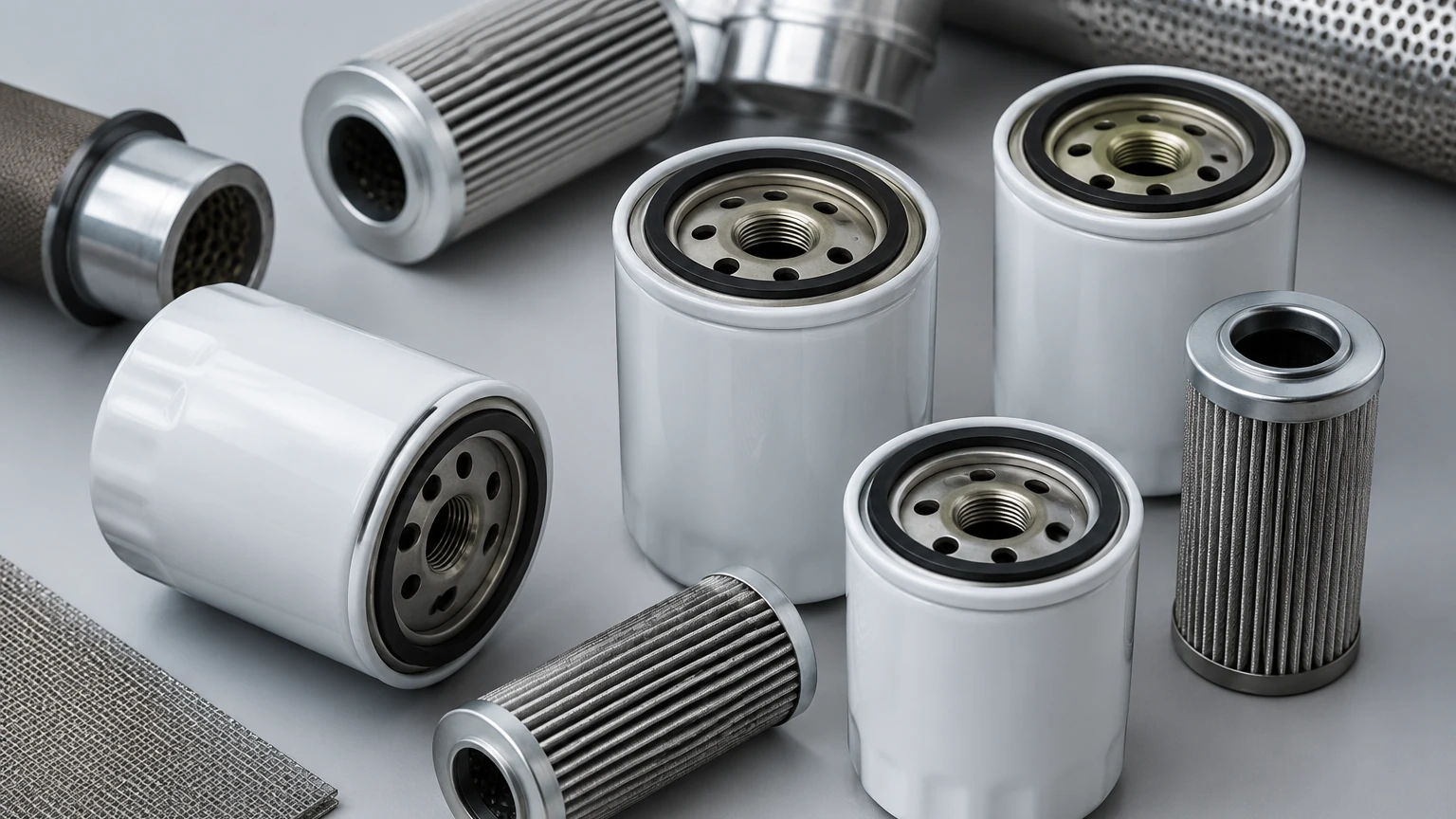
In industrial fluid power systems, contamination control is the primary factor determining the longevity and reliability of hydraulic components. Hydraulic spin-on filters represent a critical category of filtration technology designed for ease of maintenance and effective particulate removal in low-to-medium pressure applications. These self-contained units, consisting of a filter element housed within a disposable metal canister, are widely utilized in return lines and suction lines of hydraulic circuits across the chemical processing, pharmaceutical, and industrial manufacturing sectors.
Selecting the appropriate hydraulic spin-on filter requires a deep understanding of fluid dynamics, material compatibility, and the specific cleanliness requirements of the system. As a professional manufacturer, Kaifil emphasizes the importance of engineering-led selection to ensure that filtration components meet the rigorous demands of modern industrial environments. For a comprehensive overview of available filtration technologies and custom manufacturing capabilities, technical professionals can visit the Main Page for detailed product specifications.
The Engineering Design of Spin-on Filtration Systems
The fundamental design of a hydraulic spin-on filter is centered on a two-part assembly: the filter head (or adaptor) and the spin-on canister. The head is a permanent fixture in the hydraulic circuit, containing the inlet and outlet ports, and often incorporating a bypass valve. The canister contains the filter media, a center tube for structural support, and the necessary seals to prevent external leakage.
Canister and Housing Integrity
In industrial applications, the canister must withstand not only the operating pressure but also pressure surges and mechanical vibrations. While standard canisters are often made of thin-walled steel, high-performance applications may require reinforced housings or specialized coatings to prevent corrosion. The threaded interface between the canister and the head is a critical point of engineering; standard threads such as BSP or NPT are common, but high-vibration environments may necessitate specific thread tolerances to prevent loosening during operation.
The Filter Element and Media
The core of the spin-on filter is the media. Depending on the application, this can range from cellulose and synthetic micro-glass to stainless steel wire mesh. Stainless steel mesh is particularly valued in high-temperature or chemically aggressive environments where traditional organic media would degrade. The media is typically pleated to maximize the surface area within the compact canister, which directly influences the dirt-holding capacity and the initial pressure drop across the filter.
Technical Performance Metrics: Beta Ratios and Micron Ratings
When evaluating hydraulic spin-on filters, engineers must look beyond nominal micron ratings, which can be misleading. The industry standard for assessing filtration efficiency is the Multi-Pass Test (ISO 16889), which provides the Beta ratio ($\beta$).
Understanding the Beta Ratio
The Beta ratio is defined as the number of particles of a given size upstream of the filter divided by the number of particles of the same size downstream. For example, a $\beta_{10} = 200$ indicates that for every 200 particles of 10 microns or larger entering the filter, only one passes through. This equates to an efficiency of 99.5%. In critical hydraulic systems, such as those powering precision CNC machinery or pharmaceutical processing equipment, high Beta ratios are essential to maintain the ISO 4406 cleanliness codes required by component manufacturers.
Nominal vs. Absolute Filtration
* Nominal Rating: An arbitrary micrometer value indicated by the manufacturer, often representing a 50% to 90% efficiency. This is generally insufficient for high-precision hydraulic systems.
* Absolute Rating: The diameter of the largest hard spherical particle that will pass through the filter under specified test conditions. For stainless steel wire mesh filters produced by Kaifil, absolute ratings provide the predictability needed for sensitive industrial processes.
Material Compatibility and Environmental Factors
The selection of materials for hydraulic spin-on filters is dictated by the fluid type and the operating environment. While standard mineral oils are compatible with most common filter materials, specialized fluids require careful consideration.
Fluid Compatibility
In the chemical processing and food industries, hydraulic systems may use fire-resistant fluids (such as water-glycols or phosphate esters) or biodegradable oils. These fluids can be chemically aggressive toward standard nitrile (NBR) seals and certain adhesive resins used in filter construction. In such cases, Viton (FKM) or EPDM seals are required. Furthermore, if the hydraulic fluid is water-based, the filter media and internal components must be made of corrosion-resistant materials like 304 or 316 stainless steel to prevent rust and subsequent system contamination.
Temperature Extremes
Standard spin-on filters often have an upper operating temperature limit of approximately 100°C (212°F). However, in heavy industrial or high-heat chemical applications, temperatures can exceed these limits. Stainless steel filtration components are engineered to maintain structural integrity and filtration performance at temperatures where synthetic or cellulose media would fail or become brittle.
Flow Dynamics and Pressure Drop Considerations
Every filter introduces a restriction to the flow of hydraulic fluid, resulting in a pressure drop ($\Delta P$). Engineers must calculate the total pressure drop of the system, which is the sum of the pressure drop across the filter head and the pressure drop across the clean filter element.
Factors Influencing $\Delta P$
1. Fluid Viscosity: Higher viscosity fluids (or fluids at low startup temperatures) create a higher pressure drop. This is a critical consideration for outdoor machinery or systems operating in unheated industrial plants.
2. Flow Rate: As the flow rate increases, the pressure drop increases exponentially. Spin-on filters must be sized so that the maximum flow rate of the system does not exceed the rated capacity of the filter.
3. Contamination Level: As the filter captures particles, the effective flow area decreases, and the $\Delta P$ increases. This is why monitoring the pressure drop is the most effective way to determine when a filter element needs replacement.
Bypass Valves
To protect the system from starvation or the filter canister from bursting during cold starts or when the element is clogged, most spin-on filter heads incorporate a bypass valve. This valve is calibrated to open at a specific differential pressure (e.g., 1.5 bar or 2.5 bar). While the bypass valve protects the hardware, it allows unfiltered fluid to circulate, which is why timely maintenance is paramount.
Maintenance Cycles and Contamination Monitoring
The total cost of ownership for hydraulic systems is heavily influenced by the maintenance strategy for filtration components. Replacing filters too early leads to unnecessary costs, while replacing them too late risks catastrophic component failure.
Differential Pressure Indicators
Modern industrial hydraulic systems often utilize visual or electrical differential pressure indicators mounted on the filter head. These devices signal when the filter has reached a predetermined percentage of its dirt-holding capacity (typically 75% to 90% of the bypass pressure). Electrical indicators can be integrated into the plant's PLC (Programmable Logic Controller) to provide real-time monitoring and automated maintenance alerts.
Oil Analysis
In addition to monitoring pressure drop, regular oil analysis is recommended for high-value industrial systems. By analyzing the particle count and the type of contaminants present, engineers can identify abnormal wear in pumps or actuators before a total system failure occurs. This data also helps in refining the selection of filter media, such as moving to a finer micron rating or a different material if specific types of wear particles are consistently found.
Custom OEM Solutions for Specialized Applications
While off-the-shelf hydraulic spin-on filters meet the needs of many standard applications, specialized industrial processes often require customized solutions. Kaifil specializes in the engineering and manufacture of custom stainless steel filtration components that can be integrated into spin-on architectures or used as standalone high-performance elements.
Advantages of Custom Stainless Steel Elements
Custom-designed stainless steel filters offer several advantages for demanding B2B applications:
* Cleanability: Unlike disposable cellulose filters, stainless steel wire mesh elements can often be cleaned (ultrasonically or via back-flushing) and reused, reducing the long-term waste and replacement costs in specific applications.
* Precision Geometry: Custom elements can be designed to fit non-standard housings or to provide specific flow characteristics that standard components cannot achieve.
* Structural Strength: For high-pressure return lines where pressure spikes are common, the inherent strength of stainless steel prevents media migration and pleat collapse.
When sourcing filtration components for OEM projects, it is essential to confirm the exact operating parameters, including maximum working pressure, fluid chemistry, and target ISO cleanliness levels. Engaging with a manufacturer that understands the technical nuances of metal filtration ensures that the final product will perform reliably under the intended service conditions.
Conclusion
Hydraulic spin-on filters are more than simple commodities; they are engineered components vital to the health of industrial machinery. From the selection of the correct Beta ratio and micron rating to the consideration of fluid compatibility and pressure drop, every technical detail matters. For engineers and purchasing teams, focusing on high-quality materials and precise manufacturing standards is the most effective way to reduce downtime and optimize the performance of hydraulic systems. To explore technical specifications for stainless steel filtration components and discuss custom industrial solutions, please refer to the Kaifil Main Page.
