


Usa Pleated Air Filters Manufacturer
In industrial environments, air filtration is not merely a matter of environmental comfort but a critical component of process integrity, equipment protection, and regulatory compliance. When engineers and procurement professionals evaluate a usa pleated air filters manufacturer, they are often looking for more than just a commodity supplier; they require a partner capable of delivering high-performance components that withstand rigorous operational demands. Pleated air filters represent a significant advancement over flat-panel designs by drastically increasing the available surface area for filtration, thereby reducing pressure drop and extending the service life of the filter element.
For demanding industrial applications—such as those involving high temperatures, corrosive gases, or high-pressure differentials—standard synthetic pleated filters may fall short. In these scenarios, the expertise of a specialized manufacturer like Kaifil becomes indispensable. By utilizing stainless steel wire mesh and precision metal components, industrial-grade filtration solutions provide the durability and chemical resistance required for the most challenging environments. To explore the full range of high-performance metal filtration options, technical teams often refer to the Main Page of specialized manufacturers to align product specifications with their specific system requirements.
Engineering Principles of Pleated Filtration
The primary advantage of a pleated air filter lies in its geometry. By folding the filtration media into a series of pleats, the manufacturer increases the total surface area within a fixed frame size. This design choice has several direct engineering benefits:
1. Reduced Face Velocity: With more surface area, the velocity of the air passing through the media (media velocity) is significantly lower than the velocity of the air approaching the filter (face velocity). Lower media velocity enhances the efficiency of particle capture mechanisms, such as diffusion and interception.
2. Lower Initial Pressure Drop: A larger surface area allows air to pass through more easily, reducing the resistance to airflow. This translates to lower energy consumption for the HVAC or process air system.
3. Increased Dust Holding Capacity (DHC): More surface area means more space to trap and hold contaminants before the filter reaches its terminal pressure drop, leading to longer intervals between replacements.
When sourcing from a usa pleated air filters manufacturer, engineers must specify the pleat density (pleats per linear inch). While higher pleat density increases surface area, it can also lead to "pleat crowding," where the airflow is restricted because the pleats are too close together, actually increasing the pressure drop. Finding the optimal balance is a hallmark of precision engineering.
Material Selection: Synthetic vs. Stainless Steel Pleated Media
While many commercial applications utilize cotton-polyester blends or synthetic fibers, industrial processes often require more robust materials. Choosing the right media is the most critical decision in the filtration design process.
Synthetic and Glass Fiber Media
These are common in standard air handling units. They are effective for general dust collection and are often rated according to the MERV (Minimum Efficiency Reporting Value) scale. However, they are susceptible to moisture, high temperatures, and chemical degradation.
Stainless Steel Pleated Wire Mesh
For applications in chemical processing, steam filtration, or high-temperature exhaust, stainless steel is the material of choice. A manufacturer specializing in metal filtration, such as Kaifil, produces pleated cartridges using 304 or 316L stainless steel wire mesh. These elements offer unique advantages:
* Temperature Resistance: Capable of operating in environments exceeding 500°F, where synthetic media would melt or ignite.
* Chemical Compatibility: Resistant to a wide range of solvents, acids, and bases.
* Cleanability: Unlike disposable synthetic filters, stainless steel pleated filters can often be cleaned (via ultrasonic baths or backwashing) and reused, offering a lower total cost of ownership in specific industrial cycles.
* Structural Integrity: Metal pleats do not collapse under high-pressure differentials, ensuring consistent filtration performance even as the filter loads with contaminants.
Key Performance Metrics for Industrial Air Filters
When evaluating products from a usa pleated air filters manufacturer, technical professionals should focus on several key performance indicators (KPIs) to ensure the component is fit for purpose.
Filtration Efficiency and Micron Rating
Efficiency defines the percentage of particles of a certain size that the filter can capture. In air filtration, this is often expressed as a MERV rating or, for high-precision metal filters, a nominal or absolute micron rating. It is essential to understand whether the application requires the capture of large particulates for equipment protection or sub-micron particles for process purity.
Pressure Drop (Delta P)
The initial and terminal pressure drop are critical for system design. A high initial pressure drop forces fans to work harder, increasing energy costs. The terminal pressure drop indicates the point at which the filter is considered "blinded" and must be replaced or cleaned. Manufacturers should provide pressure drop curves relative to airflow volume (CFM).
Burst Pressure and Mechanical Strength
In hydraulic or high-pressure pneumatic systems, the filter must withstand significant structural stress. Industrial pleated filters often incorporate an internal support core and an outer protective wrap or mesh to prevent pleat deformation or media migration.
Evaluating a USA Pleated Air Filters Manufacturer
Selecting a supplier requires a thorough audit of their manufacturing capabilities and quality control processes. For B2B buyers, the following criteria are paramount:
Compliance and Testing Standards
Ensure the manufacturer adheres to recognized standards such as ASHRAE 52.2 for air filters or ISO 16890. For metal filters, material traceability (MTRs) is vital to confirm that the stainless steel grade meets the specified chemical composition, particularly in pharmaceutical or food-grade applications.
Customization and OEM Capabilities
Off-the-shelf solutions rarely meet the exact needs of specialized industrial machinery. A reliable manufacturer should offer customization in terms of:
* Custom Dimensions: Non-standard heights, diameters, and flange configurations.
* End Cap Styles: DOE (Double Open End), SOE (Single Open End) with various O-ring configurations (222, 226), or threaded connections.
* Media Layers: Multi-layered pleated structures that combine different mesh counts to achieve graduated filtration, which improves dirt-holding capacity.
Technical Support and Engineering Consultation
An ideal manufacturer does not just take orders; they provide engineering insight. They should be able to assist in calculating the required filtration area based on flow rates and fluid viscosity, and recommend materials that prevent galvanic corrosion or chemical bypass.
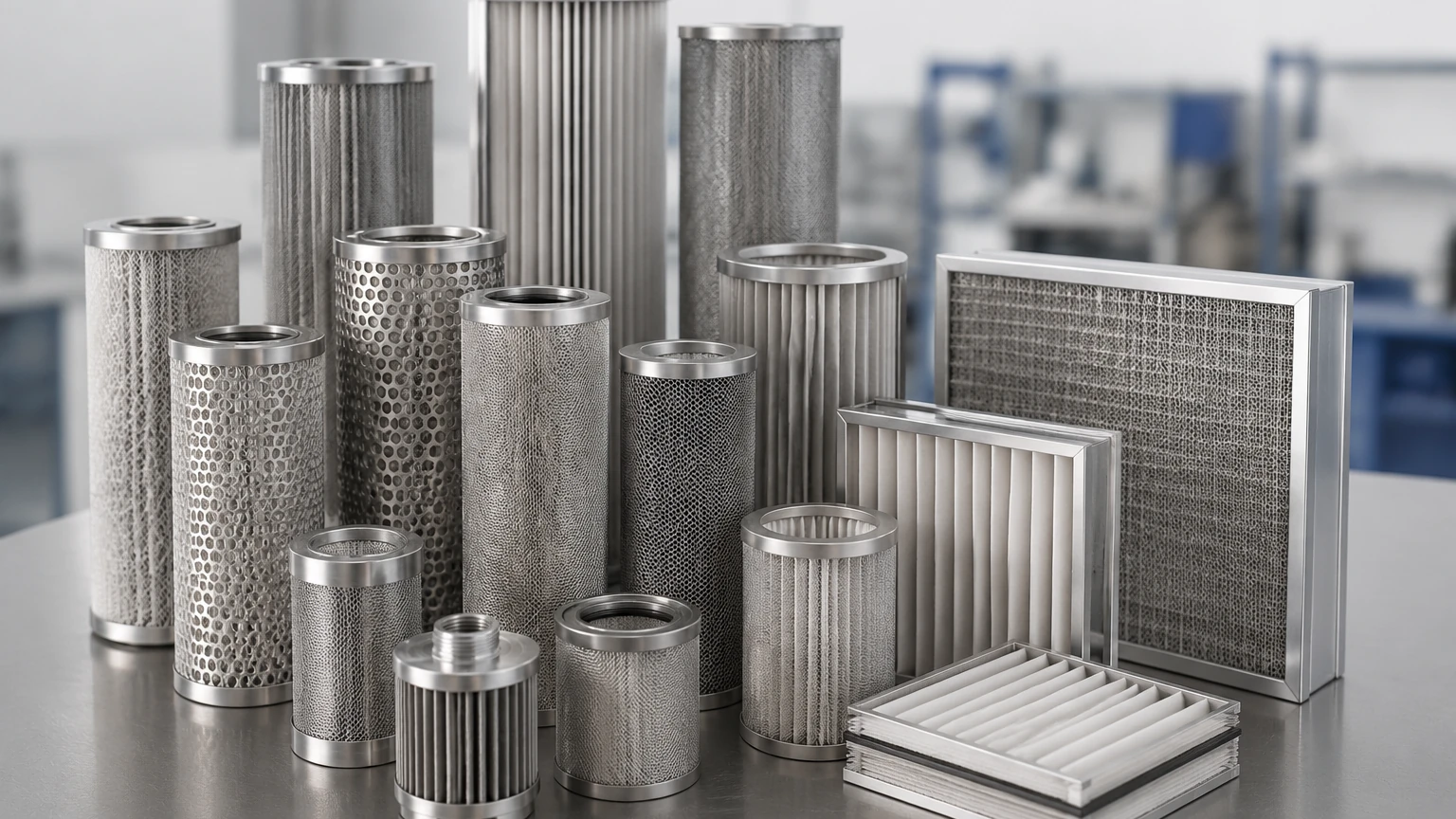
The Role of Customization in Industrial Filtration
In the context of a usa pleated air filters manufacturer, customization is often the differentiator between a system that runs efficiently and one that suffers from frequent downtime. Custom pleated metal filters are frequently used in the following sectors:
* Food and Beverage: For filtering culinary steam or protecting CO2 lines from particulates. These require FDA-compliant materials and smooth, weld-free surfaces where possible to prevent bacterial growth.
* Pharmaceuticals: Where high-purity air is required for cleanrooms or sterile venting. Stainless steel pleated elements provide the necessary durability for repeated SIP (Steam-In-Place) cycles.
* Petrochemicals: For the filtration of catalyst fines or high-temperature gas streams. The mechanical strength of pleated wire mesh is essential here to handle the high-velocity flows.
By working with a manufacturer that understands these nuances, purchasing teams can secure components that are specifically engineered for their operational environment. Detailed product data and engineering guides are typically available on the manufacturer's Main Page, allowing for a streamlined selection process.
Total Cost of Ownership (TCO) and Maintenance
While the initial purchase price of a filter is a factor, the Total Cost of Ownership (TCO) is a more accurate measure of value. TCO includes the purchase price, energy costs associated with pressure drop, labor costs for replacement, and disposal costs.
Disposable synthetic filters may have a lower upfront cost, but in high-load industrial applications, the frequency of replacement can make them more expensive over time. Conversely, a pleated stainless steel filter from a specialized manufacturer may have a higher initial cost but can be cleaned and reused for years. Furthermore, the reduced energy consumption resulting from a lower average pressure drop can lead to significant savings in large-scale air handling systems.
Maintenance cycles should be determined by monitoring the differential pressure across the filter. Modern industrial systems often utilize sensors to alert operators when the terminal pressure drop is approaching, allowing for scheduled maintenance rather than emergency shutdowns.
Conclusion
Identifying the right usa pleated air filters manufacturer involves a deep dive into material science, fluid dynamics, and manufacturing precision. Whether the application calls for standard synthetic media for general ventilation or custom-engineered stainless steel pleated cartridges for extreme industrial processes, the focus must remain on performance reliability and structural integrity.
By prioritizing manufacturers who offer transparent technical data, material traceability, and robust OEM support, engineers can ensure their filtration systems provide optimal protection and efficiency. For those seeking high-performance metal filtration solutions tailored to specific industrial challenges, visiting the Main Page of an experienced manufacturer like Kaifil is the first step toward achieving superior filtration results and long-term operational success.
