


V-bank Filters
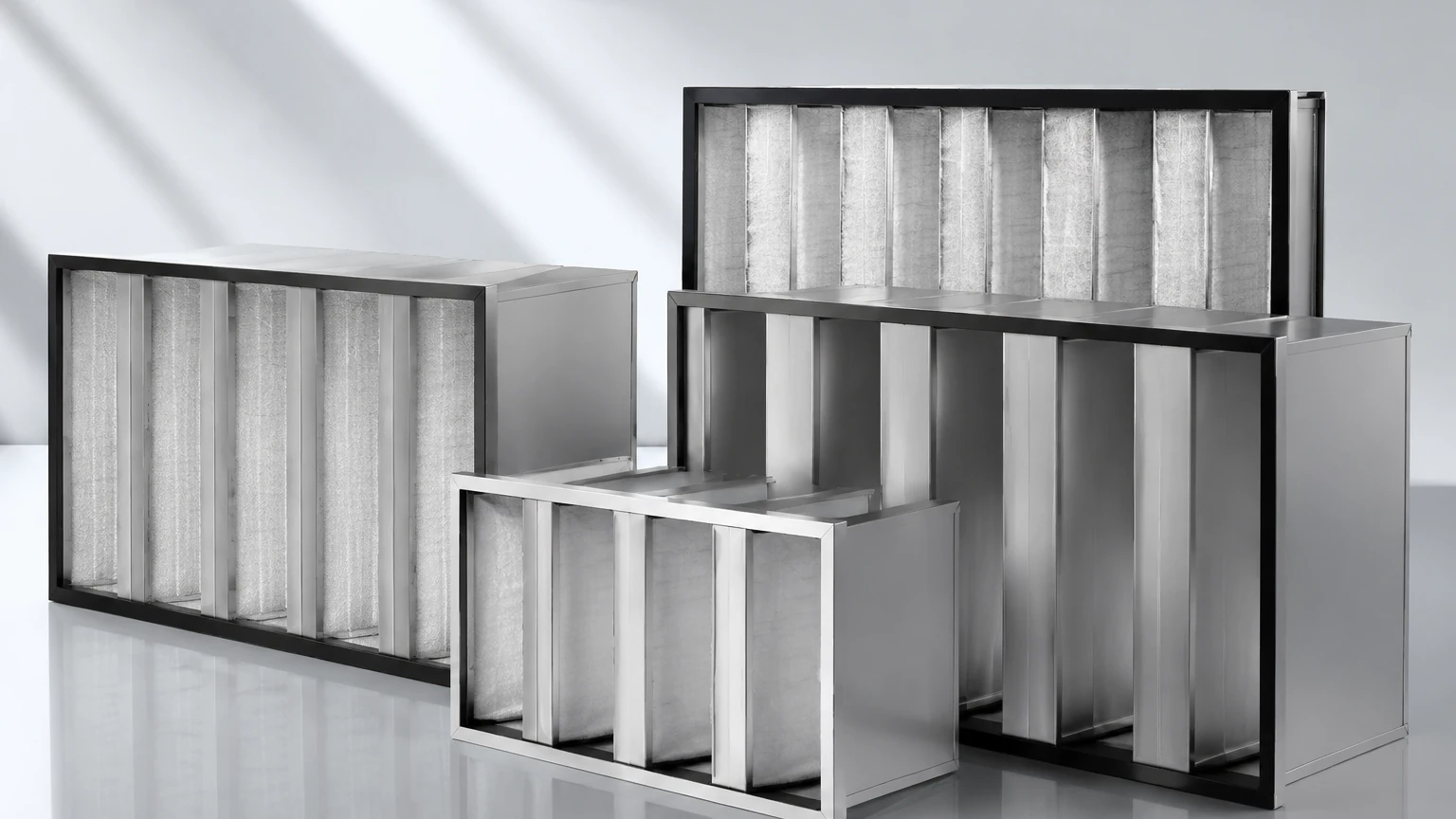
In industrial air filtration and gas processing, the demand for high airflow capacity combined with low energy consumption has led to the widespread adoption of V-bank filters. These components, often referred to as V-cell or mini-pleat V-style filters, represent a significant engineering evolution over traditional flat-panel or bag filters. By arranging pleated media in a series of V-shaped banks, manufacturers are able to significantly increase the effective filtration surface area within a standard footprint. This design is critical for facilities requiring high-efficiency particulate air (HEPA) or high-efficiency ASHRAE-grade filtration without the prohibitive pressure drops associated with high-velocity air streams.
For engineers and procurement teams managing complex industrial environments—such as chemical processing plants, pharmaceutical cleanrooms, or heavy manufacturing sites—understanding the technical nuances of v-bank filters is essential. Selecting the right configuration involves evaluating media composition, frame durability, and the specific aerodynamic requirements of the system. For a broader look at high-performance filtration components and industrial solutions, technical professionals can visit the Main Page to review product options and application support.
The Architectural Advantage of V-bank Geometry
The primary driver behind the V-bank design is the relationship between surface area and face velocity. In a standard 24×24-inch filter opening, a flat panel has a limited amount of media. When airflow increases, the velocity at which air passes through that media (the face velocity) rises, which in turn increases the resistance (pressure drop) and can decrease the efficiency of particle capture.
V-bank filters solve this by using multiple "V" configurations—typically two, three, or four banks—of mini-pleated media. This arrangement can provide up to 200–300 square feet of media in a standard 24x24x12-inch frame. Because the total surface area is so much larger, the actual velocity of the air passing through the media fibers is significantly lower than the velocity of the air entering the filter frame. This lower "media velocity" allows for:
* Higher Dust Holding Capacity (DHC): More surface area means more room to trap particulates before the filter reaches its terminal pressure drop.
* Reduced Energy Consumption: Lower resistance to airflow means fans do not have to work as hard to maintain the required cubic feet per minute (CFM), leading to substantial energy savings over the filter’s lifecycle.
* Extended Service Life: Because the filter can hold more contaminants before clogging, replacement intervals are lengthened, reducing maintenance labor and disposal costs.
Media Technology and Filtration Efficiency
The performance of v-bank filters is largely dictated by the type of media used within the pleats. Industrial applications typically utilize one of two primary media types: wet-laid micro-glass fiber or synthetic polymers.
Micro-glass Fiber Media
Micro-glass is the industry standard for high-efficiency applications (MERV 11 through HEPA). It is composed of extremely fine glass fibers held together by a water-resistant binder. This media is favored for its stability and consistent pore size, which ensures predictable performance throughout the filter's life. However, it can be fragile and sensitive to physical handling or extreme mechanical vibrations.
Synthetic Media
Synthetic media is often used in environments where moisture or high humidity is a concern, as it is naturally hydrophobic. While historically synthetic media relied on an electrostatic charge to achieve high MERV ratings (which could dissipate over time), modern dual-layer synthetic media uses mechanical structures to maintain efficiency. Synthetic options are often more durable and resistant to shedding, making them suitable for heavy-duty industrial intake systems.
Engineers must confirm the efficiency rating required for their specific process. V-bank filters are commonly available in MERV 11 to MERV 16 ratings, as well as E10 to H14 HEPA grades for critical contamination control.
Structural Components: Frames and Support Systems
While the media does the work of filtration, the frame and potting materials ensure the filter’s integrity under high-pressure conditions. In industrial settings, the choice of frame material is a critical engineering consideration.
1. Plastic (ABS/Polystyrene): Most standard v-bank filters use high-impact plastic frames. These are lightweight, easy to incinerate for disposal, and resistant to many chemicals. They are ideal for standard HVAC and light industrial use.
2. Metal Frames (Galvanized or Stainless Steel): For heavy industrial applications involving high temperatures, extreme mechanical stress, or corrosive atmospheres, metal frames are preferred. Stainless steel frames, in particular, provide the necessary rigidity and corrosion resistance for chemical processing or marine environments.
3. Potting and Sealing: The media packs must be hermetically sealed to the frame to prevent "bypass"—the leakage of unfiltered air around the media. High-quality v-bank filters use polyurethane or epoxy potting compounds that create a leak-proof bond. For cleanroom applications, the seal between the filter frame and the housing is often achieved through a gel seal or a high-compression EPDM gasket.
Performance Evaluation: Pressure Drop and Airflow
When specifying v-bank filters, engineers focus on the "initial resistance" versus the "rated airflow." A typical high-capacity V-bank filter might be rated for 2000 CFM at an initial pressure drop of 0.35 to 0.50 inches of water gauge (w.g.).
It is important to evaluate the filter’s performance curve. A filter that starts with a very low pressure drop but clogs rapidly may have a higher total cost of ownership than a filter with a slightly higher initial drop that remains stable for a longer period.
Furthermore, the "V" configuration helps maintain laminar flow downstream of the filter. In systems where the filter is followed by sensitive equipment, such as a high-precision heat exchanger or a secondary HEPA stage, the aerodynamic stability provided by the V-bank design reduces turbulence and ensures even air distribution across subsequent components.
Industrial Applications and Environmental Considerations
V-bank filters are versatile components used across various sectors. Their ability to handle high volumes of air makes them the primary choice for:
* Gas Turbine Intake Systems: Protecting expensive turbine blades from dust and salt requires high-efficiency filtration with minimal pressure loss to maintain turbine output.
* Pharmaceutical and Biotech: Used as pre-filters to extend the life of expensive terminal HEPA filters in cleanrooms.
* Data Centers: Managing the massive cooling requirements of server halls while removing fine particulates that can cause hardware failure.
* Chemical and Food Processing: In these environments, filters must often withstand fluctuating humidity and exposure to various chemical vapors.
When selecting a filter for these environments, engineers must confirm the operating temperature limits and chemical compatibility of both the media and the frame. For instance, in a caustic environment, a standard plastic frame might degrade, necessitating a transition to specialized metal-housed filtration components.
Maintenance Strategies and Replacement Cycles
The total cost of ownership (TCO) for v-bank filters is heavily influenced by the maintenance strategy. Relying solely on a calendar-based replacement schedule often leads to either premature disposal (wasting filter life) or overdue replacement (increasing energy costs and risking bypass).
Differential Pressure Monitoring: The most effective way to manage v-bank filters is through differential pressure (DP) sensors. By monitoring the drop across the filter, maintenance teams can replace the unit exactly when it reaches its terminal resistance—usually 1.0 to 1.5 inches w.g. for ASHRAE grades.
Visual Inspection: While DP is the primary metric, regular visual inspections are necessary to check for frame warping, gasket degradation, or moisture accumulation. In high-humidity environments, "blinded" media (where moisture fills the pores) can cause a sudden, sharp spike in pressure drop that might not be predicted by standard loading curves.
Sourcing and Customization for Specialized Systems
While many v-bank filters come in standard sizes, industrial systems often require customized filtration solutions to fit existing housings or to meet specific material requirements. This is where the expertise of a specialized manufacturer becomes invaluable.
When sourcing filters, technical professionals should confirm:
* Exact Dimensions: Even a 1/8-inch variance can prevent a proper seal in a mounting frame.
* Airflow Capacity: Ensure the filter can handle the system's peak CFM without exceeding the design pressure drop.
* Certification: For critical applications, look for filters tested according to ISO 16890 or EN 779:2012 standards.
For organizations requiring more than just standard air filters, such as those needing custom stainless steel wire mesh or precision metal filter cartridges for liquid or high-temperature gas applications, Kaifil provides extensive OEM and manufacturing capabilities. These specialized components are often used in tandem with air filtration systems to provide a comprehensive contamination control strategy.
To explore the full range of custom industrial filtration components and engineering services, you can visit the Main Page for detailed technical specifications and support. By integrating high-quality v-bank filters with robust metal filtration components, industrial operators can ensure maximum system uptime, energy efficiency, and product purity.
