


Vacuum Pump Exhaust Filter
In industrial vacuum systems, the management of discharge air is a critical engineering challenge. Whether the system is used for chemical processing, laboratory research, or high-volume manufacturing, the quality of the exhaust gas directly impacts the work environment, equipment longevity, and regulatory compliance. A vacuum pump exhaust filter serves as the primary defense mechanism against oil mist, particulate matter, and chemical vapors that are inherently generated during the vacuum generation process.
For engineers and procurement specialists, selecting the correct filtration component is not merely a matter of compatibility; it is a strategic decision that affects the total cost of ownership (TCO) and the operational efficiency of the entire vacuum line. This guide examines the technical specifications, material considerations, and application-specific requirements of industrial exhaust filters.
The Function of a Vacuum Pump Exhaust Filter
Vacuum pumps, particularly oil-sealed rotary vane pumps, discharge a significant amount of oil mist during operation. As the pump compresses air to atmospheric pressure, the lubricating oil used to seal the internal chambers is atomized. Without an effective vacuum pump exhaust filter, this oil mist is released into the surrounding environment, leading to health hazards, fire risks, and contamination of sensitive equipment.
Beyond oil mist recovery, these filters are designed to capture solid particulates that may be drawn into the pump from the process side or generated by internal wear of the pump components. In specialized applications, such as those found in the pharmaceutical or semiconductor sectors, the exhaust filter may also be required to handle corrosive gases or sterile air requirements, necessitating advanced material selections like high-grade stainless steel.
Technical Principles: Coalescence and Impingement
To understand how a vacuum pump exhaust filter operates, it is necessary to look at the physics of filtration. Most industrial exhaust filters utilize a combination of three primary mechanisms:
1. Interception: Larger particles are trapped as they follow the airstream and come into contact with the filter fibers.
2. Inertial Impaction: Heavier particles or droplets, unable to navigate the tortuous path of the filter media, collide with and adhere to the fibers.
3. Coalescence: This is the most critical function for oil-mist removal. As fine oil droplets pass through a multi-layered filter medium, they collide and merge into larger drops. These larger drops eventually become heavy enough to drain away from the filter element and into a collection sump, allowing for the recovery and reuse of expensive vacuum pump oil.
For high-performance systems, the efficiency of these mechanisms is measured by the filter’s ability to remove sub-micron particles. High-efficiency particulate air (HEPA) or ultra-low penetration air (ULPA) standards may be applied depending on the sensitivity of the application.
Material Selection: The Advantages of Stainless Steel
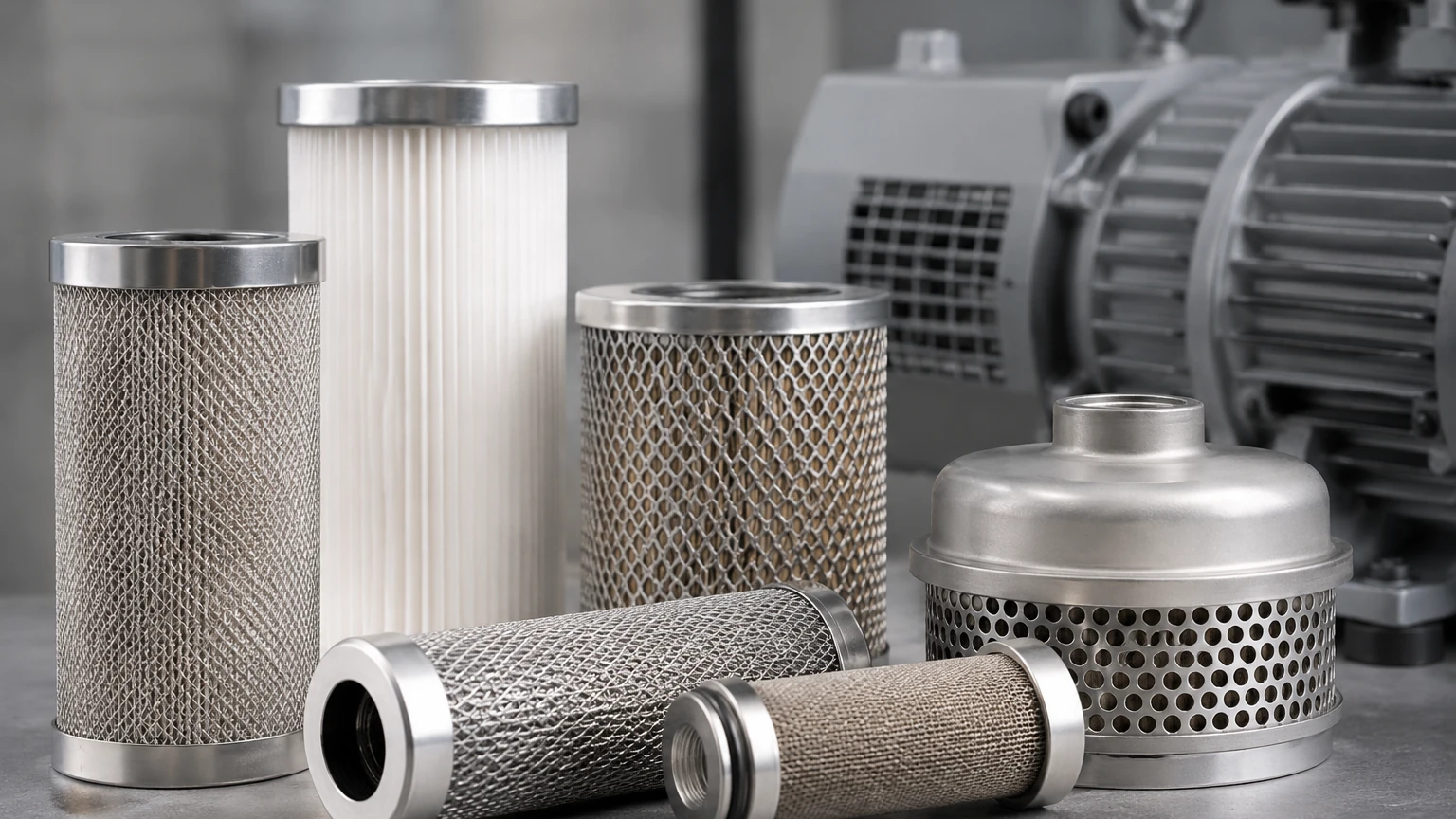
While many standard exhaust filters use disposable glass fiber or paper elements, demanding industrial environments often require more robust solutions. As a specialist in precision metal filtration, Kaifil emphasizes the use of stainless steel (typically 304 or 316L grades) for filter housings and internal support structures.
Corrosion Resistance
In chemical processing and laboratory settings, exhaust gases often contain corrosive vapors. Standard carbon steel or plastic components may degrade rapidly when exposed to acidic or alkaline discharge. Stainless steel provides the chemical inertness required to maintain structural integrity over long service cycles.
Thermal Stability
Vacuum pumps can generate significant heat, especially during continuous duty cycles. Stainless steel filter elements can withstand much higher operating temperatures than synthetic media, preventing the risk of thermal deformation or melting that could lead to a catastrophic bypass of unfiltered air.
Structural Integrity and Cleanability
Unlike disposable media, stainless steel wire mesh and sintered metal filters offer high mechanical strength. This is particularly important in high-pressure discharge scenarios or where back-pulsing is used for cleaning. Furthermore, metal filters can often be cleaned and reused, reducing the environmental impact and long-term replacement costs associated with single-use cartridges.
Engineering Considerations for Filter Selection
When specifying a vacuum pump exhaust filter, engineers must evaluate several key performance metrics to ensure the filter does not become a bottleneck in the system.
Flow Rate and Port Size
The filter must be sized to handle the maximum displacement of the vacuum pump. If the filter is too small, it will create excessive backpressure. This backpressure forces the pump to work harder, increasing energy consumption and potentially causing the pump to overheat or fail. Matching the port size (e.g., NW25, NW40, or threaded NPT/ISO connections) is the first step, but the internal surface area of the filter media is the true limiting factor for flow.
Filtration Accuracy (Micron Rating)
The micron rating determines the size of the particles the filter can capture. For oil mist, a rating of 0.3 to 1 micron is often required to achieve 99.9% efficiency. However, a finer rating increases the resistance to flow. Engineers must strike a balance between the required cleanliness of the exhaust and the allowable pressure drop across the filter.
Differential Pressure Monitoring
A critical component of any industrial filtration setup is the ability to monitor the pressure drop (ΔP). As the filter captures particulates, the resistance increases. Integrating a pressure gauge or a differential pressure sensor allows operators to replace or clean the filter element at the optimal time—before the backpressure reaches a level that compromises pump performance.
Application-Specific Requirements
Different industries impose unique demands on vacuum pump exhaust filters. Understanding these nuances is essential for selecting the right configuration from the Main Page of a professional filtration provider.
Chemical and Petrochemical Processing
In these environments, the primary concern is chemical compatibility. Filters must be designed to withstand volatile organic compounds (VOCs) and aggressive solvents. Stainless steel cartridges with specialized gaskets (such as Viton or PTFE) are standard requirements here to prevent seal degradation.
Food and Beverage Production
Filtration in the food industry requires adherence to strict hygiene standards. Exhaust filters must not only prevent oil contamination of the production area but also be constructed from food-grade materials that do not leach contaminants. Stainless steel is the preferred material due to its ease of sterilization and resistance to the harsh cleaning agents used in CIP (Clean-In-Place) processes.
Pharmaceutical and Medical Labs
Sterility and containment are the priorities in pharmaceutical manufacturing. Exhaust filters often act as a final barrier to prevent the release of active pharmaceutical ingredients (APIs) or biological agents into the environment. In these cases, the filter housing must be leak-tested to ensure 100% containment.
Common Risks and Mitigation Strategies
Failure to properly maintain or select a vacuum pump exhaust filter leads to several operational risks:
* Oil Carryover: If the coalescing element is saturated or damaged, oil mist will pass through the filter. This results in a "smoky" exhaust and oil puddles around the pump, which are both safety hazards.
* Pump Overheating: High backpressure caused by a clogged filter prevents the pump from exhausting efficiently, leading to internal heat buildup. This can thin the lubricating oil, reducing its sealing effectiveness and causing premature wear on the vanes and bearings.
* Environmental Non-Compliance: Many regions have strict regulations regarding the emission of oil mists and VOCs. Using an inadequate filter can lead to regulatory fines and the need for expensive environmental remediation.
To mitigate these risks, it is recommended to implement a preventative maintenance schedule. This includes regular visual inspections of the exhaust (looking for visible mist), checking the oil return line (if equipped), and monitoring the differential pressure.
Customization and OEM Solutions
Standard off-the-shelf filters do not always meet the specific spatial or performance constraints of specialized industrial equipment. This is where custom manufacturing becomes vital. Kaifil provides OEM capabilities, allowing for the design of filtration components that fit unique footprints or meet specific filtration efficiencies not found in standard catalogs.
Customization options often include:
* Bespoke Housing Dimensions: For installations with limited overhead or lateral clearance.
* Specialized End Caps: Custom fittings to integrate directly with proprietary pump outlets.
* Layered Media Configurations: Combining different mesh sizes or materials (e.g., a stainless steel pre-filter with a fine fiber final stage) to optimize both life span and efficiency.
Conclusion: Making an Informed Decision
The vacuum pump exhaust filter is a small but indispensable component of the industrial vacuum chain. By focusing on high-quality materials like stainless steel and ensuring the technical specifications align with the pump's displacement and the process's chemical nature, engineers can ensure a clean, safe, and efficient operation.
When evaluating suppliers, it is important to look for partners who understand the engineering nuances of filtration. A manufacturer that offers both standard and customized solutions can provide the technical support necessary to navigate complex selection criteria. For more detailed technical specifications on stainless steel filter cartridges and custom filtration components, engineers and purchasing teams are encouraged to Review product options and application support to find the solution that best fits their specific industrial requirements.
By prioritizing durability and precision in filtration, facilities can reduce maintenance intervals, protect their workforce, and ensure that their vacuum systems operate at peak performance for years to come.
