


Vacuum Pump for Vacuum Filtration
In industrial processing, vacuum filtration stands as a critical unit operation for solid-liquid separation. Unlike gravity filtration, which relies solely on the weight of the fluid to pass through a medium, vacuum filtration utilizes a pressure differential created by a vacuum source. The efficiency, speed, and reliability of this process are fundamentally dependent on the selection of an appropriate vacuum pump for vacuum filtration. For engineers and procurement specialists, understanding the technical intersection between the vacuum source and the filter media is essential for optimizing throughput and ensuring equipment longevity.
At its core, the vacuum pump acts as the engine of the filtration system. By reducing the pressure on the downstream side of the filter medium, the pump allows atmospheric pressure (or applied process pressure) to force the liquid through the pores of the filter. This guide examines the technical considerations, pump types, and system integration strategies necessary for high-performance industrial filtration.
The Fundamental Principles of Vacuum-Assisted Filtration
To select the right vacuum pump, one must first understand the physics of the filtration cycle. The rate of filtration is generally governed by Darcy’s Law, which states that the flow rate of a fluid through a porous medium is directly proportional to the pressure gradient across that medium. In a vacuum filtration setup, the vacuum pump creates this pressure gradient ($ΔP$).
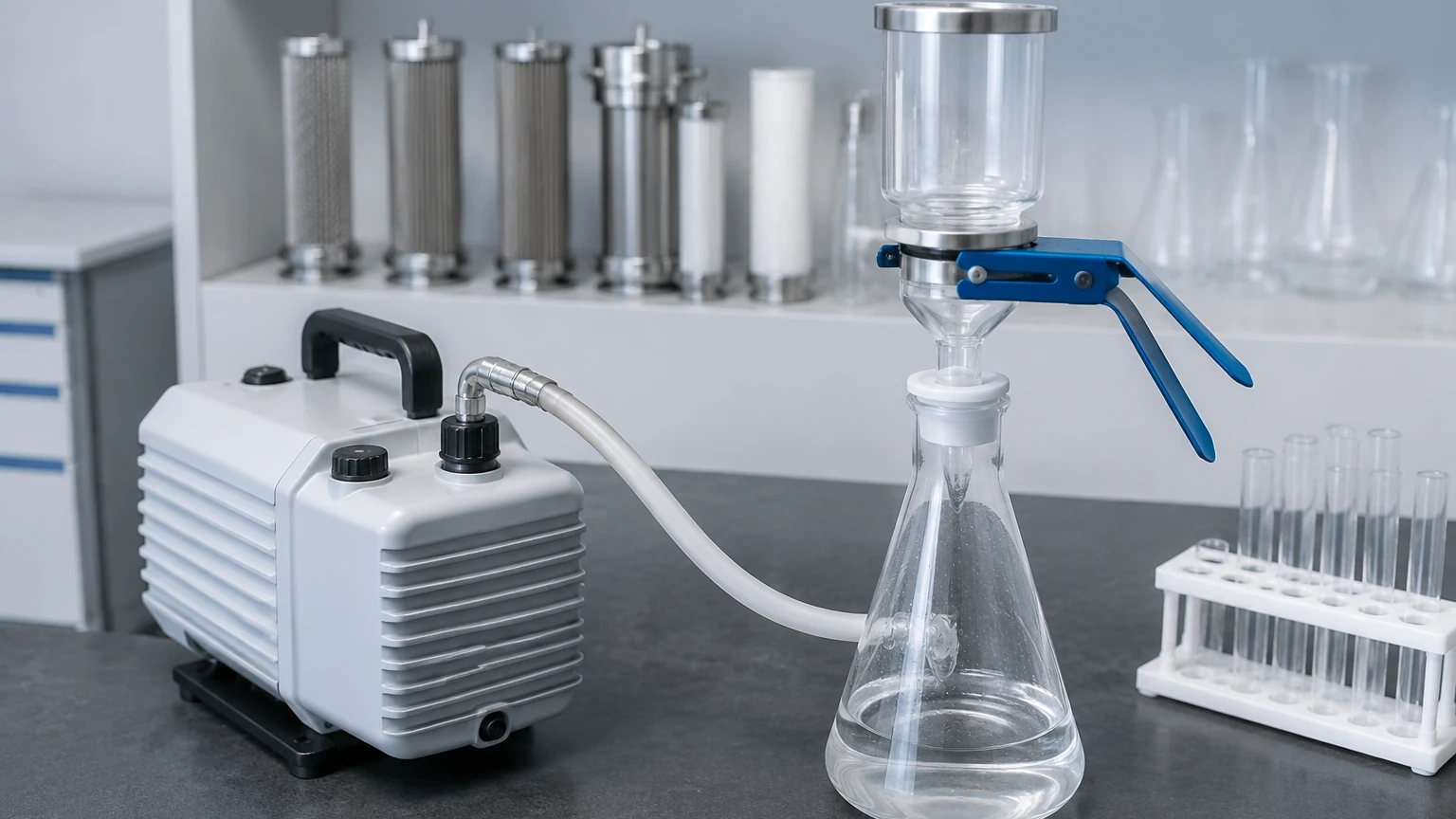
When the pump evacuates the air from the filtrate flask or receiver tank, a low-pressure zone is established. The atmospheric pressure acting on the surface of the slurry pushes the liquid through the filter cake and the filter medium. As the filter cake builds up, resistance increases. A vacuum pump must be capable of maintaining a consistent vacuum level even as the resistance of the cake grows, or the filtration rate will decay prematurely.
In industrial environments, vacuum filtration is preferred for its ability to handle high-volume slurries, viscous liquids, and applications requiring rapid cake desaturating (drying). Whether using a rotary drum vacuum filter, a belt filter, or a simple Nutsche filter, the vacuum pump's performance curve must align with the specific resistance of the filter media and the characteristics of the processed fluid.
Classification of Vacuum Pumps for Industrial Applications
There is no universal vacuum pump for vacuum filtration; the choice depends on the required vacuum level, flow rate, and the nature of the vapors being handled. Industrial vacuum pumps are generally categorized into "dry" and "wet" (oil-sealed or liquid-ring) technologies.
Diaphragm Vacuum Pumps (Dry)
Diaphragm pumps are widely used in laboratories and small-to-medium scale industrial filtration. They operate using a reciprocating diaphragm that creates a vacuum without the need for internal lubricants. This makes them ideal for applications where oil contamination is a risk. When constructed with PTFE (Teflon) or other fluoropolymer components, diaphragm pumps offer excellent chemical resistance, making them suitable for pharmaceutical and chemical processing where aggressive solvents are common.
Rotary Vane Vacuum Pumps (Oil-Sealed)
For applications requiring deeper vacuum levels, rotary vane pumps are often employed. These pumps use oil to seal the vanes and lubricate the moving parts. While they can achieve significantly higher ultimate vacuum levels than diaphragm pumps, they are sensitive to water vapor and corrosive gases. In vacuum filtration, if liquid or vapor enters the pump, it can emulsify the oil, leading to a loss of performance and potential mechanical failure.
Liquid Ring Vacuum Pumps
Liquid ring pumps are the workhorses of large-scale industrial vacuum filtration. They use a liquid (usually water) to create a seal. They are exceptionally robust and can handle significant amounts of liquid carryover and condensable vapors without damage. This makes them the primary choice for heavy-duty mining, pulp and paper, and large-scale chemical filtration plants. However, they require a constant supply of seal liquid and may consume more energy than other types.
Scroll and Piston Pumps
Scroll pumps offer a dry, high-vacuum alternative but are generally more expensive and sensitive to particulates. Piston pumps are less common in modern filtration but are still found in specific high-pressure differential applications.
Key Performance Metrics: Pumping Speed and Ultimate Vacuum
When evaluating a vacuum pump for vacuum filtration, two primary metrics define its suitability: pumping speed and ultimate vacuum.
1. Pumping Speed (Volumetric Flow Rate): Measured in CFM (cubic feet per minute) or m³/h, this indicates the volume of air the pump can move per unit of time. In filtration, the pumping speed determines how quickly the system can be evacuated and how well the pump can maintain vacuum despite air leakage through the filter cake. If the pumping speed is too low, the filtration process will be sluggish, and the cake may not dry effectively.
2. Ultimate Vacuum (Base Pressure): This is the lowest pressure the pump can achieve. While many filtration processes only require a moderate vacuum (e.g., 100 to 500 mbar), some specialized applications in the pharmaceutical industry require much deeper vacuum levels to facilitate the evaporation of residual solvents from the filter cake. It is important to note that a pump’s flow rate drops as it approaches its ultimate vacuum level.
Engineers must consult the pump's performance curve to ensure that at the operating vacuum level required by the filter, the pump still provides sufficient flow to handle the air displaced by the liquid and any air ingress through the cake.
Chemical Compatibility and Material Selection in Filtration Systems
In B2B industrial environments, the durability of the vacuum system is often dictated by its resistance to the chemicals being filtered. The vacuum pump for vacuum filtration is frequently exposed to solvent vapors, acidic mists, or alkaline aerosols.
If the pump is not chemically compatible, the internal components—such as diaphragms, valves, seals, and vanes—will degrade rapidly. For aqueous solutions, standard materials may suffice. However, for organic solvents like acetone, toluene, or methylene chloride, PTFE-coated diaphragms and FFKM (perfluoroelastomer) valves are necessary.
Similarly, the filter housing and the filter media itself must withstand these conditions. Stainless steel is the industry standard for demanding applications due to its corrosion resistance and structural integrity. For those seeking high-performance filtration components that complement a robust vacuum setup, it is advisable to Review product options and application support to ensure the filter media aligns with the chemical demands of the process.
Protecting the Vacuum Source: Liquid Traps and Pre-filtration
One of the most common causes of vacuum pump failure in filtration applications is liquid carryover. If the filtrate receiver fills up or if the vacuum line is improperly configured, liquid can be sucked directly into the pump.
To prevent this, several protective measures should be integrated into the system:
* Liquid Traps / Cold Traps: These are placed between the filtration flask and the vacuum pump to catch any liquid or condense any vapors before they reach the pump. Cold traps are particularly useful when working with volatile solvents.
* In-line High-Efficiency Filters: Placing a secondary filter before the pump inlet can prevent fine particulates that may have bypassed the primary filter from entering and damaging the pump's internal mechanisms.
* Automatic Shut-off Valves: These valves use sensors to detect liquid levels in the receiver and automatically break the vacuum or shut down the pump to prevent overflow.
By protecting the vacuum pump, facilities can extend the interval between maintenance cycles and reduce the total cost of ownership.
The Importance of High-Quality Filter Media in Vacuum Processes
The vacuum pump provides the force, but the filter media determines the quality of the separation. In industrial vacuum filtration, the media must be able to withstand the mechanical stress of the pressure differential without deforming or "blinding" (clogging).
Stainless steel wire mesh and sintered metal filters are often preferred over disposable media in B2B applications for several reasons:
* Structural Integrity: Under high vacuum, paper or fabric filters can tear or be sucked into the support structure. Stainless steel mesh maintains its geometry, ensuring consistent pore size and flow characteristics.
* Cleanability: Sintered metal filters can be back-pulsed or ultrasonically cleaned, allowing them to be reused for thousands of cycles, which is critical for continuous vacuum belt or drum filters.
* Precision: For applications requiring specific micron ratings, precision-woven wire mesh provides a predictable and repeatable filtration barrier, which reduces the load on the vacuum pump by preventing excessive pressure drops caused by premature clogging.
Selecting the right combination of vacuum strength and filter porosity is a balancing act. A filter that is too fine will require an oversized, expensive vacuum pump, while a filter that is too coarse will result in poor filtrate quality.
Total Cost of Ownership and Maintenance Strategies
When purchasing a vacuum pump for vacuum filtration, the initial capital expenditure is only one part of the equation. Technical professionals must also consider the Total Cost of Ownership (TCO), which includes energy consumption, maintenance, and downtime.
* Energy Efficiency: Liquid ring pumps, while durable, can be energy-intensive. Modern dry screw or variable speed drive (VSD) pumps can offer significant energy savings by adjusting the motor speed to match the actual vacuum demand of the filtration cycle.
* Maintenance Cycles: Oil-sealed pumps require regular oil changes and filter replacements. In contrast, high-quality diaphragm pumps may operate for 10,000 to 15,000 hours before requiring a simple diaphragm and valve replacement.
* Replacement of Consumables: In the filtration unit itself, the longevity of the filter media impacts the pump's workload. A clogged filter forces the pump to work harder at higher vacuum levels, increasing heat and wear. Utilizing durable stainless steel filtration components from specialized manufacturers can mitigate these issues.
Conclusion: Selecting the Right Solution
Successful industrial filtration is the result of a well-engineered synergy between the vacuum source and the filtration media. When selecting a vacuum pump for vacuum filtration, engineers must account for the required flow rate, the chemical nature of the filtrate, and the mechanical requirements of the filter media.
By prioritizing chemical compatibility, implementing robust protection against liquid carryover, and choosing high-quality stainless steel filter components, industrial operations can achieve efficient, reliable, and cost-effective separation. For organizations looking to optimize their filtration hardware and ensure their systems are equipped with precision-engineered components, exploring the technical resources and product catalogs of established manufacturers is the most reliable path forward. To find the specific filtration components that meet your industrial standards, visit the Main Page for comprehensive product information and engineering guidance.
