


Vacuum Pump Intake Filter
In industrial vacuum systems, the vacuum pump is often the most critical and expensive component. Protecting this asset from ingress of particulates, liquids, and vapors is essential for maintaining system integrity and operational longevity. A vacuum pump intake filter serves as the primary line of defense, installed upstream of the pump inlet to capture contaminants before they can reach the internal mechanisms. For engineers and procurement specialists, selecting the correct filtration solution requires a deep understanding of flow dynamics, material compatibility, and the specific demands of the industrial process.
As a specialized manufacturer of stainless steel filtration components, Kaifil provides precision-engineered solutions designed to meet the rigorous standards of chemical processing, pharmaceuticals, and heavy industrial applications. Understanding the technical nuances of these filters is the first step toward optimizing vacuum system performance.
The Critical Role of Intake Filtration in Vacuum Systems
Vacuum pumps operate by creating a pressure differential, drawing gas out of a sealed volume. During this process, the gas stream often carries various contaminants. Without an effective vacuum pump intake filter, these materials enter the pump, leading to several failure modes:
1. Mechanical Wear: Solid particulates, such as metal shavings, dust, or process powders, act as abrasives. In rotary vane or screw pumps, these particles can score the surfaces of rotors, vanes, and cylinders, leading to a loss of vacuum depth and eventual mechanical seizure.
2. Oil Contamination: In oil-sealed pumps, contaminants mix with the vacuum oil. This degrades the oil’s lubricating properties and increases its vapor pressure, which prevents the pump from reaching its ultimate vacuum level. Frequent oil changes become necessary, increasing the total cost of ownership.
3. Valve Clogging: Particulates can accumulate on discharge valves or internal porting, preventing proper sealing and reducing the volumetric efficiency of the pump.
4. Chemical Corrosion: If the intake stream contains corrosive vapors or droplets, they can attack the internal metallurgy of the pump. Utilizing a stainless steel filter housing and element can help neutralize or capture these elements before they cause irreversible damage.
By implementing a high-performance intake filter, facilities can extend the mean time between failures (MTBF) and ensure that the Main Page of their production efficiency remains high.
Technical Specifications: Micron Ratings and Flow Dynamics
When specifying a vacuum pump intake filter, engineers must balance two competing factors: filtration efficiency and conductance. Conductance refers to the ease with which gas flows through a component. In vacuum applications, any restriction at the inlet reduces the effective pumping speed at the process chamber.
Micron Rating Selection
The micron rating defines the size of particles the filter media can trap. For vacuum applications, common ratings range from 1 micron to 100 microns.
- Fine Filtration (1-10 microns): Used for protecting high-precision pumps in laboratory or semiconductor environments where even microscopic dust can cause failure.
- Coarse Filtration (25-100+ microns): Suitable for heavy industrial processes like woodworking, plastic extrusion, or food packaging where large debris is the primary concern.
It is important to distinguish between "nominal" and "absolute" micron ratings. A nominal rating indicates the filter can trap a large percentage of particles of a certain size, while an absolute rating (often achieved with high-density stainless steel wire mesh) guarantees the capture of all particles above that size.
Pressure Drop (ΔP) and Conductance
As a filter captures debris, the resistance to flow increases, resulting in a pressure drop across the filter element. In a vacuum system, a high pressure drop at the intake significantly impairs the pump's ability to maintain the target vacuum level. Engineers must select a filter housing and element with a high surface area to minimize initial ΔP. Stainless steel pleated filter cartridges are often preferred because they provide a much larger surface area within the same footprint compared to flat cylindrical designs.
Material Engineering: Why Stainless Steel is the Industrial Standard
While paper, polyester, and glass fiber are common in light-duty applications, industrial vacuum processes often demand the durability of metal. Kaifil specializes in stainless steel filtration solutions for several engineering reasons:
Chemical and Thermal Resistance
Vacuum processes in the chemical and pharmaceutical industries often involve aggressive solvents or high temperatures. Stainless steel (typically Grade 304 or 316L) offers superior resistance to corrosion compared to carbon steel or plastic. It can withstand operating temperatures exceeding 250°C, which is critical for processes like vacuum distillation or heat treatment.
Structural Integrity under Vacuum
At high vacuum levels, the structural integrity of the filter element is paramount. Soft media like paper can collapse or "shed" fibers into the pump if the pressure differential becomes too high. Stainless steel wire mesh and sintered metal components are rigid and self-supporting, ensuring that the filter media remains intact even under fluctuating pressure conditions.
Reusability and Sustainability
Unlike disposable cartridges, stainless steel filters are cleanable. Through ultrasonic cleaning, chemical baths, or backwashing, the accumulated contaminants can be removed, restoring the filter’s original pressure drop characteristics. This reduces long-term waste and the recurring cost of replacement parts.
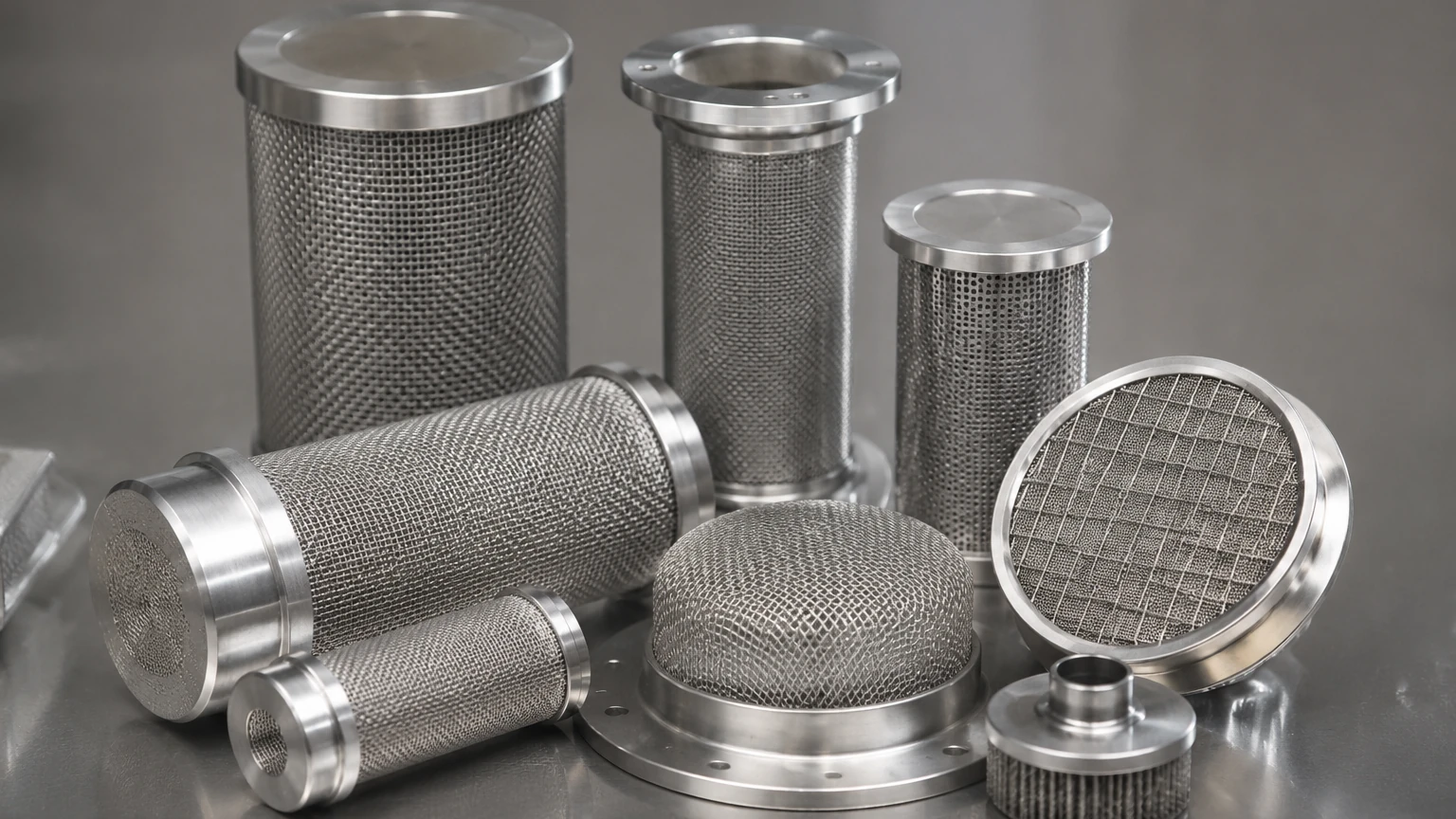
Comparing Filter Media and Structures
The internal structure of the vacuum pump intake filter determines its performance profile. Different applications require different media configurations:
* Stainless Steel Wire Mesh: This is the most versatile media. It consists of woven wires that create precise square or Dutch weave openings. It is ideal for high-flow applications where low pressure drop is essential. It is highly effective for capturing solid particulates in the 20-200 micron range.
* Sintered Metal Felt: Created by compressing and bonding stainless steel fibers, sintered felt provides a depth filtration effect. It offers higher dirt-holding capacity and can achieve much finer filtration levels (down to 1 micron) while maintaining high porosity.
* Sintered Powder Metal: Produced by sintering metal powders into a porous structure, these elements are extremely robust and are used in high-pressure or highly corrosive environments where structural strength is the priority.
* Pleated vs. Cylindrical: Pleating the stainless steel mesh increases the available filtration area by 3 to 10 times. This allows for higher flow rates and longer intervals between cleanings without increasing the size of the filter housing.
Installation and Maintenance Protocols
To ensure the vacuum pump intake filter performs its intended function, proper installation and maintenance are required. Engineers should consider the following during the design phase:
Orientation and Accessibility
The filter housing should be installed in a location that allows for easy access to the filter element. In systems where liquid carryover is expected, the filter should be oriented vertically with a drain port at the bottom of the housing to allow for the removal of collected fluids.
Monitoring Differential Pressure
The most effective way to manage a vacuum pump intake filter is by installing a differential pressure gauge (or a vacuum gauge on both the inlet and outlet of the filter). A significant increase in ΔP indicates that the filter element is loaded with contaminants and requires cleaning or replacement. Relying on a fixed schedule for maintenance can be risky, as process upsets may cause the filter to clog prematurely.
Cleaning Procedures for Stainless Steel Elements
1. Initial Inspection: Remove the element and inspect for signs of physical damage or bypass.
2. Solvent Cleaning: Soak the element in a compatible solvent to dissolve oils or chemical residues.
3. Ultrasonic Cleaning: For fine particulates trapped deep within the mesh or sintered felt, ultrasonic cleaning is the most effective method to dislodge debris without damaging the media.
4. Drying and Reinstallation: Ensure the element is completely dry and free of cleaning agents before reinstalling it to prevent contaminating the vacuum pump oil.
Customization and OEM Integration
Every industrial vacuum system has unique constraints regarding space, flow rate, and connection types (e.g., KF flanges, ISO-K, or NPT threads). Standard off-the-shelf filters may not always meet these requirements.
Kaifil provides extensive OEM and customization capabilities, allowing engineers to specify:
* Custom Dimensions: Tailoring the height and diameter of the filter element to fit existing housings.
* Specialized End Caps: Manufacturing end caps in specific alloys or with unique sealing mechanisms (O-rings, gaskets) to ensure a leak-tight fit.
* Multi-Stage Filtration: Designing housings that incorporate both a coarse pre-filter and a fine secondary stage to maximize the lifespan of the fine filter element.
* Material Upgrades: Utilizing exotic alloys like Hastelloy or Monel for environments where even 316L stainless steel may fail.
Selection Checklist for Engineers
Before purchasing or specifying a vacuum pump intake filter, technical teams should confirm the following data points to ensure the solution is fit for purpose:
1. Gas Composition: Are there corrosive vapors, condensable liquids, or pyrophoric gases involved?
2. Flow Rate (ACFM or m³/h): What is the peak flow rate of the vacuum pump? The filter must be sized to handle this flow with minimal pressure drop.
3. Operating Pressure: What is the normal operating vacuum level, and what is the maximum pressure the housing might see (e.g., during system venting)?
4. Contaminant Type: Is the primary threat fine dust, large debris, or liquid mist?
5. Connection Size: Does the filter housing match the pump inlet flange size to avoid unnecessary piping restrictions?
6. Space Constraints: Is there sufficient clearance for removing the filter element during maintenance?
By addressing these factors, engineers can select a filtration solution that not only protects the vacuum pump but also enhances the overall efficiency and reliability of the industrial process. For those seeking high-quality, durable metal filtration components, Kaifil offers the engineering expertise and manufacturing precision necessary to support demanding vacuum applications across the globe.
