


Vertical Liquid Gas Coalescers
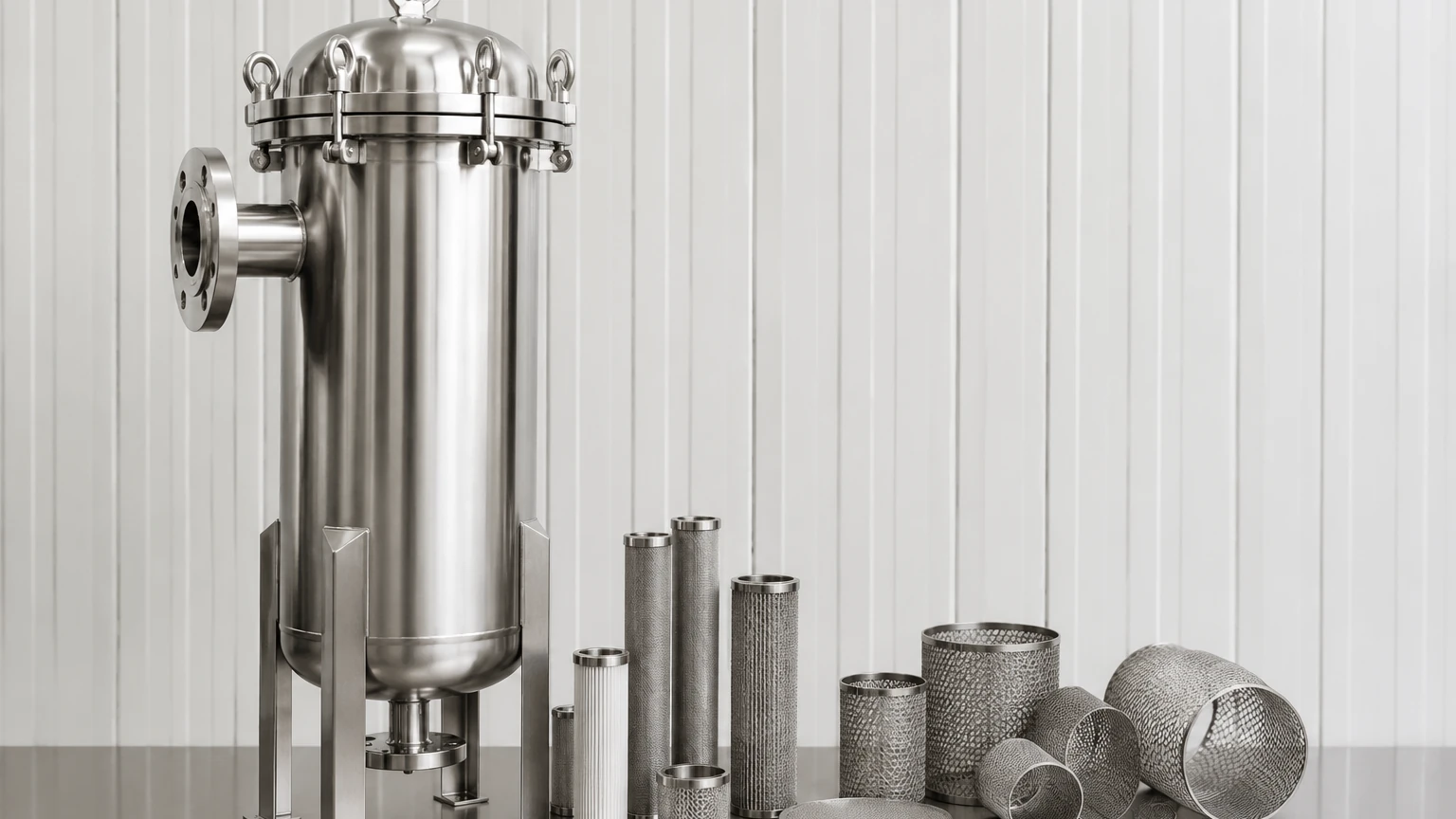
In industrial gas processing, the presence of entrained liquid droplets—ranging from large slugs to sub-micron aerosols—can lead to significant operational failures, equipment corrosion, and product contamination. Vertical liquid gas coalescers are specialized filtration vessels designed to aggregate these fine liquid droplets into larger masses that can be easily separated from the gas stream by gravity. Unlike standard particulate filters, which primarily capture solid contaminants, coalescers must manage two distinct phases: the continuous gas phase and the discontinuous liquid phase.
For engineers and procurement teams, selecting the appropriate vertical liquid gas coalescer requires a deep understanding of fluid dynamics, material compatibility, and the specific thermodynamic conditions of the process. As a manufacturer specializing in custom stainless steel filtration solutions, Kaifil provides the technical components necessary to ensure these systems operate with high efficiency and long-term durability.
The Mechanics of Coalescence in Vertical Systems
The operation of vertical liquid gas coalescers relies on a multi-stage physical process. The primary objective is to move liquid particles from a state of suspension in the gas to a state where they can be drained from the vessel. This is achieved through three main mechanisms: impingement, interception, and diffusion.
1. Direct Impingement: Larger droplets, typically those greater than 10 microns, possess enough momentum to break away from the gas streamlines when the gas flow changes direction. These droplets strike the filter media fibers and adhere to them.
2. Interception: Mid-sized droplets follow the gas streamlines but come close enough to the media fibers to be captured by surface tension.
3. Diffusion (Brownian Motion): Extremely small sub-micron aerosols move erratically due to molecular collisions. This random movement increases the probability that they will contact a fiber and be captured.
Once captured, these droplets migrate along the fibers to the intersections of the media, where they merge with other droplets. This process, known as coalescence, continues until the droplets grow large enough that the force of gravity (or the drag of the gas flow) moves them toward the outer surface of the filter element. In a vertical configuration, the gas typically flows from the inside of the cartridge to the outside, allowing the coalesced liquid to form a film on the outer layer and eventually drip into a collection sump.
Engineering Advantages of Vertical Configurations
While horizontal coalescers are often used for high liquid-load applications, vertical liquid gas coalescers offer distinct advantages in specific industrial environments. The choice of a vertical orientation is rarely arbitrary; it is driven by space constraints, drainage requirements, and the nature of the contaminants.
Footprint and Space Efficiency
In offshore platforms, chemical plants, and refineries where floor space is at a premium, the vertical design is preferred. The vertical orientation utilizes height rather than floor area, making it easier to integrate into existing piping skids or tight process modules.
Gravity-Assisted Drainage
In a vertical coalescer, the direction of gravity is parallel to the primary axis of the filter elements. As droplets coalesce on the outer surface of the media, gravity pulls them downward toward the bottom head of the vessel. This natural drainage path reduces the risk of "re-entrainment"—a phenomenon where high-velocity gas picks up already-separated liquid and carries it downstream. By providing a dedicated sump area at the bottom, vertical units ensure a clear separation between the clean gas outlet and the collected liquid.
Handling Low Liquid Concentrations
Vertical units are exceptionally efficient at removing fine mists and aerosols from gas streams where the liquid concentration is relatively low but the required purity is high. They are frequently used as secondary separators downstream of bulk knock-out drums to ensure the final gas quality meets stringent downstream specifications.
Material Selection: The Role of Stainless Steel
The efficiency of vertical liquid gas coalescers is heavily dependent on the media used within the filter cartridges. Because these systems often handle corrosive gases, high temperatures, or high-pressure environments, the choice of material is critical for maintaining structural integrity and filtration performance.
Kaifil specializes in the production of stainless steel wire mesh and precision metal filter components that serve as the backbone of high-performance coalescing elements. Stainless steel (typically grades 304 or 316L) is the material of choice for several reasons:
* Corrosion Resistance: Many gas streams, particularly in the oil and gas or chemical sectors, contain hydrogen sulfide (H2S), carbon dioxide (CO2), or other acidic components. Stainless steel resists the chemical degradation that would quickly destroy synthetic or fiberglass media.
* Thermal Stability: In high-temperature steam applications or chemical synthesis, the filter media must withstand thermal cycling without losing its pore structure or mechanical strength.
* Cleanability and Reusability: Unlike disposable glass fiber elements, stainless steel wire mesh filters can often be cleaned and returned to service, reducing the total cost of ownership and minimizing waste.
* Structural Rigidity: Under high differential pressures, the media must not collapse or bypass. The inherent strength of a pleated stainless steel cartridge ensures consistent filtration accuracy even during pressure surges.
When designing custom solutions, engineers must consider the surface tension of the liquid being removed. Stainless steel can be treated or manufactured with specific surface characteristics to enhance the "wetting" or "non-wetting" properties required for effective coalescence.
Performance Evaluation and Selection Criteria
Selecting the right vertical liquid gas coalescer involves more than just matching pipe sizes. Engineers must evaluate several performance metrics to ensure the system will meet the required effluent quality.
Filtration Accuracy and Micron Rating
Coalescers are often rated by their ability to remove particles of a specific size. For liquid-gas separation, a rating of 0.3 microns is a common industry standard for high-efficiency units, as this is the size range where aerosols are most difficult to capture. It is important to distinguish between "nominal" and "absolute" ratings; absolute ratings provide a more reliable guarantee of performance under varying flow conditions.
Gas Velocity and Flux Rates
One of the most common causes of coalescer failure is excessive gas velocity. If the gas moves too quickly through the media, it can strip coalesced droplets off the fibers before they have a chance to drain, leading to re-entrainment. Designers must calculate the "flux rate" (the volume of gas passing through a unit area of media) to ensure it stays within the optimal range for the specific media type.
Clean and Dirty Differential Pressure
The pressure drop across the coalescer elements is a key indicator of system health. A high initial pressure drop suggests the unit is undersized, while a rapid increase in pressure drop usually indicates high levels of solid particulate contamination. In many systems, a pre-filter is installed upstream of the coalescer to remove solids, allowing the coalescer to focus solely on liquid separation and extending the life of the more expensive coalescing elements.
Operational Challenges: Monitoring and Maintenance
To maintain the efficiency of vertical liquid gas coalescers, a proactive maintenance and monitoring strategy is required. Because these units are often critical to the protection of downstream equipment like compressors, turbines, or molecular sieves, failure is not an option.
Liquid Level Control
The collection sump at the bottom of a vertical coalescer must be managed carefully. If the liquid level rises too high, it can submerge the bottom of the filter elements, blocking the gas flow and causing a massive spike in differential pressure. Automated drain valves and level sensors (such as ultrasonic or magnetic float types) are standard components of a reliable coalescing system.
Element Replacement Cycles
While stainless steel elements offer longevity, they are not infinite. Over time, fine solids that bypass upstream filtration can become embedded in the depth of the media. Monitoring the differential pressure (ΔP) is the primary method for determining when to clean or replace elements. Typically, a ΔP of 10-15 psi indicates that the elements are reaching the end of their effective cycle.
Compatibility with Additives
In the oil and gas industry, chemicals such as corrosion inhibitors or methanol are often injected into the gas stream. These additives can change the surface tension of the liquid droplets, potentially hindering the coalescing process. Engineers should confirm that the filter media and seals (O-rings/gaskets) are chemically compatible with all potential additives in the stream.
Customization and OEM Solutions
Every industrial process has unique variables, from gas composition and flow rates to temperature and pressure fluctuations. Standard "off-the-shelf" filters often fail to provide the necessary efficiency or durability required for specialized applications. This is where customized engineering becomes essential.
Kaifil works closely with global customers to develop tailored filtration components that fit specific vessel geometries and performance requirements. Whether it is a unique pleated design to increase surface area or a specific wire mesh weave to handle high-viscosity liquids, customization ensures that the vertical liquid gas coalescer is optimized for the actual operating conditions rather than a theoretical average. For more information on custom stainless steel filtration components, you can visit the Main Page to explore technical specifications and application support.
Conclusion
Vertical liquid gas coalescers are vital components in the modern industrial landscape, ensuring that gas streams are free of damaging liquid contaminants. By leveraging the principles of impingement, interception, and diffusion, these systems provide high-efficiency separation within a compact footprint. However, the success of a coalescing system depends heavily on the quality of its internal components.
Choosing stainless steel media for these applications provides the necessary resistance to corrosion and thermal stress, ensuring that the filtration system remains reliable over years of operation. For engineers, the focus should remain on accurate sizing, material compatibility, and the implementation of robust monitoring systems to prevent re-entrainment and protect downstream assets. As industrial processes become more complex and purity requirements more stringent, the role of precision-engineered vertical coalescers will only continue to grow in importance.
