


What Does a Oil Filter Do
In industrial engineering and heavy machinery maintenance, the question of "what does a oil filter do" extends far beyond the simple removal of debris. In complex hydraulic systems, chemical processing lines, and high-speed turbines, the oil filter serves as the primary defense mechanism against system degradation, mechanical failure, and fluid oxidation. For engineers and procurement specialists, understanding the technical nuances of filtration is essential for optimizing equipment uptime and reducing the total cost of ownership.
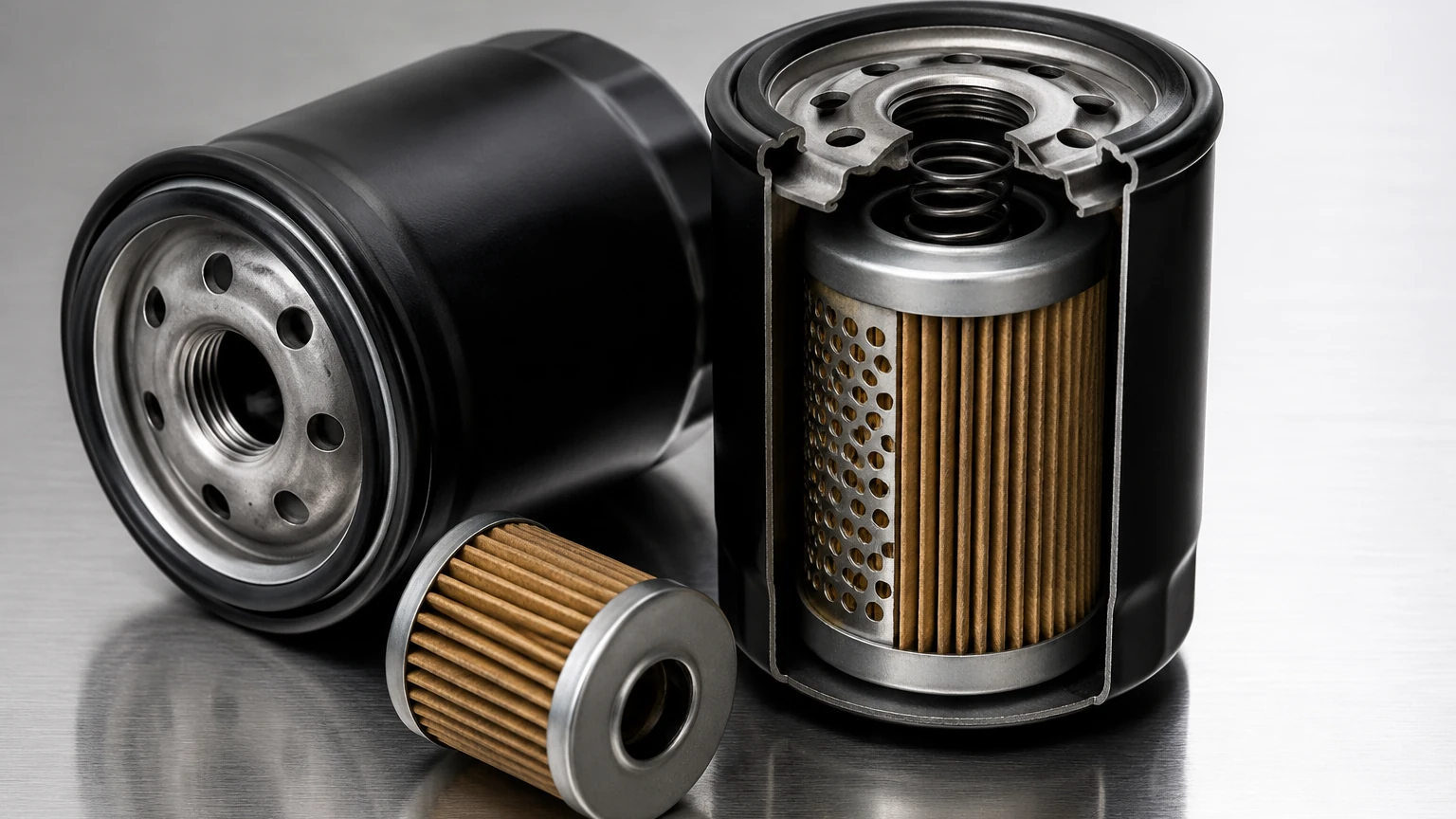
At its core, an industrial oil filter is a precision-engineered component designed to maintain the cleanliness of lubricating or power-transmission fluids. By capturing particulate matter and sometimes chemical contaminants, the filter ensures that the fluid remains within its specified ISO cleanliness levels, thereby protecting sensitive downstream components such as servo valves, bearings, and pumps.
The Primary Function: Maintaining Fluid Cleanliness and System Integrity
To answer what does a oil filter do effectively, one must look at the lifecycle of industrial machinery. As machines operate, they naturally generate internal contaminants. These include metallic wear particles from gears and bearings, seal fragments, and chemical byproducts of fluid breakdown. Additionally, external contaminants like silica dust or moisture can enter the system through breathers or during maintenance.
If these particles are allowed to circulate, they act as an abrasive slurry. This leads to a phenomenon known as the "chain reaction of wear," where one particle creates several more through surface abrasion. The oil filter interrupts this cycle by trapping these particles before they can reach critical clearances. In high-pressure hydraulic systems, where clearances in valves can be as small as 1 to 5 microns, even microscopic particles can cause "stiction" (static friction) or catastrophic component seizure.
Furthermore, the oil filter plays a role in maintaining the chemical stability of the lubricant. While it primarily targets solids, the removal of catalytic metal particles (like copper or iron) slows down the oxidation process of the oil, extending the intervals between expensive fluid changes.
Understanding the Filtration Mechanism: How Contaminants are Trapped
When evaluating what does a oil filter do, it is important to distinguish between the different physical mechanisms used to capture particles. Industrial filters, particularly the custom stainless steel solutions provided by manufacturers like Kaifil, utilize several principles to ensure high-efficiency filtration:
1. Inertial Impaction: Larger, high-density particles traveling in the fluid stream may have too much momentum to follow the fluid's path around a filter fiber or mesh wire. These particles strike the filter media directly and become embedded.
2. Interception: This occurs when a particle follows the fluid flow but comes close enough to a fiber or mesh strand to be captured by its surface. This is common for particles that are roughly the same size as the pores in the media.
3. Diffusion: For extremely small particles (sub-micron level), Brownian motion causes them to move erratically across the fluid flow lines. This increases the probability that they will contact and adhere to the filter media.
4. Sieving: This is the most straightforward mechanism, where the particle is simply larger than the pore size of the mesh or media and cannot pass through. This is the primary function of stainless steel wire mesh filters used in many industrial applications.
Engineering Considerations: Pressure Drop and Bypass Flow
A critical aspect of what does a oil filter do involves managing the trade-off between filtration efficiency and flow resistance. As a filter captures more contaminants, its pores become restricted, leading to an increase in differential pressure (ΔP) across the element.
Engineers must carefully calculate the clean pressure drop to ensure that the system pump can maintain the required flow rate. If the pressure drop becomes too high, many industrial filter housings are equipped with a bypass valve. When the ΔP reaches a specific threshold, the valve opens to allow unfiltered oil to bypass the element. This prevents the filter from collapsing or starving the system of oil, but it also means that the system is no longer being protected. Therefore, monitoring the pressure drop is a vital part of predictive maintenance.
Material Science in Filtration: Why Stainless Steel is Often Preferred
In many demanding environments, traditional cellulose or synthetic fiber filters are insufficient. This is where specialized metal filtration components become necessary. When considering what does a oil filter do in high-temperature, high-pressure, or chemically aggressive environments, the material of the filter element is paramount.
Stainless steel wire mesh and sintered metal filters offer several advantages:
* Thermal Stability: Unlike paper or plastic-based media, stainless steel can withstand extreme temperatures without losing structural integrity or leaching chemicals into the fluid.
* Chemical Compatibility: Stainless steel is resistant to a wide range of industrial solvents, corrosive chemicals, and synthetic lubricants that might degrade standard filters.
* Durability and Cleanability: One of the most significant benefits of metal filters is that they are often cleanable and reusable. This reduces waste and long-term procurement costs. In applications where the cost of downtime is high, the robustness of a metal filter provides an extra layer of security against element rupture.
* Precision Filtration: Advanced manufacturing techniques allow for the creation of wire mesh with highly accurate pore sizes, ensuring consistent performance in critical applications.
For organizations looking to optimize their filtration systems, reviewing professional product information and application guidance is a necessary step. You can Review product options and application support to understand how customized metal filtration can be integrated into your specific industrial processes.
Key Performance Indicators: Micron Ratings and Beta Ratios
To scientifically define what does a oil filter do, engineers use standardized metrics. The two most common are the Micron Rating and the Beta Ratio (β).
Micron Rating
The micron rating indicates the size of particles the filter can remove. However, it is important to distinguish between "nominal" and "absolute" ratings. A nominal rating is an average or commercial claim of efficiency, while an absolute rating refers to the diameter of the largest hard spherical particle that will pass through the filter under specified test conditions. For critical industrial components, absolute ratings are generally required.
Beta Ratio (ISO 16889)
The Beta Ratio provides a more comprehensive picture of a filter’s efficiency at a specific particle size. It is calculated by taking the number of particles of a certain size upstream of the filter and dividing it by the number of particles of that same size downstream. For example, a Beta Ratio of 200 (βx = 200) means the filter is 99.5% efficient at removing particles of size 'x'. This metric allows engineers to predict the cleanliness level of the oil after it passes through the filter.
Maintenance and Longevity: When to Clean or Replace Industrial Filters
Understanding what does a oil filter do also involves knowing when it has reached the end of its functional life. Relying solely on a fixed calendar schedule for filter changes can be inefficient—either leading to premature replacement or, worse, allowing the filter to operate in bypass mode for extended periods.
Modern industrial systems utilize several methods for determining replacement cycles:
* Differential Pressure Indicators: Visual or electronic gauges that signal when the filter media is loaded to its capacity.
* Oil Analysis: Regular sampling of the oil to check for particle counts (ISO 4406) and the presence of wear metals. If the particle count rises despite the filter being in place, it may indicate a breach in the media or that the filter is in bypass.
* Total Cost of Ownership (TCO) Analysis: While stainless steel filters have a higher initial cost than disposable ones, their ability to be cleaned and reused, combined with their superior protection of expensive machinery, often results in a lower TCO over the life of the equipment.
Custom Solutions for Specialized Industrial Applications
In many B2B environments, off-the-shelf filters do not meet the specific requirements of a unique process. Whether it is a specific footprint for a hydraulic power unit, a requirement for high-flow rates with minimal pressure drop, or the need to withstand a specific corrosive agent, customization is often the key to success.
When a manufacturer like Kaifil develops a custom filtration solution, they consider the fluid viscosity, the expected contaminant load, the operating pressure, and the desired cleanliness target. By engineering the filter from the ground up—selecting the appropriate weave for the wire mesh and the structural support for the cartridge—they ensure that the filter does exactly what it is intended to do: protect the system without becoming a bottleneck.
Conclusion
In summary, what does a oil filter do? It serves as the vital guardian of mechanical health in industrial systems. By removing harmful contaminants, maintaining fluid stability, and protecting high-precision components, it ensures that industrial processes remain efficient and reliable. For engineers, the choice of filter media—whether it be a standard disposable element or a high-performance, custom-designed stainless steel mesh—is a decision that impacts the longevity and profitability of the entire operation.
Selecting the right filtration partner is essential for achieving these goals. By focusing on technical expertise and quality manufacturing, companies can ensure their systems are equipped with the best possible protection against the hidden dangers of fluid contamination. For more information on tailored filtration components and engineering support, visit the Kaifil Main Page.
