


Vertical Pressure Filters
In the landscape of industrial liquid-solid separation, vertical pressure filters stand as a cornerstone technology for processes requiring high clarity, efficient cake recovery, and a compact footprint. Unlike atmospheric filters that rely solely on gravity, pressure filters utilize a pressurized feed to force liquid through a filter medium, significantly accelerating the separation process and allowing for the handling of high-viscosity fluids or fine particulate matter that would otherwise be difficult to process. For engineers and procurement specialists, understanding the technical nuances of these systems—from the internal stainless steel mesh configurations to the mechanical discharge mechanisms—is essential for optimizing production uptime and ensuring product purity.
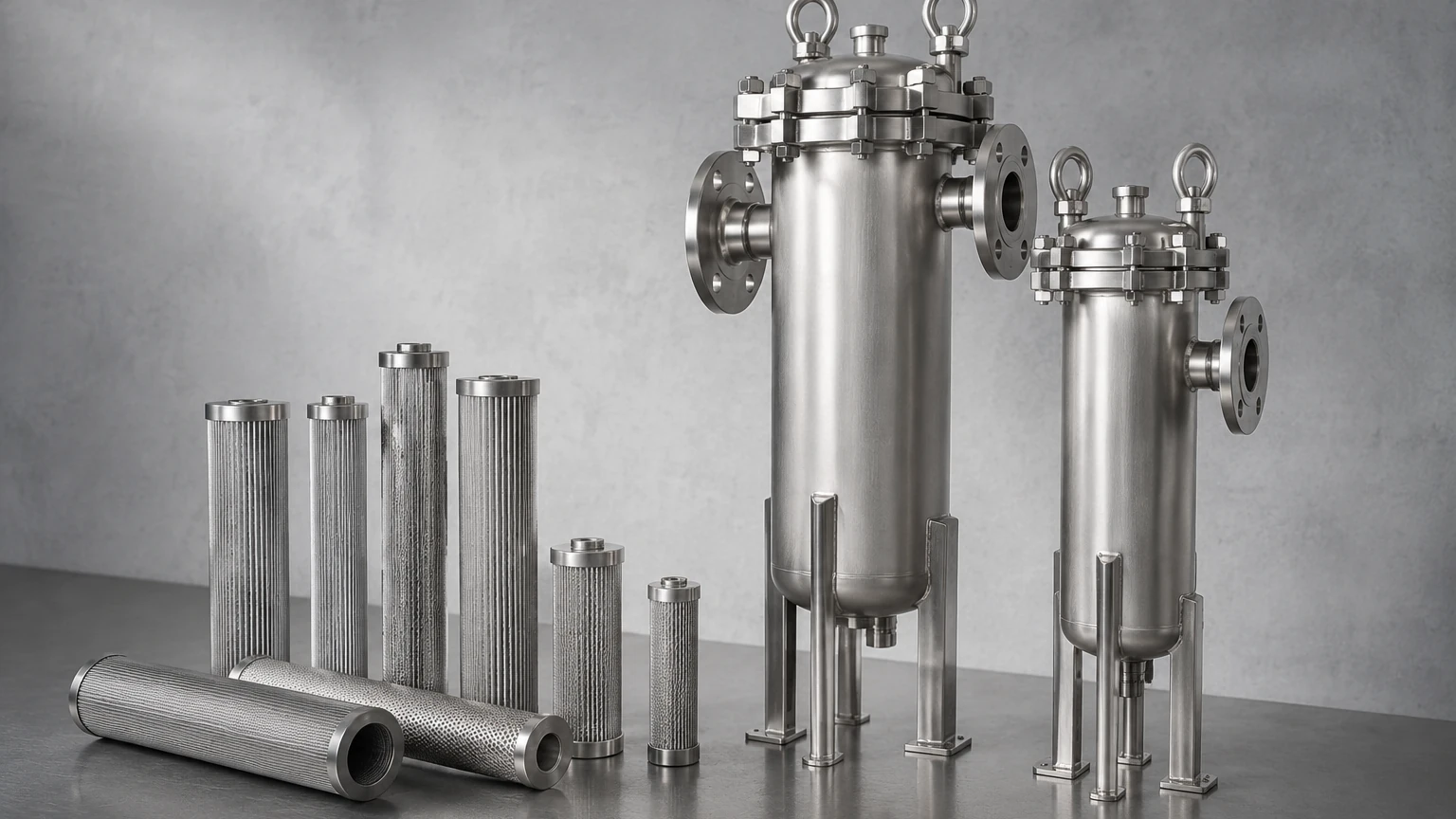
Vertical pressure filters are typically characterized by a vertical cylindrical pressure vessel containing internal filter elements. These elements, often referred to as filter leaves or cartridges, are the critical components where the actual separation occurs. By leveraging vertical orientation, industrial facilities can save significant floor space while benefiting from a design that facilitates efficient cake discharge and cleaning. Whether used in chemical processing, food and beverage production, or pharmaceutical manufacturing, the performance of the system is fundamentally tied to the quality and specification of the internal filtration media.
Understanding the Mechanics of Vertical Pressure Filters
The operational cycle of a vertical pressure filter is a multi-stage process designed to maximize the recovery of both the filtrate (the liquid) and the filter cake (the solids). The cycle begins with the filling stage, where the slurry is pumped into the pressure vessel. As the pressure increases, the liquid is forced through the filter media—often a multi-layered stainless steel wire mesh—while the solids are retained on the surface.
As the filtration continues, a "filter cake" builds up on the media. This cake itself eventually acts as a secondary filtration layer, often improving the clarity of the filtrate as the pores become finer. Once the desired cake thickness is reached or the pressure differential reaches a specific limit, the feed is stopped. Depending on the application, the cake may then undergo washing to remove impurities or air-blowing to reduce moisture content. Finally, the cake is discharged. In vertical systems, this is often achieved through a bottom-opening valve, sometimes assisted by pneumatic vibrators or mechanical scrapers that dislodge the cake from the vertical leaves.
Engineering a vertical pressure filter requires precise calculation of the filtration area. Because the vessel is vertical, the filter leaves are arranged in a way that maximizes surface area within a constrained diameter. This design is particularly advantageous for batch processes where the volume of solids is moderate but the requirement for filtrate clarity is high.
Engineering Advantages of Vertical Configurations
The choice between vertical and horizontal pressure filters often comes down to facility constraints and the nature of the filter cake. Vertical pressure filters offer several distinct engineering advantages:
1. Spatial Efficiency: In many brownfield industrial sites, floor space is at a premium. The vertical orientation allows for a large filtration surface area while occupying a minimal footprint. This makes them ideal for integration into existing production lines.
2. Cake Stability and Discharge: In a vertical leaf filter, the cake forms on both sides of the leaf. While horizontal filters can sometimes struggle with cake stability if the pressure fluctuates, vertical leaves are designed to hold the cake securely until the discharge phase. When it is time to empty the vessel, gravity assists the process, especially when the leaves are vibrated.
3. Reduced Liquid Heel: Vertical designs can be engineered to minimize the "heel"—the unfiltered liquid remaining in the vessel at the end of a cycle. This is critical in pharmaceutical or specialty chemical applications where the product is high-value and waste must be minimized.
4. Simplified Maintenance: Many vertical pressure filters are designed with quick-opening top covers or bottom heads, allowing for rapid inspection of the internal stainless steel components without the need to disassemble complex piping arrays.
Critical Filter Media Considerations for Vertical Systems
The heart of any vertical pressure filter is the filter medium. In modern industrial applications, stainless steel is the material of choice due to its mechanical strength, thermal resistance, and chemical compatibility. When selecting media for vertical pressure filters, engineers must consider the following technical factors:
Material Grade and Chemical Compatibility
Most industrial filters utilize SS304 or SS316L. For highly corrosive environments, such as those involving chlorides or acidic chemical processing, higher alloys like 904L or Hastelloy may be required. The choice of material ensures that the filter elements do not succumb to pitting or stress corrosion cracking over time.
Weave Types and Micron Ratings
The precision of the filtration is determined by the wire mesh weave. Common types include plain Dutch weave, twilled Dutch weave, and five-heddle weave. Each offers a different balance of flow rate, mechanical strength, and particle retention. For example, a Dutch weave provides a dense, strong structure capable of retaining very fine particles while withstanding high differential pressures.
Sintered vs. Single-Layer Mesh
In demanding applications, single-layer mesh may not provide sufficient rigidity. Sintered wire mesh, which involves diffusion-bonding multiple layers of mesh together, creates a robust, porous plate that maintains its shape under pressure. This is particularly important in vertical pressure filters where the elements are subject to vibration during the cake discharge phase.
To explore specific configurations and technical data sheets for these components, engineers can Review product options and application support on the Kaifil website.
Performance Evaluation: Flow Rates and Filtration Accuracy
When evaluating a vertical pressure filter, two primary metrics dominate the technical discussion: flow rate (flux) and filtration accuracy (micron rating). These two factors are often in inverse proportion; a finer micron rating typically results in a higher pressure drop and a lower flow rate.
Engineers must calculate the "clean pressure drop" of the filter media to ensure the pump system can handle the required throughput. As the filter cake grows, the resistance increases. A well-designed system will have a predictable pressure-increase curve, allowing for automated cycle management. If the pressure increases too rapidly, it may indicate that the micron rating is too fine for the particle size distribution of the slurry, leading to premature "blinding" of the mesh.
Furthermore, the structural integrity of the internal elements is paramount. In a vertical pressure filter, the elements must withstand not only the operational pressure but also the mechanical stresses of the cleaning cycle. High-quality manufacturing, such as precision TIG welding of the stainless steel frames and mesh, prevents bypass—a failure mode where unfiltered slurry leaks into the filtrate stream due to structural gaps.
Maintenance, Cleaning, and Replacement Cycles
The total cost of ownership (TCO) for vertical pressure filters is heavily influenced by the ease of cleaning and the longevity of the filter elements. Because these systems are often used in continuous industrial processes, downtime for maintenance must be minimized.
Clean-in-Place (CIP) Capabilities
Many modern vertical pressure filters are equipped with CIP systems. These systems use internal spray headers to wash the filter leaves without opening the vessel. The effectiveness of a CIP cycle depends on the surface smoothness of the stainless steel mesh. Electropolishing the filter elements can reduce particle adhesion, making the cleaning process faster and more thorough.
Replacement Cycles
While stainless steel filter elements are durable, they are not infinite. Factors such as abrasive particles in the slurry, aggressive chemical cleaning agents, and mechanical fatigue from vibration will eventually necessitate replacement. Monitoring the "residual pressure drop"—the pressure across the filter after a cleaning cycle—is the best way to determine when the media has become permanently fouled or blinded. Generally, if the residual pressure drop exceeds 20-30% of the original clean pressure drop, it is time to inspect or replace the elements.
Selecting the Right Vertical Pressure Filter for Industrial Applications
Selection of a vertical pressure filter is a collaborative process between the plant engineer and the manufacturer. To ensure the system meets the specific needs of the application, several data points must be confirmed:
* Slurry Characteristics: What is the solids concentration? What is the particle size distribution? Is the liquid aqueous, organic, or a high-viscosity oil?
* Operating Conditions: What are the maximum operating pressure and temperature? Are there rapid temperature fluctuations that could cause thermal expansion issues in the filter leaves?
* Cake Handling: Is the cake the primary product or a waste byproduct? Does it need to be dried or washed within the filter?
* Regulatory Compliance: In food and pharmaceutical applications, the filter must meet stringent hygienic standards, such as FDA or 3A requirements, necessitating specific surface finishes and gasket materials.
By focusing on these technical parameters, procurement teams can move beyond generic equipment and invest in customized solutions that provide long-term reliability. For detailed engineering support and to view the range of custom stainless steel filtration components available for these systems, professionals should visit the Kaifil Main Page.
In conclusion, vertical pressure filters represent a sophisticated solution for complex industrial separation tasks. By combining a space-saving design with high-performance stainless steel filtration media, these systems provide the clarity and efficiency required by modern manufacturing. Whether you are upgrading an existing line or designing a new process, the focus should always remain on the precision of the internal components and their ability to withstand the rigors of your specific industrial environment.
