


Vessel Tank Design
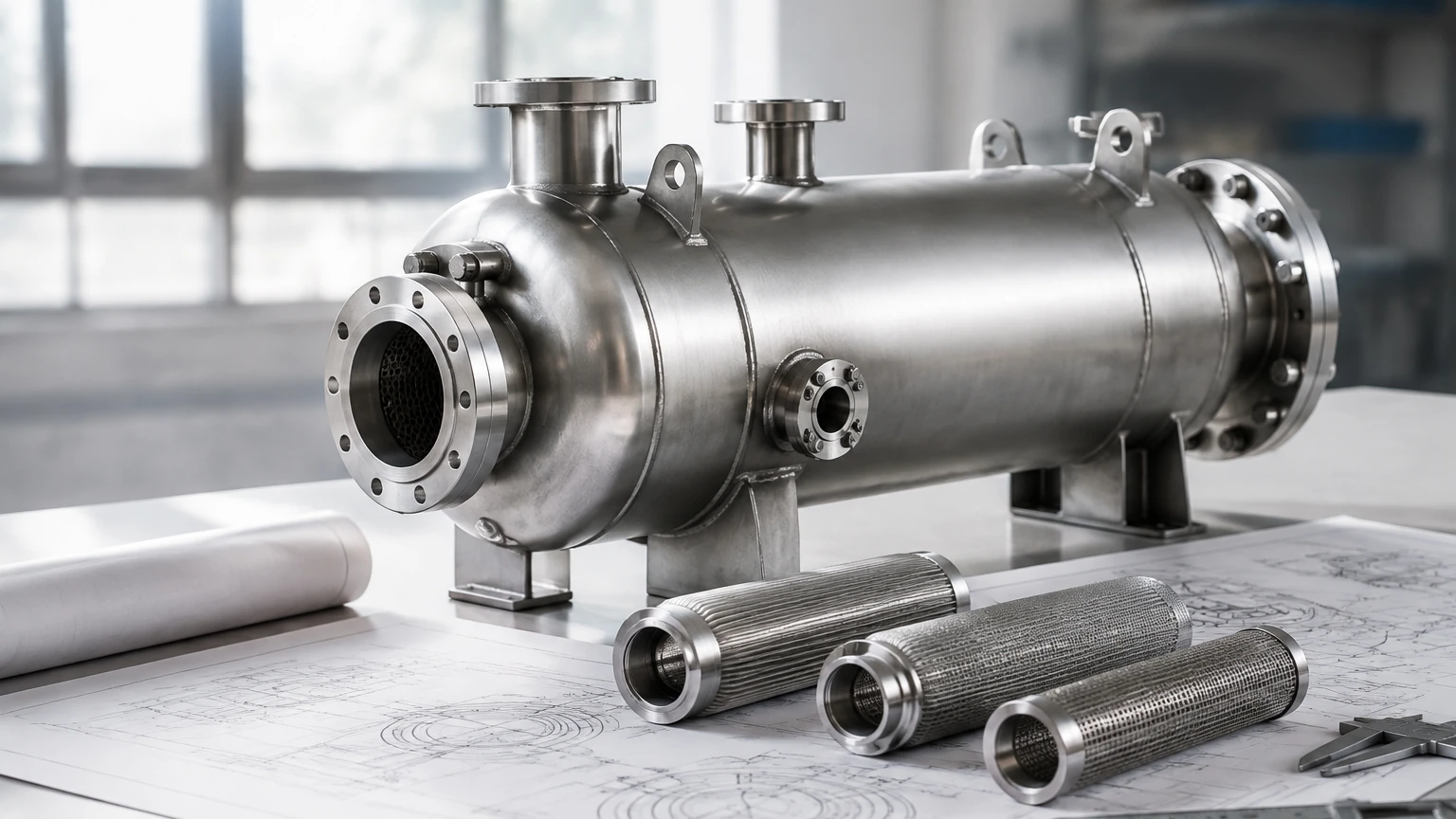
In industrial filtration systems, vessel tank design serves as the foundational architecture that determines the efficiency, safety, and longevity of the entire process. For engineers and technical procurement teams, the design of a pressure vessel or atmospheric tank is not merely about containment; it is about creating a controlled environment where filtration media—such as stainless steel wire mesh or precision filter cartridges—can perform optimally under specific hydraulic and thermal conditions.
Effective vessel tank design requires a multidisciplinary approach, blending mechanical engineering, fluid dynamics, and material science. Whether the application involves high-pressure hydraulic systems, corrosive chemical processing, or sanitary food and beverage production, the vessel must be engineered to withstand operational stresses while facilitating ease of maintenance and component replacement.
Engineering Standards and Structural Integrity
The primary consideration in vessel tank design is structural integrity, particularly when the system operates under pressure. Most industrial filtration vessels are designed according to established codes such as the ASME (American Society of Mechanical Engineers) Boiler and Pressure Vessel Code (BPVC) or the European Pressure Equipment Directive (PED). These standards dictate the minimum wall thickness, welding procedures, and testing protocols required to ensure safety.
When designing a vessel, engineers must calculate the Maximum Allowable Working Pressure (MAWP) and consider the potential for pressure surges or vacuum conditions. The geometry of the vessel—specifically the head design (ellipsoidal, hemispherical, or torispherical)—significantly impacts how stress is distributed across the structure. For filtration applications, the vessel must also account for the weight of the liquid, the weight of the internal filter assemblies, and the additional force exerted by the pressure drop (differential pressure) across the filter media as it becomes loaded with contaminants.
Material Selection and Chemical Compatibility
Material selection is a critical pivot point in vessel tank design. In the world of industrial filtration, stainless steel is the preferred material due to its mechanical strength and resistance to oxidation. However, the specific grade of stainless steel must be matched to the process fluid.
1. 304 Stainless Steel: Suitable for general-purpose applications, water treatment, and less corrosive environments. It offers excellent weldability and structural strength.
2. 316L Stainless Steel: The standard for chemical processing and pharmaceutical applications. The addition of molybdenum provides superior resistance to chlorides and pitting corrosion. The "L" (low carbon) designation is crucial for preventing carbide precipitation during welding, which ensures the vessel remains corrosion-resistant at the heat-affected zones.
3. Specialty Alloys: In extreme cases involving high-salinity or highly acidic fluids, alloys like Duplex stainless steel or Hastelloy may be integrated into the design to prevent premature failure.
Beyond the shell, the internal gaskets and seals must be compatible with both the temperature and the chemical composition of the fluid. Common materials include EPDM, Viton, and PTFE, each offering different levels of resistance to thermal expansion and chemical degradation.
Flow Dynamics and Internal Filtration Integration
A vessel is only as effective as the filtration components it houses. In vessel tank design, the internal layout must promote uniform flow distribution. Poorly designed inlets can lead to "channeling," where the fluid bypasses large portions of the filter media, leading to premature localized clogging and reduced filtration efficiency.
To optimize flow, designers often incorporate baffles or flow distributors at the inlet. This ensures that the velocity of the fluid is reduced before it contacts the stainless steel filter cartridges or wire mesh screens. The spacing between internal components is also vital; there must be sufficient clearance to allow for the even accumulation of solids and to prevent high-velocity zones that could erode the filter media.
Furthermore, the design must provide a secure sealing interface for the filtration elements. Whether using a double open-end (DOE) or a code 7 (226) O-ring interface, the vessel's internal plate or manifold must be machined to precise tolerances to prevent bypass—the phenomenon where unfiltered fluid leaks around the edge of the filter element.
Sanitary Design and Industry-Specific Requirements
For industries such as pharmaceuticals and food and beverage, vessel tank design must adhere to sanitary standards (such as 3-A or EHEDG). In these environments, the prevention of bacterial growth is as important as the removal of physical particulates.
Sanitary vessel design focuses on:
* Surface Finish: Internal surfaces are often electropolished to a specific Ra (roughness average) value, typically 0.4 μm or better, to eliminate microscopic crevices where microbes can thrive.
* Drainability: The vessel must be designed with a sloped bottom and no "dead legs" (areas where fluid can stagnate). This ensures that the system can be fully cleaned-in-place (CIP) or steamed-in-place (SIP).
* Weld Quality: All internal welds must be ground smooth and polished to match the surrounding surface finish, ensuring there are no pits or inclusions.
In contrast, hydraulic or industrial oil filtration vessels prioritize high-pressure ratings and robust mechanical seals to handle high-viscosity fluids and rapid pressure fluctuations.
Maintenance, Accessibility, and Operational Safety
Long-term operational costs are heavily influenced by how easily a vessel can be serviced. A well-conceived vessel tank design incorporates features that simplify the replacement of filter elements.
* Closure Mechanisms: For vessels requiring frequent filter changes, quick-opening closures (such as swing bolts or V-band clamps) are preferred over standard bolted flanges. These reduce downtime and the need for specialized tools.
* Venting and Draining: Every vessel must include high-point vents to release trapped air during startup and low-point drains to allow for complete evacuation of fluid before maintenance. This is critical for operator safety, especially when handling hazardous or high-temperature fluids.
* Lifting Lugs and Supports: For larger vessels, the design must include lifting lugs for installation and appropriately rated leg or skirt supports to ensure stability under seismic or wind loads if installed outdoors.
Engineers should also consider the inclusion of differential pressure gauges. By monitoring the pressure drop between the inlet and outlet, operators can accurately determine when the internal wire mesh filters or cartridges have reached their dirt-holding capacity and require cleaning or replacement.
Selection Criteria for Custom Vessel Fabrication
When moving from a theoretical design to procurement, it is essential to partner with a manufacturer that understands the interplay between the vessel and the filtration media. Customization is often necessary because off-the-shelf solutions rarely meet the exact flow rate, space constraints, and filtration accuracy required for specialized industrial processes.
Before finalizing a design, technical teams should confirm the following:
* Filtration Accuracy: Does the vessel design support the micron rating required? Higher precision filtration often requires more robust internal support structures to prevent media migration.
* Replacement Cycles: Is the vessel sized correctly to allow for a reasonable interval between filter changes? Undersized vessels lead to high operational costs due to frequent downtime.
* OEM Capabilities: Can the manufacturer provide both the vessel and the customized internal components? Integrated sourcing ensures that the tolerances between the vessel housing and the filter elements are perfectly matched.
For organizations seeking high-performance filtration components and engineering support, reviewing the capabilities of a specialized manufacturer is the first step. You can explore a wide range of industrial filtration solutions and technical specifications on the Main Page of Kaifil, where custom engineering meets manufacturing expertise.
Conclusion
Vessel tank design is a critical component of industrial infrastructure that directly impacts process reliability and product quality. By focusing on stringent engineering standards, appropriate material selection, and optimized flow dynamics, engineers can ensure that their filtration systems operate at peak efficiency. As industrial requirements become more demanding, the integration of custom-designed vessels with high-quality stainless steel filtration media remains the most effective strategy for achieving long-term performance and safety in demanding environments.
