


Wastewater Treatment Plant Screening
In the hierarchy of wastewater processing, preliminary treatment serves as the critical first line of defense. At the heart of this stage is wastewater treatment plant screening, a mechanical process designed to remove large solids, debris, and inorganic materials from the influent before they can damage downstream equipment or interfere with sensitive biological and chemical processes. For engineers and facility managers, selecting the correct screening technology is not merely a matter of debris removal; it is a strategic decision that affects the hydraulic efficiency, maintenance frequency, and overall longevity of the entire treatment facility.
Effective screening prevents the accumulation of rags, plastics, and grit in aeration tanks and digesters, while also protecting high-value components such as centrifugal pumps and membrane bioreactors (MBRs). As industrial and municipal requirements become more stringent, the demand for precision-engineered filtration components—specifically those utilizing high-grade stainless steel—has grown significantly.
The Fundamental Role of Screening in Wastewater Infrastructure
Wastewater treatment plant screening is categorized as a physical unit operation. The primary objective is to protect the plant's mechanical integrity. Influent wastewater often carries a diverse load of non-biodegradable solids, including wood, stones, plastic containers, and fibrous materials known in the industry as "ragging."
If these materials are not captured at the headworks, they lead to several operational failures:
* Pump Impeller Clogging: Fibrous materials wrap around shafts and impellers, leading to increased motor strain, overheating, and eventual mechanical failure.
* Pipe Blockages: Large solids can settle in low-velocity sections of the piping network, causing hydraulic bottlenecks.
* Process Interference: In secondary treatment, non-biodegradable solids occupy valuable volume in bioreactors and can damage fine-bubble diffusers.
* Sludge Quality Degradation: Debris that passes through screening ends up in the sludge, complicating the dewatering process and reducing the quality of the final biosolids.
By implementing a multi-stage screening approach, plants can ensure that the downstream environment remains conducive to efficient treatment. To explore specific component designs for these systems, engineers often Review product options and application support on the Kaifil Main Page to align hardware specifications with influent characteristics.
Classification of Screening Technologies: Coarse vs. Fine
Screening is generally divided into three technical categories based on the size of the openings (aperture) and the specific role they play in the treatment train.
Coarse Screening
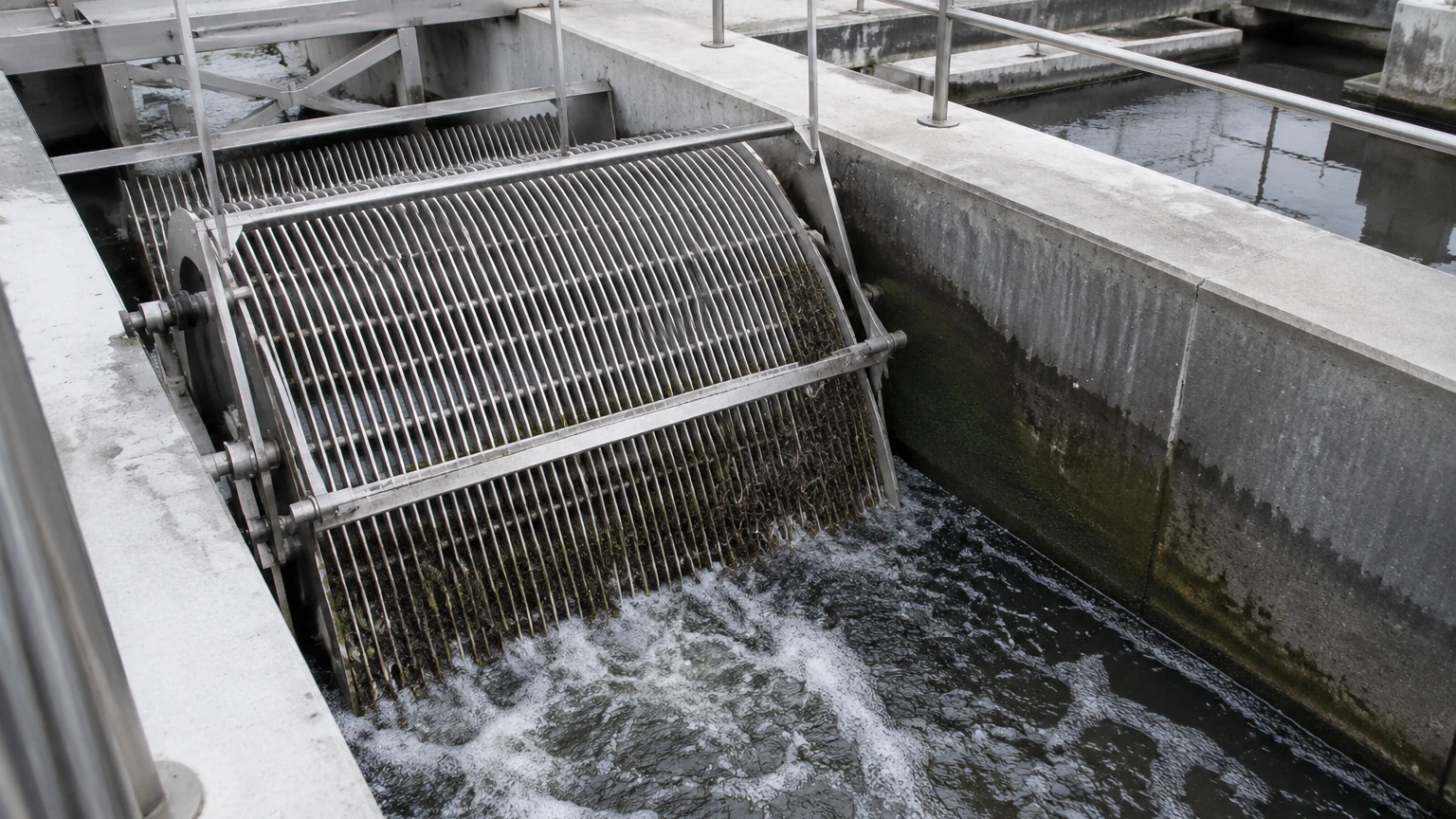
Coarse screens, often referred to as bar screens or trash racks, typically have openings ranging from 6 mm (0.25 inches) to 50 mm (2 inches) or larger. These are situated at the very beginning of the headworks. Their primary function is to remove large objects that could cause immediate catastrophic failure to influent pumps. These screens may be manually cleaned in very small installations, but modern industrial facilities almost exclusively use mechanically cleaned bar screens.
Fine Screening
Fine screens utilize smaller apertures, typically between 1.5 mm and 6 mm. These are essential for plants utilizing advanced secondary treatments like MBRs, where even small fibers can cause significant fouling. Fine screens often employ perforated plates or wedge wire configurations. The choice between a perforated plate and a wire mesh depends on the specific capture efficiency required for hair and fibrous materials.
Micro-Screening
Micro-screening involves apertures smaller than 0.5 mm. These are frequently used for tertiary treatment or for specific industrial applications where high-solids recovery is required. At this level, the structural integrity of the filter media is paramount, as the pressure differential (head loss) across the screen increases significantly as the mesh becomes finer.
Material Engineering: Why Stainless Steel is the Standard
The environment within a wastewater treatment plant is exceptionally harsh. Components are subjected to constant immersion, abrasion from grit, and chemical attacks from hydrogen sulfide (H2S) and various industrial solvents present in the influent.
For these reasons, stainless steel is the preferred material for wastewater treatment plant screening components. Kaifil specializes in the manufacture of these high-performance metal filter components, focusing on two primary grades:
1. Grade 304 Stainless Steel: Suitable for standard municipal wastewater applications where corrosion levels are moderate. It provides excellent structural strength and cost-effectiveness.
2. Grade 316/316L Stainless Steel: Essential for industrial wastewater or coastal municipal plants where high chloride levels or aggressive chemicals are present. The addition of molybdenum in 316L provides superior resistance to pitting and crevice corrosion.
Beyond chemical resistance, stainless steel wire mesh and perforated components offer the mechanical rigidity necessary to withstand hydraulic surges without deforming. This ensures that the aperture size remains constant over the life of the screen, maintaining consistent filtration accuracy.
Technical Evaluation Criteria for Screen Selection
When specifying screening equipment, engineers must look beyond simple dimensions. Several technical variables dictate the performance of the system:
1. Approach Velocity and Through-Screen Velocity
The velocity of the wastewater as it approaches the screen must be high enough to keep solids in suspension (typically above 0.4 m/s) but low enough to prevent debris from being forced through the openings. The "through-screen" velocity is critical; if it exceeds 0.9 m/s, the risk of "stapling" (fibers getting stuck in the mesh) and head loss increases dramatically.
2. Head Loss Calculations
Head loss is the difference in the water level before and after the screen. It is a function of the open area of the screen, the velocity of the flow, and the degree of blinding (clogging). A well-designed screen maximizes the percentage of open area to minimize head loss while maintaining structural integrity. Engineers must calculate the maximum head loss at peak flow conditions to prevent upstream flooding.
3. Capture Efficiency
Not all screens with the same aperture size perform equally. Perforated plates generally offer higher capture efficiency for hair and fibers compared to bar screens with the same opening size. This is due to the two-dimensional nature of the opening, which prevents long, thin objects from "threading" through.
Operational Challenges and Risk Mitigation
Even the best-engineered wastewater treatment plant screening system faces operational risks. Understanding these challenges allows for better preventive maintenance and design.
* Blinding and Fouling: This occurs when fats, oils, and grease (FOG) or biological growth coat the screen surface. Automated cleaning cycles, often utilizing high-pressure spray bars or mechanical brushes, are necessary to maintain the open area. Selecting a screen with a smooth surface finish, such as electropolished stainless steel, can significantly reduce the rate of fouling.
* Mechanical Wear: The constant movement of cleaning rakes against the screen surface causes abrasion. Using high-strength stainless steel alloys and ensuring precision tolerances in the manufacturing of the filter components can extend the replacement cycle of these parts.
* Bypass Events: During heavy rainfall or peak flow, screens can become overwhelmed. Design specifications must include a clear bypass protocol or redundant screening channels to ensure that the plant remains operational without discharging untreated solids downstream.
Customization and OEM Integration for Plant Upgrades
Many existing wastewater treatment plants face the challenge of upgrading their screening capacity within a fixed footprint. This is where customized filtration solutions become invaluable. Standard off-the-shelf screens may not align with existing concrete channels or flow profiles.
Custom manufacturing allows for the development of:
* Specific Aperture Geometries: Tailoring the mesh or perforation pattern to the specific debris profile of the local influent.
* Retrofit Cartridges: Designing stainless steel filter cartridges that fit into older mechanical housing, improving filtration fineness without replacing the entire machine.
* Reinforced Structures: Adding support grids or heavier gauge wire to components that experience high hydraulic impact.
By working with a specialist manufacturer like Kaifil, engineers can obtain precision-machined components that meet the exact tolerances required for high-efficiency screening. This technical collaboration ensures that the replacement parts or new installations are optimized for the specific hydraulic conditions of the site.
Pre-Purchase Technical Checklist for Engineers
Before finalizing a purchase or specification for wastewater treatment plant screening components, the following factors should be confirmed with the manufacturer:
1. Material Certification: Ensure the stainless steel grade (304, 316L, etc.) is certified and appropriate for the chemical profile of the wastewater.
2. Open Area Percentage: Request the exact calculation of the effective open area to verify head loss projections.
3. Mechanical Tolerances: For fine screens, confirm the tolerance of the aperture size. Inconsistent openings can lead to the passage of solids that damage downstream membranes.
4. Cleaning Compatibility: Verify that the mesh or perforated plate can withstand the mechanical force of the intended cleaning system (e.g., brush pressure or water jet PSI).
5. Total Cost of Ownership (TCO): Evaluate the initial cost against the expected lifespan and the cost of downstream repairs if the screen fails. Investing in higher-quality stainless steel components often results in a lower TCO through reduced maintenance and fewer equipment failures.
Conclusion
Wastewater treatment plant screening is a vital process that dictates the operational health of the entire facility. By selecting the appropriate screening fineness, utilizing durable materials like stainless steel, and considering the specific hydraulic requirements of the plant, engineers can significantly improve treatment efficiency.
As plants move toward more advanced treatment technologies, the precision of the initial screening stage becomes even more critical. High-quality, customized filtration components provide the reliability needed to protect complex downstream systems and ensure regulatory compliance. For those seeking to optimize their filtration performance, the Main Page of Kaifil offers a comprehensive look at the engineering capabilities and product ranges available for industrial and municipal wastewater applications.
